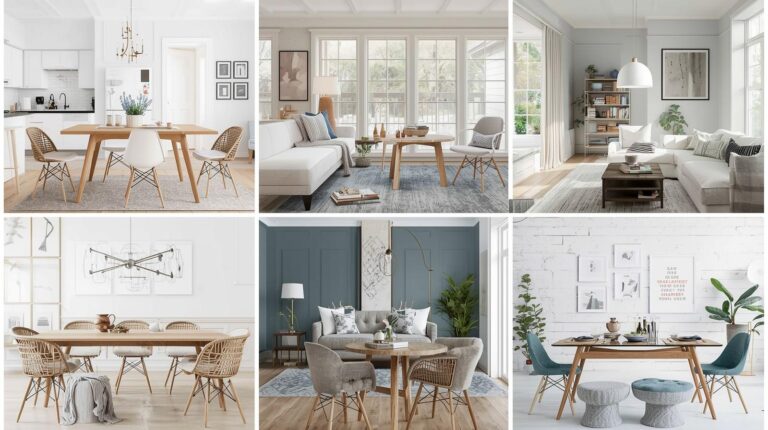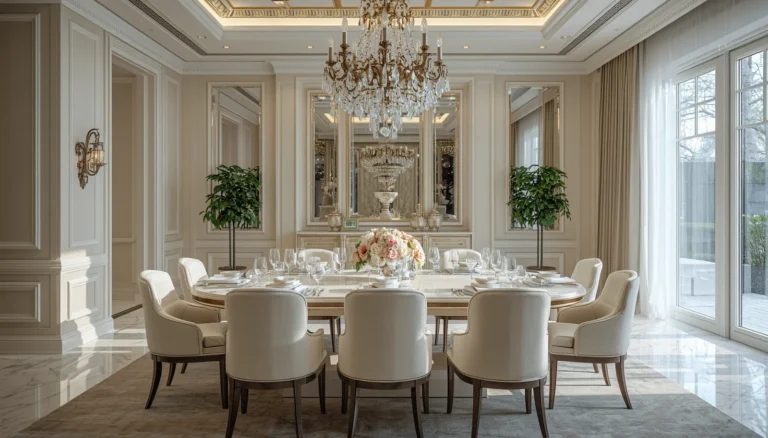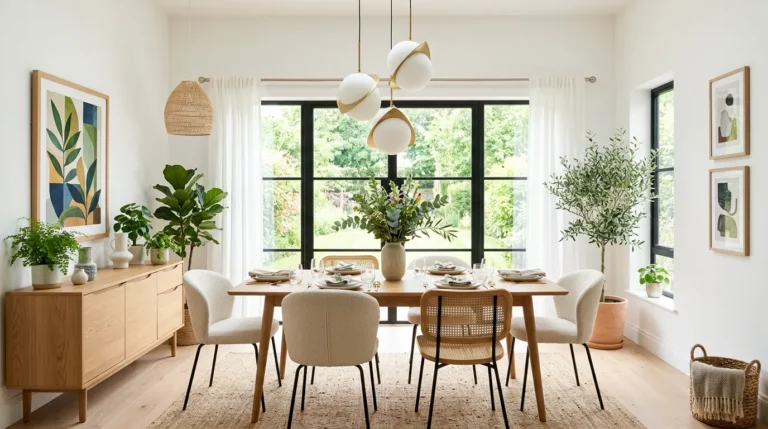

Grounding Your Space With Raw Materials and Tactile Mineral Palettes
TL;DR Grounded interiors rely on raw, tactile materials and low-impact mineral pigments to build visual…

TL;DR Grounded interiors rely on raw, tactile materials and low-impact mineral pigments to build visual…

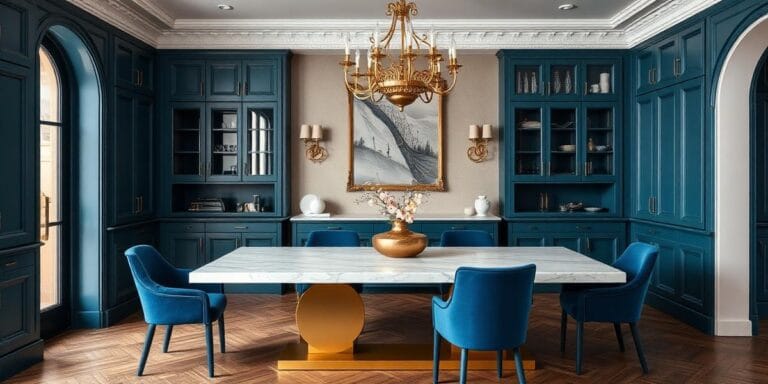
TL;DR Blue palettes bring immediate calm and sophisticated structure to dining spaces when balanced with…

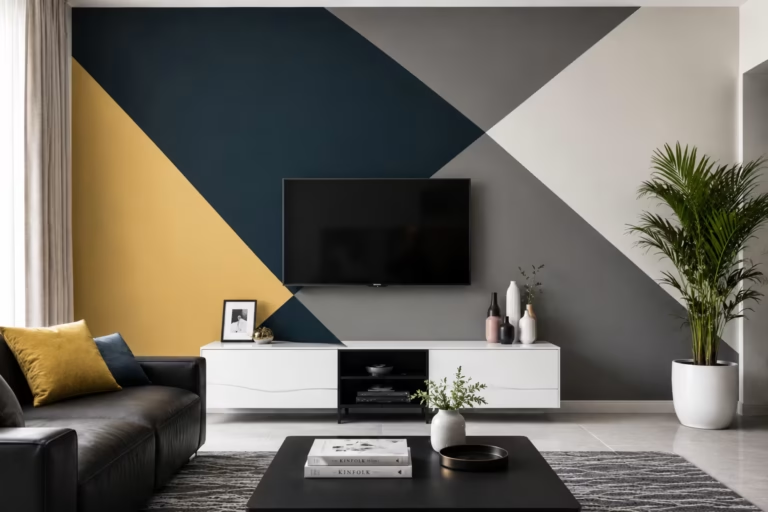
TL;DR Two-tone wall painting uses contrasting paint shades to alter how room proportions look. Successful…

TL;DR Transforming a room requires thoughtful color choices and precise geometric patterns. Using high-quality painters…

TL;DR Butter yellow is a soft, creamy warm tone that sits between ivory and golden…

TL;DR Displaying African tribal print framed art requires balancing bold geometric patterns with neutral backgrounds…

TL;DR Authentic Ethiopian wall art introduces deep historical narrative and texture to contemporary living rooms…

TL;DR Butter yellow wall paint acts as a soft, light-reflecting neutral that replaces cold grays…

TL;DR A home plan of 1500 square feet works well when the layout protects daily…

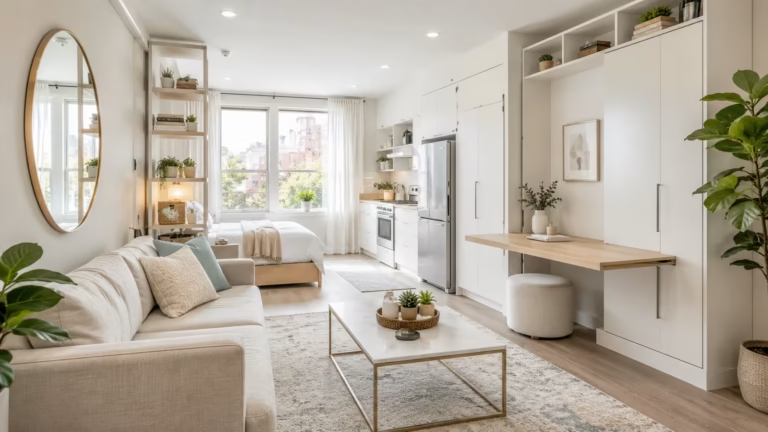
TL;DR Maximizing a small room requires strategic furniture scaling, deliberate lighting placement, and cohesive color…

TL;DR Achieving a factory-smooth finish on interior architectural woodwork requires methodical surface preparation and the…

TL;DR A fireplace wall works best when it earns its role as the room’s focal…

TL;DR Using dark paint against bright moulding creates an architectural framework that anchors large spaces…

TL;DR Refreshing your home on a tight budget is absolutely doable with the right approach….

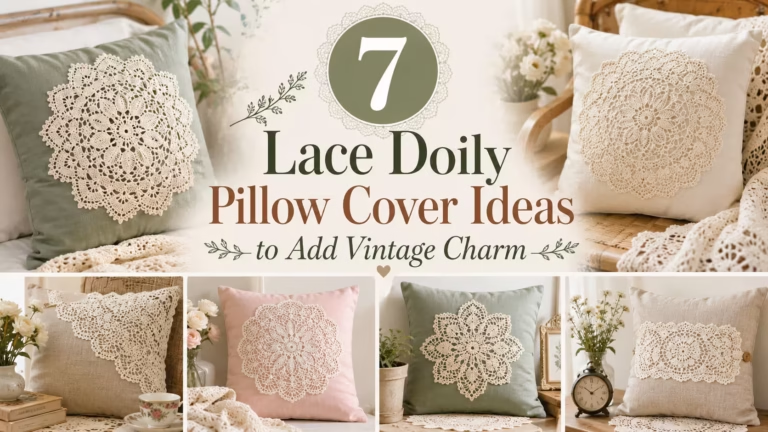
TL;DR Lace doily pillow covers are one of the most affordable and visually rich ways…

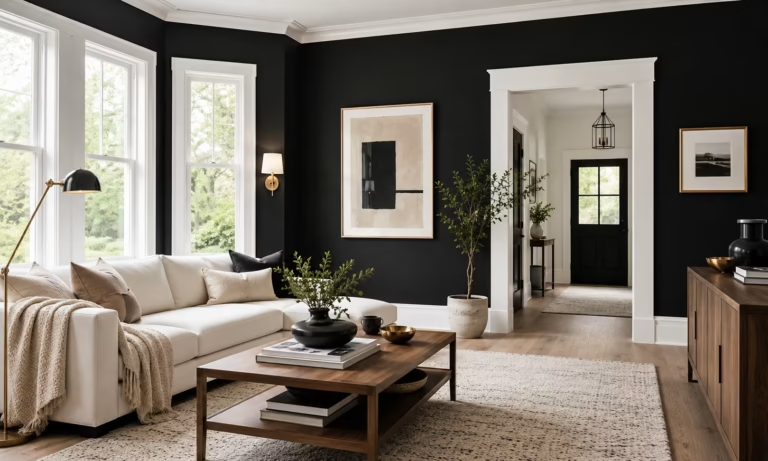
TL;DR Modern black walls with white trim work because they create contrast, structure, and visual…

TL;DR An antique bar cart styled with intention does more work per square foot than…

TL;DR Selecting a compact multi-functional couch requires balancing mechanical footprints with daily room traffic flow….

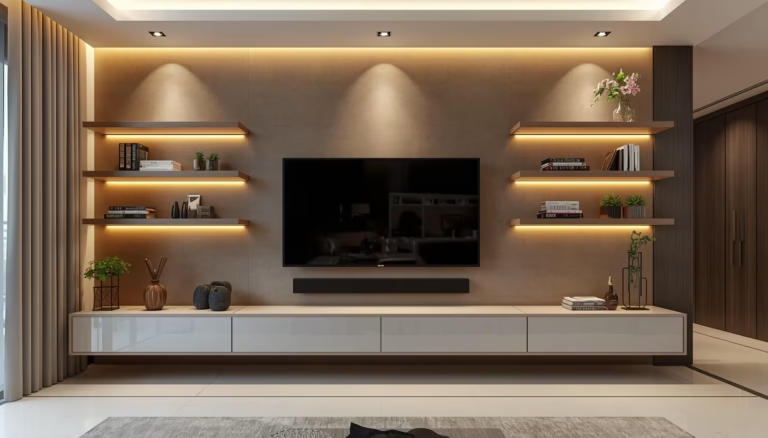
TL;DR Place the TV so the center of the screen sits at eye level when…

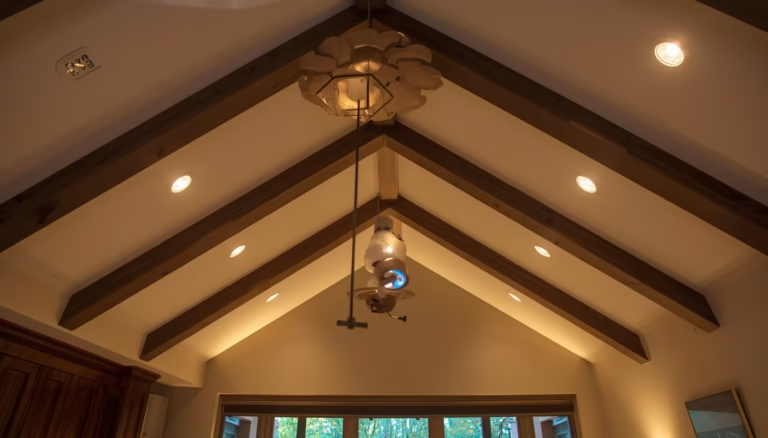
TL;DR Vaulted ceilings create dramatic architectural impact, but standard pot light rules don’t apply to…

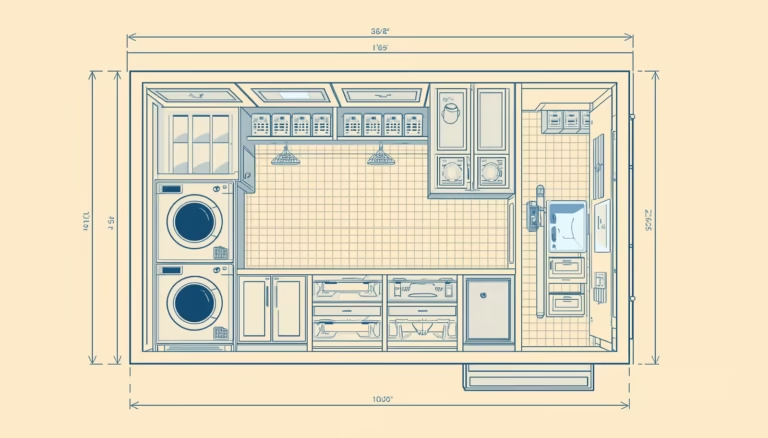
TL;DR Structuring an efficient utility area requires defining distinct zones for washing, drying, and folding….
![Human/ Act as a senior SEO content strategist, a semantic SEO authority, and a veteran editorial journalist with years of real publishing experience. Your writing must pass as the work of a domain expert who writes for other experts while remaining fully accessible to a curious new reader. The final article must meet Google AdSense content policies (no adult, no hate, no dangerous claims, no copyrighted material reproduced verbatim, no deceptive content). PRIMARY OBJECTIVE: Create a highly user-intended article that earns topical authority through semantic depth, lived‑experience insights, and a confident, natural prose rhythm. Search intent must be fully satisfied without any filler. Every sentence earns its place. Make sure you follow all the following structures. MANDATORY HEADING HIERARCHY Use exactly one H1. It must be the most compelling, idea‑rich headline. It must differ from the meta title. H2 headings must be clearly subordinate to H1 in visual weight. Under any H2, include 2 to 3 paragraphs depending on the subtopic’s complexity. Every paragraph's word count is natural (average 50–70 words). Avoid identical paragraph lengths in sequence. Use H3 sections where it helps break a subtle point into readable sub‑layers. H3 must be clearly smaller than H2. Never skip heading levels (no jumping from H2 to H4). Headings must use semantic variants of the core topic naturally. Do not stuff keywords. FORMAT RULES (GOOGLE ADSENSE COMPLIANT & HUMAN-EDITED LOOK) Use active voice sentences (80–90%) in the blog article. Write only in flowing paragraphs. Do not use bullet points, numbered lists, or any kind of table. Blog must include entities to rank in LLM. Make sure strictly do NOT use em dashes (—). Do not insert divider lines. Keep punctuation clean and natural like an editor. Readability should generally sit between 60 and 70 on the Flesch Reading Ease scale, but small deviations are acceptable when a complex point needs precise language. WORD COUNT & DEPTH Minimum 1700 words long. Expand using conceptual depth, relevant examples, and context. No words may be added just to inflate length. If the topic truly requires extended analysis, go up to 2400 words. Every paragraph must feel intentional. ADVANCED SEMANTIC SEO & ENTITY REQUIREMENTS Build the article around core entities, related entities, and their attributes. Search engines must perceive a knowledge graph‑level understanding. Naturally weave in LSI terms, co‑occurring phrases, and intent‑specific variations (informational, practical, comparative) without disturbing the narrative flow. Cover informational, implementation‑oriented, and contextual angles in a seamless order. Do not place any external links or reference citations in the article. The piece must stand on its own authority. Never keyword‑stuff. The main keyword’s frequency must feel invisible. NLP & GOOGLE HELPFUL CONTENT OPTIMIZATION Write for a curious, time‑pressed human. Show that you have made the mistakes, fixed them, and learned something worth sharing. Use sentence‑length variation: some lines short and punchy, others layered with careful reasoning. Favour contractions and everyday speech patterns where it feels natural, like a real copywriter. Stiff, over‑formal prose is a failure. Foreshadow questions a reader would ask, then answer them in a later paragraph. This creates an organic, non‑robotic flow. Must Include E-E-A-T SIGNALS (MUST BE EMBEDDED, NOT DECLARED) Write with the quiet confidence of someone who has spent years in the subject. State observations that cannot be found on generic summary pages. Explain why a method works, what the second‑order effects are, and when it fails. No mention of gambling, adult themes, weapons, unsubstantiated health claims, or anything outside standard informational/safe commercial topics. Must include one or two realistic, concrete examples (not hypothetical “imagine you” starters; use real‑world scenario descriptions like a case reporter). Names can be fictionalised, but the scenario must feel true. Reference broad industry patterns without naming specific sources or linking out; the knowledge must appear to live inside the author’s head through experience. LAST INSTRUCTIONS / DO NOTS DO NOT produce content that is defamatory, illegal, or that violates Google and Google AdSense platform policies. DO NOT present the prompt itself to readers; keep this instruction set internal. Do not include meta phrases or AI-style conclusions (e.g., "Certainly", "Here’s the article"). DO NOT put the reference source links and mentions in the Article, The links and posts which you use as source to generate the article (Strict). Deliver only the article content without self-references (Strict). EXTENDED BANNED PHRASES & AI FINGERPRINT LIST (Strictly DO NOT USE ANY OF THESE) Intro/Starting: Discover, Explore, In today’s digital world, Understanding, Hands on, In this article we will discuss; let's dive in; let's explore; this article will cover, In this guide, In recent years, Nowadays, Over the years. Robotic transitions/connectors (when used as crutches at the start of multiple sentences in a row): learn, Moreover, Furthermore, Additionally, However, Therefore, As a result, In conclusion, To sum up, Overall. (Fine to use sparingly and organically, but never stack them.) Overused AI style words: Ultimate, Essential, Comprehensive, Complete guide, Step‑by‑step, Proven, Effective, Powerful, Best practices, Key benefits, Key features. Overused SEO/blog scaffolds: You need to know, Everything you need to know, Must know, Top reasons, Top benefits, Top tips, Best ways, Simple ways, Easy methods, Quick tips. Generic explanation padding: It is important to note, Keep in mind, Make sure to, You should, One of the best ways, The main reason is, The key factor, The most important thing. Ending/Conclusion clichés: In summary, To wrap up, Final thoughts, At the end of the day, We hope this article helps, Hopefully this guide. AI‑typical sentence patterns: Whether you are a beginner or expert, No matter your experience level, From beginners to professionals, This makes it easier, This helps you to, This allows you to. Fluffy filler: Basically, Simply put, Generally speaking, In simple terms, Needless to say, Clearly, Obviously. AI marketing hype: Game‑changer, Next‑level, Cutting‑edge, Revolutionary, Boost your, Skyrocket, Maximize, Unlock. Extra AI fingerprints: Let’s take a look, Here’s what you need to know, Here are some tips, Let’s break it down, Let’s get started, Without further ado, That being said, It goes without saying, In a nutshell, All things considered. Meta‑phrases in the output: “Certainly,” “Here’s the article,” any self‑reference to the fact that you are an AI. The reader must never suspect a machine is behind the words. elve, navigate (the world of / the landscape of), leverage (as a verb for “use”), underscores (e.g., “This underscores the importance of”), pivotal, realm (e.g., “within the realm of marketing”), robust (when talking about features, solutions, strategies), seamless / seamlessly, foster (e.g., “foster a sense of community”), streamline, synergy / synergistic, actionable (e.g., “actionable insights”), granular (e.g., “granular control”), holistic, testament (e.g., “a testament to the quality of”), adhere to (instead of “follow”), facilitate, elevate (your skills / your work), harness (e.g., “harness the power of”), resonate (with your audience). ARTICLE STRUCTURE (EXACT SEQUENCE) METADATA SECTION (WRITE FIRST, INTERNAL ONLY) Main Keyword: Secondary Keywords: Meta Title (55–61 characters, high click‑intent): Meta Description (150–160 characters, promise a unique insight): SEO URL Slug (short, keyword‑rich): Image Alt Text (descriptive, entity‑aware): H1: (Different from Meta Title, crafted to spark curiosity) ##TL;DR A clear TL;DR (Too Long; Didn’t Read) summary in 2–3 concise sentences. Focus only on the main idea and key points. Avoid extra details, examples, or repetition. Keep it simple and easy to understand. ##Introduction An engaging introduction (3–5 sentences) for a blog post. Start with a hook or question, clearly introduce the topic, and explain what the reader will learn or gain. Keep the tone simple, clear, and reader-friendly. Main Body (H2 and H3 Structure) Write a comprehensive main body for a blog post on the following topic using proper H2 and H3 headings. Organize the content into logical sections. Under each heading, provide clear explanations, actionable tips, and must-be-relevant examples. Use simple language and short paragraphs, and make the content SEO-friendly and easy to scan. ##Wrap Up: A short, clear, and concise closing (3–4 sentences) for the following topic. Summarise the key points, restate the main idea, and give a final takeaway or advice. Keep it simple, engaging, and reader-friendly. ##FAQs Section: Create exactly 3 SEO-friendly FAQs for the following topic. The questions should reflect real user search intent and be highly relevant and highly searched. Write clear, helpful, and authentic answers (1–2 sentences each). Keep the language simple and informative. In this article write disclaimer same as is it, make sure, dont changing, Disclaimer: This content shared by Fall Rugs is solely for research and informational purposes. Fall Rugs is not a professional interior design or home renovation consultancy, and the information provided should not be considered professional advice for home improvement or decor. All ideas and suggestions are based on current trends and general knowledge in the home decor industry. ============ OUTPUT FORMATTING (STRICT) Return the entire article in proper Markdown format. - Use # for H1 - Use ## for H2 - Use ### for H3 - Make important phrases bold using **bold** - Separate paragraphs with proper spacing - Do not return plain text - Do not describe formatting – apply it directly The final output must look like a fully formatted published blog post. Here is my topic [Small Studio Layouts That Live Much Bigger Than They Are] These ideas must be with proper numbering Deliver only the finished article with no self-referential phrases like “Now I will write…” or “Here is the article.” The final output must look exactly like a published page. And everything must be well formatted.](https://fallrugs.com/wp-content/uploads/Dining-Room-Ideas-That-Set-a-Modern-Mood-Without-Feeling-Cold-768x438.avif)
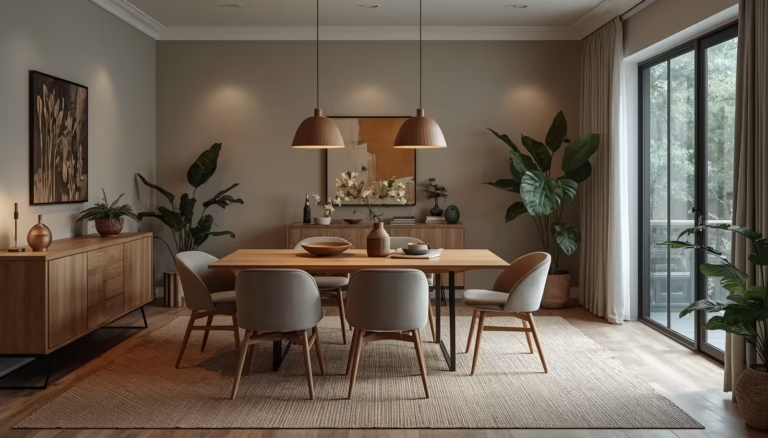
TL;DR Modern dining rooms work best when clean lines meet warmth, comfort, and personal detail….

TL;DR A lounge room that looks modern but still feels genuinely lived-in requires layering textures,…

TL;DR Achieving an extraordinary dining space requires a careful balance of custom architectural elements, noble…

TL;DR Small dining rooms succeed when every surface, sightline, and seat earns its place. The…

TL;DR Great dining room lighting doesn’t require a designer budget. This article covers ten fixtures…

TL;DR Scandi dining rooms succeed when they balance soft light, natural texture, and genuine utility….

TL;DR Achieving a sun-drenched gathering space requires balancing crisp white wall treatments with rich, organic…

TL;DR Creating a sophisticated dining space in a small apartment requires careful selection of high-impact,…

TL;DR An authentic bohemian dining room pairs structured furniture lines with rich, organic textures to…

TL;DR A minimalist dining area strips away visual noise so the space feels wider, calmer,…

TL;DR Finding an ideal dining assembly requires balancing physical room dimensions with long-term material resilience….

TL;DR Creating an inviting contemporary dining space requires balancing clean lines with rich, tactile materials….

TL;DR High-end dining spaces succeed by balancing architectural proportions with hidden sensory comforts. True spatial…

TL;DR A dining table defines how a room breathes, who gathers, and what conversations unfold…

TL;DR Transforming a dining room requires balancing functional furniture with layered visual elements. Success lies…

TL;DR Increasing space in a compact eating area requires a strategic focus on furniture profiles,…