

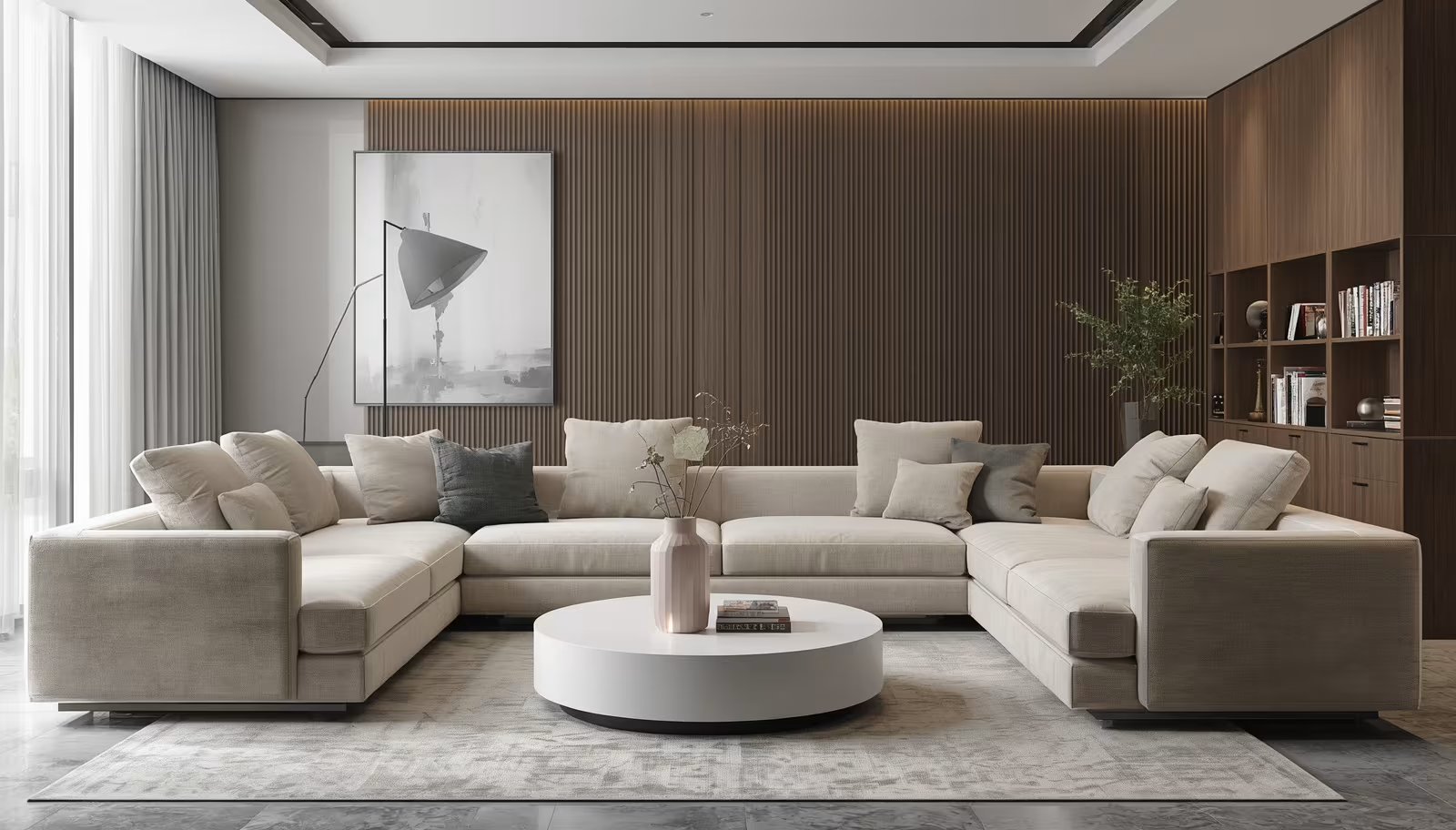
TL;DR
Selecting a compact multi-functional couch requires balancing mechanical footprints with daily room traffic flow. Focusing on zero-wall clearances and integrated storage hidden inside the chaise preserves open floor space. High-density foam layers paired with reinforced steel frames provide durability for both sitting and sleeping over extended use.
Introduction
How do you accommodate overnight guests when your floor plan barely accommodates a standard coffee table? Tight footprints often force homeowners to choose between daily sitting comfort and occasional hospitality needs.
Deploying a well-chosen hybrid seating arrangement can resolve this tension entirely. This breakdown analyzes structural layouts, mechanical designs, and material choices that enhance utility in limited square footage.
Optimizing Floor Configurations for Tight Footprints
Small rooms demand careful calculation of every square inch of clearance before purchasing furniture. Homeowners frequently make the mistake of measuring only the seated footprint, forgetting that an extended bed mechanism requires substantial forward space. A successful arrangement preserves paths of movement even when the mattress fully extends across the room.
Positioning the furniture against the longest unbroken wall usually creates the most balanced spatial flow. Placing a heavy piece across a main walkway blocks natural light and makes the room feel cramped. When you position the extended portion parallel to structural lines, the entire room maintains its spatial integrity.
Choosing low-profile backrests and thin armrests prevents the furniture from visually overwhelming a restricted room. Wide, rolled arms eat up valuable inches that could otherwise expand the sleeping surface. Sleek, straight profiles maintain a clean aesthetic while expanding the actual seating area.
Six Numbered Layout Innovations for Compact Rooms
Evaluating specific engineering designs helps identify which hybrid furniture matches your exact architectural constraints. Different mechanisms solve distinct spatial problems, meaning a layout that excels in a long, narrow room might fail completely in a square studio apartment. The following options prioritize spatial economy while providing reliable sleep surfaces.
Each concept addresses specific clearance issues, mechanical weight limits, and hidden storage requirements. Balancing these factors ensures the furniture serves its dual purpose without requiring constant room rearrangement.
Idea 1: The Reversible Storage Chaise Unit
This design features a movable chaise lounge that switches from the left side to the right side depending on your room layout. Underneath the lounge cushions, a gas-lift mechanism reveals a deep compartment designed to hold pillows, heavy blankets, and linens. Storing bedding directly inside the frame eliminates the need for an extra closet or linen chest in a cramped apartment.
During a recent project in a downtown micro-apartment, an editorial stylist named Marcus used this exact setup to organize a three-hundred-square-foot layout. By shifting the chaise to face away from the entry door, he created an open walkway while keeping guest linens completely hidden. The dual-purpose frame provided comfortable daytime lounging and quick conversion for weekend visitors.
Idea 2: The Minimalist Armless Modular Configuration
Removing traditional armrests entirely from the furniture frame saves up to twelve inches of horizontal space. This configuration relies on separate, block-shaped modules that lock together using heavy-duty steel brackets underneath the base. You can separate the individual pieces to create independent chairs during social gatherings, then recombine them into a solid guest bed at night.
The absence of fixed sides allows taller guests to sleep comfortably without knocking their feet against upholstered barriers. Without rigid boundaries, the seating area feels larger and visually lighter within a restricted floor plan. This adaptability makes modular units highly effective for shifting room requirements.
Idea 3: The Front-Pull Trundle Extension
A trundle mechanism utilizes a hidden drawer on casters tucked beneath the primary seating cushions. Pulling the handle brings the lower frame forward, and a spring-loaded assist lifts the secondary mattress level with the main seat. This system requires zero rear clearance, meaning the back of the couch can sit completely flush against a wall.
Because the mechanism extends forward rather than unfolding from the center, the transformation takes seconds and demands minimal physical effort. Homeowners must ensure that floor coverings, such as thick shag rugs, do not obstruct the wheels during extension. Smooth, low-pile carpets or hardwood floors work best for this specific style.
Idea 4: The Click-Clack Split-Back Design
Utilizing an internal hinge mechanism, the split-back design allows individual sections of the backrest to lower independently into a flat position. This configuration operates similarly to a traditional futon but features the substantial cushioning and aesthetic polish of a premium sectional couch. The split mechanism offers varied seating angles for multiple people simultaneously.
When fully flattened, the combined surface creates a firm, supportive sleeping platform that uses the existing seat cushions as the mattress. This eliminates the need for a separate hidden mattress frame, significantly reducing the overall weight of the furniture piece. Light weight makes moving the unit easier during seasonal cleaning.
Idea 5: The Drop-Side Convertible Daybed Style
This layout uses hinged side panels that fold completely flat to extend the sleeping surface horizontally. When raised, the panels function as comfortable, cushioned armrests or back supports for corner seating. Lowering one or both sides immediately adapts the unit into a twin-sized sleeper without changing the main footprint.
This design works exceptionally well in narrow bonus rooms or home offices that serve double duty as guest spaces. The simplicity of the folding sides minimizes mechanical wear over time, reducing the likelihood of hardware failure. It represents a durable solution for tight spaces that avoids complicated internal setups.
Idea 6: The Wall-Hugging Hidden Track Sleeper
Advanced tracking mechanisms allow the frame to slide forward along an internal rail system as the backrest lowers. This engineering feat prevents the top of the sofa from scraping against the wall during transition, requiring less than two inches of rear clearance. It solves the common issue of needing to drag heavy furniture away from the wall before hosting guests.
The internal tracks must consist of reinforced steel to prevent warping under continuous weight shifts. While these models often carry a higher price point, their space efficiency justifies the investment for permanent residents of tight urban environments. The smooth operation protects wall paint and baseboards from repeated impact.
Analyzing Mechanical Engineering and Frame Durability
The longevity of hybrid furniture relies heavily on the materials hidden beneath the upholstery fabric. Cheap frames constructed from particleboard or soft pine warp rapidly under the stress of repeated mechanical transitions. Heavy-duty construction demands kiln-dried hardwood frames, which resist twisting and warping caused by indoor humidity shifts.
Metal mechanisms within pull-out sleepers add significant weight and complexity to the living space. Lightweight aluminum frames often bend under heavy loads, whereas heavy-gauge steel supports retain their structural shape for decades. Examining the rivets and joints of a mechanism before purchase prevents premature failure of the sleeping platform.
Weight distribution affects the floor surfaces underneath the furniture legs. Heavy steel mechanisms can leave permanent indentations on hardwood floors or crush delicate carpet fibers over time. Placing wide, felt-bottomed cups under the contact points distributes the load evenly and prevents surface damage.
Cushion Density and Textile Engineering for Continuous Utility
Daily sitting exerts different pressure patterns than overnight sleeping, creating a unique challenge for cushion designers. Low-density polyurethane foam feels soft initially but sags permanently after a few months of consistent use. High-resiliency foam cores wrapped in polyester fiber coils maintain their loft while providing adequate spinal support for overnight guests.
Pocketed coil inner springs offer an alternative that mirrors the feel of a traditional mattress. These coils move independently, reducing motion transfer when two people share the sleeping space. This configuration prevents the sinking sensation common in low-grade foam alternatives, ensuring better rest.
Textile selection dictates how well the sectional handles stains, friction, and environmental wear. Performance fabrics woven from synthetic fibers like polyester or nylon offer superior durability compared to loose natural weaves. These textiles clean easily and resist pilling, keeping the furniture looking fresh despite heavy daily use.
Spatial Economics and Traffic Management in Small Rooms
Integrating a multi-functional seating unit requires adjusting the surrounding layout to accommodate the furniture when fully opened. Designers refer to this as the zone of expansion, which must remain free of heavy, immobile objects. Lightweight nesting tables or coffee tables on wheels easily roll out of the way when converting the room for the night.
Visual mass affects how large a room feels to the naked eye. Sectionals that sit flat on the floor appear heavy and block visual depth, making a small room feel small. Units with exposed, tapered legs allow light to pass underneath, creating an open feeling that expands the room visually.
A professional interior architect named Elena applied this principle when retrofitting a cramped attic apartment in Seattle. She selected a low-slung, legless modular sectional with a neutral linen cover to match the low, sloping ceiling lines. The setup provided deep seating without obstructing natural light from the single dormer window.
Evaluating Long-Term Mechanical Impacts and Maintenance
Every mechanical joint introduces a potential point of failure that requires periodic inspection and maintenance. Dry hinges squeak and bind, putting unnecessary strain on the wood frame during opening cycles. Applying a silicone-based lubricant to moving rivets once a year keeps the transition smooth and silent.
Loose fasteners represent another hidden issue that can destabilize the entire sleeping platform. Regular body movements loosen bolts over months of use, causing the frame to wobble when deployed. Tightening the internal hardware during seasonal cleaning prevents structural shifting and extends the lifespan of the unit.
Cushion rotation balances the uneven wear patterns caused by preferred seating positions. People naturally gravitate toward the corner seat or the chaise end, leading to localized foam compression. Flipping and swapping accessible cushions every few months ensures uniform density across the entire surface.
Enhancing Comfort and Utility Through Smart Styling
Styling a compact sectional involves selecting accessories that enhance function without cluttering the physical space. Oversized accent pillows look cozy but require storage space when the bed extends for sleeping. Opting for a few slim, supportive lumbar pillows provides comfort during the day and easily tucks away into storage compartments.
Light, monochromatic color palettes help large furniture pieces blend into light-colored walls. Dark, heavy fabrics create a stark contrast that draws attention to the footprint of the sectional. Soft grays, creams, or muted earth tones reflect light, keeping the atmosphere airy and open.
Adding a thin, high-quality mattress topper improves the sleeping experience on convertible surfaces. Even premium cushions feature seams where the sections meet, which guests can feel through thin sheets. A roll-up gel foam topper smoothes out these transitions and stores neatly inside the chaise compartment.
Wrap Up:
Careful evaluation of clearance zones and frame mechanics ensures your small living space remains highly functional. Prioritizing high-resiliency foam and steel tracking systems protects your investment from daily wear. Choosing configurations with built-in storage allows you to maximize every square inch without sacrificing guest comfort.
FAQs Section:
What is the best sectional layout for a narrow living room?
A reversible chaise sectional placed flush against the longest wall optimizes narrow rooms by preserving a clear parallel walkway.
How do I protect my hardwood floors from a pull-out sleeper mechanism?
Placing heavy-duty felt pads or wide rubber cups under the support feet prevents the metal components from scratching wood surfaces.
Can you use a modular sectional as a daily sleeping bed?
While possible, daily use requires a high-resiliency foam core or pocket coil system paired with a mattress topper to prevent premature cushion sagging.
Disclaimer:
This content shared by Fall Rugs is solely for research and informational purposes. Fall Rugs is not a professional interior design or home renovation consultancy, and the information provided should not be considered professional advice for home improvement or decor. All ideas and suggestions are based on current trends and general knowledge in the home decor industry.