
TL;DR
High-end dining spaces succeed by balancing architectural proportions with hidden sensory comforts. True spatial sophistication relies on layered lighting, managed room acoustics, and varied tactile materials rather than pure expense. Prioritizing human ergonomics and curated sightlines ensures guests remain relaxed and engaged throughout the evening.
Introduction
Why do some beautiful rooms feel strangely cold, while others instantly make you want to sit down and talk for hours? When hosts spend thousands on premium finishes, they often wonder why their dinner parties still feel rigid or rushed. The answer lies within the hidden mechanics of spatial psychology and sensory room design. By mastering specific hidden principles of high-end interior planning, you can transform an ordinary dinner into an exceptional social event.
1. Architectural Scaling and Spatial Geometry
The foundational success of an exceptional hosting environment depends entirely on structural spacing and human scale. Entertaining spaces collapse socially when physical movement is restricted or awkward. Experienced interior designers know that a seated guest requires a minimum of thirty inches of lateral space to dine comfortably without brushing elbows with neighbors. Service paths behind occupied chairs demand at least thirty-six inches of clear clearance so hosts or staff can pass smoothly without disturbing the meal.
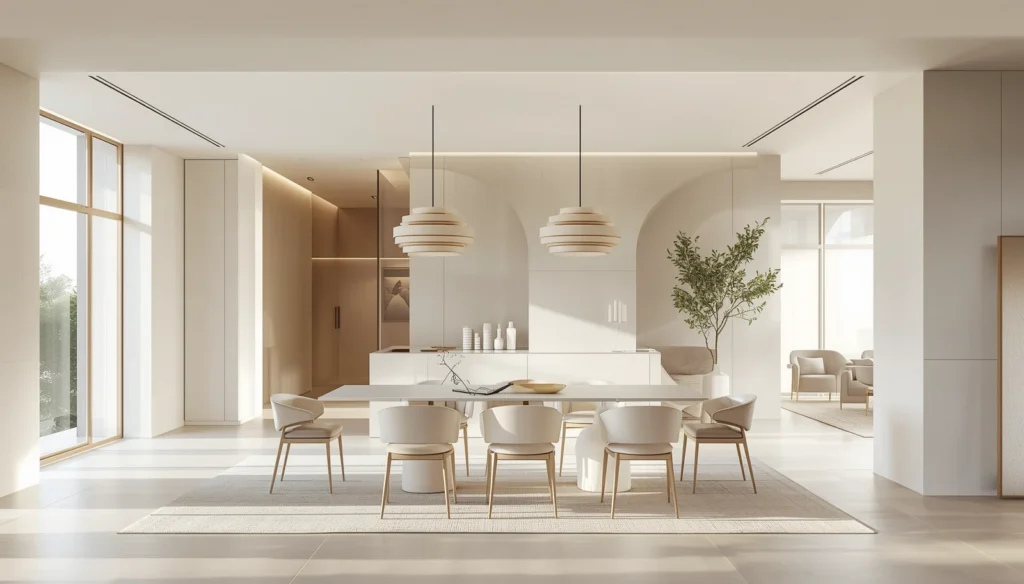
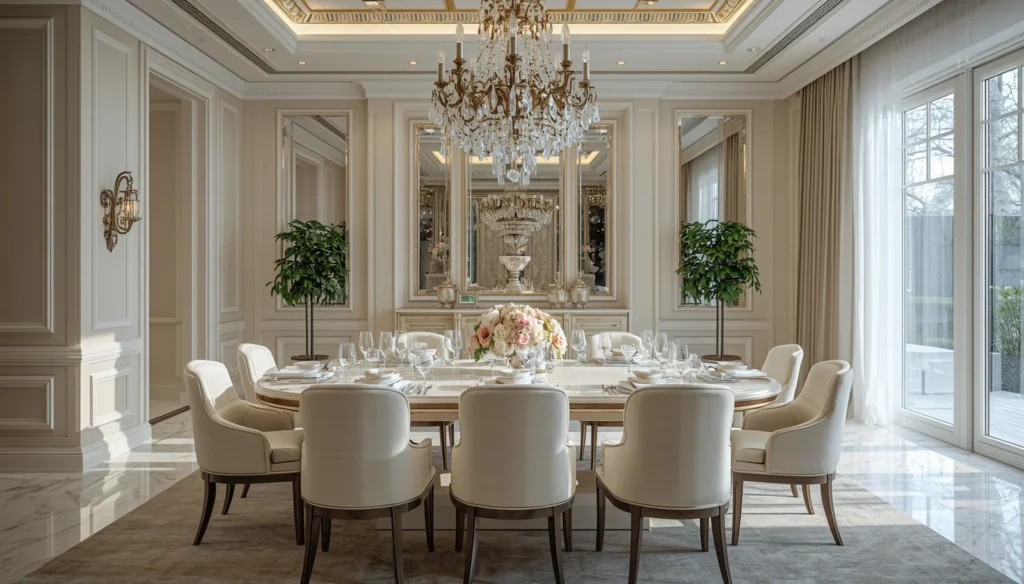
Let’s analyze a recent project involving an expansive suburban estate. The homeowner installed a magnificent twelve-foot rectangular table, but the narrow architecture left only twenty-four inches of clearance against the perimeter walls. The room felt like a crowded train car during large gatherings, causing guests to feel tense. Replacing that piece with a custom oval table and expanding the wall clearance to forty-two inches immediately transformed the room from an awkward bottleneck into an open, flowing environment.
Vertical volume requires equal consideration when arranging formal spaces. High, soaring ceilings often swallow the warmth of a dinner party, making individuals feel exposed in a vast void. Architects correct this by dropping the visual ceiling plane using deep coffered plaster panels or wide crown moldings. This structural adjustment contains the energy of the room, creating an intimate boundary that keeps focus centered down on the human interactions happening around the table surface.
2. Layered Illumination and Atmospheric Depth
A single light source hanging directly over a table is the fastest way to ruin a premium gathering. Central fixtures casting downward light create harsh facial shadows and make guests look tired, destroying the relaxed social mood. High-end atmospheres require multiple independent light sources working together to create visual depth and warmth. Think of the room as a mini theater where different fixtures highlight distinct architectural elements rather than flooding the entire floor evenly.
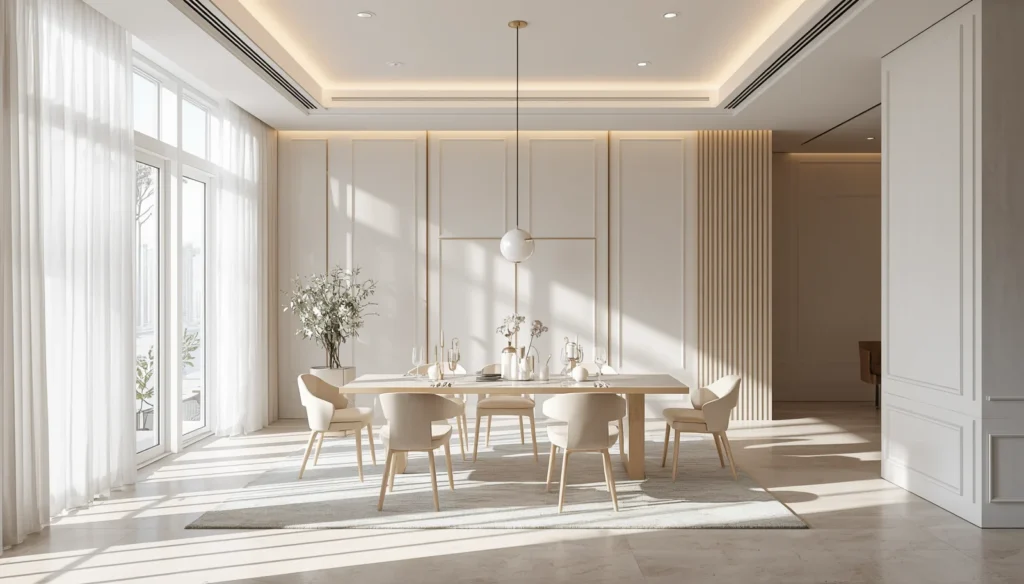
Hidden perimeter elements like low-profile plaster coves or small architectural pinspots wash walls with soft light, making the structural boundaries expand visually. Small accent fixtures can target specific paintings or sculpture displays, providing eyes with interesting resting spots outside the central seating circle. The overhead chandelier should operate primarily as a decorative sculpture, remaining dimmed down to a soft glow while alternative sources handle the structural illumination.
When selecting light bulbs, color temperature stands as your most critical technical variable. Standard commercial lighting sitting at three thousand Kelvin feels cold, clinical, and completely unsuited for long evenings. Elite entertaining environments utilize modern dim-to-warm technology that operates at twenty-seven hundred Kelvin at full strength and automatically shifts down to a warm, candle-like twenty-two hundred Kelvin when dimmed. This specific shift relaxes the human nervous system and naturally invites deep conversation.
3. Acoustic Softening with Architectural Textiles
An overlooked flaw in many contemporary premium homes is excessive sound reverberation. When an entertaining room features polished stone floors, bare plastered walls, and large glass windows, human speech waves bounce around uncontrollably. This creates a noisy echo chamber where guests must shout to be heard, leading to early mental fatigue and an early end to the party. True spatial luxury addresses the ears just as much as the visible design elements.
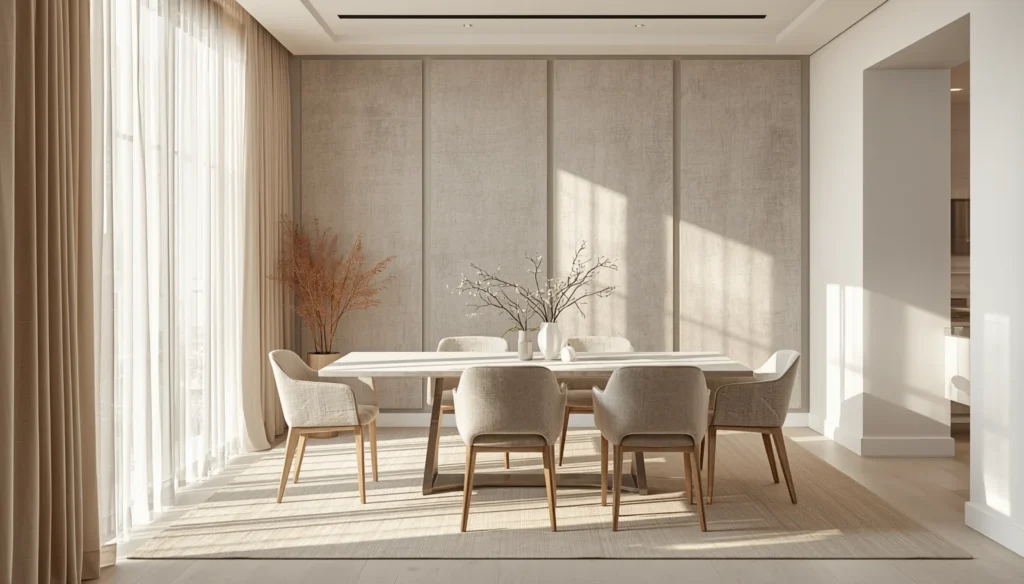
Correcting this acoustic issue requires introducing sound-absorbing materials that look like decorative features. Wrapping standard drywall in heavy silk-wool fabric panels or textured grasscloth backed by thin acoustic foam deadens sound waves effortlessly. Placing a thick, hand-knotted wool rug that extends three feet beyond the table perimeter serves a similar purpose. The rug absorbs the sound of sliding chairs and heavy footsteps, keeping the ambient noise low.
Window drapery panels provide another excellent opportunity to manage room acoustics. Installing thick, double-lined velvet or heavy linen draperies acts as an effective baffle against hard window glass. When these textile elements cooperate, the room takes on the peaceful acoustic properties of an exclusive private club. Guests notice the calming atmosphere immediately, even if they cannot point out the specific textile integration causing the comfort.
4. Tactile Disparity and Material Sophistication
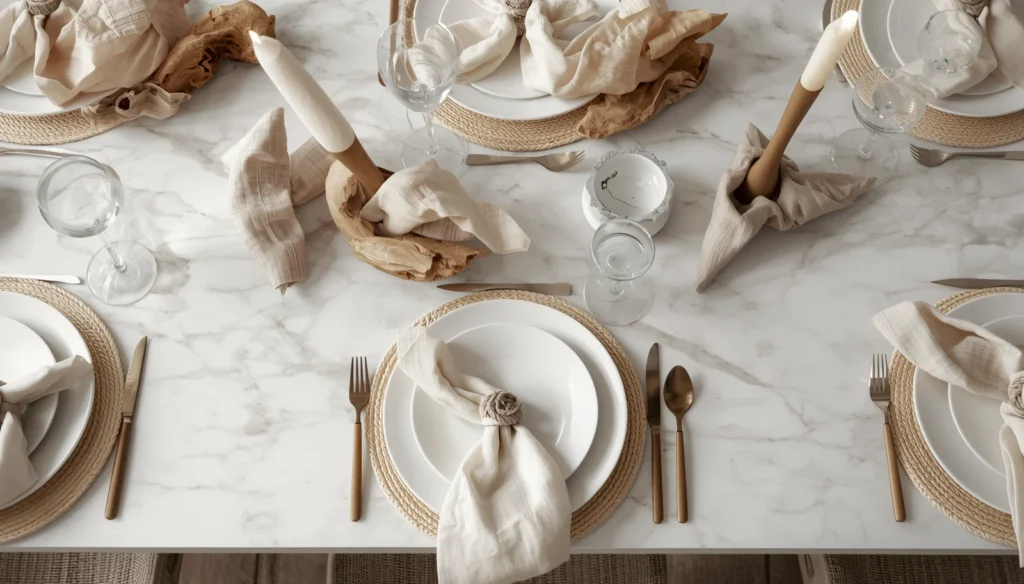
Human brains find uniform, smooth surfaces uninteresting and cold over long periods. Designing with a mix of contrasting tactile textures creates a rich sensory environment that feels instantly welcoming. When a guest touches a surface in your home, the physical feedback should feel substantial, varied, and authentic. Mixing contrasting materials prevents a space from looking flat or feeling like an uninspired furniture showroom.
Pairing a highly polished lacquer dining tabletop with matte, wire-brushed oak storage cabinetry creates immediate visual and physical interest. For seating, consider wrapping the interior of the chairs in soft mohair velvet for maximum skin comfort, while using durable embossed leather on the exterior backs. This unexpected combination of textures rewards close physical contact and signals high-level craftsmanship throughout the room.
Metal finishes offer another subtle layer for physical storytelling. Avoid sterile polished chrome or identical factory coatings that look mass-produced. Opt instead for unlacquered brass or hand-forged bronze that slowly develops a natural patina over time. When a guest touches a heavy, solid metal handle on a sideboard console, the pure weight of the material communicates luxury far better than any prominent brand logo ever could.
5. Seating Psychology and Curated Sightlines
Seating arrangements directly influence how social energy moves through an evening. Placing key conversationalists in the center positions of a long table rather than at the ends spreads verbal interactions evenly across the room. This simple adjustment breaks up stiff hierarchies and encourages open discussion among all seated guests. It shifts the dynamic away from a formal lecture toward an inclusive group experience.
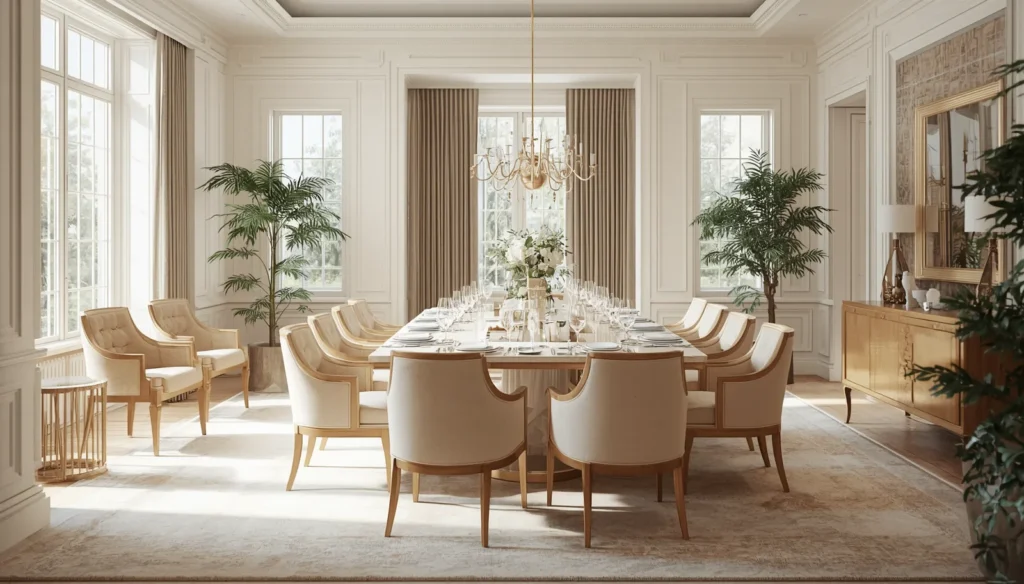
Sightlines require careful planning so that no guest spends the evening looking at a blank wall or an open kitchen prep zone. Frame every seat’s view with an engaging piece of art, a large architectural mirror, or a styled credenza arrangement. Ensuring that every angle offers an interesting visual anchor guarantees that everyone feels they received the best seat in the room.
People seated with their backs facing a main entryway often feel subconsciously exposed, which prevents complete relaxation. Using high-backed chairs or positioning the table away from direct door openings provides a reassuring sense of spatial enclosure. This protective positioning allows individuals to lower their social defenses, making them much more likely to share authentic stories and stay late into the evening.
6. Custom Furniture Engineering and Structural Comfort
Ready-made furniture rarely satisfies the specific demands of a premium entertaining space. Standard tables are often built too narrow to comfortably host elaborate multi-course meals alongside large floral arrangements. Specifying a custom table width of forty-four inches provides the necessary physical room for complex place settings, wine decanters, and serving platters. This extra space keeps the tabletop looking organized rather than messy during the meal.
Hidden utility can sit directly inside custom cabinetry pieces surrounding the table area. A bespoke sideboard console can look like an antique storage chest while concealing specialized plate-warming drawers or silent cooling wells for beverages. These integrated systems let hosts serve guests smoothly without constantly leaving the room to run back to the kitchen, preserving the momentum of the dinner conversation.
Seating mechanics require precise technical execution because visual beauty means nothing if a chair becomes uncomfortable after forty-five minutes. Skilled furniture makers tilt dining chair backs to an angle of roughly one hundred and five degrees to support an upright posture while allowing a relaxed lean. Using dual-density foam cores ensures cushions remain firm and supportive over hours of sitting.
7. Narrative Art Curation and Visual Scale
Art should never be selected simply to match the color of the room’s curtains or rugs. Selecting generic artwork makes a home feel like a corporate hotel lobby instead of a personal sanctuary. Exceptional spaces demand art with real personality, scale, and narrative depth to act as natural conversation starters. The pieces chosen for these walls should spark curiosity and break the ice among newly introduced guests.
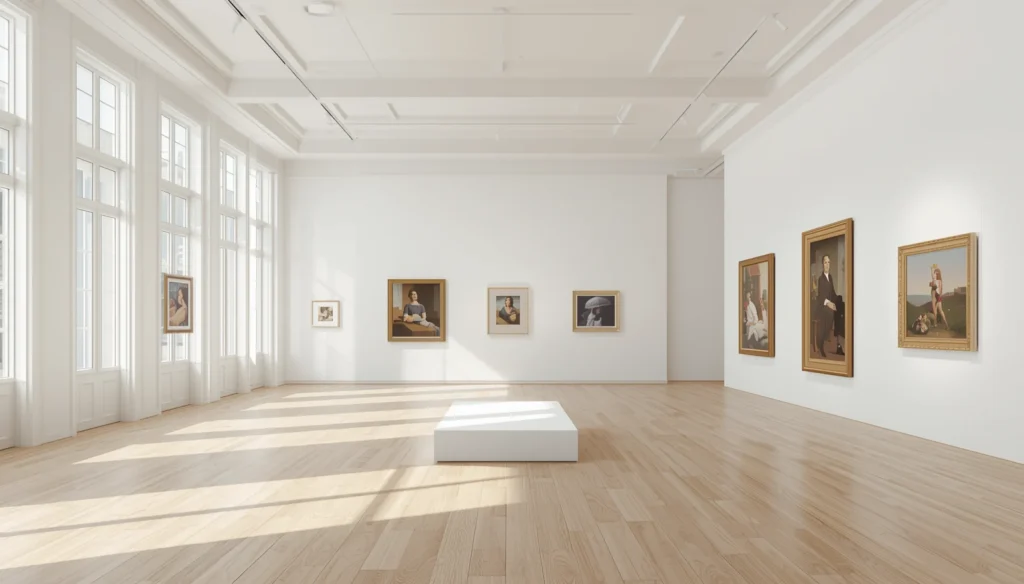
Scale matters immensely when hanging artwork in an environment meant for entertaining. One optical, massive canvas stretching six feet across a main wall carries far more emotional weight than a busy gallery wall filled with tiny frames. The large piece matches the grand energy of an architectural space, grounding the room and providing a clear, commanding visual anchor for the entire evening.
Hang your artwork relative to a seated viewpoint rather than a standing one. Most galleries position art for standing individuals, but dining environments require a lower visual plane to feel balanced. Dropping the frames a few inches ensures the center of the image aligns perfectly with the eye levels of seated guests, pulling the artwork directly into the social circle.
8. Climate Calibration and Environmental Scenting

A visually stunning room fails completely if the physical temperature becomes uncomfortably warm. Gathering a dozen people under active lighting fixtures while serving hot food causes a rapid rise in ambient heat. If the ventilation system cannot handle this thermal load quietly, guests will quickly grow sleepy and restless. Managing this invisible environmental factor is just as important as selecting high-end furniture fabrics.
Premium residential builds solve this issue by installing independent climate zones featuring linear slot diffusers that distribute air silently across ceilings. Smart home automation systems can pre-cool the entertaining space by three degrees an hour before anyone arrives, lowering the surface temperatures of walls and furniture. This proactive adjustment offsets the upcoming heat surge from cooking and gathering without creating cold drafts.
Scent management requires strict boundaries to avoid ruining the dining experience. Heavy synthetic room sprays and strongly scented candles conflict directly with the subtle aromas of fine food and wine. Professional hosts keep scented products out of the room entirely, opting for unscented beeswax candles on the table. Introduce home fragrances exclusively in entryways or powder rooms, leaving the dining air neutral and clean.
Wrap Up:
Designing an exceptional hosting environment requires shifting focus away from passing trends and focusing deeply on the human experience. By coordinating spatial geometry, intentional lighting layers, and soft acoustics, you build a space where guests feel naturally comfortable. True luxury never reveals itself through flashy decor; it shows in the thoughtful details that allow human connection to flourish. When a room treats comfort as a priority, every dinner party becomes an unforgettable event.
FAQs Section:
How far should a dining room chandelier hang above the table surface?
The bottom of your light fixture should sit between thirty-two and thirty-six inches above the tabletop when dealing with a standard eight-foot ceiling height. For taller ceilings, you can raise the fixture three inches for every additional foot of wall height to maintain balanced spatial proportions.
What is the best way to determine the correct rug size for a formal dining area?
Your rug must extend at least thirty-six inches beyond all sides of the table to ensure the rear legs of the chairs remain safely on the fabric when guests push back to stand up. This layout prevents catching edges and protects your flooring from scrape marks.
Can an oval table accommodate more guests comfortably than a standard rectangular option?
Oval tables offer greater seating flexibility because the curved corners eliminate hard barriers, allowing you to slide in extra chairs without squeezing anyone against a sharp edge. The rounded geometry also encourages a more inclusive conversation pattern since everyone can see each other clearly.
Disclaimer:
The content shared by Fall Rugs is solely for research and informational purposes. Fall Rugs is not a professional interior design or home renovation consultancy, and the information provided should not be considered professional advice for home improvement or decor. All ideas and suggestions are based on current trends and general knowledge in the home decor industry.