
TL;DR
Finding an ideal dining assembly requires balancing physical room dimensions with long-term material resilience. True hospitality relies on leaving proper clearance for guest movement and selecting seating that supports extended conversation. Choosing the right structural configuration transforms a simple meal into an effortless social gathering.
Introduction
Why do some dinner parties feel natural while others leave guests eager to escape the room? The secret rarely lies in the menu itself, but rather in the physical environment where people gather. A mismatched or poorly scaled dining arrangement creates invisible friction that dampens conversation and restricts physical movement. This analysis explains how to choose a gathering centerpiece that balances spatial mechanics with tactile luxury, ensuring your home remains a welcoming space for years to come.
Architectural Proportions and the Mechanics of Room Flow
The physical relationship between a furniture piece and the surrounding structural walls dictates the entire mood of an evening. Professional interior layouts require a minimum of thirty-six inches of perimeter space around a tabletop to ensure that a guest can push back their seat without striking a wall or a sideboard. When this boundary shrinks, the room feels restricted, turning casual hosting into an exercise in spatial defense.
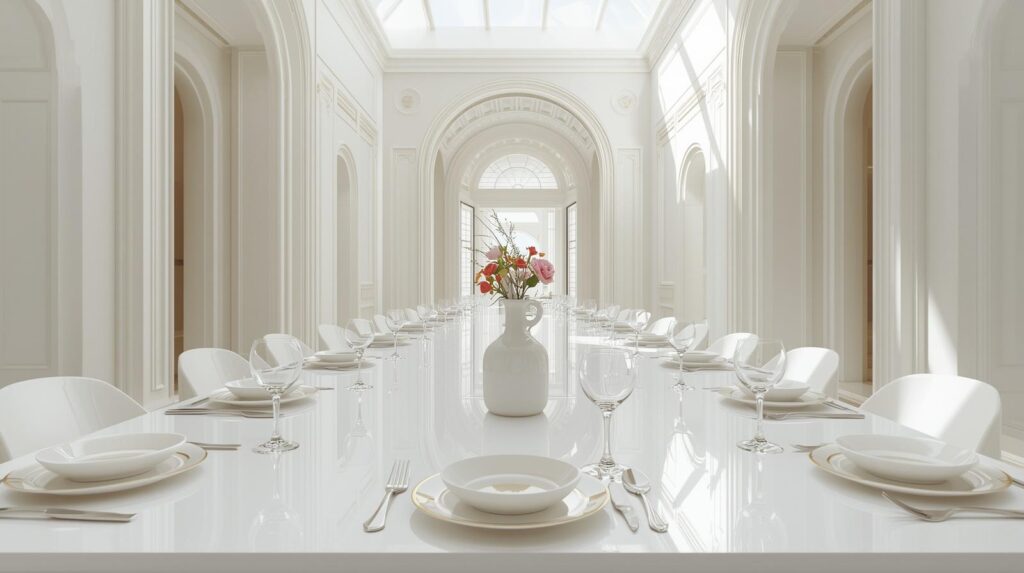
Experienced hosts often look for a forty-eight-inch perimeter along major traffic pathways. This extra distance accommodates the host moving behind occupied chairs with serving platters, preventing awkward collisions during dinner service. Prioritizing these clearances before looking at aesthetic details saves homeowners from buying grand showpieces that render a room completely non-functional.
Calculating True Chair Clearance
The real spatial math must include the depth of the dining chair itself when pulled out for a guest to sit. A standard seat requires roughly twenty-four inches of operational depth when occupied, leaving very little room for foot traffic if the initial layout was miscalculated. Ignoring this secondary movement pattern results in guests feeling trapped, unable to leave the table without forcing three other people to readjust their posture.
When spatial margins are razor-thin, a homeowner can pivot toward specific frame profiles. Slender metal bases or tapered wooden legs preserve visual openness, while heavy pedestal configurations can free up ankle room but alter how chairs tuck away when the party ends. Balancing these physical attributes keeps the environment comfortable and allows the evening to progress naturally.
Geometric Selection and Social Dynamics
Table geometry establishes the social framework of every gathering you host. Rectangular surfaces serve large crowds efficiently, grounding a formal dining space and providing clear, authoritative anchoring for linear rooms. This classic shape defines positions of honor at the ends, making it ideal for structured celebratory meals or traditional holiday gatherings.
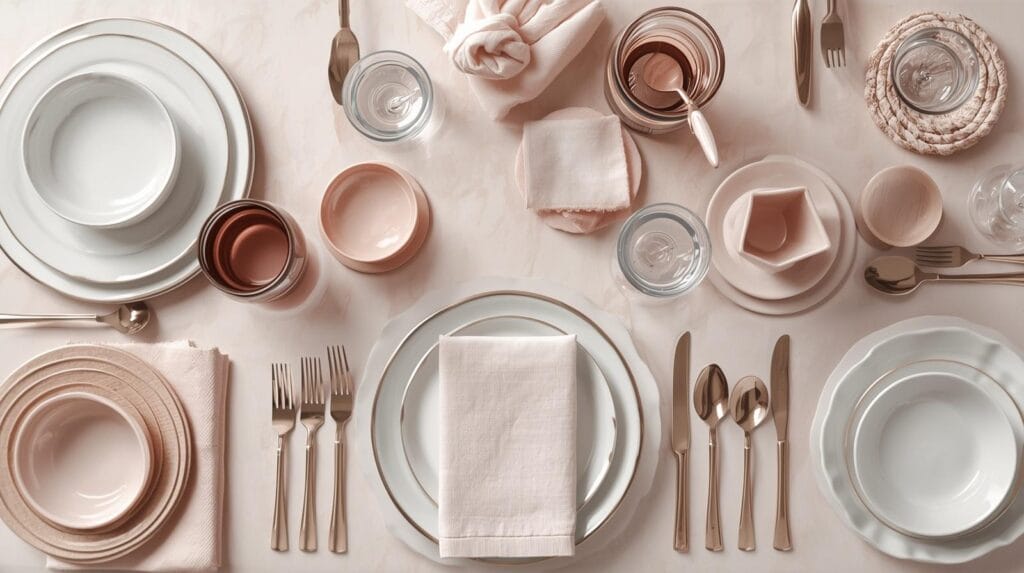
Round tables alter the emotional energy by placing every person on an equal visual plane. Without a defined head of the table, conversation tends to become democratic, flowing across the center rather than fracturing into localized duets. This arrangement demands a wider square room, as a large circular surface can easily swallow a narrow rectangular space and disrupt walkways.
The Psychology of Sightlines
Unobstructed sightlines across a surface keep guests engaged for hours without physical fatigue. A round or oval configuration ensures that everyone remains within peripheral vision, which naturally reduces the effort needed to follow multi-person jokes or storytelling. When guests can easily see each other face-to-face, the room feels warmer and more intimate.
Consider an evening in a renovated brownstone where an architectural consultant hosted twelve colleagues. The long rectangular table initially split the party into three distinct conversation zones, leaving the middle guests stranded between competing dialogues. Replacing that linear surface with a softened boat-shaped oval connected those disparate groups, proving that minor adjustments in edge curvature directly influence social cohesion.
Material Realism and Longevity Under Pressure
Selecting a surface material requires balancing visual appeal with the unyielding realities of heat, moisture, and impact. Solid hardwoods like walnut, white oak, and cherry remain the gold standard because they can endure decades of active service and multiple rounds of refinishing. These timbers possess inherent natural variations that hide minor imperfections, developing a rich history rather than showing ugly damage.
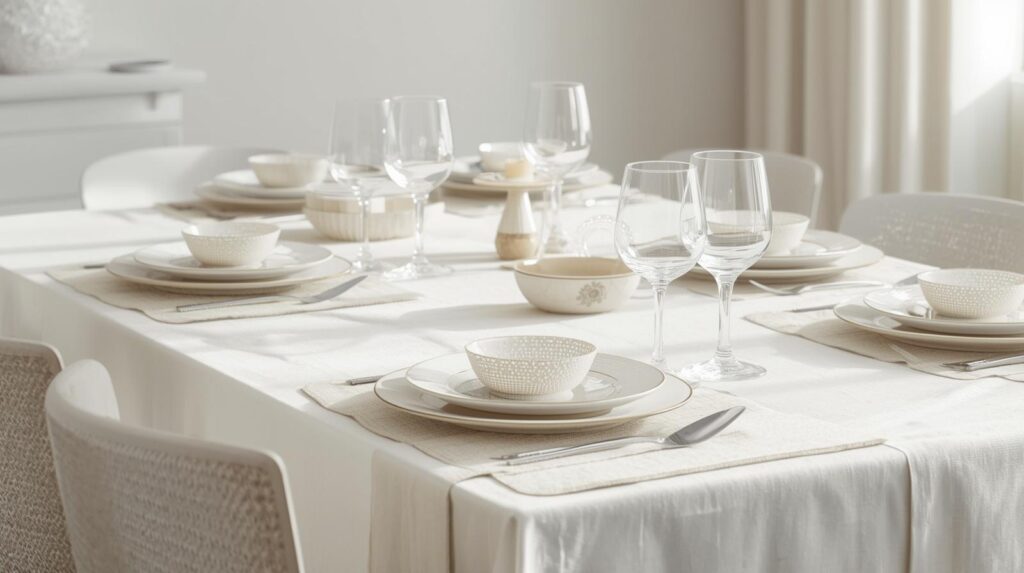
Wood veneers offer excellent stability against warping in climate-controlled spaces, but they present long-term vulnerabilities if the outer layer is thin. A deep scratch through a veneer exposes the underlying composite material, creating an irreversible blemish that cannot be sanded out. Hosts who entertain frequently must evaluate the thickness of these top layers to avoid early replacement costs.
Maintenance Reality Checks for Active Hosts
The choice of tabletop finish determines how much anxiety you will experience when someone spills a glass of red wine or sets down a hot ceramic plate. Polyurethane coatings offer a hard, impervious shield against liquids, but they can look plastic and are difficult to patch locally when scratched. Natural oil and wax finishes require periodic reapplication but allow homeowners to buff out minor blemishes without stripping the entire piece.
A catering director in Chicago chose a matte-finished solid walnut top for her private residence, knowing it would face constant exposure to hot platters and spilled sauces. While oil-rubbed timber requires an annual reapplication of wax, the surface has developed a beautiful patina that tells the story of dozens of celebrations. This real-world durability contrasts sharply with high-gloss lacquers, which show fine spiderweb scratches the moment a porcelain dish slides across the surface.
Alternative materials like marble and glass present unique acoustic and thermal challenges that often surprise new owners. Polished stone surfaces feel exceptionally premium, yet they are porous and highly susceptible to etching from acidic foods like lemon juice or tomato sauce. Glass tops solve the stain problem but create loud clattering noises every time a wine glass or fork touches down, altering the acoustic comfort of your dinners.
Seating Ergonomics and Extended Dwell Time
A dinner party lives or dies based on the comfort of the chairs. A beautifully designed table cannot rescue an evening if the accompanying seating causes lower back fatigue after forty-five minutes. The angle of the backrest, known professionally as the pitch, must strike a balance between upright dining support and relaxed, post-meal lounging.
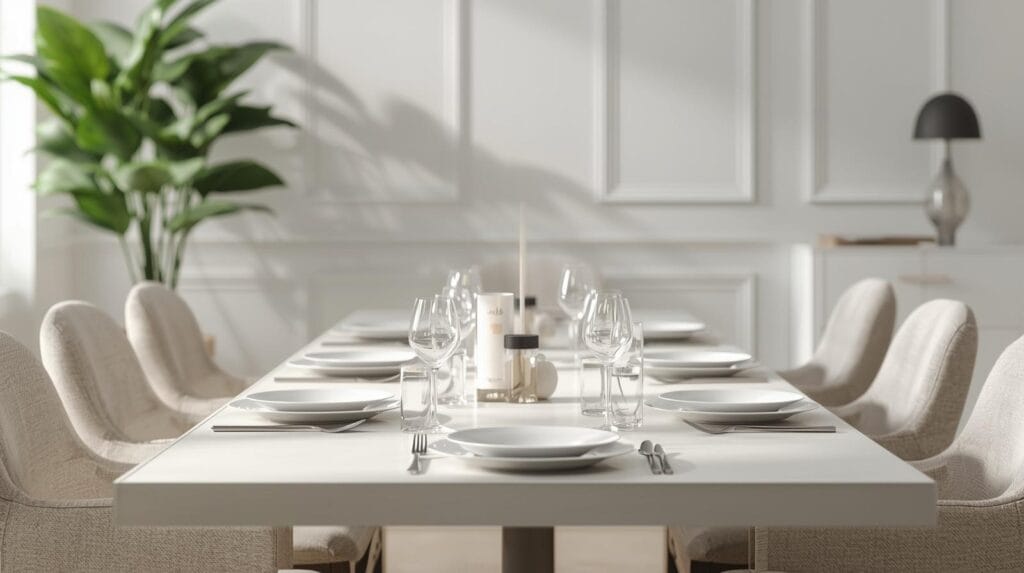
High-quality seating relies on high-density foam or traditional spring suspension systems that distribute body weight evenly over several hours. Cheap, unreinforced cushions flatten out quickly, leaving guests sitting directly on hard wooden or metal support rails. Prioritizing structural seating integrity ensures that your friends remain comfortable long after the dessert plates have been cleared away.
The Hidden Value of Integrated Armrests
Chairs with armrests, or carver models, change how people interact with the physical space around them. Placing these wider, more supportive seats at the heads of a rectangular table gives the host a comfortable vantage point while anchoring the overall aesthetic. These pieces encourage guests to recline slightly during long discussions, transforming the dining room into a true salon.
Textile choice for these seats requires careful consideration of rub counts and fiber composition to withstand regular use. Performance fabrics treated with moisture barriers prevent liquid spills from soaking into the cushion core, allowing easy cleanup during the meal. Choosing a textured weave like a heavy linen blend or performance velvet masks surface dust and minor wear between deep cleanings.
Extension Mechanisms and Temporal Flexibility
For homeowners who transition between quiet family dinners and large weekend gatherings, an expanding table provides the necessary versatility. Traditional draw-leaf systems require manual physical strength to lift and slide heavy panels into position, which can become tedious over time. Modern butterfly mechanisms store the extra leaves within the internal frame of the table, opening smoothly with minimal effort.
Every mechanical connection introduces potential failure points that require precision engineering to survive decades of use. Poorly constructed extension slides can sag over time, creating an uneven surface where plates rattle and liquids pool toward the center seam. Inspecting the metal hardware and locking clips underneath the frame ensures the surface remains level when fully extended.
Managing the Spatial Footprint of Expansion
An extended table alters the entire circulation path of a home, sometimes blocking entries or pushing up against heavy storage furniture. Hosts must plan for where the extra chairs live when the table is collapsed to its everyday size. Storing matching folding chairs in a nearby closet or using them as accent seating in bedrooms prevents the dining area from looking cluttered during the week.
When a table expands, the lighting design above it must accommodate the shifting center of gravity. A single decorative pendant light centered over a small table can look awkward and leave the outer guests in darkness once the extensions are pulled out. Linear suspension fixtures or directional recessed lighting paths ensure that illumination remains balanced regardless of the furniture’s configuration.
Structural Integrity and Joinery Aesthetics
The true quality of a dining set is revealed underneath the tabletop, where legs meet the apron. Mortise and tenon joinery reinforced with corner blocks indicates a piece built to withstand the constant shifting and leaning that occurs during lively dinners. Avoid furniture held together entirely by basic wood screws or cheap staples, as these connections loosen under lateral pressure and cause permanent wobbling.
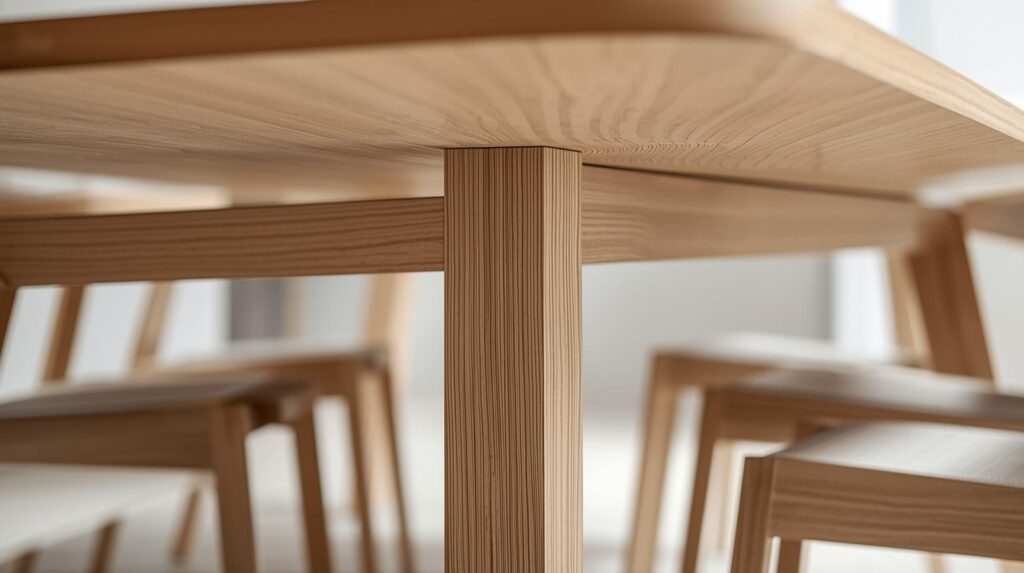
Heavy timber construction requires room to breathe, expanding and contracting with seasonal changes in household humidity. Expert woodworkers utilize specialized clips or elongated screw slots that allow the solid wood top to move independently of the rigid base. Without these hidden engineering allowances, a solid wood top will eventually split across the grain, destroying the surface.
Evaluating Base Architecture
The style of the table base dictates how freely your guests can move their legs and where chairs can be tucked. Trestle bases offer excellent end-of-table clearance but can interfere with knee placement along the sides if the spacing is tight. Four-legged designs provide classic stability but force guests to work around the corners when sliding into their seats.
Pedestal tables eliminate perimeter leg obstructions entirely, creating a fluid environment where extra stools can easily be added in an emergency. These central supports must be cast from heavy materials like iron or solid hardwood to prevent the table from tipping when someone leans heavily on the edge. Assessing these structural elements protects your investment and ensures guest safety during every event.
Harmonizing Textures and Color Palettes
A cohesive dining room relies on a careful balance between the dominant wood tones of the furniture and the existing architectural finishes. Mixing contrasting wood species requires a deliberate hand; matching a white oak floor with a slightly different white oak table can look like an accidental error. Opting for a rich walnut table on a light oak floor creates a clear intentional contrast that defines the dining zone.
Visual weight also influences how large a furniture set feels within a room’s composition. Dark, chunkier profiles absorb light and ground an airy, high-ceilinged space, while light-colored woods and thin frames make a small apartment feel spacious. Balancing these elements prevents the furniture from overwhelming the surrounding interior design.
Integrating Accents and Table Settings
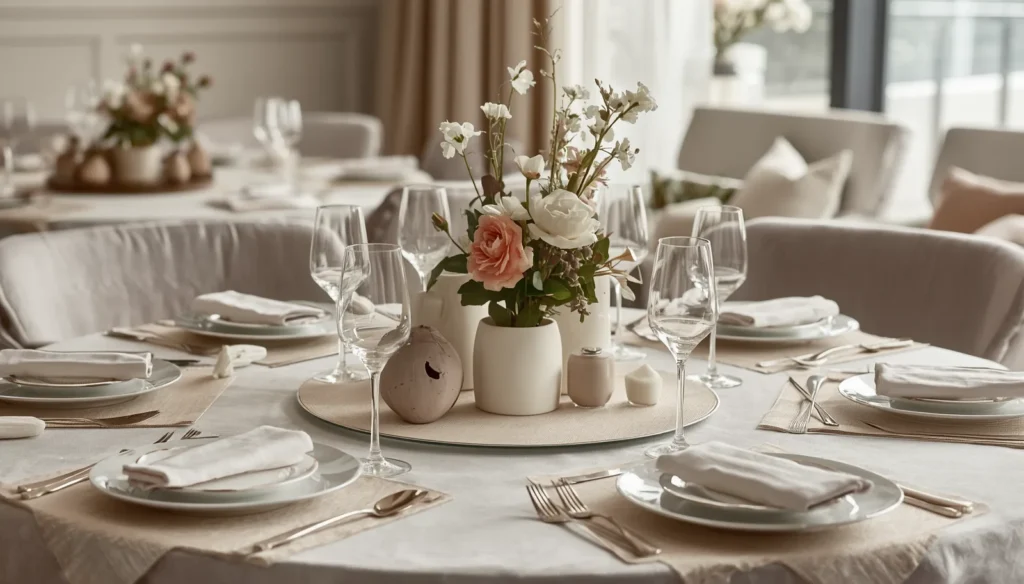
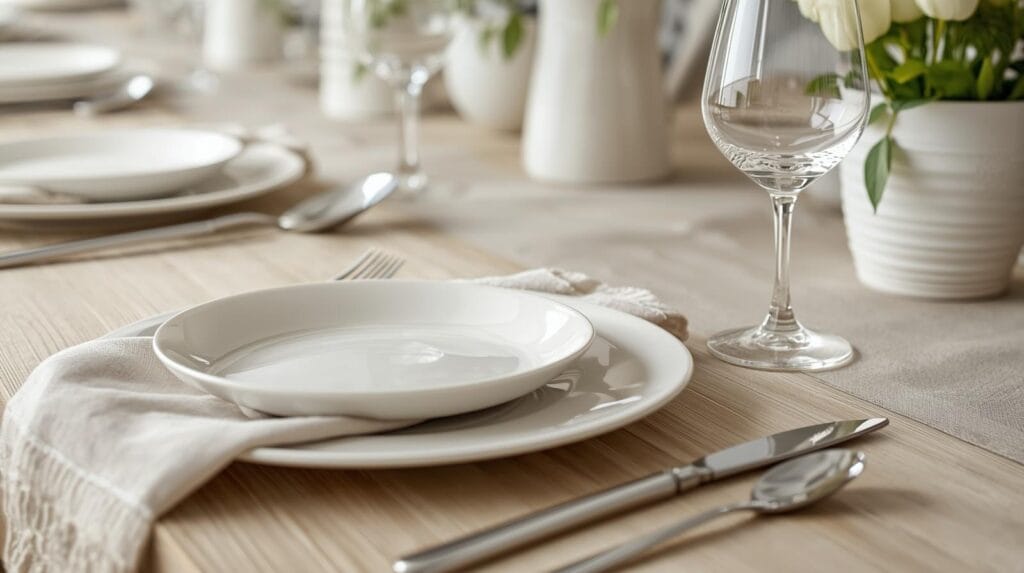
The dining surface acts as a blank canvas for linen runners, ceramics, and glassware that set the specific mood for the evening. Highly figured wood grains look beautiful on their own and require minimal dressing, while uniform finishes benefit from textured table linens to add depth. These soft layers also play a functional role, dampening sound and protecting the finish from hot serving dishes.
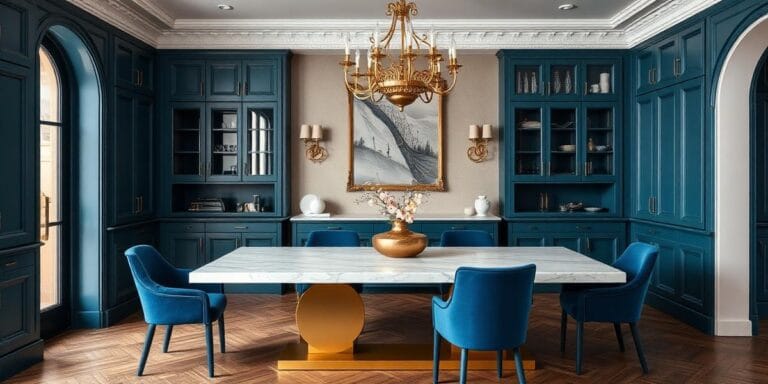
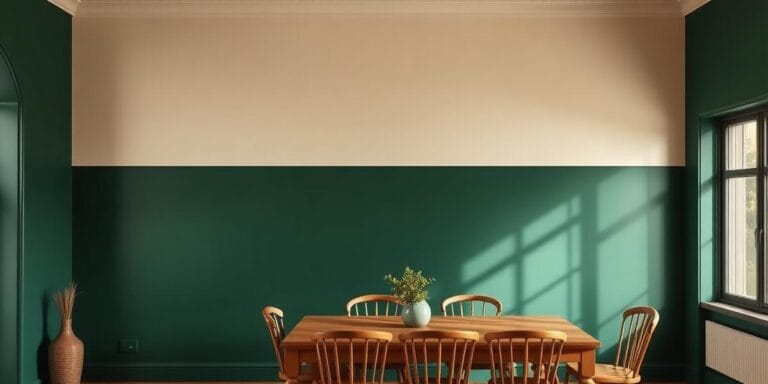
Wall colors and window treatments should complement the central furniture choice rather than compete for attention. A room featuring bold wallpaper pairs beautifully with a minimalist, clean-lined dining set that allows the walls to frame the gathering space. Designing with this bigger picture in mind ensures the entire room feels unified, calm, and ready to welcome guests.
Wrap Up:
Investing in the right dining assembly requires balancing rigorous spatial measurements with high-quality material engineering. Prioritizing guest clearance, seating acoustics, and durable wood finishes transforms a simple room into a resilient hosting environment. By choosing a configuration that matches your actual home traffic patterns, you guarantee that future dinner parties remain relaxed and comfortable.
FAQs Section:
Q: How much space is needed between a dining table and the wall?
A: A minimum of thirty-six inches of clearance allows guests to slide chairs out comfortably, while forty-eight inches is ideal for active traffic flow behind occupied seats.
Q: Which table shape is best for small dining rooms meant for entertaining?
A: Oval and round tables with pedestal bases maximize seating flexibility and spatial flow in tight areas by eliminating sharp corners and leg obstructions.
Q: What is the most durable wood type for a frequently used dining table?
A: Solid white oak and walnut offer exceptional structural density and grain patterns that resist denting while allowing for seamless long-term refinishing.
Disclaimer:
The content shared by Fall Rugs is solely for research and informational purposes. Fall Rugs is not a professional interior design or home renovation consultancy, and the information provided should not be considered professional advice for home improvement or decor. All ideas and suggestions are based on current trends and general knowledge in the home decor industry.