

TL;DR
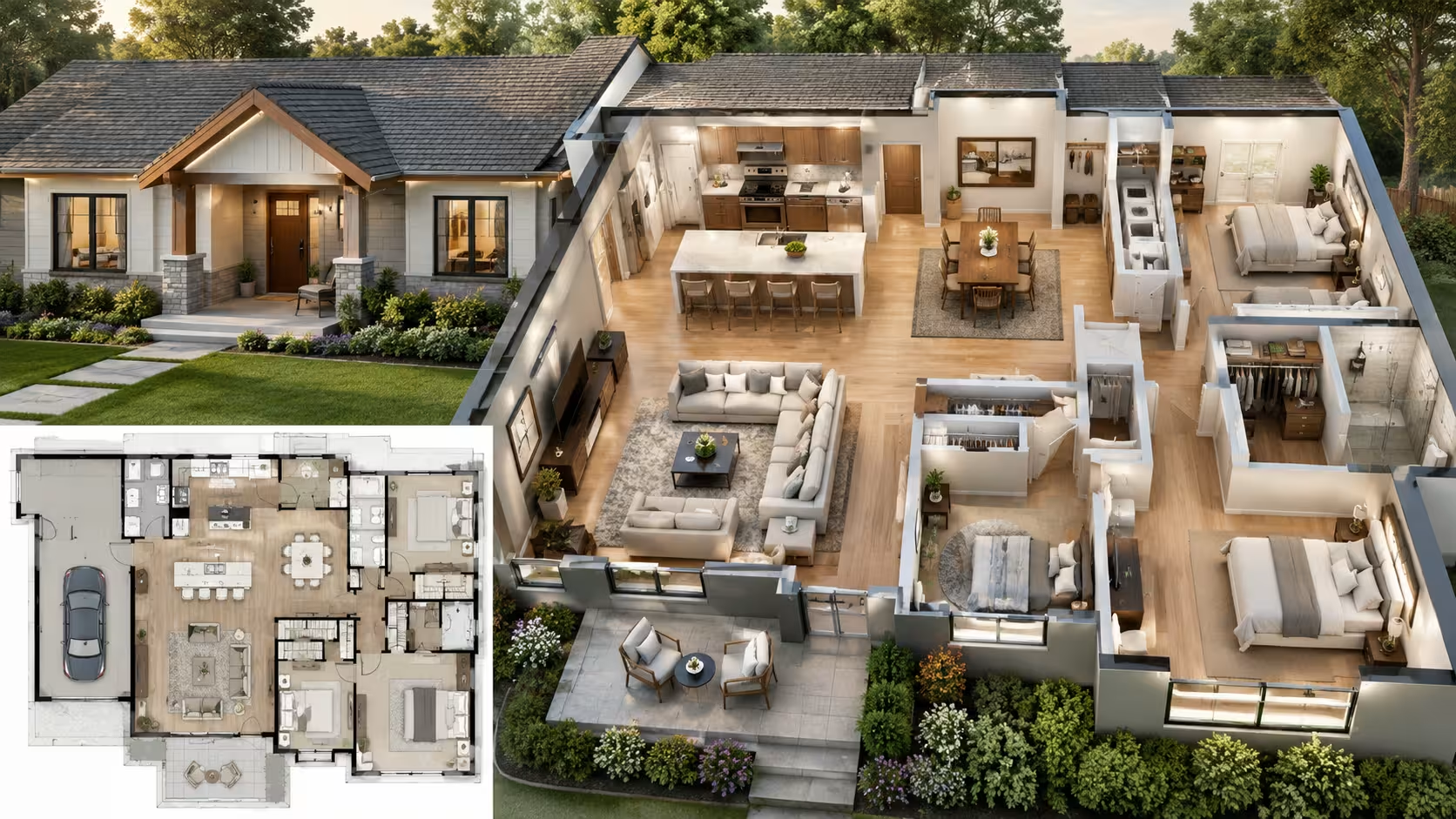
A home plan of 1500 square feet works well when the layout protects daily movement, storage, light, and privacy. The strongest plans usually balance an open kitchen-living zone, three practical bedrooms, two bathrooms, and flexible space that can change as a household changes.
Introduction
Can a 1500 square foot house feel roomy without drifting into wasteful space? It can, but the floor plan has to work harder than a larger custom build. Every hallway, window, closet, rug, cabinet, and door swing affects how the home lives. This article explains how to plan room sizes, traffic flow, storage, furniture, costs, and decor choices so the home feels calm, useful, and built for real life.
What 1500 Square Feet Really Means in a Home Plan
A 1500 square foot home usually sits in the sweet spot between a compact starter house and a full-size family home. In the United States, many postwar ranch homes from the 1950s and 1960s landed near this size because builders learned that three bedrooms, two bathrooms, and a shared living zone could fit without excess. The same logic still works in 2026.
The mistake I see most often is treating 1500 square feet as a number instead of a system. A plan with 220 square feet of hallway can feel smaller than a plan with 80 square feet of hallway and better room connections. Sarah Susanka’s “Not So Big House” approach became influential because it pushed homeowners to value proportion, light, and purpose over raw size.
Core planning facts that shape the layout
- A typical 1500 square foot plan often supports three bedrooms and two bathrooms without feeling cramped.
- A 12 by 14 foot bedroom gives enough space for a queen bed, two nightstands, and walking clearance.
- A living room around 14 by 18 feet can hold a sofa, lounge chairs, a media wall, and an 8 by 10 rug.
- A 36 inch walkway works for most interior paths, while 42 inches feels better in busy kitchens.
- A 1500 square foot single-story ranch often needs a wider lot than a two-story version.
A real-world example makes the point. In Austin, Texas, many newer infill homes use a narrow footprint with open living areas near the front and bedrooms toward the rear. In older suburbs outside Chicago, 1500 square foot ranch homes often place bedrooms along one side and the kitchen, dining, and living rooms on the other. Both can work, but they solve light, noise, and privacy in different ways.
A Smart Room Mix for a 1500 Square Foot House
A good home plan 1500 square feet starts with the room mix before style enters the discussion. For many couples, small families, retirees, and remote workers, the most useful layout includes three bedrooms, two bathrooms, one main living room, a kitchen with dining space, laundry, pantry storage, and at least one flex zone. That flex zone can be a desk nook, mudroom bench, or reading corner.
The strongest plans avoid oversized rooms that starve the rest of the house. A huge primary suite looks good on paper, but it can steal square footage from storage, kitchen circulation, or a second bedroom. Designers at firms like Studio McGee often use layered materials, rugs, built-ins, and lighting to create richness inside modest rooms rather than relying on scale alone.
Practical room-size ranges that usually work
- Primary bedroom: 13 by 14 feet to 14 by 16 feet.
- Secondary bedrooms: 10 by 11 feet to 11 by 12 feet.
- Living room: 14 by 16 feet to 16 by 18 feet.
- Kitchen and dining area: 220 to 320 square feet combined.
- Laundry zone: 35 to 70 square feet, depending on side-by-side or stacked machines.
A realistic plan might use about 420 square feet for bedrooms, 160 square feet for bathrooms, 450 square feet for kitchen, dining, and living, 140 square feet for storage and laundry, and the rest for circulation and wall thickness. Those numbers shift by climate and lifestyle. A family in Phoenix may value a shaded garage entry, while a homeowner in Vermont may need a stronger mudroom for boots, coats, and winter gear.
When three bedrooms are better than two large ones
Three bedrooms often protect resale value because buyers search by bedroom count before they study room quality. A third bedroom can work as a nursery, guest room, sewing room, Peloton space, or office. During the remote work boom after 2020, many buyers started treating a separate work room as a daily need rather than a luxury.
A two-bedroom version can still make sense for retirees, empty nesters, or couples who want a larger kitchen and primary suite. The risk appears later when the home must serve new owners, aging parents, or a child. In a 1500 square foot plan, flexibility carries long-term value.
Open Plan, Split Plan, or Ranch Layout: Choosing the Right Structure
The open floor plan remains popular because it makes a modest home feel brighter and more social. Frank Lloyd Wright used open living concepts long before modern builders turned them into a marketing phrase, and today brands like West Elm and IKEA design furniture that fits these shared zones. The catch is noise. A blender, television, dishwasher, and video call can collide fast.
A split-bedroom plan places the primary suite on one side and secondary bedrooms on the other. This works well for parents, guests, and multigenerational households. A ranch plan keeps everything on one level, which suits aging in place and easier cleaning. A two-story 1500 square foot home can save lot space, but stairs cost square footage and affect daily movement.
Layout options and where they shine
- Open plan: strongest for entertaining, light sharing, and small homes with fewer interior walls.
- Split-bedroom plan: strongest for privacy and guest separation.
- Ranch layout: strongest for accessibility and aging in place.
- Two-story layout: strongest for narrow lots and urban neighborhoods.
- L-shaped layout: strongest for patios, garden views, and sheltered outdoor rooms.
A couple in Raleigh, North Carolina, renovated a 1968 ranch that measured just under 1500 square feet. They removed a non-load-bearing wall between the kitchen and dining area, widened the cased opening to the living room, and added a Ruggable 9 by 12 washable rug to define the sitting zone. The home did not gain square footage, but it gained usable life.
Watch the hidden costs of an open layout
Open plans can cost more when structural walls need beams, posts, or engineering review. A laminated veneer lumber beam may be needed when a load-bearing wall comes out. In many U.S. markets, structural engineering review for a small residential change can cost several hundred to a few thousand dollars, depending on the project.
Open rooms also need better lighting layers. Recessed cans alone can make a living space feel flat. A stronger plan uses pendants over the island, sconces near shelves, table lamps, and dimmers. Pottery Barn, Schoolhouse, and Visual Comfort all sell fixtures often used in layered residential lighting, though local code and electrician guidance still matter.
Kitchen, Dining, and Storage Choices That Save Square Footage
The kitchen usually decides whether a 1500 square foot home feels expensive or awkward. A compact L-shaped kitchen with an island can beat a large kitchen with poor clearances. The National Kitchen and Bath Association has long treated work aisles, landing zones, and appliance spacing as core design concerns because small mistakes show up every morning.
Storage deserves the same respect as countertops. A 24 inch deep pantry cabinet can absorb cereal, canned goods, small appliances, and paper towels better than scattered upper cabinets. IKEA’s SEKTION system became popular partly because it offers modular cabinet sizes, drawer inserts, and pull-outs that help budget kitchens use space like custom millwork.
Kitchen planning details that carry real weight
- Keep at least 36 inches in a one-cook aisle and closer to 42 inches where two people often pass.
- Use drawers for pots, plates, and pantry goods because they reveal items faster than deep shelves.
- Place trash and recycling near the sink and dishwasher, not across the room.
- Choose a 30 inch range and 33 to 36 inch refrigerator when space is tight.
- Use a 30 to 42 inch island depth instead of forcing a bulky showpiece.
In a 1500 square foot plan, the dining area often works better as part of the kitchen zone than as a formal room. A 72 inch rectangular table can seat six in daily life and eight during holidays if the room allows it. For apartments and compact homes, brands like Article, CB2, and West Elm sell extendable tables that support flexible dining without swallowing the plan.
Storage that belongs where the mess begins
The best storage sits close to the activity that creates clutter. Shoes belong near the entry. Towels belong near baths. Vacuum storage belongs near the main living zone. Pantry goods belong close to the kitchen, not in a random hall closet. This sounds basic, yet many plans fail here.
A mudroom does not need to be large. A 5 foot wall with hooks, a bench, and closed lower storage can carry backpacks, dog leashes, jackets, and reusable grocery bags. In rainy cities like Seattle or Portland, that one wall can save the living room from daily mess.
Furniture, Rugs, Light, and Materials That Make the Plan Feel Finished
A floor plan only becomes real once furniture enters the room. Many 1500 square foot homes fail after move-in because the furniture was bought for a larger house or a showroom photo. A deep sectional can block circulation. A round dining table can solve tight corners. A low media console can make an 8 foot ceiling feel less pressed.
Rugs matter more than many builders admit. Fall Rugs, Ruggable, Loloi, Safavieh, and Pottery Barn all sell sizes that shape living zones without new walls. An 8 by 10 rug usually fits a modest seating group, while a 9 by 12 rug gives a larger living room better proportion. Washable rugs make sense for pets, kids, and open kitchen-adjacent rooms.
Material choices that work hard in compact homes
- Luxury vinyl plank handles moisture better than many wood products and often costs less than hardwood.
- White oak flooring gives warmth without heavy grain and appears often in modern American interiors.
- Quartz counters resist staining better than marble in busy kitchens.
- Satin paint hides wall flaws better than high-gloss paint in living areas.
- Pocket doors and barn-style sliders can save swing space, but they need proper wall planning.
Light-colored walls can help a 1500 square foot home feel calmer, but all-white interiors can turn cold without texture. Designers such as Shea McGee often balance white walls with wood, linen, woven shades, ceramic lamps, and muted rugs. Benjamin Moore White Dove and Sherwin-Williams Alabaster remain common choices because they read warm in many homes.
The mistake: buying decor before measuring
A homeowner in Tampa bought a 96 inch sofa before checking the living room’s walkway. The sofa fit the wall, but it narrowed the path from the kitchen to the patio to less than 28 inches. The fix was not dramatic. A 84 inch sofa, two smaller chairs, and a 9 by 12 rug restored movement and made the room feel more intentional.
Measurement prevents returns, wasted money, and rooms that feel tense. Tape the sofa size on the floor. Mark the dining chair pull-out zone. Check door swings. A 1500 square foot home rewards people who plan from movement first and decoration second.
Cost, Build Type, and Long-Term Value
Costs vary by region, labor market, materials, foundation, roof complexity, and local code. A basic 1500 square foot home in a lower-cost U.S. market may cost far less per square foot than the same plan in Los Angeles, Boston, or New York. A simple rectangle with a gable roof usually costs less than a plan with many corners, rooflines, bump-outs, and custom windows.
The plan also affects operating costs. A compact house with good insulation, right-sized HVAC, LED lighting, and efficient windows can cost less to heat and cool. In colder states like Minnesota and Maine, air sealing and insulation can matter more than trendy finishes. In Texas and Arizona, shade, attic ventilation, and window placement carry real comfort value.
Cost decisions that affect the whole project
- A slab foundation often costs less than a full basement, but basements add storage in colder regions.
- A simple roof shape saves money compared with multiple gables and valleys.
- Standard window sizes usually cost less than custom sizes.
- One plumbing wall shared by kitchen, laundry, and bathrooms can lower rough-in complexity.
- Durable midrange finishes often beat fragile luxury materials in family homes.
A 1500 square foot plan can also support long-term resale when it avoids narrow user assumptions. A giant hobby room may suit one owner, but a flexible bedroom or den suits more buyers. A tub-shower combo in one bath can matter for families with children. A walk-in shower in the primary bath can help older adults.
Small homes need a stronger maintenance mindset
Less square footage does not mean no maintenance. Gutters still clog. HVAC filters still need replacement. Caulk fails around tubs and windows. Vinyl plank, wool rugs, quartz counters, and painted cabinets all need care, even when brands market them as durable.
Plan for maintenance access during design. A water heater trapped behind storage becomes a future headache. An attic hatch hidden inside a closet packed with boxes will be ignored. In a tight home, service access protects the budget as much as the floor plan protects daily comfort.
Wrap Up
A home plan 1500 square feet succeeds when the layout respects movement, storage, privacy, light, and furniture scale. The strongest designs do not chase wasted grandeur. They use right-sized bedrooms, a practical kitchen, flexible rooms, durable materials, and decor that defines space without crowding it. Build the plan around daily habits first, then let style support the way the home already works.
FAQs Section
What is the best layout for a 1500 square foot house?
A three-bedroom, two-bath layout with an open kitchen, dining, and living zone works well for many households. A split-bedroom plan adds privacy, while a ranch layout supports easier movement and aging in place.
Can a 1500 square foot home fit a family of four?
Yes, a 1500 square foot home can fit a family of four when bedrooms, closets, bathrooms, and shared spaces are planned carefully. Storage near entries, a flexible third bedroom, and durable furniture make daily life much smoother.
How much does it cost to build a 1500 square-foot house?
The cost depends on location, labour, land, permits, foundation, materials, and roof complexity. A simple rectangular plan with standard windows and midrange finishes usually costs less than a custom plan with complex rooflines and luxury materials.
Disclaimer
This content shared by Fall Rugs is solely for research and informational purposes. Fall Rugs is not a professional interior design or home renovation consultancy, and the information provided should not be considered professional advice for home improvement or decor. All ideas and suggestions are based on current trends and general knowledge in the home decor industry.