
TL;DR
An antique bar cart styled with intention does more work per square foot than a console table ever could. The trick sits in layering height, mixing eras without creating visual noise, and treating the cart as a living composition rather than a static liquor shelf. Restraint separates a conversation piece from a cluttered mess.
Introduction
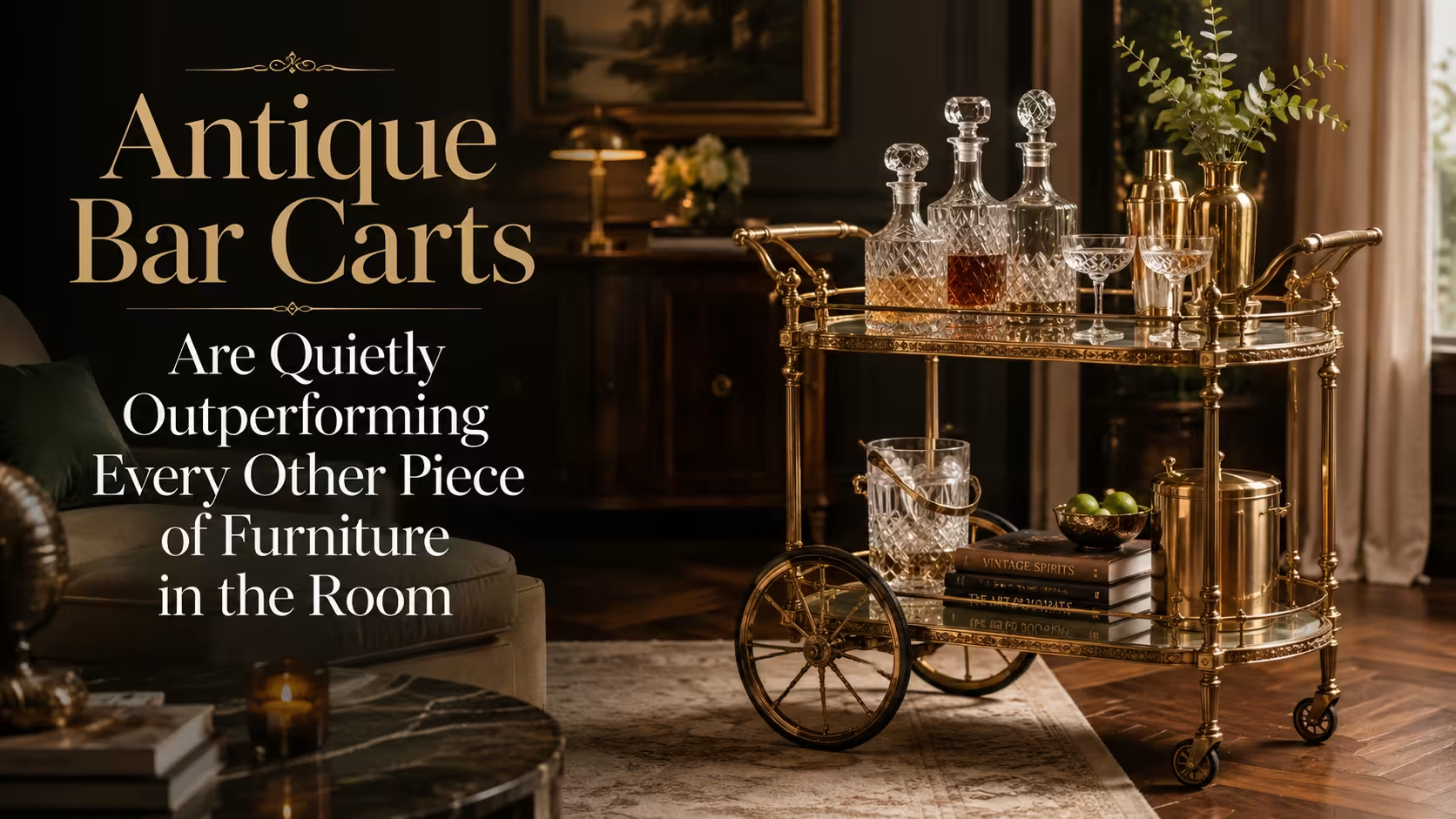
Walk into any well-appointed living room and your eye will drift toward movement, reflection, and objects that seem to have a pulse. That is exactly what a properly styled antique bar cart delivers. These rolling pieces of history, born from tea trolleys of the Victorian era and refined through the brass-and-glass decadence of mid-century Hollywood, occupy a strange sweet spot.
They are simultaneously functional furniture and pure theater. The problem most people face is not finding a cart worth owning. It is freezing the thing in time with a row of dusty bottles and calling it styled. A cart that breathes gets talked about. One that doesn’t just collects glass rings.
What Makes an Antique Bar Cart Worth Styling in the First Place
The cart itself sets the ceiling for what your styling can achieve. Some pieces demand restraint because their architecture already carries the room. Others need you to build visual weight from scratch. Knowing which category you are holding onto changes every decision that follows.
Reading the Bones of a Vintage Cart
Brass and glass carts from the 1950s and 1960s carry a lightness that heavy wood tea trolleys from the 1920s simply do not. A Milo Baughman-style brass cart with slim lines and mirror shelves already reflects light aggressively. Adding twelve crystal objects to it creates chaos, not glamour. Meanwhile, a dark mahogany Edwardian trolley with deep grain and casters the size of fists can absorb far more visual density before it feels cluttered.
I once watched a client stack a burled-walnut French cart with oversized art books, a squat decanter, and a table lamp with a linen shade. It looked anchored and intentional. The same arrangement on a skinny brass number would have felt like a yard sale on wheels. Match the styling mass to the visual weight of the frame first, then layer in personality.
Identifying Cart Archetypes and Their Era Signatures
Art Deco carts from the 1930s tend toward geometric severity, chrome accents, and mirrored surfaces that demand symmetry. Hollywood Regency pieces from the 1950s and 1960s lean into brass, bamboo turning, and a certain louche confidence that rewards asymmetry. Knowing the era prevents you from forcing a minimalist Scandinavian sensibility onto a cart built for maximalist entertaining.
Collectors gravitate toward names like Maison Jansen for French elegance or Aldo Tura for goatskin-wrapped Italian oddities, but even unmarked department store carts from mid-century America can anchor a room beautifully when their proportions are right. The cart’s provenance matters less than whether its scale fits the space. A three-tier cart in a tight apartment hallway is a shin-bruising liability. A petite two-shelf piece in a cavernous living room disappears entirely.
The Three-Layer Rule for Bar Cart Composition
Styling an antique cart without a compositional framework usually ends with objects shoved together and hope holding the arrangement upright. The three-layer approach borrows from still-life painting and retail visual merchandising, two disciplines that figured out object grouping long before bar carts hit Instagram.
Anchor Layer: Weight, Height, and Gravity
The anchor layer solves the problem of a cart that looks like it might blow away. This layer typically occupies the back third of each shelf and includes objects with real visual mass. Think a substantial crystal decanter on a brass tray, a table lamp with a ceramic base, or a framed art piece leaning against the wall behind the cart itself.
The lamp move is especially useful on carts placed against a wall. A small lamp with a tapered shade brings eye-level light into the composition and prevents the entire setup from reading as a dark horizontal band at waist height. Height in the anchor layer pulls the eye upward and makes the cart feel like furniture, not an afterthought. Just avoid anything so tall it competes with wall art hung above it. That fight never ends well.
Functional Layer: The Working Heart of the Cart
This is where the bottles, glassware, and tools live, but placement still follows form. Group spirits by bottle shape rather than brand to create rhythm. A squat square gin bottle next to a tall slender vodka creates a jagged skyline that reads as messy. Cluster bottles of similar height together, then break the line with a single taller vessel at one end like punctuation. Glassware benefits from odd-number groupings, a trick lifted from Japanese floral arrangement that creates natural tension.
Three lowball glasses on a small tray feel composed. Four feel like you just unloaded the dishwasher. Tools like shakers, jiggers, and muddlers should sit on a tray or in a low vessel where they gather visually rather than scattering. A vintage silver julep strainer left loose on a glass shelf looks lost. The same strainer tucked into a small ceramic catchall suddenly looks curated.
Expressive Layer: The Personality Signals
This layer is where most people either freeze up or go feral. The expressive layer covers objects that have zero bar function but deliver all the character. A small stack of vintage cocktail books with worn spines, a brass animal figurine, a cluster of dried eucalyptus in a stoneware vase, or a singular object so weird it demands questions. I keep a small carved onyx obelisk on my own cart, a flea market find that has started more conversations than any bottle of Japanese whisky ever could.
The expressive layer works when it feels accidental but never random. Restrict this layer to two or three objects per shelf maximum. More than that and the cart stops being a composition and starts being a storage facility for small interesting things you collected and never placed anywhere proper.
Era Mixing Without Creating a Museum Gift Shop
Pairing a 1920s cart with contemporary glassware and a sculptural object from a modern ceramicist creates tension that feels alive. Matching the cart with period-correct everything creates a diorama. The difference between the two is the difference between a home and a historical society fundraiser.
The One-Era-Apart Principle
A practical rule that has saved me from myself more than once: keep decorative objects within one design era of the cart’s origin, but never match the era exactly. An Art Deco cart from 1935 pairs beautifully with glassware from the 1950s. The streamlined geometry carries forward, but the slight softening of mid-century forms prevents the whole thing from feeling like a period room.
A 1960s Hollywood Regency cart alongside 1980s Memphis-influenced bar tools creates a dialogue between eras that share a love of bold gesture. Jumping straight from a Victorian trolley to stark contemporary minimalism can work in a gallery setting, but in a home it often reads as confused rather than curated.
Mixing Metals Intentionally
Brass cart frames and chrome tools can coexist. The secret is acknowledging the mix rather than pretending it isn’t happening. Place a chrome cocktail shaker on a brass tray, and the tray becomes a visual bridge that says “this mix was on purpose.” Avoid scattering mixed metals across the cart evenly, which reads as haphazard. Concentrate one metal finish on the top shelf and let another dominate the lower shelf. The separation creates zones that the eye processes as distinct compositions rather than a metallurgical argument. Mixed metals work when they clump, not when they speckle.
Seasonal Rotation That Feels Natural, Not Themed
The fastest way to drain an antique cart of its sophistication is to dress it for holidays like a retail window. A ceramic pumpkin in October is fine. A ceramic pumpkin next to a ghost figurine next to a banner that reads “Boo” is a cry for help. Seasonal shifts should feel like the cart breathed in a different direction, not like it put on a costume.
The Produce-and-Texture Approach
Winter calls for citrus on a wooden board, the oils in orange peel releasing into the air near the vermouth. Summer wants a glass pitcher of iced tea or a cluster of herbs in water, basil and mint doing double duty as garnish supply and living decor. A pomegranate split open on a small plate in autumn brings deep red into the composition without a single decorative gourd.
Organic material signals seasonality more gracefully than decorations ever will. Fresh flowers in a small bud vase do the same work, but only if the arrangement is tight and low. A sprawling bouquet on a bar cart is a spill waiting to happen and visually blocks the very objects the cart exists to display.
Glassware and Spirit Rotation by Temperature
Cold months pull darker spirits forward, amaro and aged rum and peated scotch, their deep amber and mahogany tones warming the cart’s palette. Summer pushes gin, blanc vermouth, and aperitifs to the front, their clear and pale green hues lightening the visual load. I swap glassware seasonally as well, heavy crystal tumblers for winter, thin-walled highballs and coupes for summer. The cart’s entire mood shifts without a single explicitly seasonal decoration entering the frame. This is how a bar cart ages through a year with dignity.
Common Styling Failures and How to Recover
Real mistakes I have made on real carts in real homes, including my own, because no one styles perfectly on the first pass. The recovery is usually faster than the regret.
The Bottle Forest
Ten liquor bottles lined up like soldiers on a single shelf. This is not a bar cart. This is a storage unit. The fix is immediate and painful: remove at least half the bottles and store them elsewhere. A cart should display what gets used this month plus maybe one statement bottle that looks as good as it tastes. The rest lives in a cabinet. If you lack cabinet space, decant frequently used spirits into smaller vessels and tuck the full-size bottles away. The cart gains breathing room instantly.
The Tchotchke Avalanche
Small objects multiply when you are not looking. A tiny brass elephant here, a matchbook collection there, a stray candle snuffer that rolled behind the bitters. Before long the cart reads as a horizontal junk drawer. The hard reset involves clearing every shelf completely, then adding back only what passes a simple test: would a guest ask about this object? If the answer is no, the object does not deserve the real estate. Sentimental clutter is still clutter, and a bar cart is too small a stage for filler.
The Dead Zone Below
The bottom shelf of a two-tier cart often becomes a graveyard for overflow bottles and forgotten cocktail napkins. Treat the lower shelf as a second composition with its own anchor, functional, and expressive layers scaled to its reduced height. A stack of large-format art books, a low bowl with spare corks, or a small ice bucket with tongs resting across the top gives the lower shelf purpose. If the bottom shelf isn’t styled, the cart’s visual center of gravity sinks and the whole piece feels unstable, even if the bottles on top are arranged beautifully.
Lighting the Cart for Evening Presence
An antique bar cart styled without consideration for how it reads under low light is a cart that only works from noon to three. Evening is when these pieces earn their keep, catching lamplight and candle glow while conversation swirls around them.
Placement Relative to Light Sources
Brass and mirrored carts amplify ambient light dramatically when positioned within six feet of a floor lamp or sconce. Glass shelves bounce light upward through bottles, creating the kind of glow that makes spirits look more expensive than they are. Wood carts absorb light and benefit from a small dedicated source on the cart itself. A cordless LED lamp with a warm bulb, the kind that charges via USB and runs for hours, removes the cord management headache entirely. Place it behind a decanter so the light filters through the liquid. The glass becomes the shade, and the whole setup looks deliberate rather than electrified.
Candle Logic on a Moving Cart
Candles on a bar cart are romantic until someone wheels the thing six inches to reach a bottle and hot wax sloshes onto the shelf. Votive candles in heavy glass holders solve this, their low center of gravity resisting minor bumps. Avoid taper candles entirely on a cart that moves. Even if the cart never moves, a single unsnuffed taper tipped by an errant elbow becomes a liability. Tea lights in cast iron or brass cups give flame without fragility.
Building a Cart That Tells a Story Over Time
The best antique bar carts I have encountered were never styled in a single afternoon and frozen in place. They accumulated. A silver jigger picked up at a Vermont antique shop. A set of etched coupes from a Paris flea market. A cocktail book found in a Little Free Library with someone’s handwritten margarita ratio on the inside cover. These objects land on the cart over years, and the cart becomes a quiet autobiography.
Let the cart breathe between additions. A new object needs negative space around it to feel intentional. When you bring home a new piece for the cart, remove something else for a month. The composition tightens, loosens, shifts. The cart stops being furniture and starts being a living arrangement that reflects the seasons, the gatherings, and the particular taste of the person who tends it.
That is the styling that cannot be replicated by following a checklist, and it is the only styling that ever really registers with a guest who has seen a dozen perfectly staged homes. Real personality reads. Perfection scans and fades.
Wrap Up
Antique bar cart styling succeeds or fails on invisible decisions about mass, height, and restraint long before anyone notices the objects themselves. Treat the cart as a three-layer composition with an anchor, functional tools, and a handful of expressive objects that earn their place.
Mix eras with the one-era-apart principle, shift the cart seasonally through produce and spirit rotation rather than themed decorations, and light it for the evening hours when it actually gets seen. A bar cart that accumulates meaning over time will always outperform one assembled in a single shopping trip.
FAQs
How do I style a small antique bar cart without making it look cluttered?
Limit each shelf to one anchor object, two or three functional pieces grouped on a tray, and a single expressive object. Negative space is your most powerful styling tool on a small cart.
Should an antique bar cart always have alcohol on display?
Not at all. Coffee and tea setups with a pour-over kettle, ceramic mugs, and a small plant create an equally compelling composition and better suit homes where alcohol isn’t central to entertaining.
What glassware works best on an open bar cart?
Glassware with visual weight, like cut crystal or colored glass, holds its own against bottles and tools. Delicate stemware tends to read as fragile and cluttered unless grouped tightly on a tray.
Disclaimer
This content shared by Fall Rugs is solely for research and informational purposes. Fall Rugs is not a professional interior design or home renovation consultancy, and the information provided should not be considered professional advice for home improvement or decor. All ideas and suggestions are based on current trends and general knowledge in the home decor industry.