
TL;DR
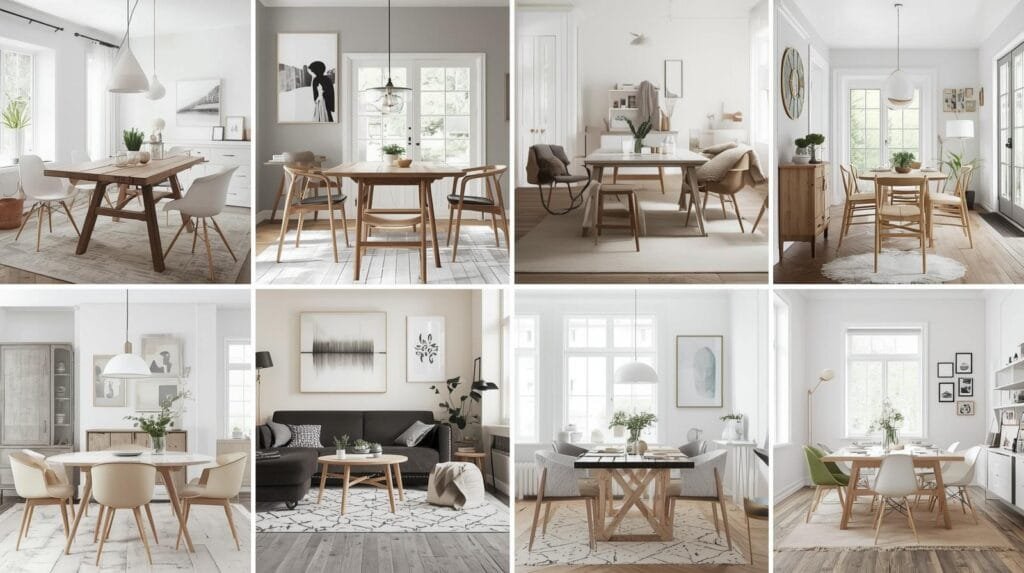
Scandi dining rooms succeed when they balance soft light, natural texture, and genuine utility. The six tactics here are not about perfection. They are about creating a space where people linger at the table because the room feels like a quiet exhale. Each hack was selected after years of watching what actually works in lived-in homes, not just styled shoots. The common thread is warmth that does not shout.
Introduction
A cold room kills a meal faster than bad wine. Scandinavian design has a reputation for looking too spare, too precious, too white to actually live in. That reputation misses the point entirely. True Nordic interiors are a direct response to long, dark winters and the human need for refuge. A Scandi dining room done right wraps around you like a wool blanket. The six hacks that follow come from watching families eat, spill, laugh, and linger in rooms designed for real life. They strip away the fantasy and leave you with the bones of something durable and kind.
1. Layer Window Light With Deliberate Softness
Natural light is the currency of Scandinavian design. Northern latitudes ration daylight so tightly that every lumen counts. A dining room near a window should never fight for brightness. Heavy drapes and fussy valances steal from the room what nature already gives in short supply. The fix is simple and reversible. Leave windows bare or dressed in sheer linen panels that filter the harshest glare without blocking the sky. The fabric should move slightly with a draft, just enough to remind you the room breathes.
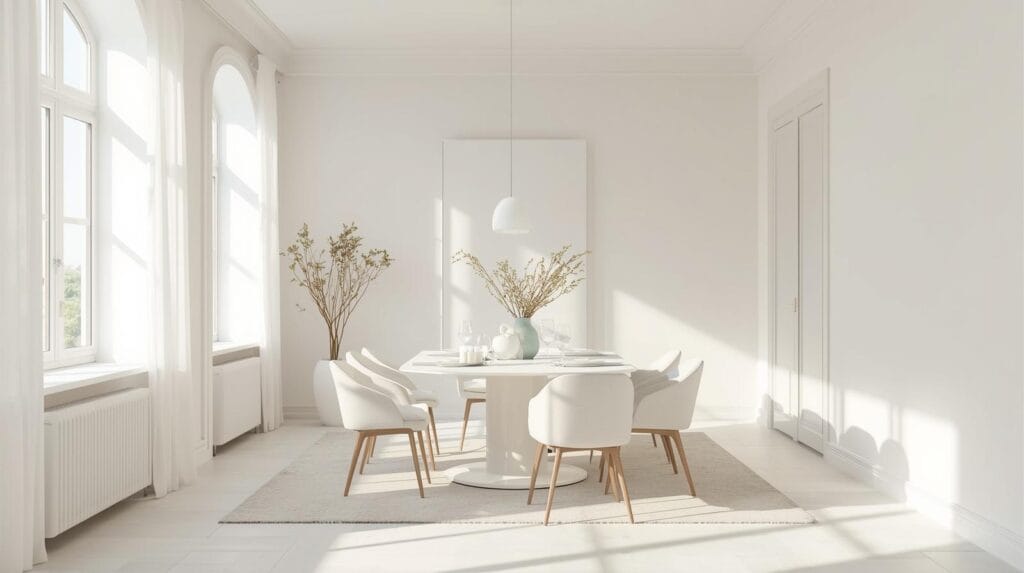
Most people stop at the window treatment and miss the second layer entirely. Light does not land on a table and die. It bounces. A matte white wall opposite the window reflects a clean, diffuse glow back onto the faces of your guests. If that wall is painted in a flat, non-reflective finish, the light softens further and skin tones look better. I learned this by accident in a Copenhagen apartment with a single east-facing window. The white wall became the secret light source, and nobody could explain why the room felt so gentle at breakfast.
Why Cool White Walls Fail After Sunset
A bright white wall at noon is a gift. The same white wall under a warm bulb at dinner can look grey and clinical. The colour temperature mismatch between daylight and artificial light is a real problem that paint swatches never solve. Nordic homes often compensate with wall colours that have a whisper of warmth. A white with a hint of cream or a trace of clay pigment holds the room together as the light shifts. The wall does not look yellow in the day, and it does not look dead at night. That tiny pigment decision does more emotional work than most expensive furniture upgrades.
2. Anchor the Room With a Wood Table That Ages Honestly
Veneer tables with high-gloss finishes belong in hotel conference rooms. A Scandi dining table asks for a different kind of relationship with time. Solid oak or ash, left unoiled or lightly soaped, records the life that happens around it. A ring from a hot mug, a faint scratch from a ceramic plate, the ghost of a water glass all become part of the table’s biography. The room feels more relaxed because nobody is walking on eggshells about the furniture. That psychological shift matters when you host people who are nervous about ruining something expensive.
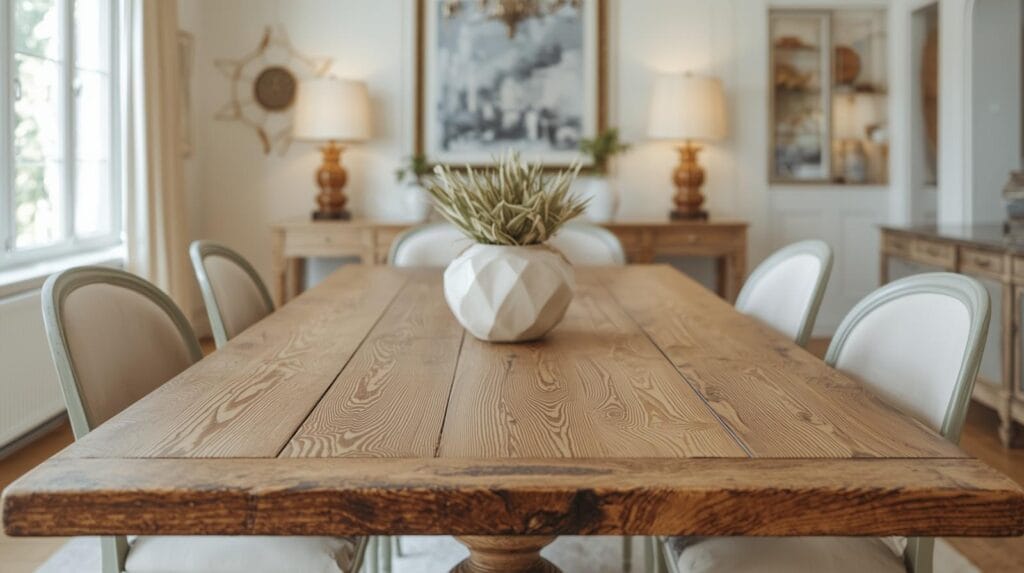
The table should be slightly undersized for the room rather than jammed against the walls. Negative space around a dining table is a luxury that costs nothing. It lets chairs slide back fully and bodies move without the choreography of sideways shuffles. In a small apartment, a round table with a central pedestal base eats less visual square footage than a rectangular slab. The absence of corners softens the traffic flow and makes the room feel more generous than its measurements suggest. Proportion is the quiet designer nobody notices until it is wrong.
The Case for Benches Along One Side
Benches are not just a space-saving trick for small breakfast nooks. A long, low bench along one side of a rectangular table creates a diner-like intimacy that individual chairs cannot replicate. Three people can slide in comfortably where two chairs would feel rigid. Children love benches because they can kneel, sprawl, and change position without asking permission. The bench should be solid wood, heavy enough that it does not scoot backward when an adult sits down. A thin sheepskin thrown over the seat in winter is the only decoration it needs.
3. Deploy Candlelight as a Non-Negotiable Ingredient
A Scandi dining room without candles is a stage without actors. The tradition runs deep because the climate demands it. When the sun sets at three in the afternoon for months on end, flame becomes a survival mechanism. Candlelight flatters food, softens faces, and slows down the pace of conversation. The warm colour spectrum of a flame is roughly 1850 Kelvin, a number that means little until you compare it to the 2700 Kelvin of a typical warm LED. That gap is the difference between a room that feels like a hug and a room that feels like a waiting room.
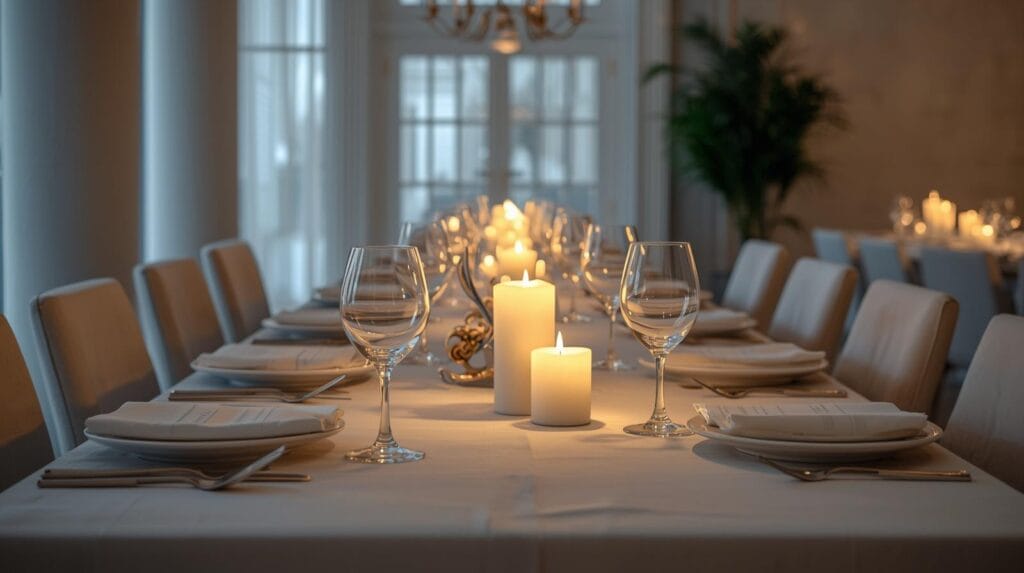
Cluster candles in odd numbers at varying heights. A single candlestick looks lonely. Three together on a tray create a small altar of light that draws the eye to the centre of the table. Unscented beeswax or stearin candles burn clean without competing with the smell of food. Scented candles at a dining table are an amateur mistake. Perfume and rosemary lamb do not belong in the same conversation. Keep the air neutral and let the meal speak for itself.
Placing Light Below Eye Level
Most dining rooms push all light sources upward. Overhead pendants are important, but they cast shadows down onto plates and make faces look tired. Candlelight works its magic because it sits low, on the table, where it illuminates from below. A low-hung pendant with a warm dimmable bulb, combined with candles on the table surface, creates a cross-light that eliminates harsh under-chin shadows. The result is everyone at the table looking like a slightly better version of themselves. Vanity is an underrated design tool.
4. Introduce Tactile Textures That Invite Touch
A room that looks warm but feels cold is a betrayal of Scandinavian principles. Texture is the bridge between the eye and the hand. Wool throws draped over the back of chairs, a jute rug underfoot, and linen napkins that wrinkle with use all send the same signal. This room is for living in, not for photographing. The textures should feel slightly rough, not slick or synthetic. A hand-knitted wool cushion has more design integrity than a velvet one manufactured to mimic a trend.
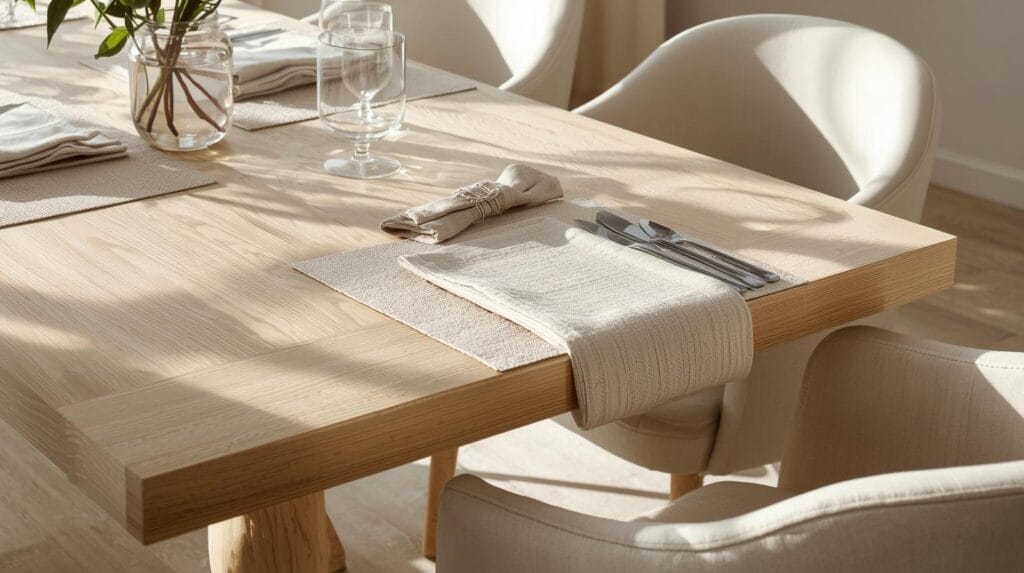
Texture also absorbs sound. A dining room with hard surfaces everywhere, glass tabletop, bare floor, plaster walls, bounces conversation into an echoing din. A flatwoven wool rug under the table dampens the clatter of cutlery and the scrape of chair legs. The room suddenly feels more intimate, not because anything visible changed, but because the acoustic signature softened. Guests lean in closer and speak at a lower volume. That single rug can shift the entire social dynamic of a dinner party.
Ceramics That Feel Handmade
Factory-glazed dinnerware has a flawless surface that reads as sterile under warm light. Hand-thrown ceramic plates with slight irregularities, pinprick air bubbles in the glaze, subtle asymmetry in the rim, hold warmth differently. The imperfections scatter light in a way that feels organic and unforced. A stack of oatmeal-coloured stoneware plates on an open shelf doubles as decor between meals. The objects themselves do the work. You do not need to style them.
5. Edit Decor Down to Meaningful Objects Only
Scandi restraint is not about emptiness for its own sake. It is about making room for the few things that carry genuine emotional weight. A dining room shelf crammed with generic ceramic vases and mass-market art sends a message of anxiety. The clutter whispers that someone was afraid of blank space. Remove everything. Then put back the single landscape painting your aunt did in art school, the small bronze candlestick inherited from a grandmother, the bowl a friend threw on a wheel. Three objects with a story outperform thirty objects with a receipt.
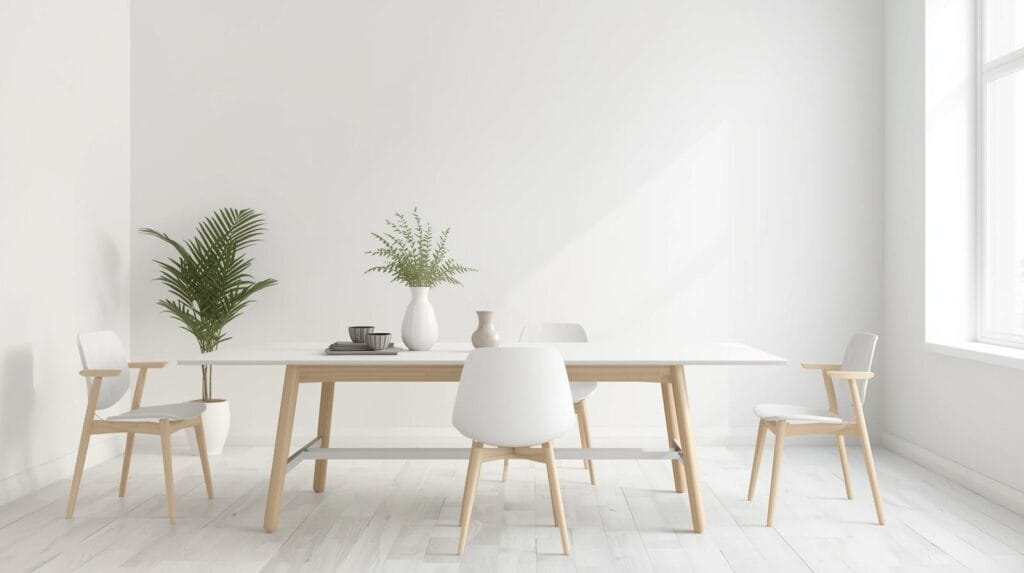
This editing process has a second-order effect on cleaning and mental load. A dining room with fewer surfaces gathers less dust and demands less attention. The room stays ready to use with almost no daily maintenance. When a guest arrives unannounced, you light a candle and the space is already set. That ease of living is the luxury Scandinavian design promises and rarely delivers in magazine spreads. Real minimalism is a time-saving device disguised as an aesthetic choice.
The Open Shelf as a Stage, Not Storage
An open shelf in a dining room should display, not warehouse. Stacking everyday plates and bowls is fine because those items get used and replaced in a natural rhythm. Lining up twenty glasses you never touch is a dust-collecting exercise. A shelf works best when it holds a single meaningful grouping. A ceramic pitcher, a small framed ink drawing, and a trailing plant in a simple pot. Three items. The empty space around them is not a mistake. It is the frame.
6. Add Green Life Without Creating a Jungle
Plants in a dining room perform two practical tasks. They scrub the air of the staleness that settles after a long meal, and they inject a living, breathing counterpoint to all the hard surfaces. The Scandi approach to greenery is restrained. One substantial plant in a corner makes a stronger statement than a dozen small pots scattered across every sill. A fiddle-leaf fig with tall, architectural structure draws the eye upward and makes the ceiling feel higher. A trailing pothos on a high shelf softens a stark wall line.
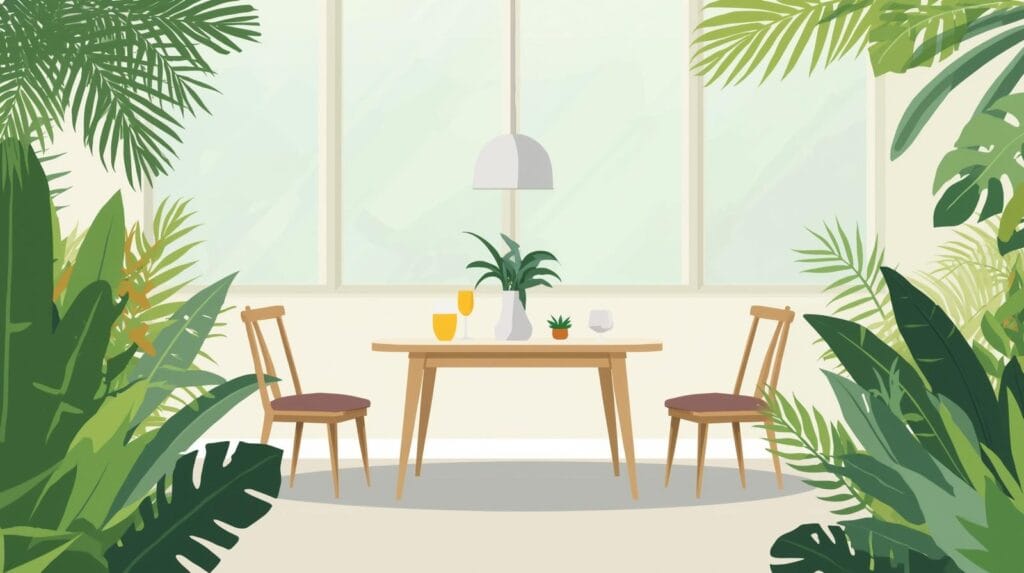
The container matters as much as the plant. A terracotta pot with a raw, unglazed finish ages beautifully and wicks moisture naturally. A glazed ceramic pot in a muted sage or charcoal keeps the focus on the foliage. Avoid plastic pots left visible. The slight dissonance of something alive sitting in something synthetic undercuts the whole organic premise of the room. Repot any new plant into a simple vessel before it enters the dining space. The ritual itself is a small act of care that seeps into the atmosphere.
Dried Branches as a Winter Stand-In
Fresh greenery can struggle in a dark Nordic winter, and the same dark corner defeats even hardy houseplants. Dried branches solve the problem without looking like a compromise. A tall vase of bare birch branches or dried eucalyptus stems creates a sculptural silhouette against a white wall.
The branches last for months, require zero maintenance, and catch the candlelight in a way that dense foliage does not. When spring returns and the light strengthens, swap the branches for something green. The seasonal rhythm becomes a quiet marker of time passing, something a dining room benefits from deeply.
Wrap Up
A Scandi dining room that works for real life is a collection of small, thoughtful decisions that compound into an atmosphere. Soft light, honest wood, living flame, tactile textures, meaningful objects, and a touch of green are not expensive ingredients. They are principles anyone can apply to the room they already have. The goal is not a perfect Instagram tableau. The goal is a space where someone sits down at six in the evening and stays until midnight because leaving feels harder than ordering another pot of tea.
FAQs
How do I make a Scandi dining room feel warm if I rent and cannot paint the walls?
Focus on the elements you can control: warm-toned textiles like linen curtains and wool throws, candlelight clustered on the table, and a large rug that covers cold flooring. These layers compensate for sterile wall colours by adding warmth at the touch level and the eye level simultaneously.
What is the best dining table shape for a small Scandi dining room?
A round or oval table with a single central pedestal base works best because it eliminates the visual bulk of corner legs and allows chairs to tuck in cleanly. The curved shape also improves traffic flow around the table in tight spaces.
Can a Scandi dining room work without candles?
Candlelight is central to the tradition, but a dimmable warm LED pendant hung low over the table combined with small, warm-toned accent lamps on a sideboard can create a similar layered glow. The key is avoiding a single harsh overhead source that flattens the room.
Disclaimer:
The content shared by Fall Rugs is solely for research and informational purposes. Fall Rugs is not a professional interior design or home renovation consultancy, and the information provided should not be considered professional advice for home improvement or decor. All ideas and suggestions are based on current trends and general knowledge in the home decor industry.