
TL;DR
A minimalist dining area strips away visual noise so the space feels wider, calmer, and more inviting. The seven ideas here cover everything from furniture choices to lighting and color, giving you a clear path to a cleaner, more intentional dining room without sacrificing warmth.
Introduction
There is a particular kind of exhaustion that cluttered spaces create, and the dining area tends to collect it faster than any other room. A chair tucked too tightly, a sideboard buried under mail, pendant lights that fight with the ceiling fan, and suddenly a meal that should feel like a pause becomes another stressor. Minimalist dining area design solves this not by removing personality, but by removing distraction. These seven ideas are grounded in real interior practice, and each one earns its place.
1. Ground the Room With a Single, Statement Table
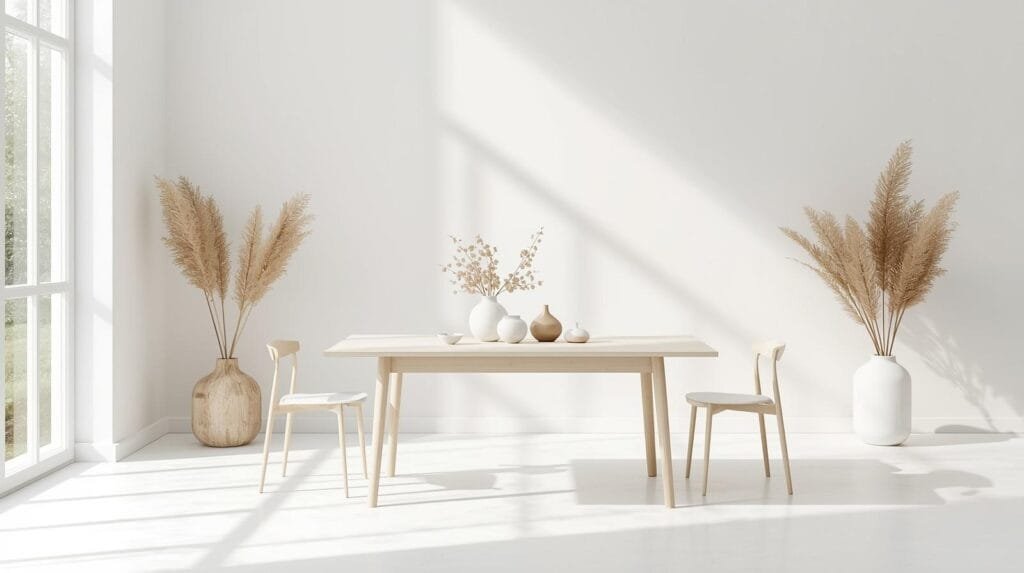
The dining table is the gravitational center of the entire space, so starting here is not a stylistic choice but a structural one. A minimalist approach means choosing one table that does the work of many: strong material, clean silhouette, and proportions that respect the room rather than dominate it. Solid oak with straight, unembellished legs reads as timeless rather than trendy. A white Carrara marble top with a thin profile communicates refinement without demanding visual attention from every other surface.
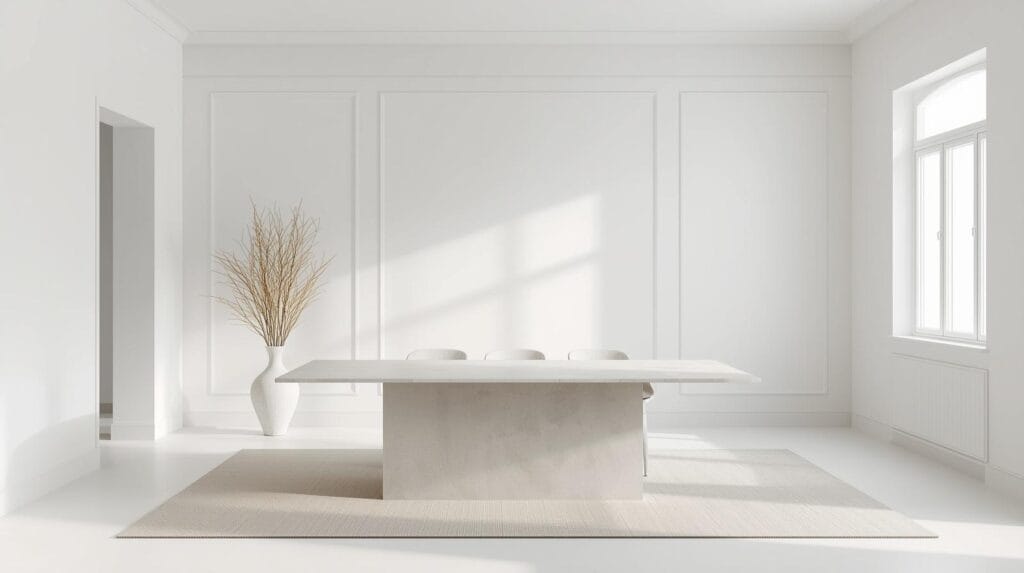
What makes this work is contrast through restraint. A single striking table surrounded by breathing room carries far more presence than a room packed with competing pieces. A dining table with tapered wooden legs and a matte-lacquer top, for instance, does not need a matching buffet, a bar cart, and a collection of art prints to feel complete. It needs space, good chairs, and light.
The practical test is this: if you removed the table and the chairs and the room still looked busy, the design has a problem. Minimalist dining rooms should feel almost empty without the furniture, because the furniture is the entire statement.
2. Choose Chairs That Disappear Into the Room
This sounds counterintuitive until you actually try it. Clear acrylic ghost chairs around a wooden table make the table appear to float. Slender wire-frame chairs in matte black let the floor pattern breathe beneath them. Linen-upholstered dining chairs in an off-white tone blend into the wall rather than chopping the sightline into fragments.
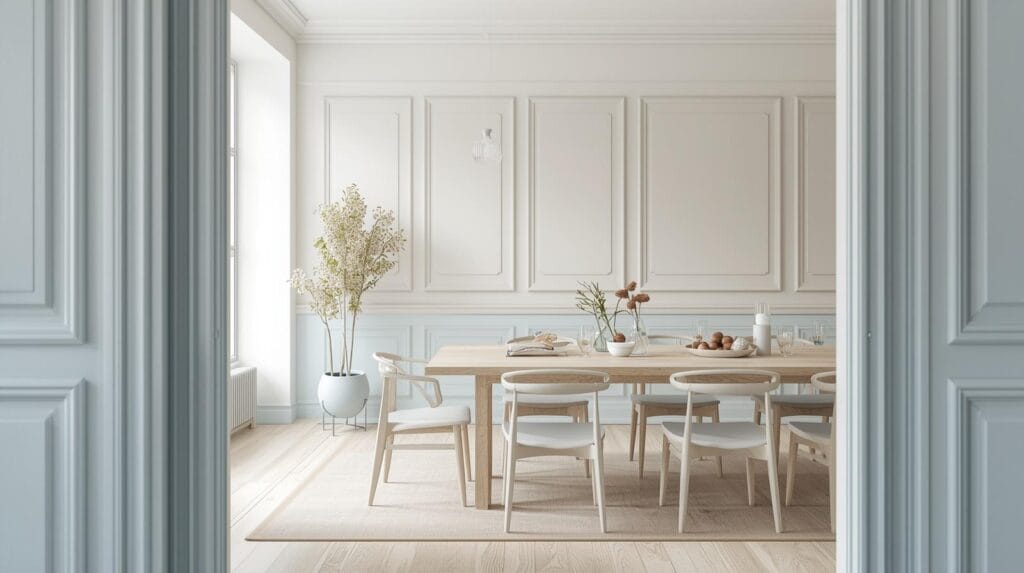
A designer named Priya was renovating a rented apartment in a compact city building. Her dining area was twelve feet wide with a structural column interrupting one wall. Rather than fighting the column with bold furniture, she wrapped it in the same white plaster finish as the surrounding walls and chose barely-there acrylic chairs around a slim walnut table. The column stopped being a problem. The room looked effortlessly cohesive because nothing in it demanded the eye’s attention more than anything else.
The chair-disappearing principle does not mean all chairs must be transparent or pale. It means their visual footprint, the surface area they occupy in the field of view, should be considered deliberately. Chairs with open backs, slim armrests, or low profiles occupy far less visual space than chunky upholstered throne-style seats. That reduction accumulates across the room into genuine calm.
3. Commit to a Neutral, Tonal Color Palette
Minimalist dining room color is not about painting every wall white. That is a common misreading that produces sterile, cold spaces rather than calm ones. The real principle is tonal coherence, meaning the wall color, the table finish, the upholstery, and the flooring all belong to the same family of temperature and saturation.
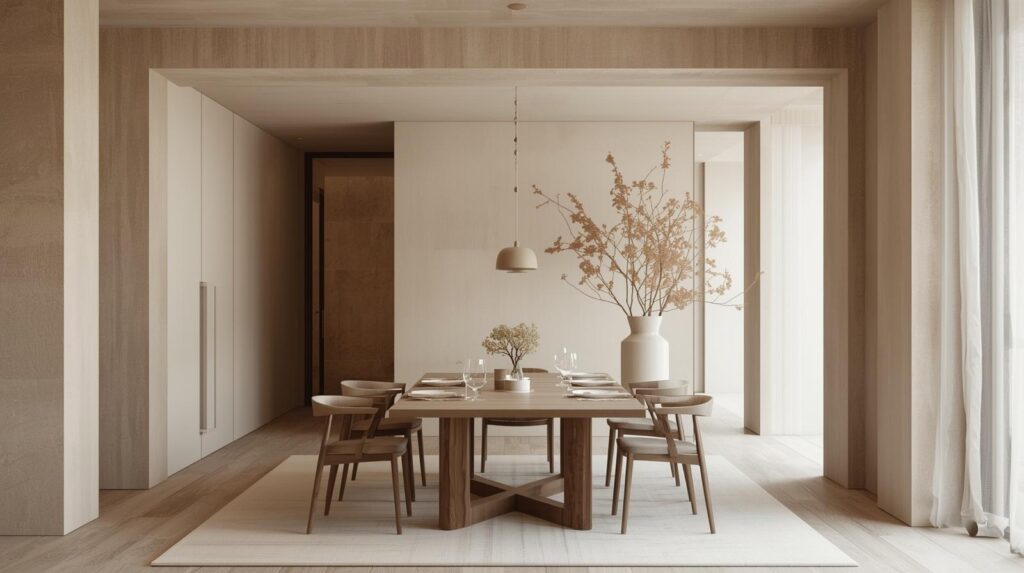
Warm neutrals do this particularly well. Think raw linen against unbleached plaster walls, a honey-toned oak table over a clay-hued tile floor. Cool neutrals work differently but just as well: pale concrete walls, dove-gray chairs, a table in washed ash wood. The key is that no single element leaps forward in color while the rest recede. Everything exists at roughly the same visual intensity.
Where people lose this is in the accessories. A single terracotta vase on an otherwise pale table does not break the tonal palette. But a terracotta vase next to a cobalt blue candle holder next to a printed table runner next to a geometric fruit bowl creates color competition that no amount of minimalist furniture can resolve. The accessories should share the palette’s logic even when they break its exact shade.
4. Control Lighting With Intention, Not Abundance
Lighting is the most underestimated tool in a minimalist dining area, and most rooms get it wrong in the same way: too many sources fighting each other. A maximalist room can absorb a ceiling fixture, a sideboard lamp, recessed spots, and a candle cluster. A minimalist dining area cannot.
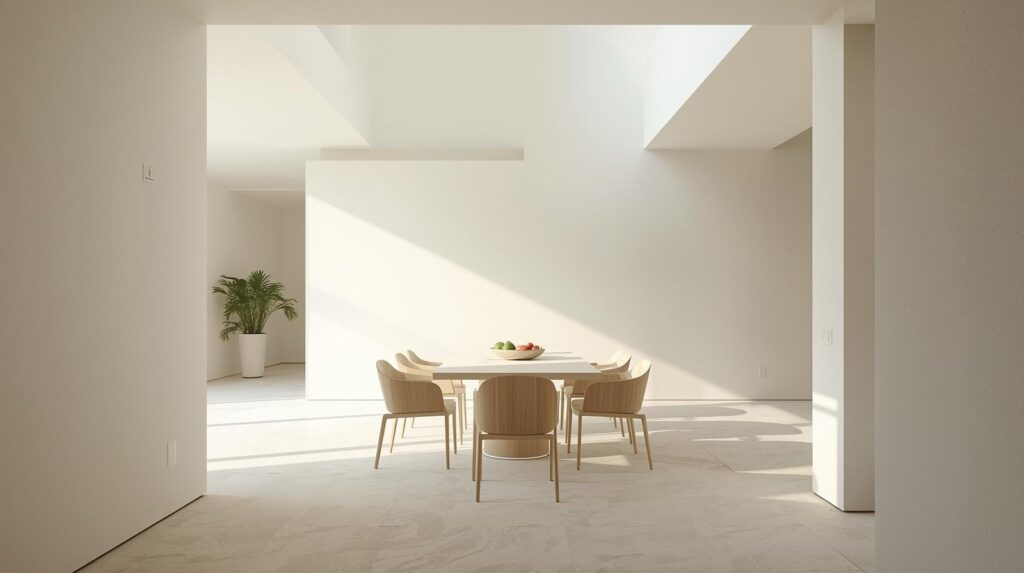
One pendant light positioned directly above the table, hung at the right drop height so it clears seated eye-level by a few inches, does more for atmosphere than an entire recessed grid. The pendant’s form should be considered the same way a piece of sculpture is considered: simple enough not to distract, interesting enough to reward a second look. A matte plaster dome, a hand-blown amber glass globe, a blackened steel ring with a bare-filament bulb, any of these works because each one reads as singular rather than repeated.
Layering in minimalist dining spaces means adding dimmer control, not adding fixtures. A single pendant on a dimmer switch delivers everything from bright clarity during a family lunch to soft amber glow during a dinner party. That versatility through reduction is exactly what minimalist design practice looks like in functional terms.
5. Keep the Floor and Ceiling Free of Visual Competition
Two surfaces that receive surprisingly little attention in dining room design are the floor and the ceiling, and in a minimalist space, those surfaces either carry the design forward or undermine everything else. A heavily patterned area rug under a minimalist dining table creates an immediate conflict of intention. The rug pulls attention downward just as the table is meant to anchor it.
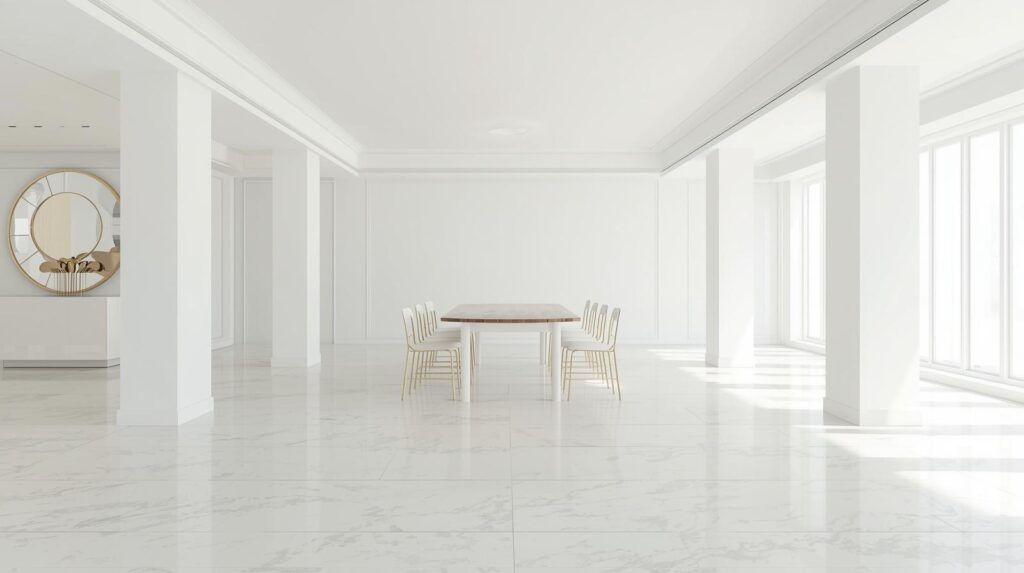
This does not mean the floor must be bare hardwood or polished concrete, though both work beautifully. It means a rug, if used, should be so tonally aligned with the space that it registers as texture rather than pattern. A thick, undyed jute rug beneath a natural wood table on pale floorboards, for instance, reads as a continuation of material language rather than a decorative intervention.
The ceiling follows the same logic. Exposed beam work that is painted the same tone as the ceiling recedes. Beams painted in contrast become a dominant feature that needs the rest of the room to compete. A plain plaster ceiling in a warm off-white asks nothing of the room. It simply expands it.
6. Edit the Dining Surface to Only What Belongs
A dining table in a minimalist space should hold, during ordinary days, almost nothing. This is the point at which many people stall, because the table surfaces attract the household’s physical entropy: keys, school bags, unopened post, a phone charger, someone stretched from the wall. The design principle and the daily practice need to align.
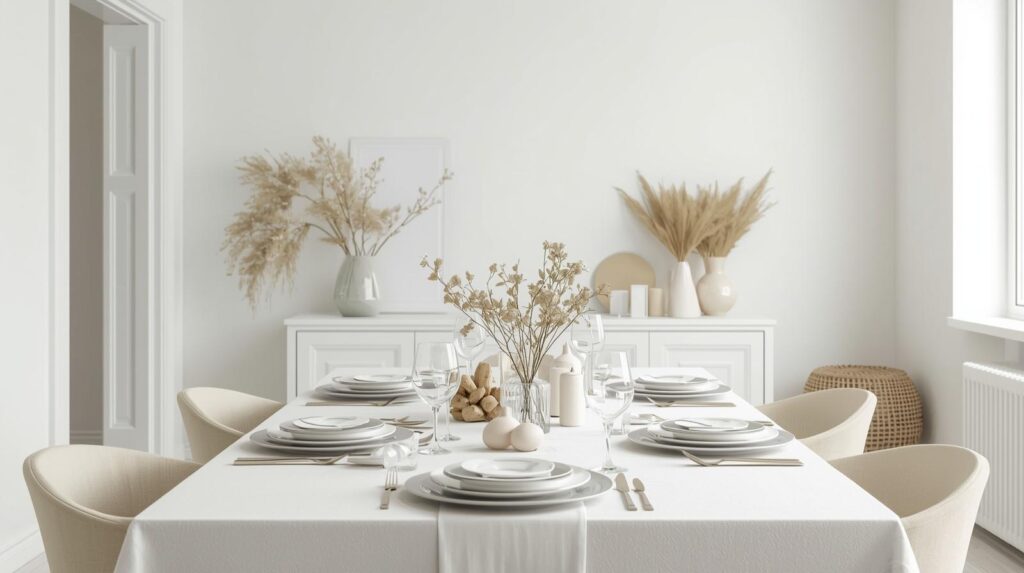
A single small ceramic bowl at the table’s center serves as a collection point for one considered object: a single stem from the garden, a small candle, a stone that means something to the household. That object changes with the season. It does not compete with the table’s form or the room’s palette, it participates in it.
Markus, an architect who designed his own home’s open-plan dining area in the Scandinavian tradition, described the rule he gave his family: the table holds only what will be used in the next twenty minutes. Everything else has a drawer, a hook, or a basket near the door. That single operational principle kept his otherwise formal dining table feeling genuinely lived-in rather than sterile, because the intention was always toward the meal rather than toward the maintenance of appearances.
7. Use Natural Materials to Prevent the Space Feeling Cold
The most common objection to minimalist dining design is that it produces cold, museum-like spaces that feel unwelcoming. In most cases, that coldness is a material problem, not a design philosophy problem. Rooms dominated by high-gloss lacquers, polished chrome, and hard synthetics feel cold because those surfaces reflect rather than absorb. They show every fingerprint and shadow harshly.
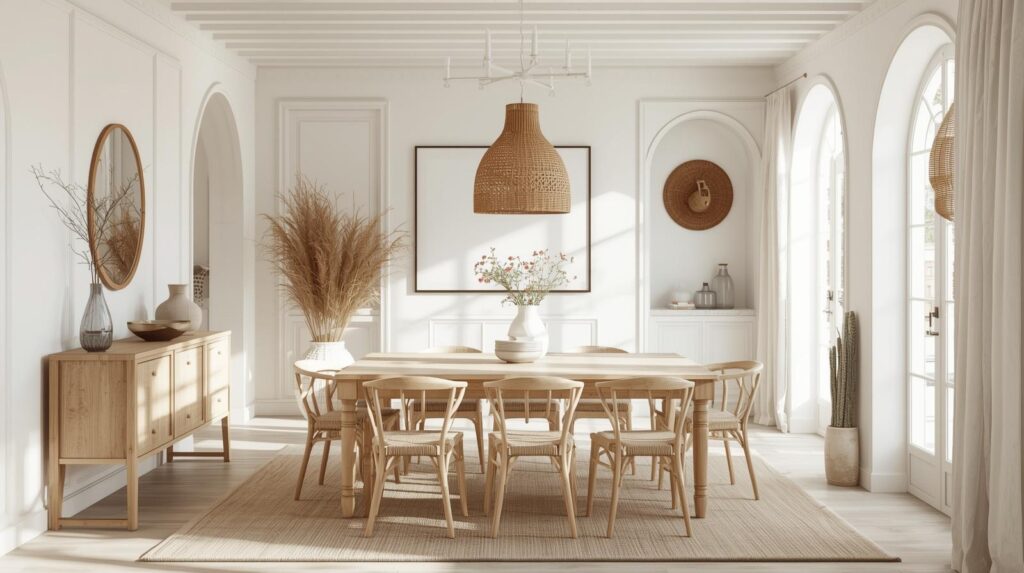
Natural materials solve this without adding visual complexity. Raw linen chair upholstery softens the sightline with its texture. An unfinished oak tabletop carries the warmth of grain variation across its surface. Rattan pendant shades scatter light in organic ways that no glass or metal shade can replicate. Matte stone tiles at the floor absorb light instead of bouncing it, giving the room a groundedness that prevents the space from feeling elevated into abstraction.
The material principle in minimalist dining spaces is not about quantity but quality of surface. One beautiful raw-edge stone countertop on a narrow sideboard contributes more sensory warmth than a room full of reproduced wood-effect laminates. The investment in genuine natural materials is paid back in the room’s felt atmosphere, which is the thing that makes people want to sit longer at the table rather than leave the moment the plates are cleared.
Wrap Up
A minimalist dining area is not a room emptied of personality. It is a room where every choice is considered and every surface earns its presence. Starting with the table, editing the chairs, controlling the palette and the light, and grounding the space in genuine natural materials creates a dining environment that feels genuinely calm rather than merely sparse. The result is a space that makes meals feel like occasions again, which was the point all along.
FAQs
What is the easiest way to start making a dining room more minimalist?
Begin by removing everything from the dining table that is not directly related to eating, and reassess the room from there. Reducing surface clutter alone reveals what the space is actually capable of before any furniture changes are needed.
Can a small dining area still look minimalist?
A smaller dining space often benefits more from minimalist principles than a large one, because restraint in a tight area creates an impression of volume. Choosing a round table over a rectangular one, using light-toned upholstery, and avoiding heavy rugs all make compact spaces feel more open.
Do minimalist dining rooms have to be white or gray?
Not at all. Tonal warmth in earthy neutrals, warm taupes, or soft terracottas works just as well as cool grey-white palettes. The principle is coherence of tone, not commitment to a specific color family.
Disclaimer:
The content shared by Fall Rugs is solely for research and informational purposes. Fall Rugs is not a professional interior design or home renovation consultancy, and the information provided should not be considered professional advice for home improvement or decor. All ideas and suggestions are based on current trends and general knowledge in the home decor industry.