
TL;DR
Creating a sophisticated dining space in a small apartment requires careful selection of high-impact, affordable design elements. By focusing on vertical elements, rich textures, and light-reflective materials, renters can achieve an upscale aesthetic for less than fifty dollars. Strategic placement of these curated accents establishes distinct zones and enhances the overall dining experience.
Introduction
Can a compact dining corner truly mimic the atmosphere of an upscale bistro without draining your savings account? Many apartment dwellers face the challenge of styling restricted square footage without altering permanent fixtures or overspending on furniture. The secret lies in selecting design elements that carry significant visual weight while maintaining a modest physical footprint. Sprucing up an eating alcove involves a thoughtful curation of materials, textures, and lighting choices that collectively shift the mood of the entire room.
The Architectural Logic of Small Scale Interiors
Apartment living often forces a compromise between utility and aesthetic expression in common areas. When square footage is at a premium, the dining area frequently suffers from a lack of identity, blending into a kitchen walkway or a living room corner. Successful interior design within tight constraints relies heavily on defining clear spatial boundaries without constructing physical barriers.
Selecting the right accents requires looking closely at how objects occupy three-dimensional space. Pieces that possess high visual density can anchor a room, while slender items draw the eye upward to create an illusion of heightened ceilings. Balancing these geometric elements prevents a small dining table from feeling overwhelmed or cluttered by everyday items that accumulate throughout the week.
Lighting playing across different surfaces transforms how we perceive distance and boundaries. By introducing varied textures and reflective objects, a simple wooden table becomes a sophisticated focal point. The design approach focuses on establishing a strong mood through deliberate, inexpensive choices that project quiet sophistication without requiring structural modifications.
1. Slender Matte Black Taper Candle Holders
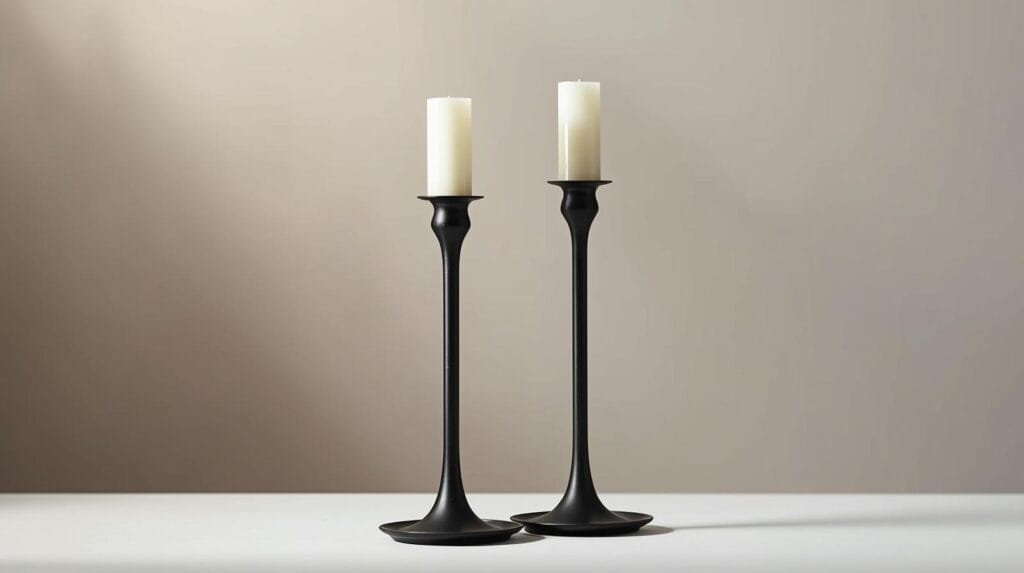
Vertical lines work wonders in constrained architectural spaces by drawing the eye away from narrow floor dimensions. A trio of slender matte black taper candle holders offers an immediate sense of structure to a dining surface. The stark contrast of the dark metal against a light table background creates a graphic focal point that commands attention instantly.
Industrial designers frequently employ dark matte finishes to ground a design scheme and add visual weight. These specific holders occupy very little physical space on a tabletop, leaving ample room for plates and glassware during meals. Their varied heights encourage the eye to move dynamically across the setting.
The Interplay of Verticality and Ambient Light
Table styling often falls flat when all objects sit at the exact same horizontal plane. Taper holders break this monotony by extending the design composition upward into the room’s negative space. This vertical extension shifts the focus away from the limited width of the table itself toward the total height of the room.
When the candles are lit, the moving shadows create an intimate atmosphere that softens sharp apartment walls. The flickering illumination draws guests inward, casting a warm glow that makes inexpensive materials look vastly more luxurious. This sensory shift completely modifies how people experience the dining space during evening hours, making the room feel enclosed and secure.
Experienced hosts know that lighting influences the perceived taste of food and the comfort of guests. Soft, low-level illumination encourages slower dining and deeper conversation, mimicking a fine boutique restaurant atmosphere. Investing in simple wax tapers and metal holders yields a high return in ambient quality for minimal cost.
2. Heavy Textured Woven Cotton Table Runners
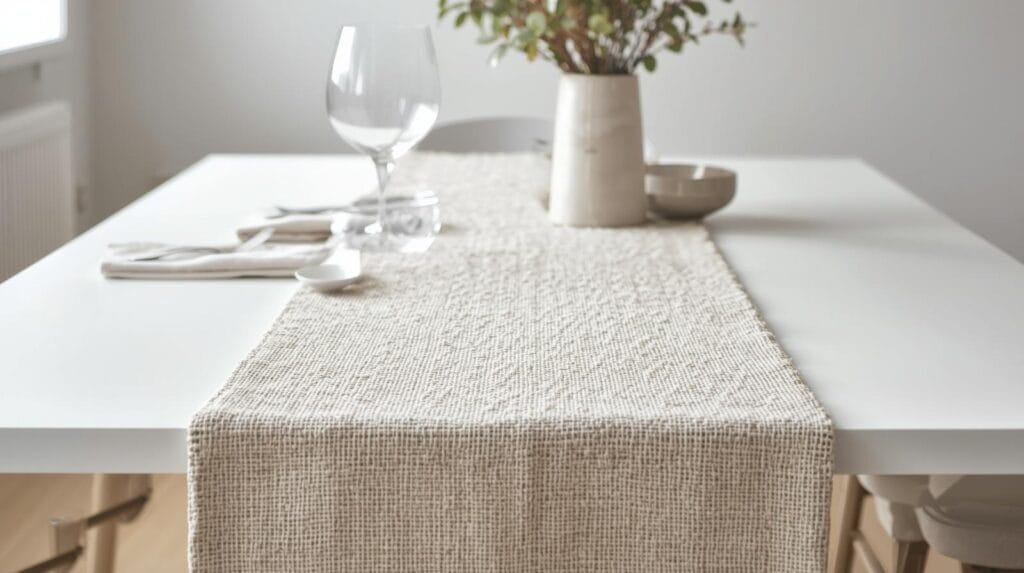
Hard surfaces dominate standard apartment dining furniture, which often features laminate or veneered finishes that look sterile. Introducing a heavy textured woven cotton table runner injects necessary tactile variation into the immediate environment. The physical softness of the fabric counters the rigid lines of modern furniture, creating a beautifully balanced and inviting sensory experience.
A runner serves as a neutral canvas for the rest of your tabletop components. Choosing a neutral hue with a prominent weave pattern adds depth without introducing visual chaos or conflicting color schemes. The textile acts as a stabilizing anchor, gathering separate items like plates, cutlery, and centerpieces into a singular, cohesive design statement that anchors the room effortlessly.
Spatial Boundary Formatting Through Textiles
Using long textiles helps define the dining zone within an open-concept apartment layout. The runner establishes a clear visual pathway down the center of the table, guiding the gaze along a specific axis. This structural line visually extends the length of shorter tables, altering the perceived proportions of the furniture.
Fabric elements also absorb sound, a critical benefit in apartments with hardwood floors or bare walls. Reducing echo contributes to a relaxed, quiet dining atmosphere that feels separate from the rest of the living space. Selecting a durable, machine-washable cotton ensures that this specific design element remains practical for daily use over an extended period.
Textiles allow for quick aesthetic shifts without requiring storage space for bulky furniture items. Folding a runner away takes seconds, yet unfolding it instantly prepares a room for guests. It represents a flexible tool for renters who need multi-functional spaces that transition from workspace to dinner party.
3. Ribbed Amber Glass Geometric Vases
Color and transparency represent excellent tools for altering the perception of space in small rooms. A ribbed amber glass vase provides a warm tone that enriches the color palette of a dining room. The fluted texture on the glass catches morning and evening light, casting beautiful patterned shadows across the immediate surroundings.

Glass objects possess a unique quality where they provide visual interest without blocking sightlines or making a room feel crowded. An amber hue infuses a sense of historic charm and sophistication into a contemporary apartment setting. The vase functions beautifully when holding a single botanical stem or when left entirely empty as sculpture.
Light Refraction and Chromatic Warmth
Positioning glass near windows or light sources produces dynamic illumination patterns throughout the afternoon. The amber tint filters incoming light, casting a golden hue that enhances the coziness of the dining nook. This subtle color play introduces a layer of sophistication that standard clear glass simply cannot match.
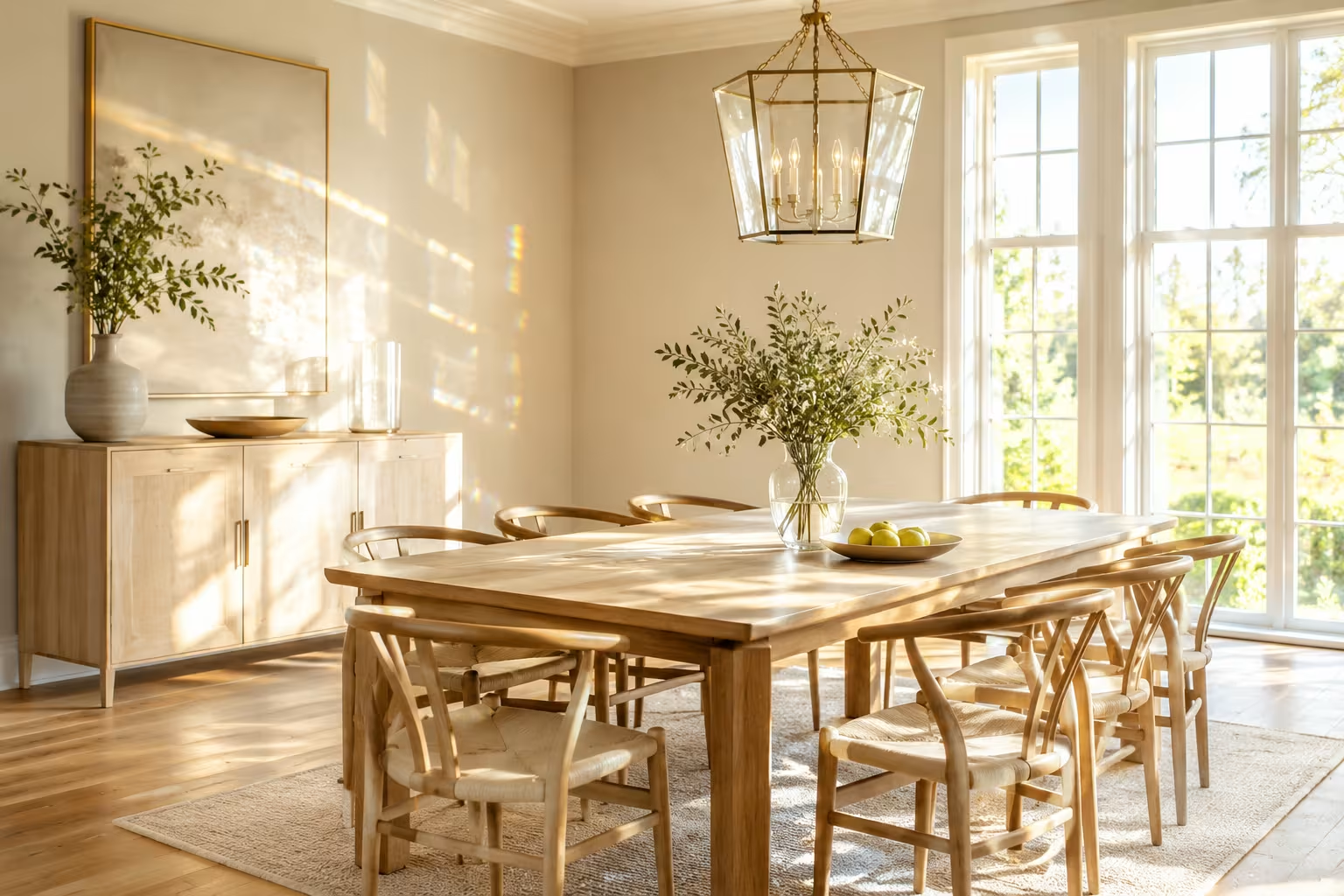
The vertical ribs on the surface of the vase create a rhythmic pattern of highlights and shadows. This structural detail adds a sense of craftsmanship to an inexpensive item, making it appear like a costly boutique find. It demonstrates how careful material selection can yield high aesthetic returns on a minor investment.
Using glass also bridges the gap between organic elements and manufactured furniture. Filling the vase with dried eucalyptus or foraged branches introduces nature indoors without maintenance costs. The combination of amber tones and green foliage grounds the dining space in a natural palette.
4. Removable Geometric Patterned Wall Panels
Blank walls can make a small dining room feel stark and uninspiring, resembling a temporary office rather than a home. Removable geometric patterned wall panels offer an excellent method for creating a distinctive accent wall without risking a security deposit. These self-adhesive options allow apartment dwellers to experiment with bold patterns and architectural lines with peace of mind.
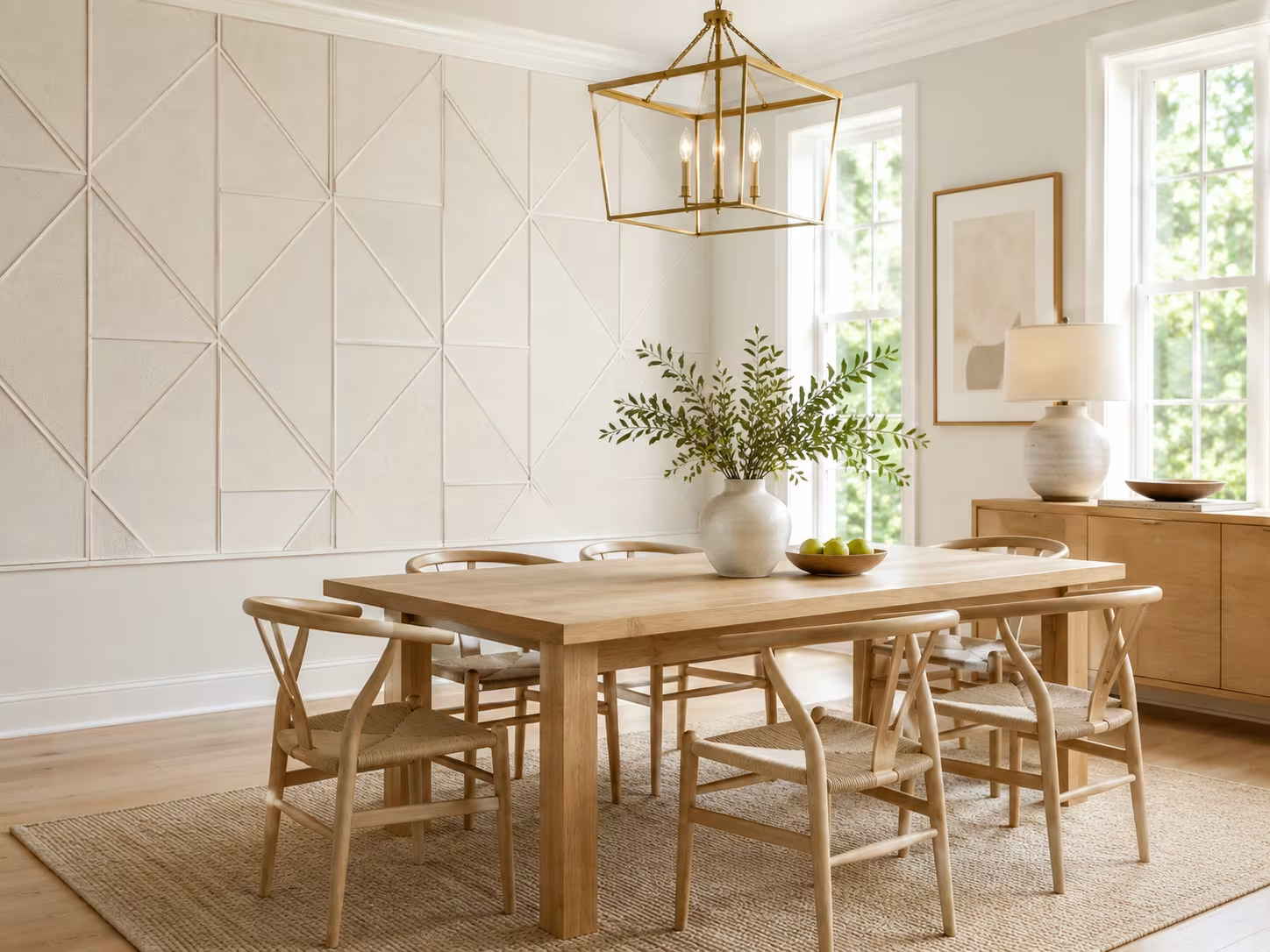
Applying a geometric pattern directly behind the dining table establishes a clear destination within a multi-functional room. The shapes draw the eye, turning a plain drywall surface into an engaging backdrop for meals and conversation. This simple design modification redefines the room’s layout, providing a dedicated sense of place.
Establishing Visual Anchors Without Permanent Alterations
When a dining table floats in an open area, it can feel unanchored and accidental within the apartment layout. A patterned backdrop secures the furniture arrangement, making the placement look intentional and grounded. The contrast between the wall design and the furniture creates a layered effect that suggests architectural depth.
Modern removable wall products feature sophisticated matte finishes that closely mimic high-end traditional wallpapers. They peel away cleanly when it comes time to move out, avoiding costly wall repairs or repainting fees. This balance of professional appearance and rental practicality makes it an exceptional choice for modern urban living.
Wall patterns also influence how light bounces around the dining room during the day. A subtle geometric print creates shadows that add texture to flat drywall surfaces. This structural illusion makes the entire room feel custom-designed rather than mass-produced.
5. Minimalist Brushed Metallic Floating Ledges
When floor space is severely limited, walls become your most valuable asset for introducing character. A minimalist brushed metallic floating ledge offers a sleek platform for display without encroaching on walking paths. The metallic sheen introduces a modern element that catches overhead light, brightening up dim corners of the dining space.
Floating ledges allow you to rotate art pieces, small books, or ceramic items as seasons change. This flexibility ensures your dining room style remains dynamic and personal over time. By raising decorative pieces off the table surface, you preserve precious room for dining essentials while maintaining a styled environment.
Vertical Spatial Optimization and Object Curation
Mounting shelves slightly above eye level encourages people to look upward, emphasizing the vertical volume of the room. This shift in perspective makes compact dining alcoves feel much more spacious than their actual dimensions suggest. The thin profile of a metallic ledge ensures that the shelf itself remains unobtrusive.
Curating the objects on the ledge requires a restrained approach to prevent a cluttered appearance. Mixing a small framed print with a single trailing plant creates a balanced, organic composition. This thoughtful arrangement introduces life and personality into the room while reinforcing the overall design concept of the space.
Metal finishes reflect light in a sharp, clean manner that contrasts beautifully with soft fabrics and glass. The presence of brushed brass or silver tones introduces a refined note to the wall. It acts as a subtle frame for whatever objects you choose to display.
Real World Scenario: The Oak Street Vignette
Consider the transformation of a small studio apartment on Oak Street, where the resident struggled to separate her sleeping quarters from her eating area. The space felt chaotic, with a small square table pushed directly against a plain white wall. The arrangement offered little comfort or distinction during evening meals.
The resident introduced a heavy woven table runner along with three black taper candle holders of varying heights. She mounted a single brushed metal ledge on the wall above, displaying a single line art print. These additions cost less than fifty dollars combined but entirely reshaped the perception of the corner.
The vertical lines of the candles and the texture of the runner created a distinct boundary that defined the dining zone. This simple configuration provided an upscale atmosphere that made hosting small dinners comfortable. The overall success rested entirely on managing scale and material contrast rather than investing in expensive furniture pieces.
Visitors immediately noticed the intentionality of the setup, assuming the transformation required extensive interior design consultation. The success demonstrated how small budget adjustments yield significant lifestyle improvements without structural alterations. It serves as an example for renters who want to maximize their living environments on a modest budget.
Common Selection Errors in Budget Decorating
A frequent mistake when decorating on a budget involves purchasing multiple small, inexpensive knick-knacks. Accumulating too many tiny objects creates visual clutter that makes a small room feel cramped and disorganized. Selecting fewer pieces with greater visual weight creates a cleaner, more upscale appearance that feels calm.
Another pitfall is ignoring the scale of the furniture when picking out accessories for the room. A massive vase can dwarf a small bistro table, while tiny candle holders might disappear entirely on a larger surface. Measuring your space and visualizing the proportions beforehand prevents these awkward imbalances from disrupting your design scheme.
Misaligning colors can also disrupt the visual harmony of a compact space. When budget decor pieces feature wildly clashing tones, the dining area loses its cohesion and feels fragmented. Sticking to a unified color palette ensures that each item complements the others, building a look that appears truly expensive.
Wrap Up:
Maximizing the style of an apartment dining room does not require an extravagant budget or permanent renovations. Focusing on high-impact elements like matte black candle holders, textured runners, and ribbed glass allows you to create a sophisticated space for under fifty dollars. By thoughtfully balancing vertical lines and material textures, you can transform any small eating corner into an inviting destination. Prioritize scale and cohesion to achieve a professional look that respects both your wallet and your square footage.
FAQs Section
How do you make a small apartment dining room look expensive on a budget?
Focus on incorporating a few high-quality textures like woven cotton and ribbed glass while keeping the color palette cohesive. Introduce vertical elements like slender candle holders to draw the eye upward and create an illusion of space.
What is the best way to define a dining space in an open apartment layout?
Use a textured table runner to establish a clear visual axis and mount a floating ledge or removable wall panel behind the table. These elements act as visual anchors that separate the eating area from the rest of the room.
How do I choose the right size decor for a small dining table?
Select items that provide vertical height without occupying too much surface area, leaving plenty of room for actual dining use. Avoid clustering numerous small objects, opting instead for two or three well-proportioned pieces that create a clean look.
Disclaimer:
The content shared by Fall Rugs is solely for research and informational purposes. Fall Rugs is not a professional interior design or home renovation consultancy, and the information provided should not be considered professional advice for home improvement or decor. All ideas and suggestions are based on current trends and general knowledge in the home decor industry.