
TL;DR
Traditional kitchen design is less about replicating the past and more about building warmth that outlasts trends. These 15 ideas draw on enduring materials, natural textures, and layout principles that turn a working kitchen into the room everyone gravitates toward. Think crafted wood, muted earthy tones, and layered detail rather than polished minimalism.
Introduction
Walk into a truly well-designed traditional kitchen and something shifts. The noise from the rest of the house seems quiet. There is a sense that this room has been used, loved, and arranged by someone who thought carefully about how people actually gather. That quality is not accidental, and it does not come from a single product purchase.
It comes from a series of deliberate choices made at the level of materials, layout, color, and light. What follows is a grounded look at 15 of those choices, pulled from real kitchen renovations and informed by the kind of institutional knowledge that only comes from watching many kitchens succeed and fail.
The Case for Traditional Design in a Modern Home
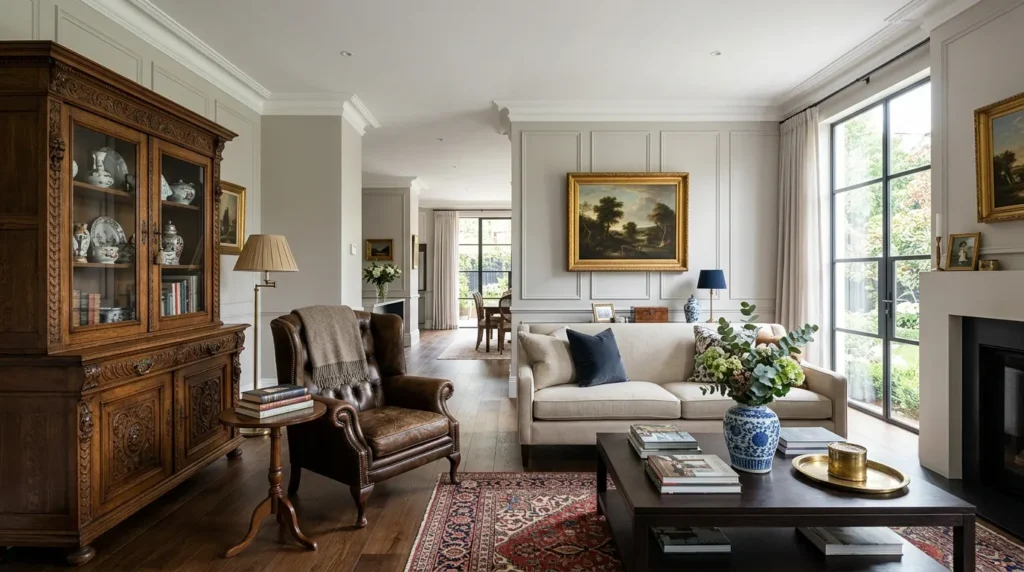
There is a recurring tension in kitchen renovation: the pull toward clean contemporary lines versus the desire for a space that actually feels inhabited. Sleek handleless cabinets and polished concrete look stunning in photography. In daily life, they can feel cold. Traditional kitchen design solves this by building in warmth at the structural level, not as an afterthought achieved through throw pillows.
Traditional does not mean dated. The visual language of a Shaker cabinet, a reclaimed timber beam, or a Belfast sink has survived because it solves real problems. Inset cabinet doors stay straight over decades. Thicker countertop edges resist chipping. Painted wood brightens with age rather than yellowing like laminate. Every traditional detail that has endured has done so because it performs well, not just because it looks good in a magazine.
The practical argument for traditional kitchen ideas is just as strong as the aesthetic one. These kitchens are designed around the logic of cooking and gathering. The pantry is deep enough to actually store things. The island, when present, is sized for people to stand around comfortably. Light comes from more than one source. For many, the ultimate expression of this structural warmth is integrating a fireplace, blending culinary function with living room comfort (you can explore some inspiring kitchen fireplace ideas to see how this works). These choices reflect an understanding of how a kitchen gets used across a full day.
Shaker Cabinetry: The Foundation That Never Fails
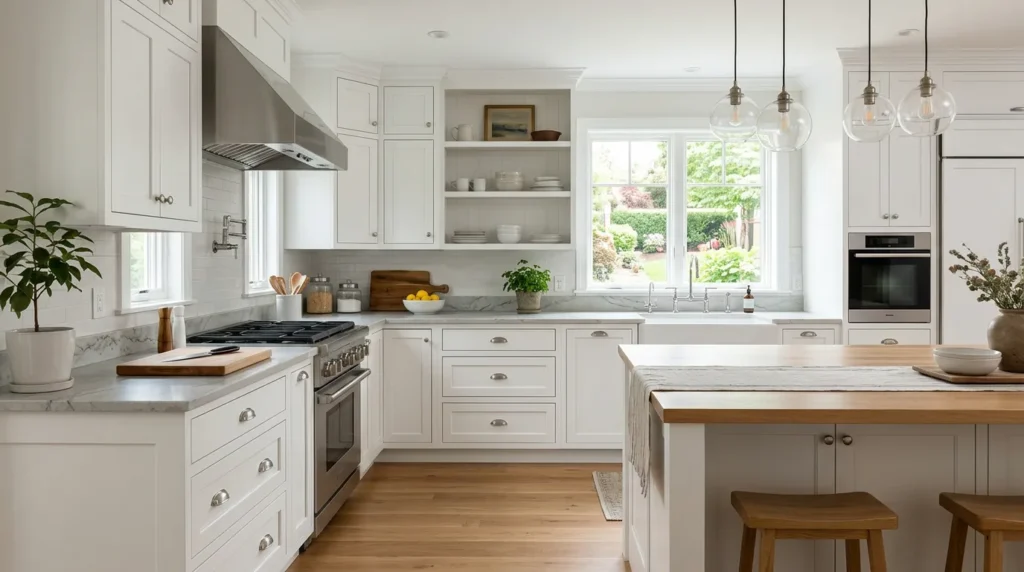
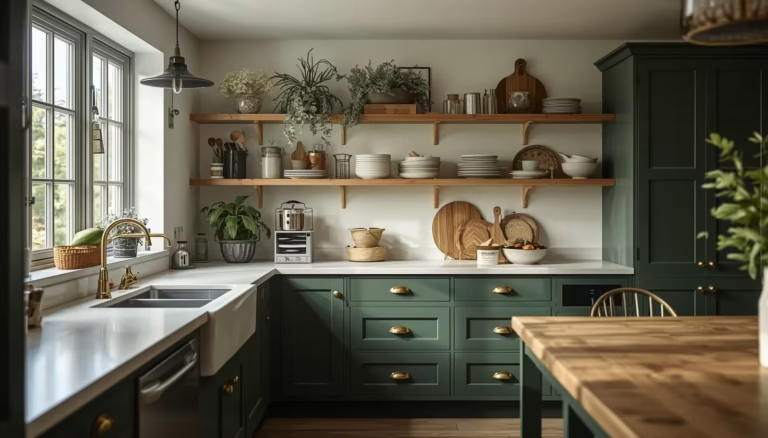
If there is a single element that anchors traditional kitchen design, it is the Shaker cabinet. The recessed panel door with its simple frame reads as honest and unadorned, which is precisely why it has outlasted dozens of competing styles since its origins in the 18th-century American craft movement. It works in a creamy off-white kitchen and equally well in a deep forest green one.
What makes Shaker cabinetry particularly valuable is its neutrality. It does not compete with bold countertops, decorative hardware, or statement tile. A kitchen with well-made Shaker cabinets in a warm bone color becomes a canvas on which every other decision gets to shine. The cabinet becomes background, in the best possible sense.
One point that often goes unmentioned in kitchen guides: the quality gap between Shaker cabinets is enormous. Face-framed inset construction, where the door sits flush within a solid wood frame, is far more demanding to produce than overlay construction. When a traditional kitchen looks genuinely old-world in its quality, it is almost always the result of inset construction, not simply the door profile. That distinction is worth budgeting for.
Hardware as a Character Detail
The hardware on Shaker cabinets deserves its own attention. Brushed brass, oil-rubbed bronze, and unlacquered brass all age differently and carry different associations. Unlacquered brass will darken and develop a patina over time, which suits a kitchen where you want things to feel lived in. Brushed nickel stays consistent but can read as contemporary. The choice is not cosmetic; it is about what story the kitchen tells ten years in.
The Farmhouse Sink: Function as Feature
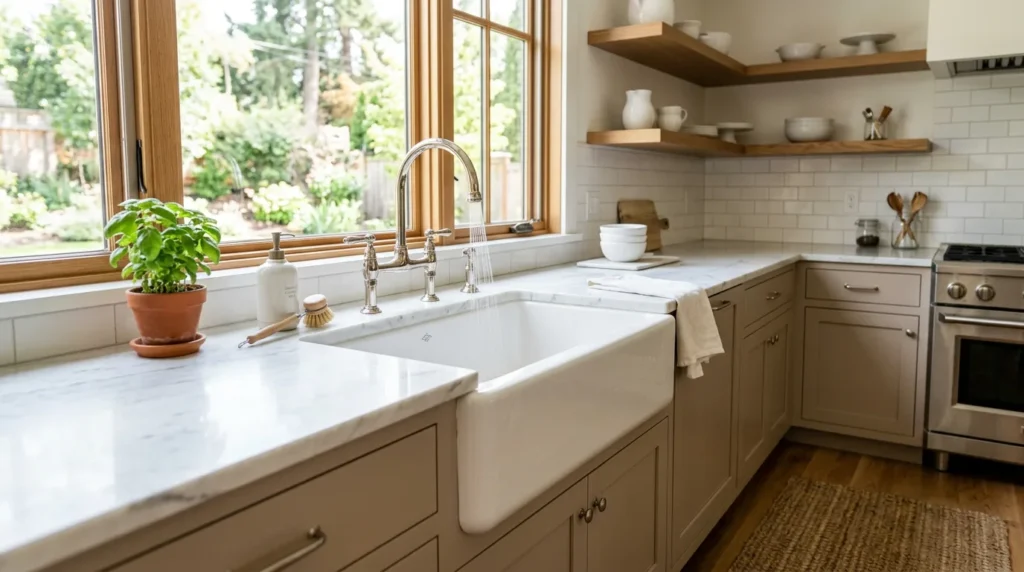
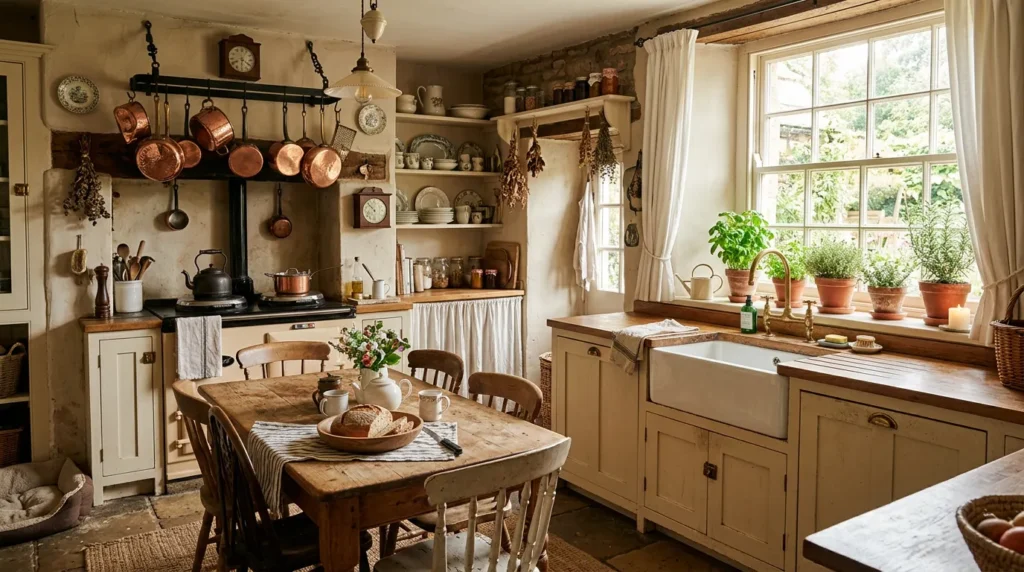
The apron-front farmhouse sink became a staple of traditional kitchens because it was built for serious work. The deep basin was designed for washing large pots and bathing children in an era when one sink served many purposes. That depth is still its defining virtue. A fireclay farmhouse sink in an antique white or biscuit tone adds visual weight that a drop-in undermount sink simply cannot.
Placement matters as much as the sink itself. Centering the farmhouse sink under a window is one of the most satisfying design decisions in traditional kitchen design. The light, the view, the working surface of the sink: they all align in a way that makes the most routine task feel considered. It is the kind of detail that does not appear in a floor plan but is the first thing you notice when you stand in the finished kitchen.
Warm Wood Tones and Open Shelving
Traditional kitchens breathe differently when wood is present in multiple forms. The cabinet box in painted wood, an island in a contrasting walnut stain, open shelves in white oak: layering wood tones creates a depth that no single material can achieve on its own.
Open shelving in a traditional kitchen is a different proposition than open shelving in a minimalist space. Here, the shelves are expected to hold things, real things: stacked plates, earthenware crocks, a row of glass jars with dried goods, cookbooks worn at the spine. The shelf becomes a display of how the kitchen is actually used. This is one of the moments where the concept of kitchen bookshelf ideas enters the conversation naturally; a curated row of food and cooking books on a dedicated kitchen shelf is both practical storage and a genuine design statement.
Choosing the Right Wood Finish
The finish applied to wood shelving and cabinetry in a traditional kitchen affects both durability and appearance. An oil finish on open shelves allows the grain to breathe and develops character with use, but requires periodic maintenance. A hardwax oil finish offers similar depth with better water resistance, which matters in a space where moisture is constant. Understanding these differences before installation prevents costly refinishing later.
Natural Stone Countertops and Their Long Game
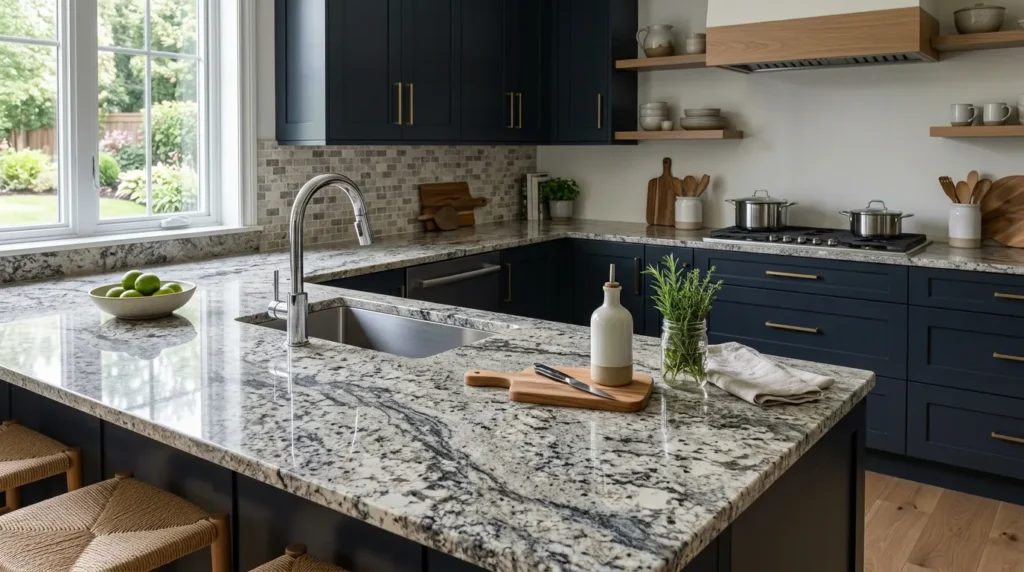
Marble has a complicated reputation in kitchens. Design publications love it. Anyone who has lived with it knows its etching and staining vulnerabilities. The traditional kitchen perspective on this is pragmatic: honed marble, with its matte surface, hides etching far better than polished marble. A honed Calacatta or Carrara countertop in a well-used kitchen develops a soft patina that actually improves over time.
Soapstone is the underacknowledged alternative that experienced kitchen designers often recommend for households that want the look of stone without the anxiety. It is non-porous, immune to acidic etching, and develops a dark, complex color as it ages. Rubbing it occasionally with mineral oil deepens the color and masks minor scratches. A soapstone kitchen counter treated this way after five years looks better than it did when it was installed.
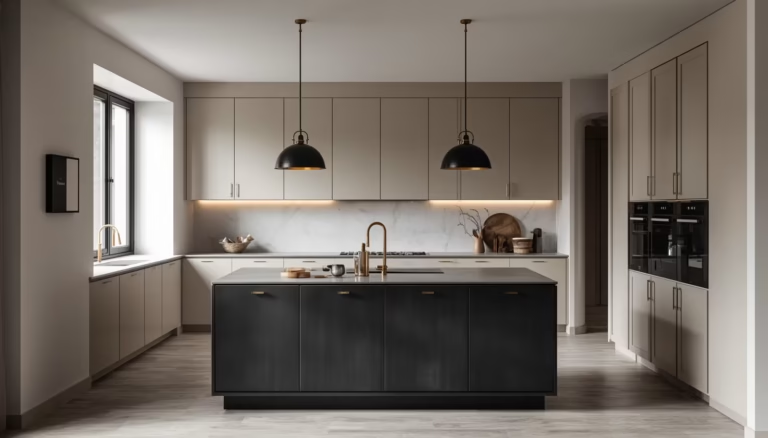
Thick countertop edges are a traditional kitchen signature. A two-inch or three-inch thick edge on a marble or soapstone counter communicates solidity in a way that a thin contemporary edge cannot. The eased or ogee profile applied to that edge is a minor detail with an outsized visual impact. The moodiness of soapstone pairs exceptionally well with darker cabinetry. If you’re drawn to this atmospheric aesthetic, you might find inspiration in these modern dark grey kitchen ideas that balance heavy stone textures with elegant, muted tones.
The Role of Color: From Butter Yellow to Deep Navy
Color selection in traditional kitchen design is one of the most misunderstood aspects of the process. The instinct is often to go safe with white or cream. White works, but it is only one option in a far richer palette.
Butter yellows and warm ivories create morning kitchens that feel genuinely welcoming from the first coffee. The color reads differently at 7am with eastern light than at 7pm under warm tungsten, and in a traditional kitchen, that shift is desirable. The concept often surfacing in searches around orange kitchen ideas sits adjacent to this: amber, turmeric, and terracotta tones applied to walls or lower cabinets can bring an unexpected richness that softens the formality of traditional joinery.
Deep navy and hunter green on lower cabinets with cream uppers is a combination that has proven its staying power. The contrast creates visual rhythm and the darker lower cabinets hide scuffs and handprints in a working kitchen. This is a detail that looks considered because it is considered, born from watching how kitchens actually wear over time. While deep blues and greens are classics, many homeowners are now leaning towards sophisticated neutrals. For instance, exploring modern dark grey kitchen ideas can show you how to achieve that same grounded, high-contrast look while keeping the space feeling incredibly timeless.
Gothic Kitchen Influence: When Drama Enters the Traditional Space
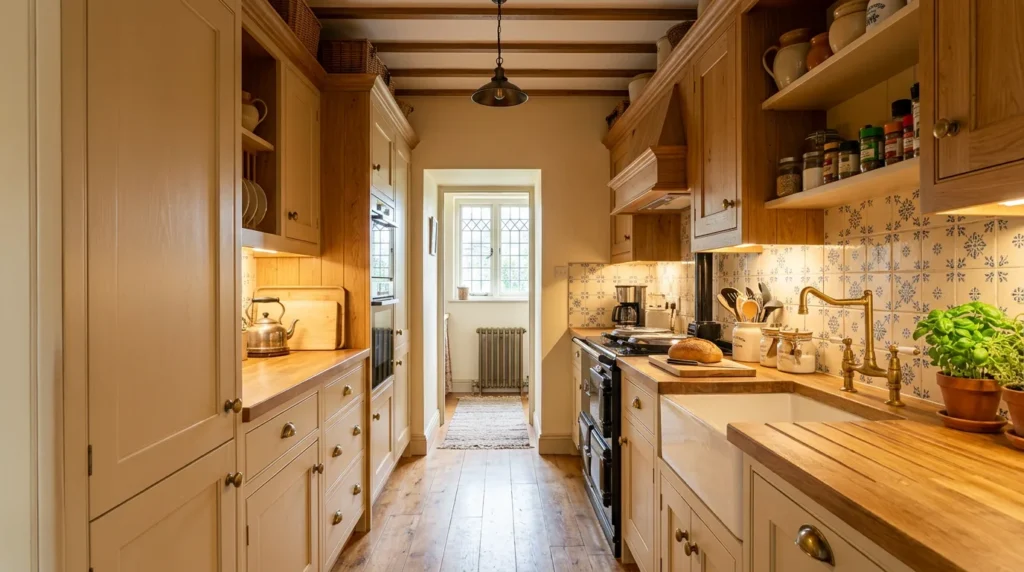
The gothic kitchen aesthetic, increasingly visible in design spaces online, is worth understanding as an extreme end of the traditional spectrum. Pointed arch details on cabinet doors, dark painted interiors, dramatic pendant lighting with wrought iron elements, and stone or slate floors all borrow from gothic architectural tradition. When handled with restraint, these elements produce a kitchen that feels singular without tipping into costume.
A gothic-influenced traditional kitchen does not require a full commitment to the aesthetic. A single pointed-arch window, or cabinets painted in a deep charcoal with forged iron hardware, can introduce that atmospheric quality while keeping the rest of the room grounded in conventional traditional design. The risk is in overdoing it; one statement is memorable, five become theater.
Lighting Layers That Change Everything
Lighting is where many traditional kitchen renovations fall short. A single ceiling fixture, even a beautiful one, produces flat light that drains warmth from any room. Traditional kitchens at their best use at least three layers: ambient overhead light, task lighting directly over work surfaces, and accent lighting that highlights the visual elements worth seeing.
Pendant lights over an island or peninsula in a traditional kitchen are usually in aged brass, aged bronze, or matte black with a glass shade. The shade shape matters; a wider flared shade casts more diffuse light, while a tight schoolhouse shade focuses a pool of light on the work surface below. Neither is universally right. The choice depends on ceiling height and how close the pendants hang to the counter.
Under-cabinet lighting is a technical detail with significant lifestyle impact. Strip lighting hidden behind a small valance at the front of the upper cabinet eliminates shadows on the countertop entirely. In a kitchen where the main ambient light is warm and relatively low, this task lighting becomes the working light of the kitchen, and its color temperature needs to match the ambient sources.
Narrow Kitchen Ideas and the Traditional Approach to Tight Spaces
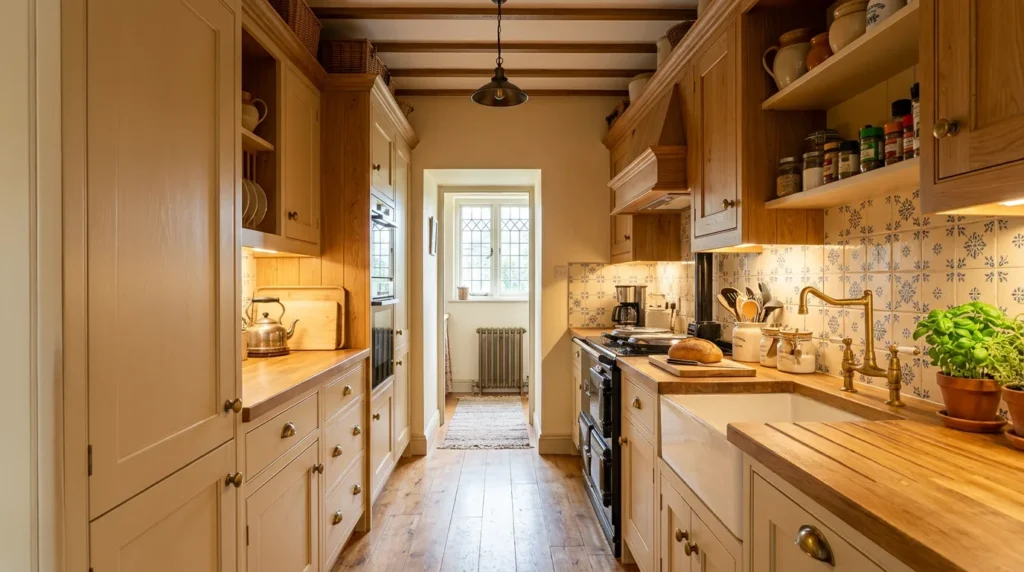
A kitchen that is eight feet wide or less presents real challenges for a traditional design, which tends toward mass and visual weight. The response is not to strip out all traditional elements but to deploy them more carefully. Narrow kitchen ideas in the traditional idiom often center on verticality: cabinets that run all the way to the ceiling, a single run of open shelving on one wall, and a mirror or a window at the end of the galley to extend the sightline.
Pale painted cabinetry in a narrow kitchen is not a compromise but a tool. Cream or off-white on all surfaces creates a continuous visual field that resists the feeling of compression. One contrasting element, a dark-tiled splashback or a natural wood floating shelf, gives the eye a place to rest without fragmenting the space.
The hardware choice in a narrow kitchen becomes more consequential. Cup pulls and bin pulls take up more visual real estate than a simple knob. In a tight kitchen where the cabinet doors are close together, the clean line of a simple bar pull in aged brass maintains order without visual clutter.
The Integrated Pantry and Kitchen Bookshelf Ideas
A dedicated pantry, whether a full walk-in or a bank of tall cabinets with pull-out shelving, is one of the most consequential things a traditional kitchen can include. When the pantry holds dry goods, small appliances, and overflow items, the main kitchen can stay visually clean and function-focused.
Within the pantry or along a kitchen wall, a dedicated zone for cookbooks is a design decision that sits at the intersection of function and personality. Kitchen bookshelf ideas in a traditional space work best when the shelving itself has some weight to it: thick oak boards on iron brackets, or a section of open cabinetry framed in painted wood. The books themselves become part of the visual: a row of French cooking classics, their spines worn and varied in color, tells you who lives here more efficiently than any decorative object. For more specific layouts and styling tips, you can explore our full guide on bookshelf ideas for cookbook enthusiasts.
Flooring That Ties the Room Together
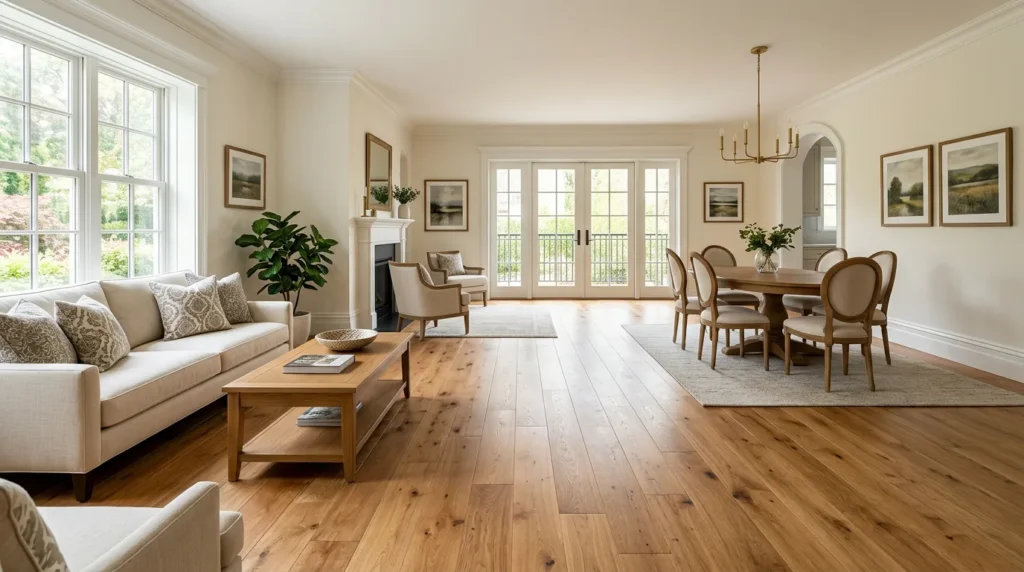
Traditional kitchen floors are almost always in natural materials: stone tile, encaustic cement tile, wide-plank wood, or terracotta. Each brings its own practical and visual logic.
Terracotta tiles, particularly large format ones in a slightly irregular handmade style, establish a kitchen’s traditional character more immediately than almost any other single element. They are warm underfoot in comparison to ceramic, they age beautifully, and they connect visually to the earthenware and pottery that often appears elsewhere in a traditional kitchen. The sealing regimen they require is the main maintenance consideration, but it is manageable.
Wide-plank oak flooring running through from the kitchen into an adjacent dining or living space creates a visual continuity that makes a home feel larger. The traditional approach here is to use the same floor throughout rather than changing materials at the threshold. The kitchen is not a separate service space but the room the rest of the home opens toward.
The Island as Social Infrastructure
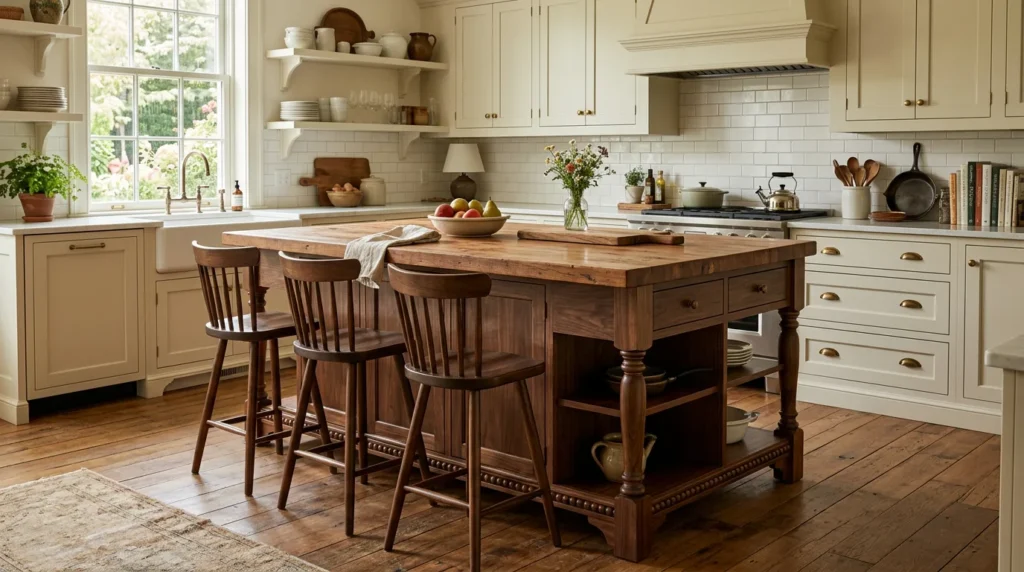
A kitchen island in a traditional space is not a minimalist slab. It is usually a piece of furniture in its own right, often in a contrasting color or wood tone to the perimeter cabinets, with turned legs or bracket feet that lift it away from the visual weight of the base cabinets. A butcher block top on the island creates a dedicated cutting and prep surface while adding warmth.
The social dimension of the island is what makes it genuinely useful. Bar-height stools on one side mean that people can sit, eat, and talk to whoever is cooking without being in the way. In households where the kitchen is the primary gathering space, the island becomes the table for all informal meals. If you love the idea of a kitchen that acts as the ultimate social hub, pairing your island layout with a cozy hearth is a game-changer—take a look at these kitchen fireplace ideas for more inspiration. Getting its dimensions right, both height and overhang for knee clearance, is more important than getting its aesthetic right.
Wrap Up
A traditional kitchen earns its authority through accumulated detail, not any single signature move. The combination of honest materials, thoughtful color, layered lighting, and a layout designed around actual human gathering produces a space that improves with use rather than fighting it. Whether the starting point is a tight galley that needs the narrow kitchen treatment or a larger room with space for an island and a pantry, the principles remain consistent: build for the long term, choose materials that age well, and let the room reflect how it is actually lived in. That is the standard these 15 ideas are measured against.
FAQs
What makes a kitchen “traditional” rather than just old-fashioned?
Traditional kitchen design is defined by natural materials, handcrafted details, and layouts built around real cooking and gathering rather than aesthetics alone. It feels timeless because its choices are grounded in function, not trend cycles.
Can traditional kitchen ideas work in a small or narrow kitchen?
Yes. The key is selecting traditional elements that add vertical interest and using a consistent, light color palette to avoid visual compression. Open shelving, tall cabinetry, and carefully chosen hardware all translate well into narrower spaces without losing the warmth traditional design is known for.
What is the best countertop material for a traditional kitchen?
Honed marble, soapstone, and thick-edged butcher block are all strong choices depending on how the kitchen is used. Soapstone requires the least maintenance and ages particularly well; honed marble is more demanding but develops a beautiful patina in an active kitchen.
Disclaimer:
The content shared by Fall Rugs is solely for research and informational purposes. Fall Rugs is not a professional interior design or home renovation consultancy, and the information provided should not be considered professional advice for home improvement or decor. All ideas and suggestions are based on current trends and general knowledge in the home decor industry.