

TL;DR
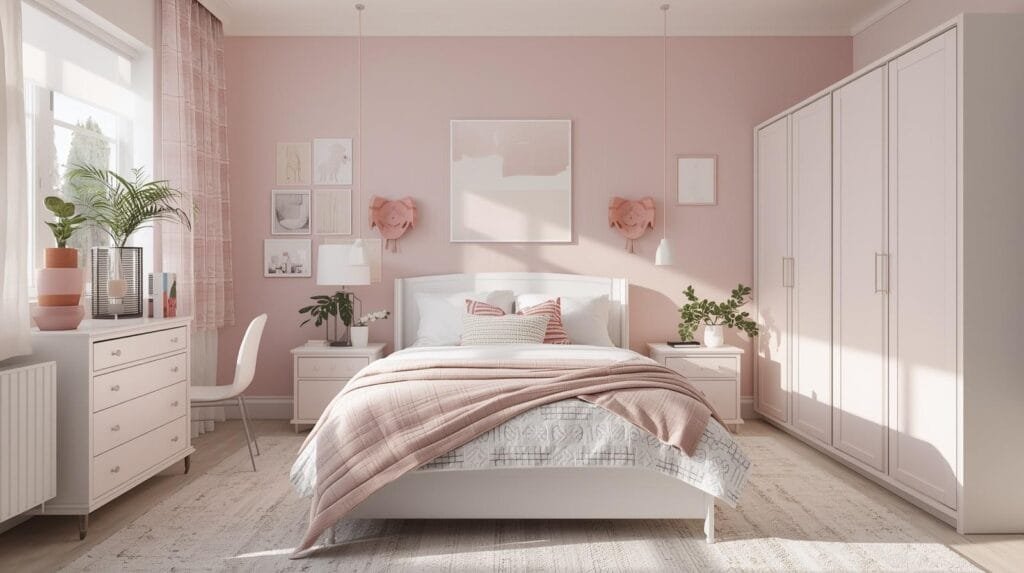
Teen bedrooms work best when they flex with changing tastes instead of locking into a single theme. The twelve ideas here focus on modular furniture, color palettes that evolve easily, and display systems that let her curate her own space. Good design gives her control while keeping the bones solid enough to last.
Introduction
Watching a thirteen year old outgrow the lavender walls she begged for two years ago teaches you something fast. Fixed themes fail. The smarter move shifts the thinking from decorating a room to building a framework she can reshape as her identity shifts. That shift matters because it saves money, reduces waste, and honestly reduces arguments. These twelve ideas come from watching real rooms adapt through high school, seeing what stuck and what got painted over the moment trends changed. They cover color, storage, layout, lighting, and the trickier question of how to make a room feel like hers without letting it become a time capsule of whoever she was last summer.
1. Start With a Neutral Shell, Then Layer in Personality
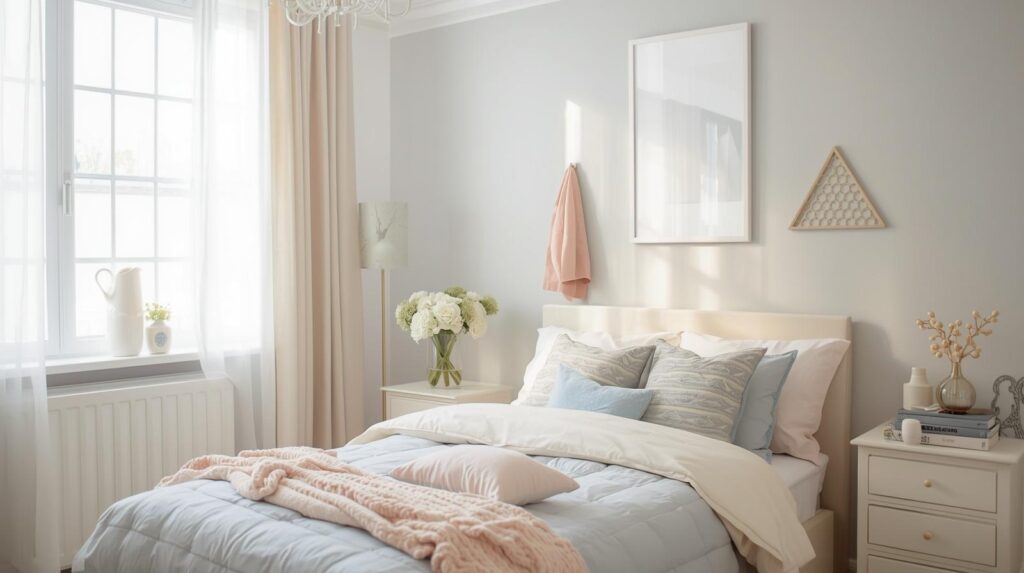
A soft white or warm greige wall does something a bold accent wall cannot do. It stays quiet while everything else gets loud. When the room starts with a neutral backdrop, the pressure comes off the paint and lands on the textiles, the art, the objects she actually cares about. Walls become a canvas rather than a commitment.
The Longevity Argument
The girl who paints her room charcoal at fourteen rarely still loves it at sixteen. Neutral walls absorb trend shifts without complaint. Swap a duvet cover, change the curtain panels, switch out the rug, and the whole room reads differently. The structure underneath stays stable. That stability matters for parents watching renovation budgets, but it also matters for a teenager still figuring out what she likes. A neutral shell gives her permission to experiment without consequences.
A real example involves a family in Portland who painted their daughter’s room a chalky warm white called School House White. Over four years, the room cycled through a boho phase with macrame and terracotta, a minimalist phase with black and white photography, and a cottagecore phase with floral bedding and dried flowers. The walls never changed. The room always felt current because the objects did the work.
How to Make Neutral Not Boring
Texture prevents neutral rooms from falling flat. A boucle throw, a nubby linen duvet, a thick wool rug, and linen curtains in slightly different tonal values create depth without color. Art with bold forms but restrained palettes gives the eye places to land. The trick involves layering at least three textures in the same tonal family so the room feels intentional rather than unfinished.
2. Let the Bed Do the Heavy Lifting
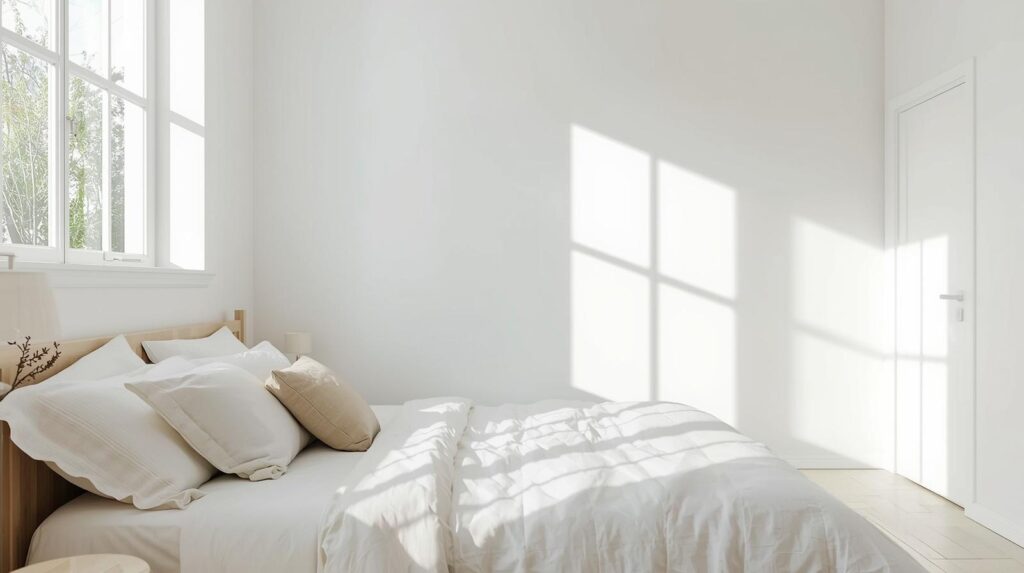
The bed occupies the most visual real estate in any bedroom. Getting that piece right solves half the design problems before anything else enters the room. A low platform bed with a simple upholstered headboard works across styles. She can pile it with pillows when the maximalist mood strikes or strip it back when she wants a cleaner look.
Upholstered Headboards as Anchors
A tall upholstered headboard in a performance velvet or textured linen creates a focal point that grounds the entire room. Performance fabrics matter here because teenagers spill drinks, apply makeup in bed, and generally treat fabric hard. The headboard shape should lean simple. Clean lines and soft curves age better than tufting or nailhead trim, both of which pin the room to a specific design moment.
Frames that sit low to the floor visually expand a small room. They also make the bed feel more loungy and relaxed, which suits how teenagers actually use their bedrooms. They sleep, scroll, study, and socialize in that one piece of furniture. Designing for that reality means choosing a bed that functions like a sofa during daylight hours and a proper bed at night.
Storage Beds for Small Spaces
Rooms with tight square footage benefit enormously from drawer storage built into the bed base. The space under a bed usually collects dust and abandoned socks. Turning it into pull out drawers for out of season clothing or extra bedding frees up closet space for things she accesses daily. The hardware needs to glide smoothly. Sticky drawers guarantee she will never use them after the first month.
3. Build a Vanity Zone That Feels Grown Up
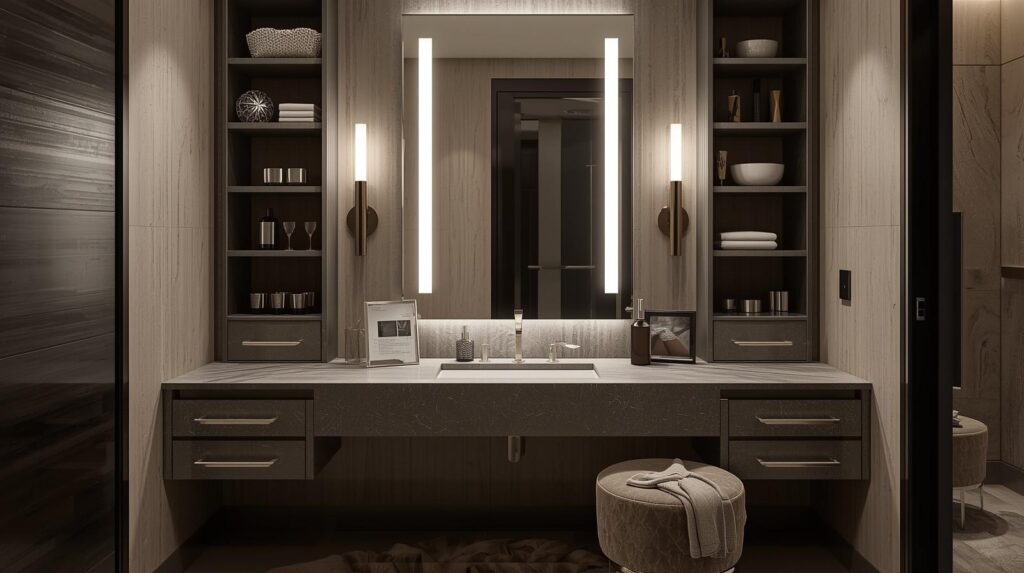
Most teen girls need a dedicated spot for skincare, makeup, and the general grooming rituals that take over bathroom counters. A vanity area carved out of a corner of the bedroom prevents bathroom traffic jams and gives her a territory she controls completely. It does not require a built in counter. A simple desk or console table paired with a good mirror and a comfortable stool does the job.
Lighting That Actually Works
Overhead lighting sabotages makeup application. A vanity mirror with adjustable LED brightness and color temperature settings makes a far bigger difference than most people expect. Warm light for evening looks, cool light for daytime makeup, and dimmable options for late night skincare routines. Side lit mirrors eliminate the shadows that ring lights create. A simple wall mounted swing arm lamp on either side of the mirror provides even, shadow free illumination that functions better than most dedicated vanity lights.
Storage for the Daily Rotation
The products she uses every day need to live on the countertop in an organized but accessible way. A tiered acrylic shelf or a simple ceramic tray keeps bottles from spreading across every surface. The less frequently used items belong in a drawer organized with small dividers. A closed cabinet underneath hides backup products, hair tools, and the chaos that accumulates when buying skincare faster than finishing it.
4. Create a Lounge Corner That Is Not the Bed
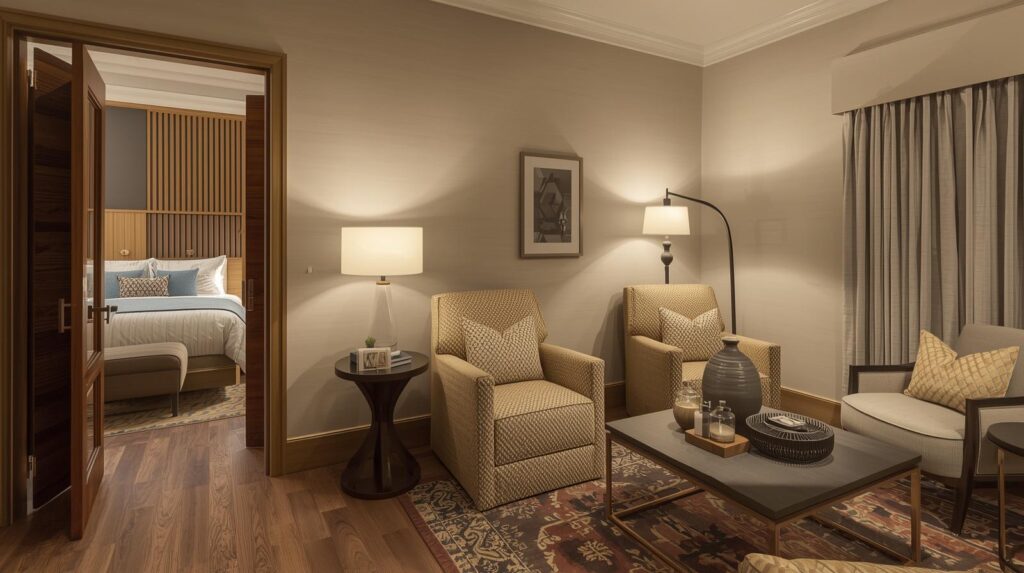
Teenagers need a place to sit that is not the mattress. A small armchair, a floor cushion setup, or a compact loveseat gives friends somewhere to land during visits and gives her an alternative spot for reading or scrolling. Beds that double as the only seating in the room start to feel claustrophobic after a while. The separation between sleep space and hangout space improves how the room functions day to day.
Chair Selection for Tight Rooms
Rooms under 120 square feet rarely accommodate a full armchair. A slipper chair with a low profile fits into corners that swallow larger pieces. Floor cushions with supportive backs work for rooms where every square foot counts. Beanbags have improved dramatically over the past decade. The structured ones with removable, washable covers in adult fabrics like corduroy or canvas no longer read as juvenile.
The furniture placement matters more than the piece itself. A chair angled toward the bed creates a conversation zone. A chair facing a window creates a quiet retreat. Small moves in layout shift how the room gets used. Watching a teenager gravitate toward the reading chair instead of the bed tells you the layout is working.
Surfaces Within Reach
Every lounge spot needs a surface for a phone, a drink, a book. A small side table or a C-table that slides under the chair keeps essentials within arm’s reach without eating floor space. Mounting a narrow floating shelf at armrest height beside the chair costs less and works better in extremely tight quarters.
5. Design a Study Area She Actually Wants to Use
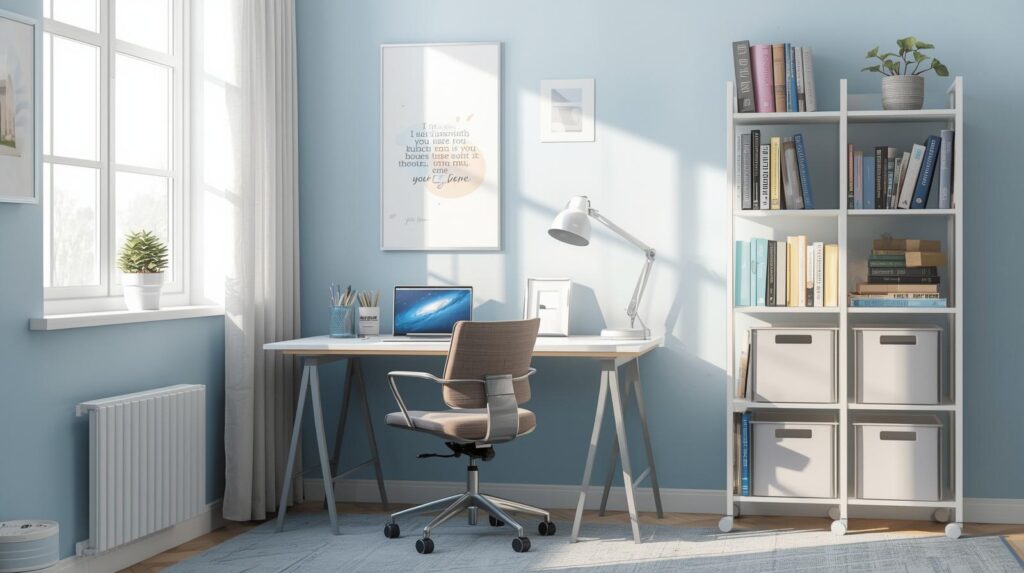
A desk facing a blank wall feels like punishment. The study setup needs natural light where possible and enough surface area to spread out textbooks, a laptop, and a notebook simultaneously. A 48 inch wide desk provides adequate space. Anything narrower frustrates. Wall mounted desks free up floor space in small rooms, but they sacrifice the flexibility to rearrange.
Ergonomics for Growing Bodies
A chair that adjusts in height matters more than a chair that looks good. Teenagers spend hours at their desks between homework and personal projects. An ergonomic task chair with lumbar support and adjustable armrests prevents the hunch that develops from years of leaning over laptops. The investment costs more upfront than a basic desk chair, but spine health is not the place to cut corners.
Screen positioning prevents neck strain. A laptop stand or external monitor raised to eye level keeps the cervical spine neutral. A separate keyboard and mouse setup makes this possible. The arrangement looks more serious than a laptop on a bare desk, and teenagers respond to that sense of legitimacy about their workspace.
Managing Cord Chaos
Cords multiply fast. A charging station tucked into a desk drawer with a built in power strip contains the mess. Cord clips mounted under the desk route cables out of sight. The visual calm of a tidy desk improves focus more than most people realize. Clutter signals chaos to the brain. A clean surface signals that work belongs here.
6. Use Color in Ways That Evolve With Her
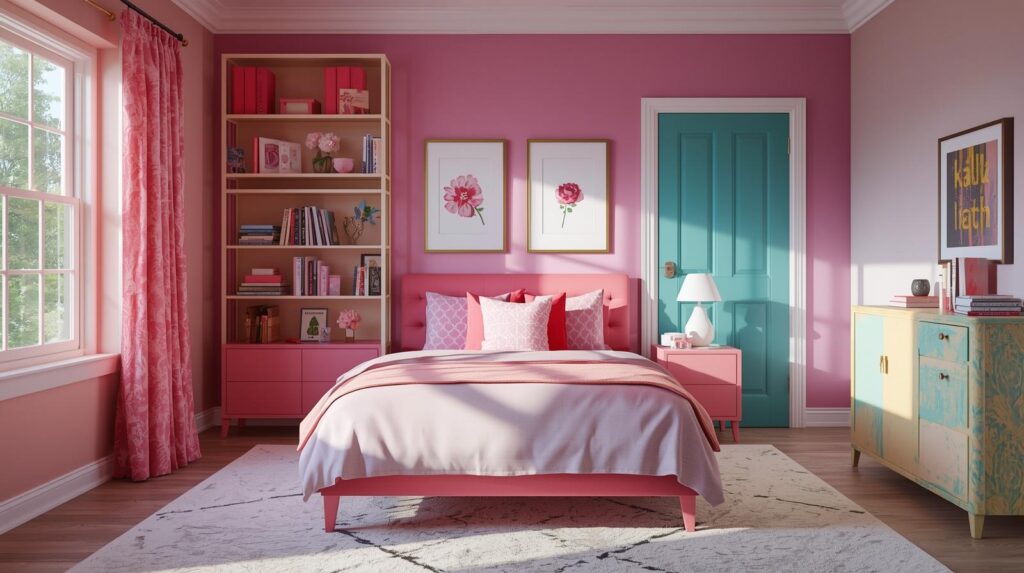
Painting an entire room a trendy shade guarantees a repaint within eighteen months. Injecting color through replaceable elements protects the underlying structure. Bedding, throw pillows, art, a single accent wall in peel and stick wallpaper, these pieces change easily when tastes shift. A dusty rose phase lasts a season. A terracotta phase lasts another. The walls stay steady.
The Accessory Approach to Color
A white room with emerald green velvet pillows and a matching throw reads as green without requiring commitment. Next season, swap the green for ochre and the room transforms. This approach works because it acknowledges the reality of teenage identity exploration. She is trying on aesthetics the way she tries on clothing. The room should support that experimentation rather than penalize it.
Textiles carry color more successfully than painted surfaces in most teen rooms. A rug in saturated hues grounds the space. Curtains in a moody tone frame the window. These elements install and remove without construction. That flexibility matters when she discovers a new favorite color in October and wants the room to reflect it by November.
Peel and Stick as the Compromise
A single accent wall in removable wallpaper satisfies the urge for pattern and color without the permanence of traditional wallpaper or painted murals. The pattern peels off clean when she outgrows it. Botanical prints, abstract geometries, and textured solids all work. The installation requires patience and a second pair of hands, but the result looks custom. Removing it takes an afternoon and leaves no trace.
7. Install Shelving That Displays Her Identity
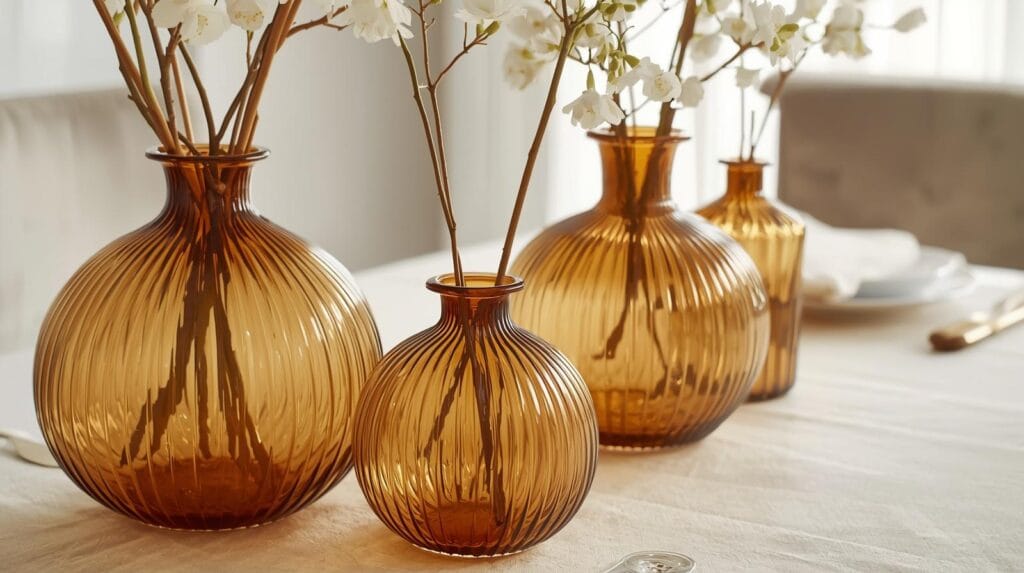
Floating shelves serve as a rotating gallery of whatever she currently loves. Books, vinyl records, small sculptures, travel souvenirs, framed photos, plants, the content changes as she changes. Open shelving invites curation. A teenager who arranges her own shelves practices making aesthetic decisions in a low stakes environment. Those decisions build confidence that translates to other areas.
Shelf Styling Without the Clutter
Curated shelves need editing. Too many objects read as visual noise. Too few read as sterile. The balance lands somewhere around groupings of three to five objects per shelf, with varying heights and textures. A stack of horizontal books acts as a riser for a small object. A trailing plant softens the hard line of the shelf edge. Negative space between groupings gives the eye room to rest.
Floating shelves in natural wood or painted the same color as the wall read as architectural rather than added. Bracket shelves in brass or black metal make a stronger style statement. The choice depends on whether the shelves should blend or stand out. In rooms with a lot of art and pattern, blending shelves let the objects shine.
Rotating the Collection
The shelf contents should change. Seasonally, monthly, whenever the mood shifts. Encouraging her to swap objects keeps the room feeling alive and responsive to her current self. The shelf becomes a living document of her interests rather than a static display that fossilizes her at fourteen.
8. Layer Lighting for Mood and Function
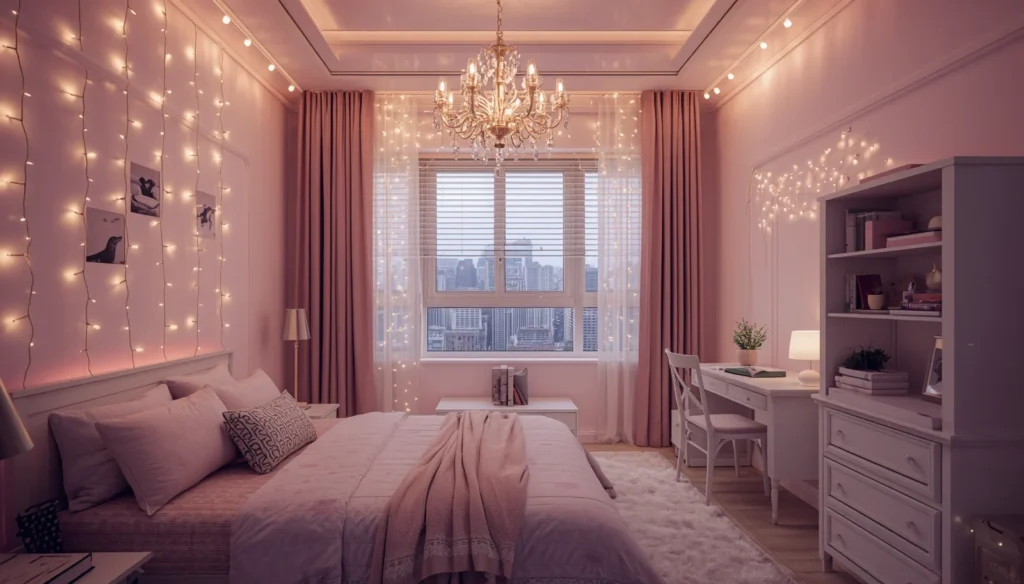
A single overhead fixture creates flat, unflattering light. Layered lighting transforms the same room into a space that adapts to the time of day and the activity. Task lighting for the desk, ambient lighting for relaxing, accent lighting to highlight art or architecture, each layer serves a distinct purpose. Dimmers on every circuit give her control over the atmosphere.
Ambient Light That Feels Soft
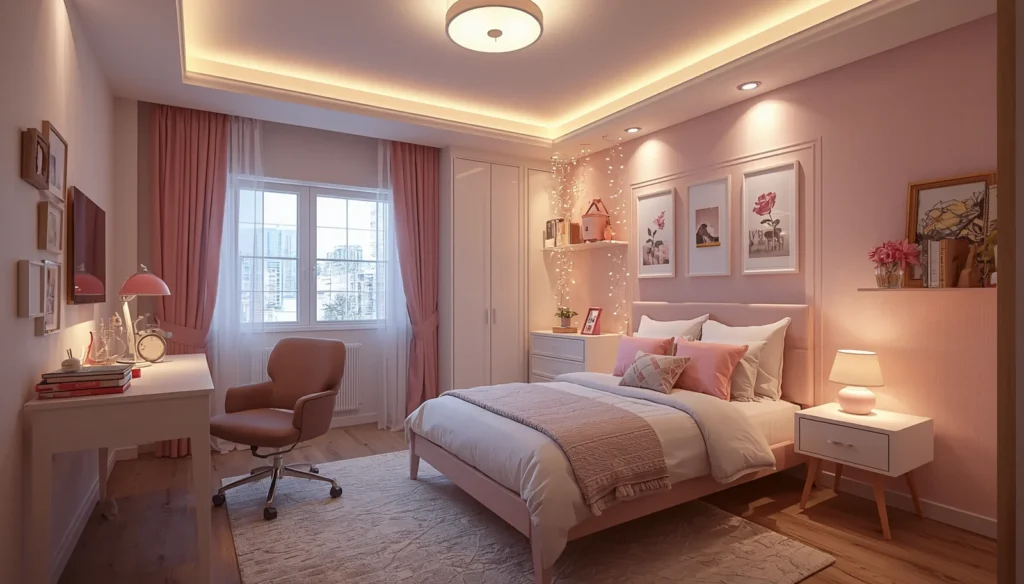
Overhead fixtures on dimmers provide the base layer. A semi flush mount or a simple pendant with a fabric shade diffuses light evenly without creating harsh shadows. The bulb temperature matters. 2700K to 3000K keeps the light warm and flattering. Cool white bulbs above 3500K make bedrooms feel like hospital rooms.
Table lamps on nightstands and the desk add pools of warmer light at eye level. These secondary sources do more for atmosphere than any overhead fixture. A lamp with an interesting base, ceramic or textured glass or turned wood, doubles as sculpture during the day. Function and beauty do not need to compete.
Accent and Task Lighting
A clip on book light or a wall mounted reading sconce frees up nightstand space and directs light precisely where she needs it. Picture lights mounted above a favorite piece of art elevate the whole room. LED strip lights tucked behind a headboard or under floating shelves create a floating effect that teenagers genuinely love. The key with LED strips lies in warm white tones and hidden placement. Visible strips and neon colors date the room badly.
9. Carve Out a Creative Zone
Not every teenager paints or plays music, but most have some creative outlet that deserves space. A corner with a small table and organized supplies for drawing, journaling, jewelry making, or letter writing signals that creativity matters in this household. The zone does not need to be large. A dedicated surface and a storage system for materials does the work.
Art Supply Storage That Works
Open bins swallow supplies into chaos. Clear drawer units or divided organizers let her see what she has at a glance. Pegboards mounted above the work surface hold scissors, rulers, and frequently used tools within reach. The vertical storage keeps the work surface clear for actual creating. A rolling cart that tucks under the table when not in use works for rooms where the creative zone shares space with another function.
Framing her finished work and rotating it into the room’s display validates the creative effort. A gallery wall of her own art mixed with pieces she admires blurs the line between creator and curator. That blurring matters. It tells her that her output belongs alongside the professional work she respects.
Protecting Surfaces
A tempered glass top or a cut-to-fit vinyl mat protects the table surface from paint, glue, and blade marks. Knowing the table is protected removes the friction that stops spontaneous creating. Cleanup becomes fast. The space stays usable.
10. Treat the Window as an Architectural Feature
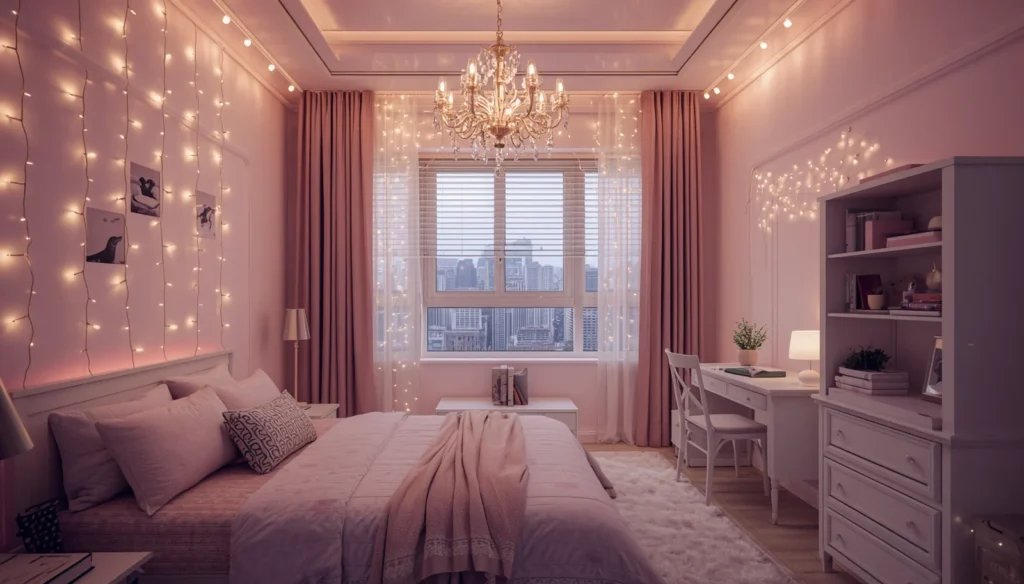
Windows in teen bedrooms often get ignored beyond basic blinds. Giving the window intentional treatment changes how the whole room feels. Floor length curtains mounted high and wide make standard windows feel expansive. Roman shades in a textured fabric add softness without the fabric yardage of full drapes. The hardware choice matters. Thin, flimsy rods look apologetic. Substantial rods in metal or thick wood signal that someone thought about this detail.
Curtains That Frame Rather Than Block
Mounting the curtain rod four to six inches above the window frame and extending it eight to twelve inches beyond each side draws the eye up and out. The window reads larger. The room reads taller. Curtains that just kiss the floor look tailored. Curtains that pool by an inch or two look romantic and relaxed. Both work. The wrong move is curtains that stop short above the floor like floodwater pants.
Blackout lining helps teenagers sleep, especially in rooms with east facing windows. The hormonal shifts of adolescence already disrupt circadian rhythms. Light control supports better sleep hygiene. A double rod system with sheer panels behind blackout curtains gives options. Sheer for daytime privacy with natural light, blackout for sleep.
Windowsill as Display
A deep windowsill functions as a secondary shelf. A few books, a small plant, a ceramic object that catches the light. The items get illuminated naturally and change appearance as the day progresses. Few displays in a room get better lighting than a windowsill arrangement.
11. Use Rugs to Define Zones in Open Spaces
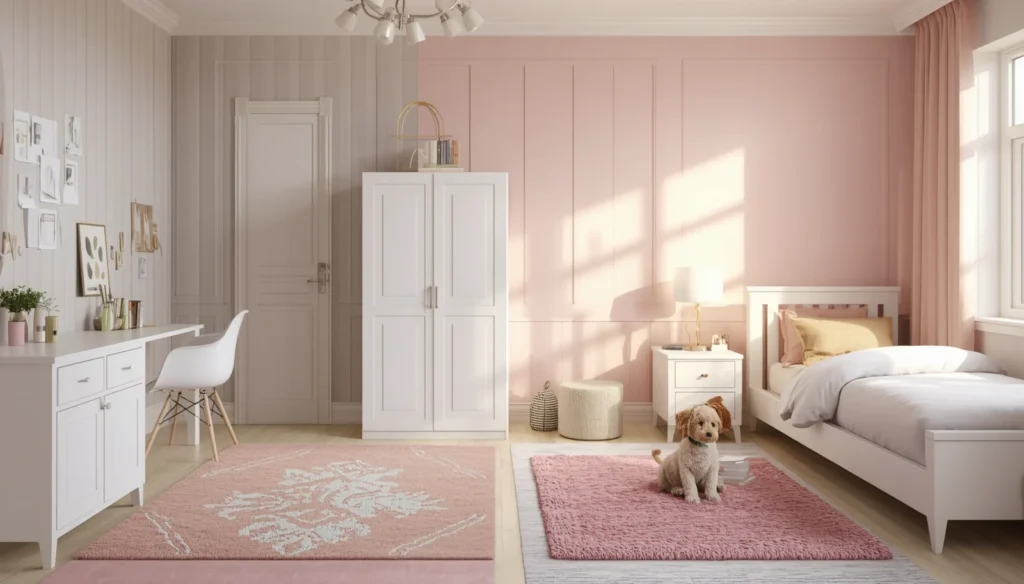
Rugs do more than warm a floor. They create visual boundaries between the sleep area, the study area, and the lounge area within a single room. A large rug under the bed anchors the primary zone. A smaller rug under the desk chair defines the work territory. The rugs do not need to match. They need to relate through color, pattern, or texture so the room feels cohesive rather than chaotic.
Rug Sizing That Avoids the Postage Stamp Look
A rug too small for the bed makes the entire room feel off. The front legs of the nightstands and the bed should sit on the rug, or the rug should float completely in front of the nightstands. A 5×8 rug under a full or queen bed usually hits that mark. Measure before buying. Returns on large rugs are a logistical headache.
Low pile rugs or flatweaves hold up better under desk chair wheels than high pile shags. Natural fibers like jute and wool blend durability with texture. Synthetic rugs in high traffic areas clean more easily. The rug under the desk chair needs to handle rolling and crumbs. Choose accordingly.
Layering Rugs for Texture
A large natural fiber rug as a base layer with a smaller patterned rug on top adds depth and defines a specific zone within the larger area. This technique works particularly well in square rooms where furniture placement does not naturally create zones. The layered look feels collected and intentional without requiring a single enormous investment piece.
12. Personalize Through the Walls Without Permanent Damage
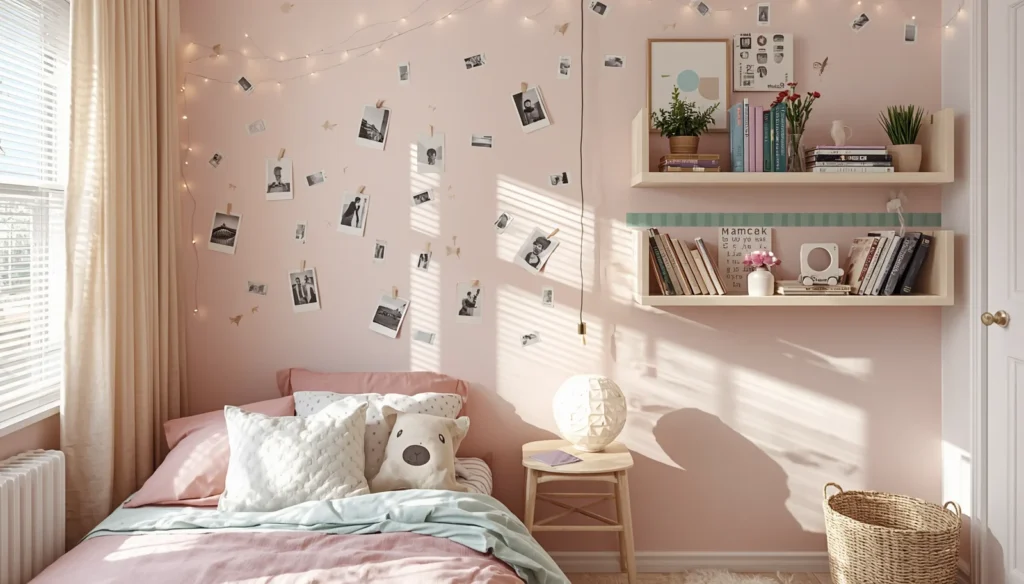
Teenagers collect things. Concert tickets, photo strips, postcards, magazine clippings, handwritten notes. Giving these items a designated home prevents them from scattering across every flat surface. A large corkboard, a grid panel, or a picture ledge system turns ephemera into a constantly updating installation. The display format matters less than the permission it grants. Her room holds her memories.
Gallery Walls That Grow
A gallery wall of frames in mixed sizes and finishes allows her to swap out the contents as her taste evolves. The frames stay put. The art and photos inside change. Digital printable art costs little and lets her experiment with different aesthetics without commitment. A mix of her own photography, downloaded prints, and original art from friends builds a wall that no catalog can replicate.
The arrangement looks best when the frames share at least one common element, matte black, warm wood, or thin gold, but do not perfectly match. A perfectly matched set reads as purchased in a box. A collected set reads as personal history.
The Memory Wall Solution
A simple string of wire with small clips mounted across a section of wall holds photos, notes, and small flat objects. It costs under twenty dollars and takes ten minutes to install. The display changes in seconds. For teenagers who process visually and want their space to reflect their social world, this low tech solution outperforms most expensive alternatives. The impermanence of the display matches the pace of teenage social life. New photos replace old ones without ceremony.
Wrap Up
A bedroom that supports a teenager through high school needs to bend without breaking. Neutral bones, flexible furniture, and replaceable color and pattern layers create a room that moves with her instead of trapping her in last year’s aesthetic choices. The twelve ideas here share a common thread. They give her agency over her environment while building in the stability that keeps the space functional long after the initial makeover excitement fades. Good teen room design looks less like a Pinterest board and more like a framework for self discovery.
FAQs
What is the best wall color for a teen girl’s bedroom?
Warm white or soft greige walls provide the most flexibility because they let bedding, art, and accessories drive the color story. This neutral base allows the room to evolve through multiple style phases without requiring repainting.
How can I decorate a small teen bedroom without making it feel cramped?
Choose furniture that multitasks, such as a storage bed, a wall mounted desk, and floating shelves. Keep the color palette light and cohesive, use mirrors to bounce light, and resist the urge to fill every corner with furniture.
At what age should a teenager redesign her bedroom?
Most girls start wanting a more mature room around age thirteen or fourteen as they transition from middle school interests. Rather than a full redesign, plan for an adaptable framework that can accommodate changing tastes through high school.
Disclaimer:
The content shared by Fall Rugs is solely for research and informational purposes. Fall Rugs is not a professional interior design or home renovation consultancy, and the information provided should not be considered professional advice for home improvement or decor. All ideas and suggestions are based on current trends and general knowledge in the home decor industry.