
TL;DR
Narrow kitchen does not have to feel like a punishment. With the right layout choices, storage thinking, and visual tricks, even a 7-foot-wide galley can work harder than a kitchen twice its size. The ideas here are grounded in how real kitchens function, not just how they photograph.
Introduction
Most design advice talks about narrow kitchens as though the problem is purely visual. Make it look bigger, the advice goes, and you are done. That misses the real frustration: a tight kitchen that looks fine in photos but forces you to shuffle sideways every time someone opens the oven.
The actual challenge is functional, and the fixes need to be functional too. What follows covers spatial planning, storage architecture, lighting logic, and finish choices that make a narrow kitchen genuinely easier to live and cook in. Below are the 10 narrow kitchen ideas for your home decor,
1; Embrace the Galley Layout Instead of Fighting It
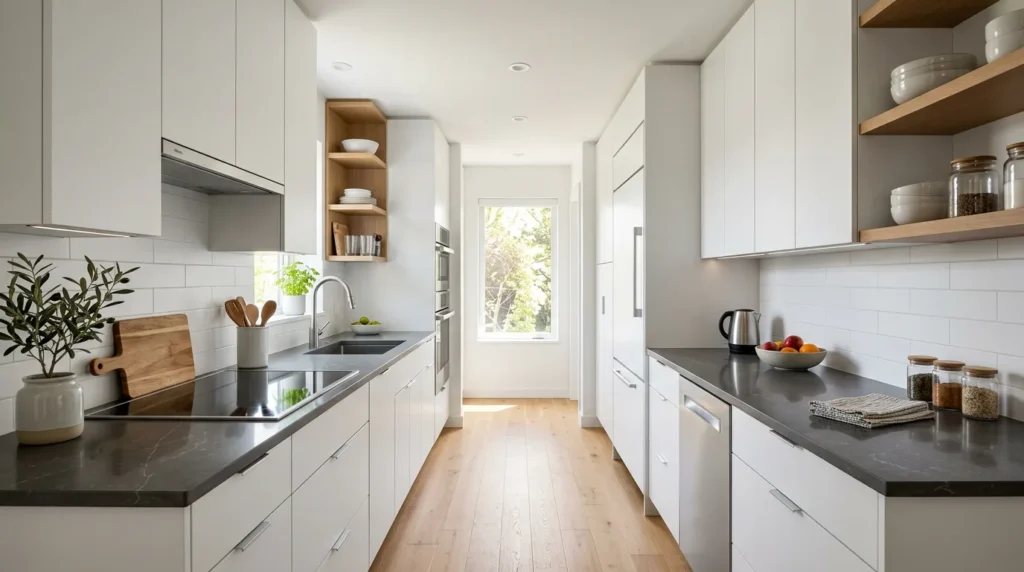
Professional kitchens run on the galley principle because it works. Two parallel countertop runs facing each other create a work triangle so tight that a single cook can move between the hob, sink, and refrigerator in three steps. Residential designers often try to break up this efficiency by adding an island or a peninsula, which in a narrow kitchen just produces a corridor too cramped to walk through safely.
If your kitchen measures less than nine feet across, commit to the galley layout fully. Place the sink and hob on the same wall to keep plumbing consolidated, and position the refrigerator at the open end of the run so it acts as a visual anchor rather than a traffic blocker. This single decision resolves about half the functional complaints that narrow kitchen owners raise.
The key insight most renovation guides skip: a galley kitchen’s efficiency depends on the width of the corridor between the two countertops, not on adding more surface. A corridor between 42 and 48 inches gives one cook a relaxed working zone and allows a second person to pass without collision. Anything narrower than 36 inches begins to feel punishing regardless of how the space is decorated.
2; Use Full-Height Cabinetry on One Wall Only
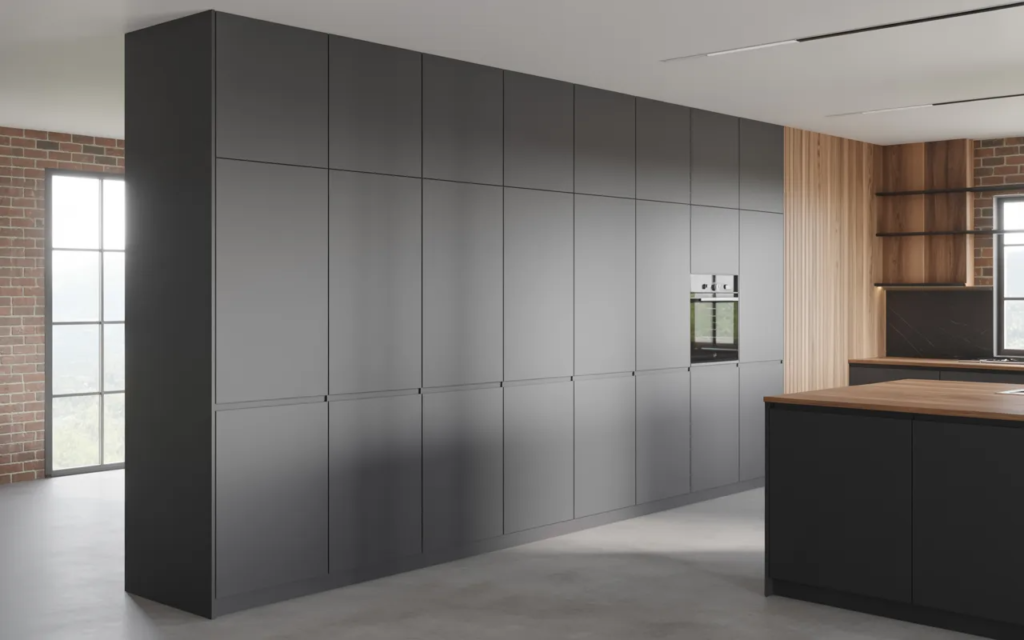
Stacking cabinets floor to ceiling on both walls of a narrow kitchen is one of the fastest ways to create a space that feels like a storage closet. The room becomes a cabinet sandwich with no visual breath left in it. The smarter move is to reserve full-height cabinetry for a single wall, typically the one that does not contain a window, and keep the opposite wall at worktop height or introduce open shelving above.
A kitchen renovation in a Victorian terrace in Leeds illustrated this well. The kitchen ran just under eight feet wide, with one exterior wall containing the only window. The designer ran tall, handleless cabinets along the interior wall from floor to ceiling, painted in a deep sage green. The window wall received only base units topped with open shelving in pale oak. The result was a room that read as a considered kitchen rather than a converted hallway, and the homeowner gained more usable storage than the previous configuration with upper and lower cabinets on both sides.
Full-height cabinetry on one wall also creates a natural place for a built-in refrigerator and a larder column, both of which disappear into the run rather than interrupting it. Handleless cabinet fronts maintain the visual linearity that keeps a narrow room feeling long and intentional rather than chopped up.
3; Bring Natural Light as Far Into the Space as Possible
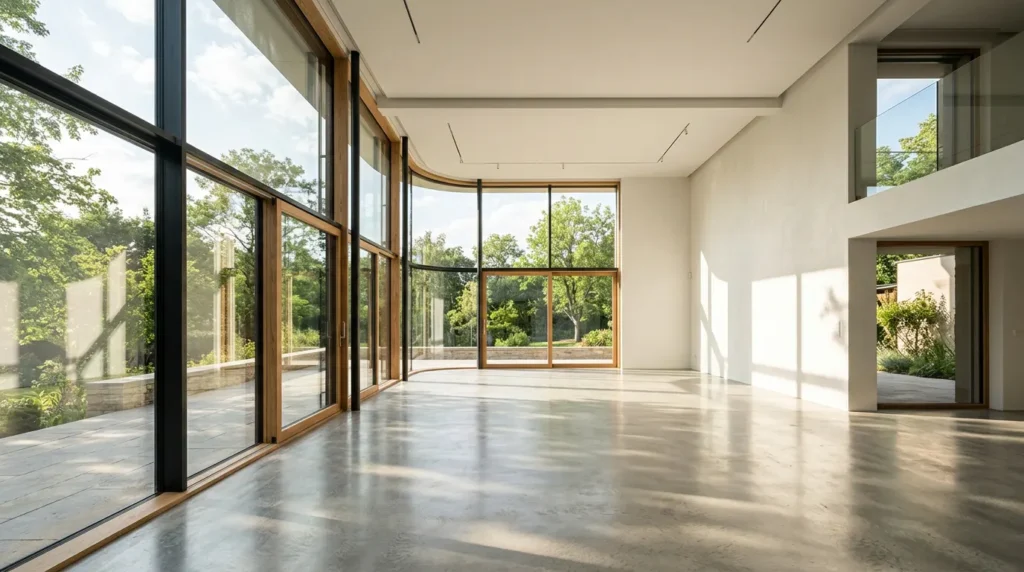
Light does not make a kitchen physically wider, but it changes how the brain reads the space. A narrow kitchen with good natural light registers as tight but comfortable. The same footprint with dim, enclosed light feels oppressive in a way no paint color can fix.
If the kitchen has only one window, resist the instinct to fill the wall around it with upper cabinets. Pull those cabinets back from the window by at least 12 inches on each side. This allows light to spill across the counter rather than being blocked immediately, and the uninterrupted zone of counter near the window becomes a genuinely pleasant prep spot. If planning consent allows, a rooflight above the kitchen run transforms a dark galley into a space that feels detached from its square footage.
For kitchens that face north or receive almost no direct sunlight, the strategy shifts toward layered artificial light. A single central pendant does nothing useful in a long narrow room. Instead, run recessed task lighting directly above both counter runs, add LED strips under upper cabinets to eliminate the shadow zone between worktop and storage, and consider a small pendant or two at the end of the run to draw the eye along the length of the space rather than letting it settle at the nearest wall.
4; Choose a Reflective Backsplash That Works With Your Light Source
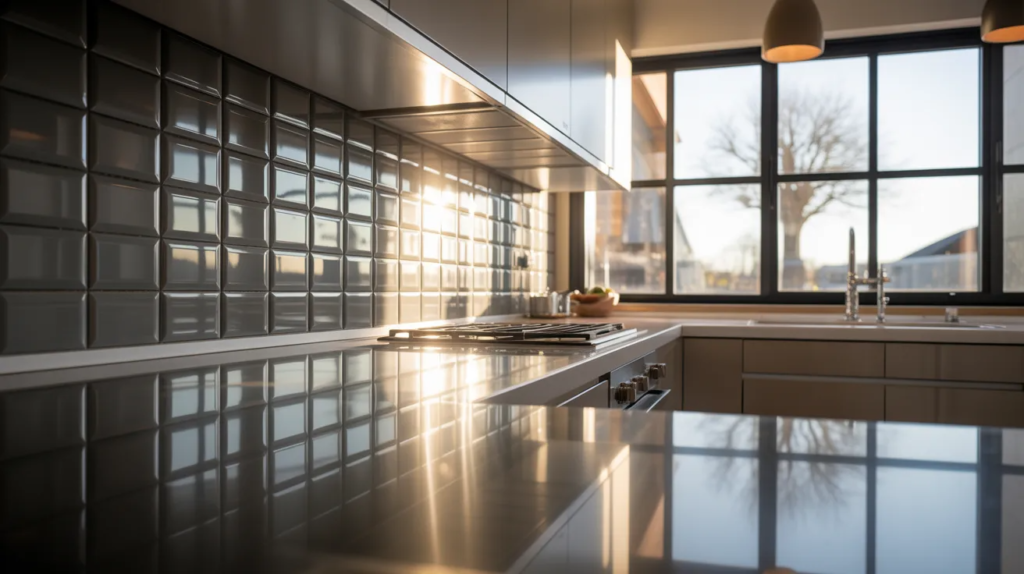
Backsplash material in a narrow kitchen carries more perceptual weight than in a standard-width room because it occupies a high proportion of visible wall area. A matte, heavily textured tile can make the space feel dense and heavy. A reflective surface bounces light back into the room and creates the illusion of depth behind the counter plane.
Gloss ceramic in a brick pattern, mirror-finish metro tiles, and polished porcelain slabs all work on this principle. The specific color matters less than the finish. A deep navy gloss tile will open up a narrow kitchen more than a pale matte tile in the same space because the reflection creates a secondary light source. This is counterintuitive to most buyers who assume light colors are always the answer in small rooms.
While light colors are a popular choice, a moody palette can also add incredible depth. For a sophisticated look, exploring modern dark grey kitchen ideas can show you how to balance darker tones with the right lighting to prevent the space from feeling cramped.
Matching Grout to Tile
Grout color is often treated as an afterthought and consistently undervalued in narrow kitchen design. Wide grout joints in a contrasting color add a grid pattern to the wall that the eye has to resolve, which takes cognitive effort and makes the space feel busier. Matching grout color closely to tile color eliminates that grid and lets the eye slide along the surface. In a narrow kitchen, anything that reduces visual noise translates directly into a calmer, more spacious feeling.
Large Format Tiles vs. Small Mosaics
Large format tiles, particularly those running horizontally in a landscape orientation, reduce the number of grout lines in the visual field and push the perceived end wall further back. Small mosaic tiles increase grout lines exponentially and tend to make the space feel busier. Unless the mosaic is being used in a single, deliberate accent zone, it is worth choosing the largest format tile that the wall area can accommodate without cutting awkwardly.
5; Build Storage Into Every Dead Zone
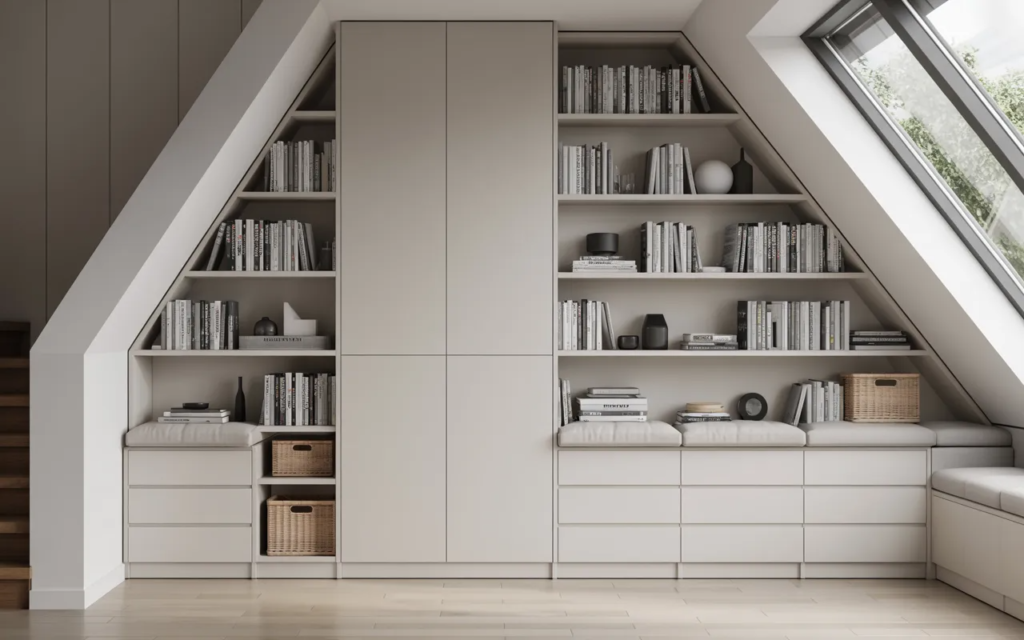
Narrow kitchens tend to waste space in places where it is not immediately obvious. The gap above the refrigerator, the space between the top of the upper cabinets and the ceiling, the inside of cabinet doors, and the thin vertical gaps between appliances and walls all represent recoverable storage that most kitchen installations simply abandon.
A bespoke joinery approach to these dead zones can add the equivalent of an extra base cabinet of storage without changing the kitchen’s footprint. Cabinet runs that reach the ceiling eliminate the dust-collecting void above standard wall units. A narrow pull-out column, sometimes called a larder pull-out or a pantry pull-out, can fit into a gap as slim as six inches and store dozens of jars, bottles, and packets that would otherwise crowd the countertop.
6; Keep the Countertop Clear and the Storage Intentional
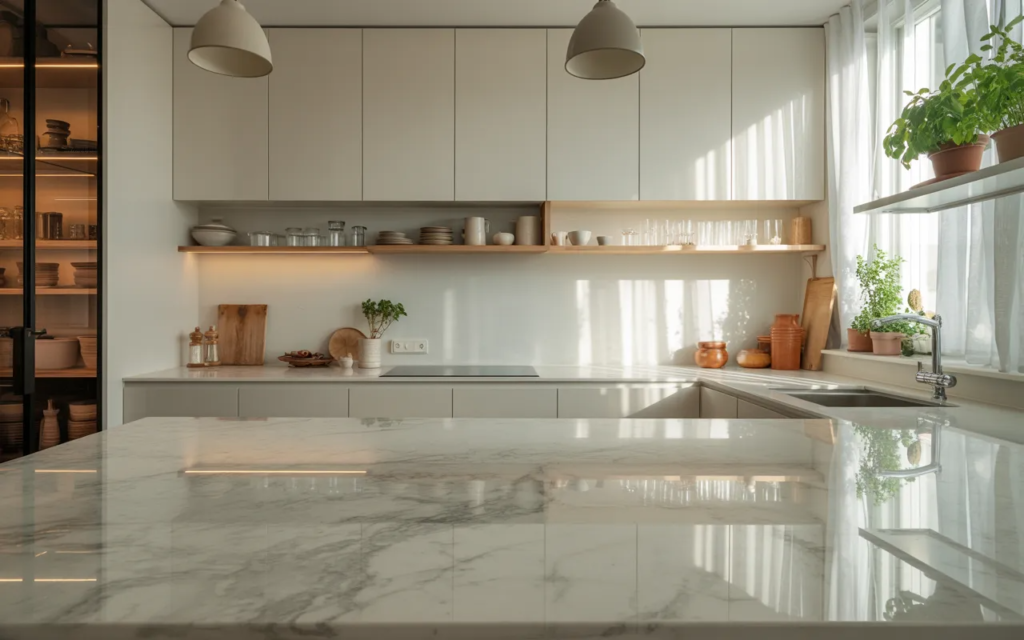
Countertop clutter is the dominant functional problem in narrow kitchens, and it usually comes from storage that does not match the way the kitchen is actually used. When the logical home for an item does not exist inside a cabinet, the item lives on the counter. Enough items on a narrow counter and the kitchen becomes unworkable.
The solution is not to remove everything and live with bare countertops, which is both impractical and visually cold. The solution is to audit what genuinely belongs on the countertop, which is usually the toaster, the kettle, the knife block, and whatever is used daily, and to build dedicated internal storage for everything else. For a deeper dive into aesthetic and functional upgrades, explore our guide on small kitchen remodel ideas and glow-up tips that can turn clutter into coordination. Drawer inserts for utensils, spice drawers under the hob, and pull-out shelves behind base cabinet doors all move frequently used items into accessible storage without sacrificing counter space. For a deeper look at tackling tight layouts, you can explore these practical small kitchen renovation ideas for small spaces to maximize every inch.
Using a Fold-Down Table for Extra Prep Space
In a galley kitchen without room for a breakfast bar, a fold-down table fixed to the end wall or mounted on the side of a base unit provides occasional extra surface without permanently narrowing the corridor. When folded flat, it contributes almost nothing to the room’s footprint. Extended, it seats two comfortably for a casual meal or provides an overflow prep zone during heavy cooking. This solution appears in small urban apartments constantly because it genuinely works, and it deserves more attention in permanent domestic kitchens than it typically receives. If you need inspiration for a complete overhaul, check out these clever small kitchen renovation ideas for small spaces to kickstart your project. If you are looking for a complete transformation, check out these creative small kitchen remodel ideas for a total glow-up to maximize both style and efficiency.
Magnetic Knife Strips and Rail Systems
A magnetic knife strip mounted above the hob retrieves one of the most space-hungry objects from the countertop and puts it within arm’s reach. A wall-mounted rail system with hooks and small baskets does the same for ladles, spatulas, and frequently used spices. These systems work visually as well as practically in a narrow kitchen because they add a layer of organised detail to the wall rather than interrupting the counter plane.
7; Use a Single Uninterrupted Countertop Material
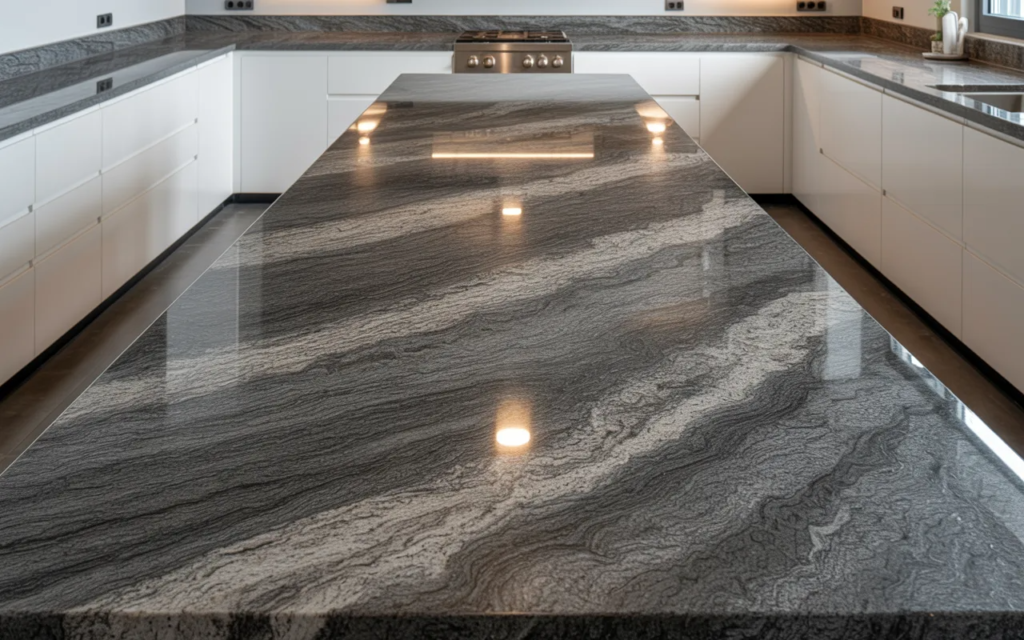
Countertop material changes are a common design choice in standard kitchens, using different materials for the island versus the perimeter, for example. In a narrow kitchen, changing countertop materials mid-run introduces a visual break that shortens the perceived length of the space. A single continuous material running the full length of both countertop runs pulls the room together and makes it read as a deliberate, coherent space rather than a sequence of decisions.
Pale engineered stone, white laminate with a clean edge, and light concrete all work well. The choice matters less than the continuity. If budget limits the use of a premium material across the full run, it is worth prioritising the full length in a simpler material over a mixed approach that uses premium stone on part of the run.
8; Paint the End Wall a Different Tone
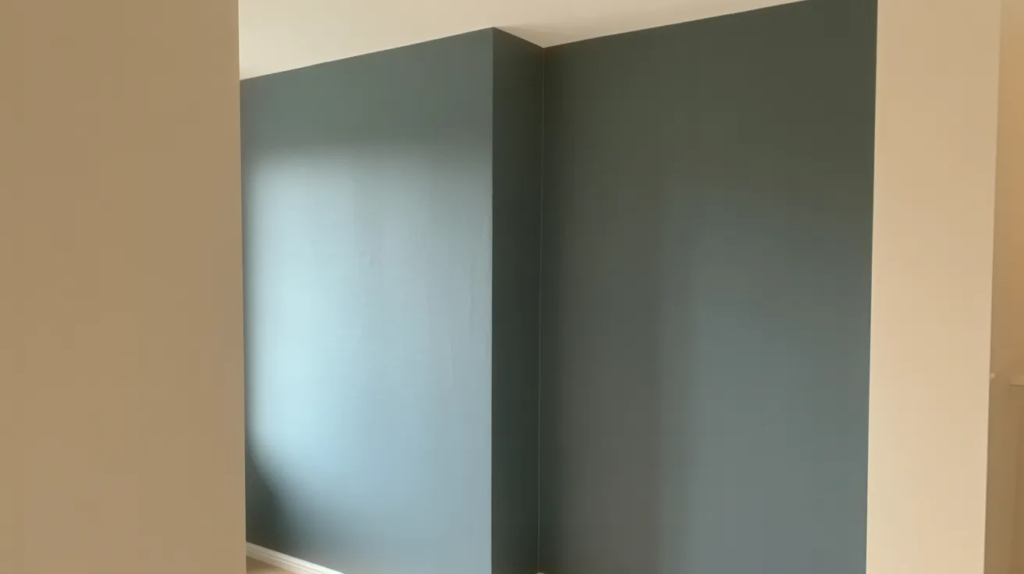
The end wall of a galley kitchen is the wall the eye travels toward. Painting it a shade or two deeper than the side walls creates a gentle sense of depth, a visual trick borrowed from theatre set design where a receding plane painted darker appears further away than it physically is. This effect is subtle but consistent and costs nothing beyond a litre of paint.
The side walls should remain light and relatively neutral, keeping the focus on the end wall and allowing the eye to travel uninterrupted. This is particularly effective in a kitchen that opens at one end into a dining area or living space, where the contrast between the darker end wall and the lighter adjoining room reads as a considered design choice rather than a space-saving trick.
9; Choose Flooring That Runs Lengthways
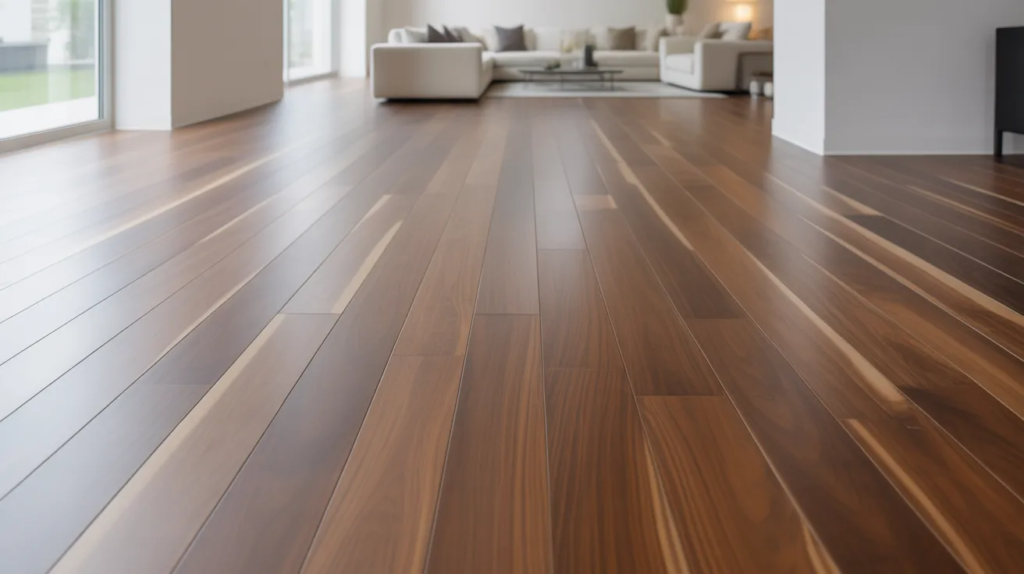
Flooring direction in a narrow kitchen is one of those choices that feels minor until you see the result. Tiles or planks running lengthways, parallel to the long walls, extend the perceived length of the room. Flooring running across the width interrupts the length visually and makes the kitchen feel shorter and wider, which is the opposite of what most narrow spaces need.
Large format rectified tiles in a continuous pattern, or engineered wood planks in a longer length, work particularly well. The fewer seams and grout lines crossing the width of the floor, the longer the room feels. This is consistent with the same principle applied to the backsplash: reducing perpendicular lines in the visual field extends the perceived dimension of the space.
10; Install Pocket Doors or Remove the Door Entirely
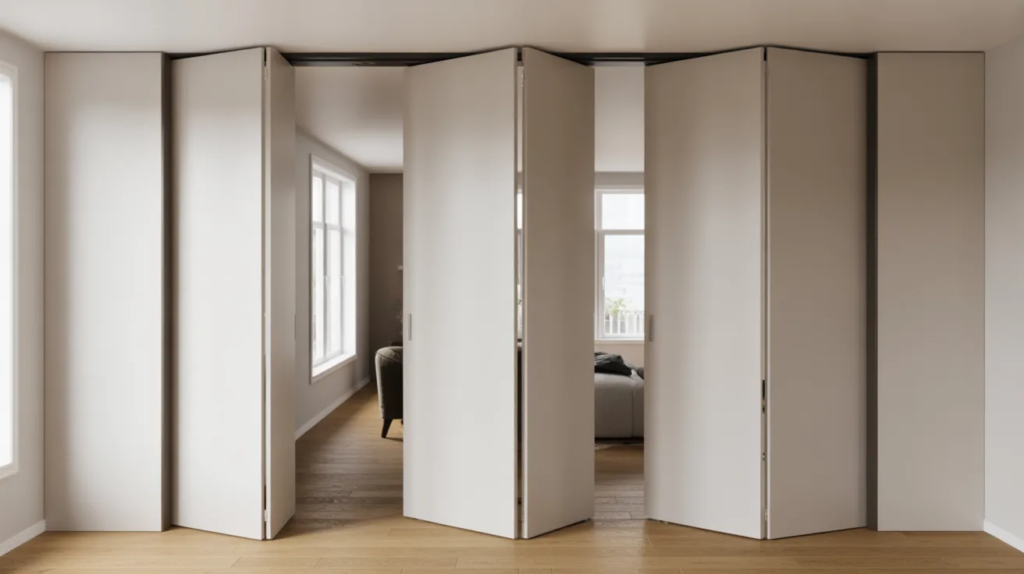
A standard hinged door on a narrow kitchen creates a dead zone in front of the door swing, and in a galley kitchen that dead zone often falls directly in front of a base cabinet or blocks part of the corridor. A pocket door that slides into the wall retrieves that floor area entirely and removes the visual interruption of a door frame projecting into the room.
Where layout allows, removing the kitchen door and opening the space to an adjoining dining area or hallway is more effective still. The kitchen reads as part of a larger connected space rather than a contained room, and borrowed light from the adjoining space helps with the perennial narrow kitchen problem of feeling enclosed. This decision changes the acoustic character of the home and requires some thought about cooking smells and noise, but for most households the spatial benefit clearly outweighs those considerations.
Related Reading: Ready to take your space to the next level? Don’t miss these inspiriting small kitchen remodel ideas for an instant glow-up.
Ready to take your space to the next level? Don’t miss these inspiring small kitchen renovation ideas for small spaces for an instant functional glow-up.
Wrap Up
A narrow kitchen becomes functional and genuinely pleasant to be in when the design decisions treat it as a specialised space with its own logic rather than a smaller version of a standard kitchen.
Full-height cabinetry on one wall, continuous countertop materials, lengthwise flooring, reflective backsplash finishes, and a committed galley layout all address the real problems: limited movement, insufficient storage, and the feeling of being closed in. Solve those problems directly and the kitchen becomes one of the most efficient rooms in the house.
FAQs
What is the minimum width for a functional narrow kitchen?
A single-wall kitchen can function at around five feet of width, but a galley with two parallel countertop runs needs at least seven feet across to provide a workable corridor. Anything between 42 and 48 inches of clear walking space between the two runs is considered the working standard.
What color makes a narrow kitchen look wider?
Light, cool-toned colors on the side walls help, but finish matters more than color. A mid-tone gloss paint reflects more light and reads as more spacious than a pale matte paint. Keeping the floor, walls, and countertops in a close tonal range also reduces the number of visual breaks that make a narrow room feel choppy.
Can you put an island in a narrow kitchen?
An island in a kitchen narrower than 12 feet total will typically reduce the working corridor to below the 42-inch minimum, making the kitchen harder to use. A fold-down table or a narrow breakfast bar fixed to one wall achieves the same casual dining function without blocking the working run.
Disclaimer:
The content shared by Fall Rugs is solely for research and informational purposes. Fall Rugs is not a professional interior design or home renovation consultancy, and the information provided should not be considered professional advice for home improvement or decor. All ideas and suggestions are based on current trends and general knowledge in the home decor industry.