

TL;DR
A loft bed can turn a cramped bedroom into a room with real zones for sleep, work, storage, and quiet time. The strongest layouts use the space under the bed with purpose, not as a dumping ground, and they balance height with comfort, lighting, safety, and style.
Introduction
A small bedroom often feels difficult because the bed claims the room before anything else has a chance. Once the mattress sits on the floor, the desk, wardrobe, rug, chair, and storage pieces start competing for leftovers. A loft bed changes that equation by lifting the largest item in the room and giving the floor back to daily life.
The idea works especially well in studio apartments, kids’ rooms, teen bedrooms, dorm rooms, and compact guest rooms where every square foot needs a job. Good loft bed bedroom ideas don’t just save space; they shape how the room feels when someone wakes up, studies, gets dressed, relaxes, or puts things away at night. The difference between a clever layout and a frustrating one usually comes down to planning the lower zone with the same care as the sleeping area.
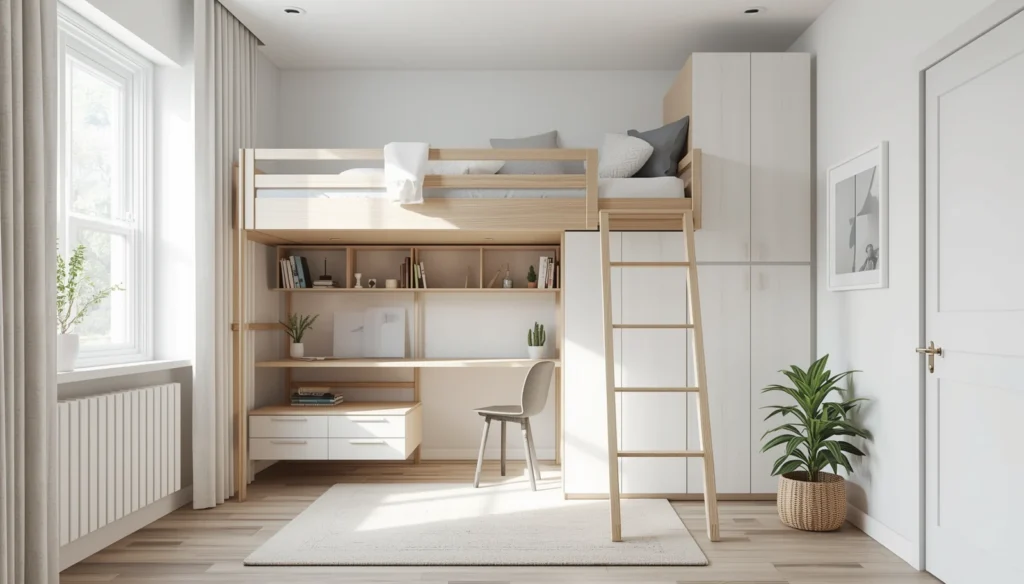
1. Loft Bed With a Built-In Study Zone Underneath
A loft bed with a desk underneath is often the first layout people consider, and for good reason. It turns the footprint of a bed into two functions: sleep above and work below. In a small bedroom, that single move can replace a separate office corner, especially when the desk runs wall to wall and uses shallow shelves rather than bulky bookcases.
This setup works best when the desk feels intentional, not squeezed in as an afterthought. A comfortable chair, a wall-mounted lamp, hidden cable routing, and one or two closed storage boxes can make the lower zone feel calm enough for real focus. I’ve seen small rooms fail here because the desk became too deep, leaving no knee space, or because the ladder blocked the chair from sliding out properly.
Why the Work Zone Needs Breathing Room
A study area under a loft bed needs good head clearance, soft lighting, and a sense of openness. If the upper frame sits too low, the person sitting below may feel boxed in, even if the layout technically fits. That feeling matters because a cramped desk becomes a place people avoid, and the room slowly turns messy around it.
A practical fix is to keep the desk surface clean and move storage upward onto slim shelves or peg rails. Closed containers also help because visual clutter feels heavier in small rooms. A neutral rug under the chair can define the work area and soften sound, especially in apartments where hard flooring makes every movement feel louder.
2. Loft Bed With a Cozy Lounge Corner Below
Not every small bedroom needs a desk. Some rooms need a place to sit that isn’t the bed, especially for teenagers, renters, and studio dwellers who spend long hours in one room. A loft bed with a lounge underneath creates a small retreat with a low sofa, floor cushions, a compact loveseat, or a reading chair.
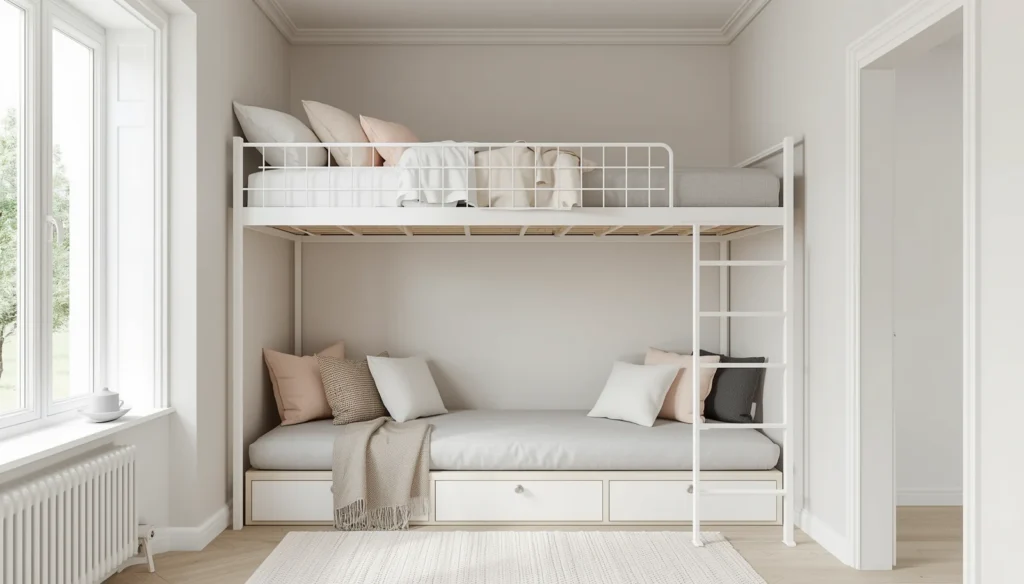
The trick is scale. A full-size sofa under a loft bed usually feels forced unless the bed is custom built with generous height. A low-profile chair, armless seat, or soft floor setup often works better. Add a warm lamp, a textured rug, and one small side table, and the space starts to feel like a private nook rather than leftover square footage.
The Comfort Test Most People Skip
A lounge zone under a loft bed should pass a simple comfort test: someone should be able to sit there without ducking constantly, reaching awkwardly for light, or feeling trapped by the ladder. If that doesn’t happen, the space may look good in photos but feel poor in daily use.
A compact rug can carry much of the mood in this layout. In one small rental bedroom I reviewed, the lower zone looked unfinished until a soft patterned rug was added beneath a low chair and lamp. The furniture didn’t change, but the area suddenly read as a room within a room, which made the whole bedroom feel more settled.
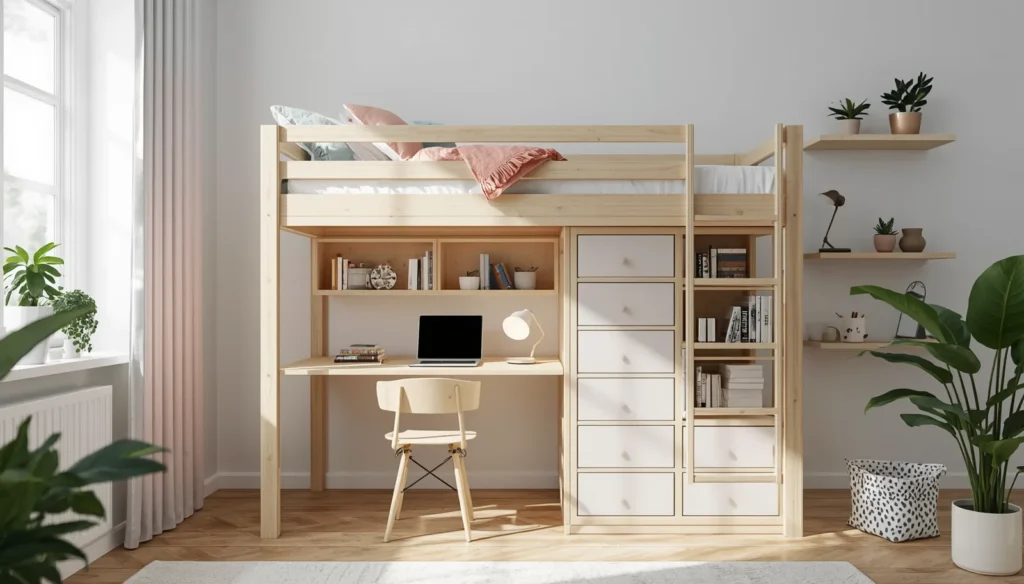
3. Loft Bed With Storage Drawers, Cabinets, and Shelves
Storage is where loft beds can earn their keep. A raised bed can hold drawers in the stairs, cabinets along the back wall, shelves along one side, and bins under the lower zone. In a small bedroom, this can reduce the need for a wide dresser or a tall wardrobe that makes the room feel tighter.
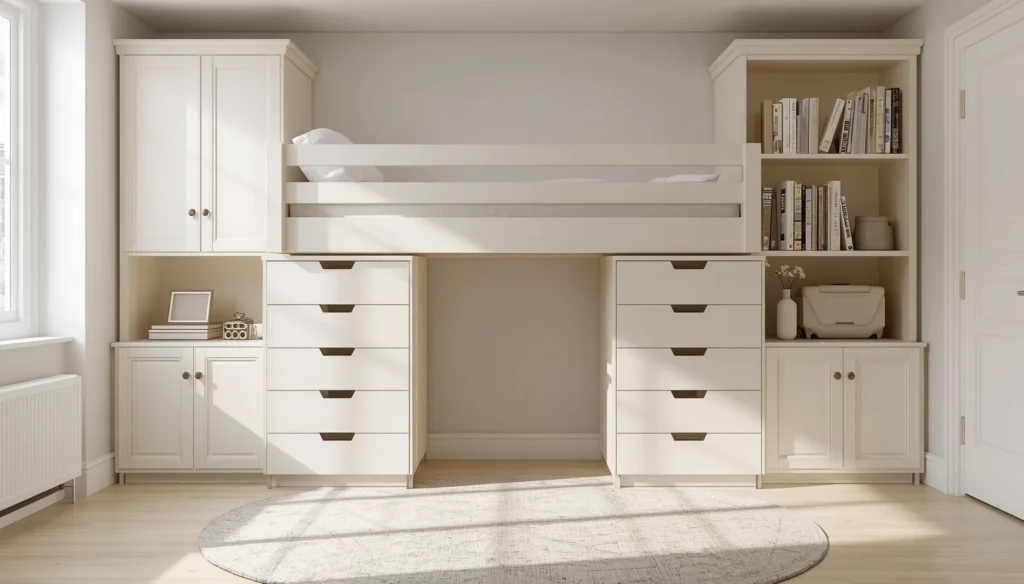
The strongest storage layouts mix open and closed pieces. Open shelves work well for books, plants, baskets, and a few decorative objects. Closed drawers and cabinets hide clothing, bedding, school supplies, chargers, and the random things that make a compact room feel chaotic. Too much open shelving can turn into visual noise fast.
How to Avoid the Storage Trap
More storage does not always mean a better room. A loft bed packed with drawers, cubbies, hooks, and shelves can start to feel like a storage unit if every inch is filled. The better approach is to decide what the room actually needs to hold, then build around those categories.
For a child’s room, stair drawers may hold toys and seasonal clothing. For a college student, the lower cabinets may store bedding, luggage, and textbooks. For a small guest room, closed cabinets beneath the loft can hold spare linens and cleaning supplies while the visible area stays calm. Storage should reduce friction, not invite more stuff into the room.
4. Loft Bed With a Wardrobe Under the Sleeping Area
A loft bed with a wardrobe underneath can solve one of the hardest small bedroom problems: where to put clothes without losing the room’s only open wall. This layout works well in narrow rooms because the wardrobe sits inside the bed’s footprint rather than taking another side of the room.
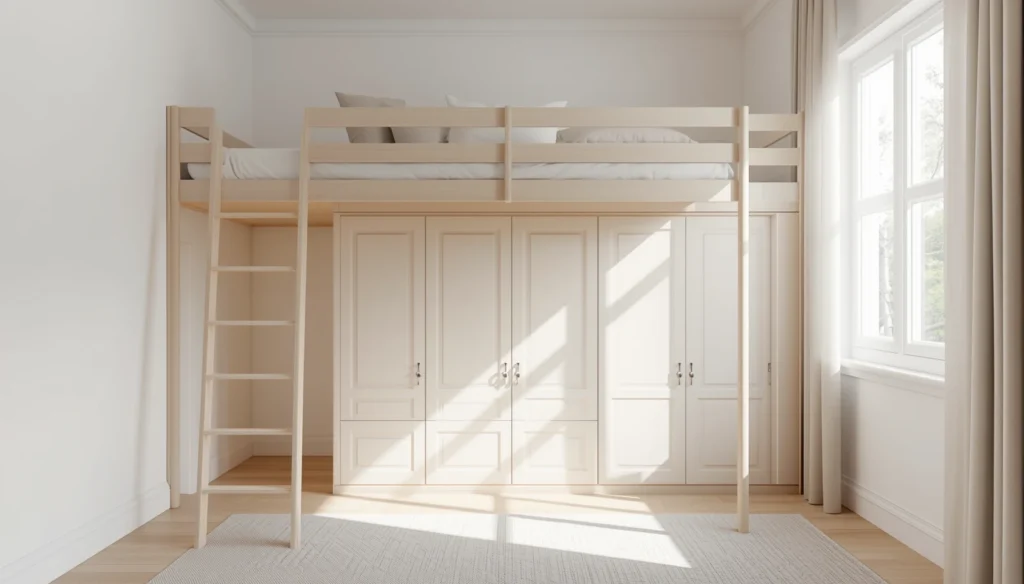
The wardrobe can be built with sliding doors, curtains, open rails, or a mix of hanging space and drawers. Sliding doors suit tighter spaces because they don’t need swing clearance. Curtains soften the look and cost less, but they need neat internal organization or the whole area can look untidy after a busy week.
When a Wardrobe Loft Works Best
This idea suits rooms where the ceiling is high enough for comfortable sleeping above and practical dressing below. If the loft sits too low, the wardrobe area may become awkward to use, especially for taller adults. A good layout leaves room to stand, pull clothes out, and place a laundry basket nearby.
A fictionalized but realistic example comes from a small city apartment owned by a young teacher named Sara. Her old room had a freestanding wardrobe, desk, and full bed, and there was barely a walking path. Moving to a loft bed with a wardrobe below freed one entire wall for a slim desk and mirror. The room didn’t become large, but it stopped fighting her morning routine.
5. Loft Bed With Stairs Instead of a Ladder
Ladders save space, but they are not always pleasant to use every day. Stairs make a loft bed feel more stable, especially for children, teens, and adults who climb up and down at night. In a small bedroom, stair loft beds also add deep storage drawers, which can replace a separate chest.
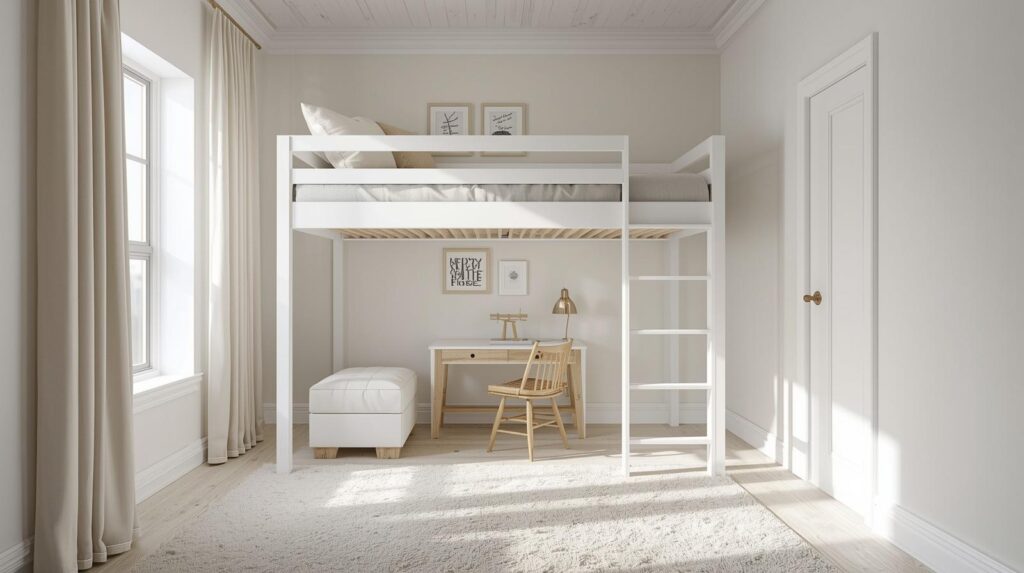
Stairs need more floor space than a ladder, so they suit rooms where one side of the bed can carry the extra length. The payoff is comfort and safer movement. A stair loft can also look more built-in, which gives the room a calmer architectural feel rather than the temporary look some metal ladder frames create.
Making Stair Storage Feel Clean
Stair drawers work hard, but they need clear categories. Shoes in the bottom step, bedding in the deeper drawers, and daily clothes in the easiest drawers create a rhythm that people can follow. When every drawer holds random items, the benefit fades.
The side of the stairs can also support hooks, a small mirror, or a narrow shelf, but restraint matters. A small bedroom needs negative space as much as storage. The goal is a room that works smoothly, not a loft bed covered in every possible add-on.
6. Loft Bed Above a Play Area for Kids
A child’s bedroom often needs sleep, play, school storage, clothing, and open floor space. A loft bed can help by lifting the sleep zone and turning the lower area into a soft play corner. This layout works well when the lower zone feels safe, visible, and simple enough to clean quickly.
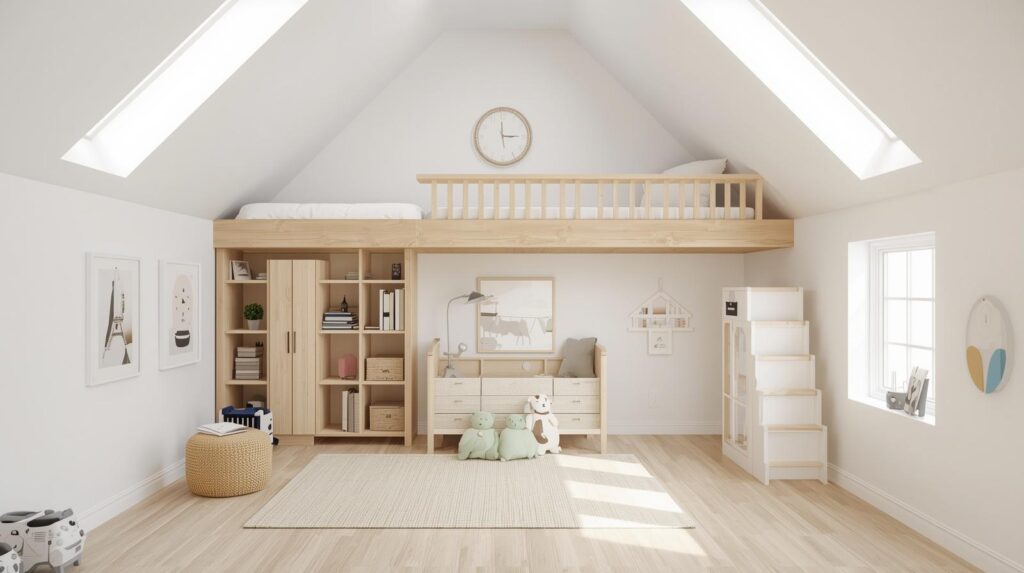
Soft rugs, low toy storage, washable baskets, and gentle lighting make the area more usable. Parents often make the mistake of overfilling the play zone with toy kitchens, tents, shelves, and oversized bins. Children usually play better when the space has fewer items and enough floor area for movement.
Safety and Calm Matter More Than Decoration
For kids, the loft bed frame should feel sturdy, with guardrails, secure stairs or a safe ladder, and enough ceiling clearance above the mattress. The play area below should avoid heavy items that could tip and sharp corners near the entry point. A child’s room can still look beautiful, but safety and routine come first.
A calm color palette also helps. Bright colors can be joyful, yet too many bold surfaces make a small bedroom feel restless. A soft rug, a few warm accents, and storage that children can reach will usually age better than a theme that feels dated in a year.
7. Loft Bed for a Studio Apartment Sleeping Zone
In a studio apartment, a loft bed can separate sleep from living without adding walls. That separation matters. When the bed stays on the floor, the whole apartment can feel like a bedroom. Lifting it creates space below for a sofa, dining table, work desk, or compact storage wall.
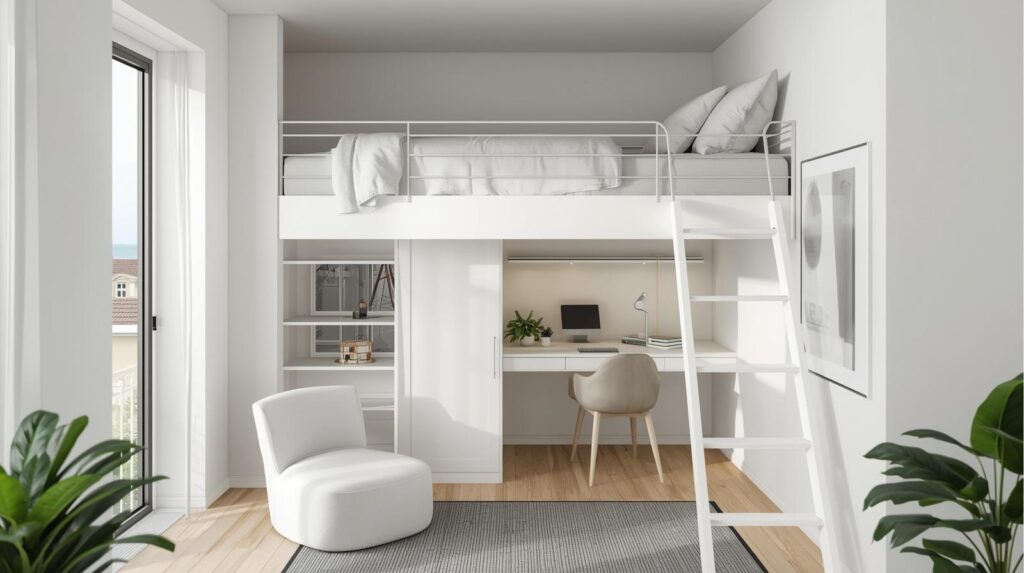
This idea works best with ceiling height and careful sightlines. The loft should not block all natural light or make the room feel top-heavy. Light-colored frames, open railings, and slim furniture below can keep the apartment feeling airy. Heavy dark structures may create a cave effect, especially in studios with one window.
How to Make a Studio Loft Feel Adult
An adult studio loft needs more polish than a dorm-style raised bed. Built-in lighting, finished wood or clean metal, proper bedding, and a cohesive rug can make the sleeping platform feel like part of the apartment design. The area below should match the main function of the home, whether that means work, hosting, storage, or relaxing.
A compact sofa under the loft can work beautifully when paired with a low coffee table and soft rug. If the ceiling is modest, a desk or storage zone may feel better than a lounge. The right answer depends less on trends and more on how the person actually lives during the busiest hours of the day.
8. Loft Bed With a Minimal, Hotel-Like Layout
Some small bedrooms feel bigger when they stop trying to do too much. A minimal loft bed layout uses clean lines, closed storage, quiet colors, and carefully chosen textiles. This style suits adults, guest rooms, and anyone who wants the room to feel calm rather than packed with clever features.
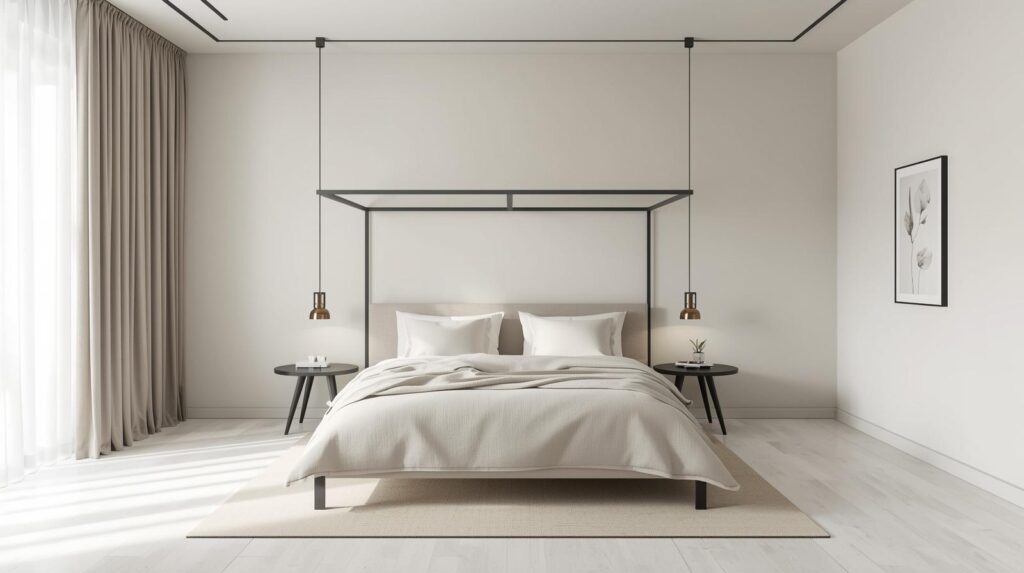
The lower zone might hold a slim desk, one chair, or a bench with hidden storage. The walls stay mostly clear, the rug anchors the room, and lighting does the mood work. A loft bed can look busy by nature, so a minimal approach often brings balance.
The Details That Create a Finished Look
A small loft bedroom feels more grown-up when the frame, bedding, rug, lighting, and storage speak the same design language. That doesn’t mean everything must match. It means the room needs rhythm. Warm wood with cream bedding, black metal with soft gray textiles, or white framing with natural baskets can all work when the choices feel edited.
Texture is especially useful in minimal rooms. A woven rug, cotton bedding, matte storage boxes, and warm lamps stop the space from feeling bare. Minimal does not mean empty. It means every visible item has earned its place.
Choosing the Right Loft Bed for Your Room
Before choosing a loft bed, measure ceiling height, mattress thickness, walking paths, window placement, door swing, outlets, and heating or cooling vents. These details sound boring, but they decide whether the room feels comfortable after the newness wears off. A loft bed that blocks a window, covers an outlet, or sits too close to a ceiling fan can turn into a daily irritation.
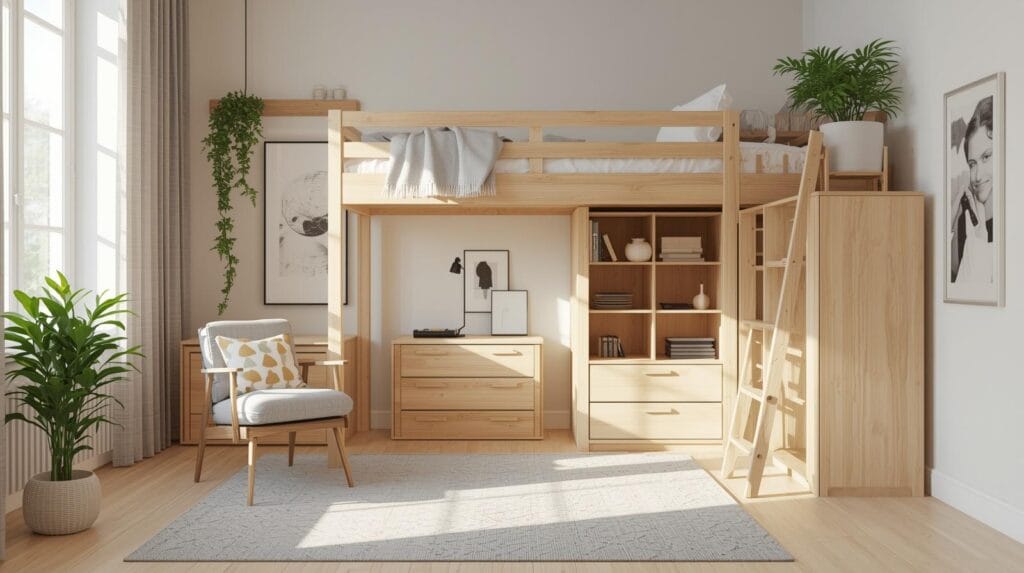
The mattress height matters more than many buyers expect. A thick mattress may reduce guardrail safety and head clearance. A thinner mattress can improve both, but it still needs enough comfort for daily sleep. The frame should also match the user’s age, weight needs, and habits. A guest room loft has different demands than a child’s everyday bed.
The lower zone should be planned before the bed is purchased. If the goal is a desk, measure chair movement and monitor height. If the goal is storage, list what needs to fit. If the goal is a lounge, check seated head clearance. Planning from the floor upward often produces a better result than choosing the loft first and hoping the space below works.
Styling a Loft Bed Bedroom Without Making It Feel Crowded
Small rooms punish clutter quickly, and loft beds add visual height that can make clutter feel even stronger. The easiest way to prevent that is to keep the color palette tight. Two main colors and one accent usually feel more controlled than several competing shades. Rugs, bedding, curtains, and storage baskets can carry the palette without making the room look staged.
Lighting deserves special attention. A loft bed needs safe light near the mattress and useful light below. Wall-mounted sconces, clip lights, LED strips with soft diffusion, and compact desk lamps can all work. Harsh overhead light tends to flatten a small bedroom and makes the underside of the loft feel gloomy.
Textiles bring comfort back into a room that could otherwise feel too structural. A rug softens the lower zone, curtains can hide storage, and layered bedding makes the upper sleep area inviting. The best loft bed bedrooms feel practical first and styled second, which is why they keep working after the photos are taken.
Common Loft Bed Mistakes That Make Small Rooms Feel Worse
The biggest mistake is choosing a loft bed that is too large for the room’s proportions. A high, heavy frame can dominate a small bedroom and make the ceiling feel lower. This often happens when people focus only on floor space and forget visual weight. Open frames, lighter finishes, and clean railings usually feel better in compact rooms.
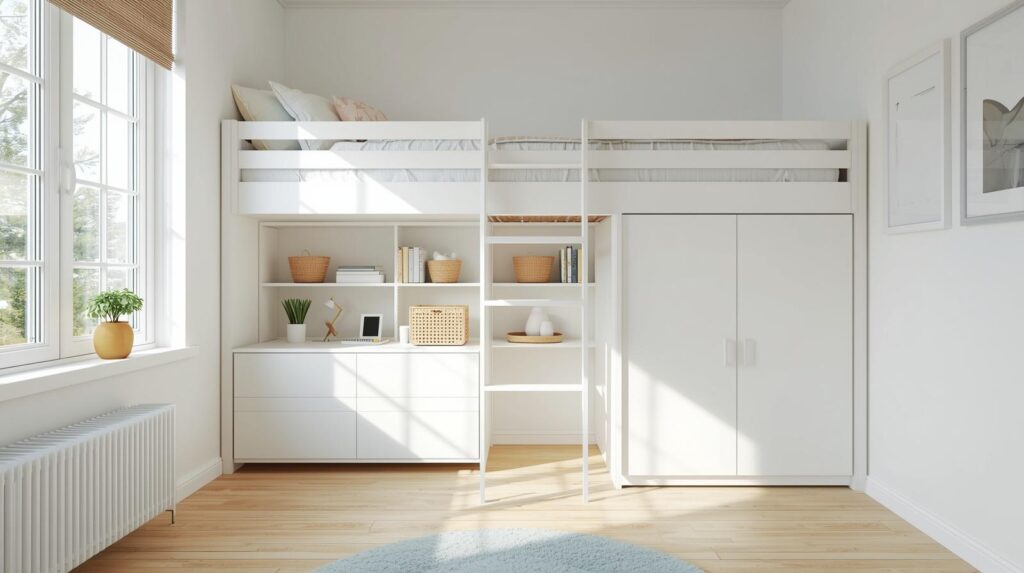
Another common mistake is treating the lower area as spare storage. Once boxes, laundry, bags, and loose items pile up below the bed, the entire room feels smaller than before. The lower zone needs a defined purpose, even if that purpose is storage. Closed cabinets, labeled bins, and a clear walking path keep the layout honest.
Poor access also causes frustration. A ladder placed where someone naturally walks, a stair unit that blocks a closet, or a desk chair trapped beneath the frame can make the room feel badly planned. A good loft bed layout respects movement. People need to enter, sit, stand, dress, clean, and sleep without negotiating with the furniture every day.
Wrap Up:
A loft bed can change a small bedroom by turning one footprint into two useful zones. The strongest ideas pair the raised sleeping area with a clear purpose below, such as a desk, lounge, wardrobe, play corner, or storage wall. The room works best when comfort, safety, lighting, and visual calm guide every choice. A good loft bed doesn’t just save space; it makes the room easier to live in.
FAQs Section:
What is the best loft bed idea for a very small bedroom?
A loft bed with a desk or closed storage underneath usually works best in a very small bedroom because it gives the lower space a clear job. Choose a slim frame, light colors, and compact furniture so the room does not feel crowded.
Are loft beds good for adults in small apartments?
Loft beds can work well for adults in small apartments when the ceiling height, frame strength, and access design are suitable. Stairs, strong guardrails, and a polished lower zone help the layout feel mature rather than temporary.
How do I make a loft bedroom look cozy?
Use warm lighting, soft bedding, a textured rug, and closed storage to make a loft bedroom feel cozy. Keep the color palette calm and avoid filling the lower area with too many visible items.
Disclaimer:
The content shared by Fall Rugs is solely for research and informational purposes. Fall Rugs is not a professional interior design or home renovation consultancy, and the information provided should not be considered professional advice for home improvement or decor. All ideas and suggestions are based on current trends and general knowledge in the home decor industry