
TL;DR
A kitchen bookshelf succeeds when it protects books from grease and steam, groups them by actual cooking frequency, and stays easy to clean. The fifteen ideas here come from watching what works in real kitchens over years of testing storage logic against daily use.
Introduction
Why does a cookbook collection often feel like a museum exhibit instead of a tool? I started asking myself that after realizing I reached for the same three books while thirty others gathered a sticky film of kitchen dust. The shelf was there but it was not working. A proper kitchen bookshelf should shorten the distance between impulse and action while your pan is already hot. That changes everything about where books live, how they are angled, and what surrounds them. This piece maps out fifteen configurations that solve real kitchen friction.
1. The Open Shelf Right Beside the Range Hood
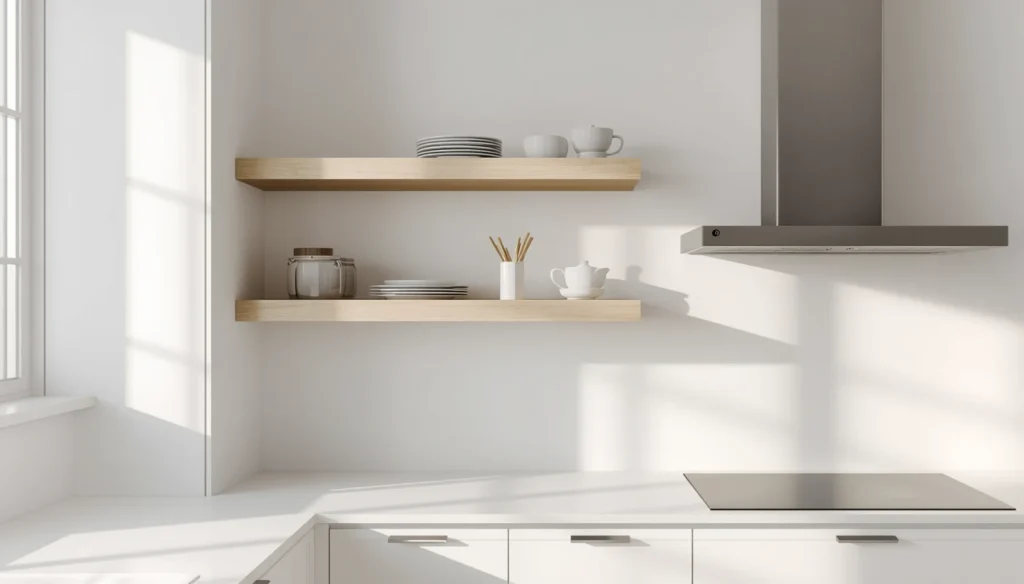
Proximity defines this idea. A single sturdy shelf mounted at eye level, positioned a safe eighteen inches from the cooktop, becomes the most efficient recipe station in the kitchen. The books that live here earn their spot through heavy rotation. You reach up without stepping sideways and the page stays visible while you stir.
Why the Hood Side Works Better Than You Think
The range hood pulls airborne grease upward before it settles horizontally. That small aerodynamic fact means books placed beside the hood gather far less residue than those placed across the room. A shelf here stays cleaner with less effort. The vertical distance also keeps the books outside the hottest steam zone during boiling sessions.
What Belongs on This Shelf
Only books you cook from at least twice a month survive this placement. Reference volumes, sentimental collections, and once-a-year holiday books have no business here. The shelf should hold five to eight titles maximum. Any more and you will knock one into a simmering pot while grabbing another. Thin paperbacks with lay-flat bindings perform best because they stay open without a paperweight. For those looking to blend utility with warmth, exploring kitchen fireplace ideas can help create a cozy, integrated cooking environment.
2. The Low Cabinet Shelf Turned Library Row
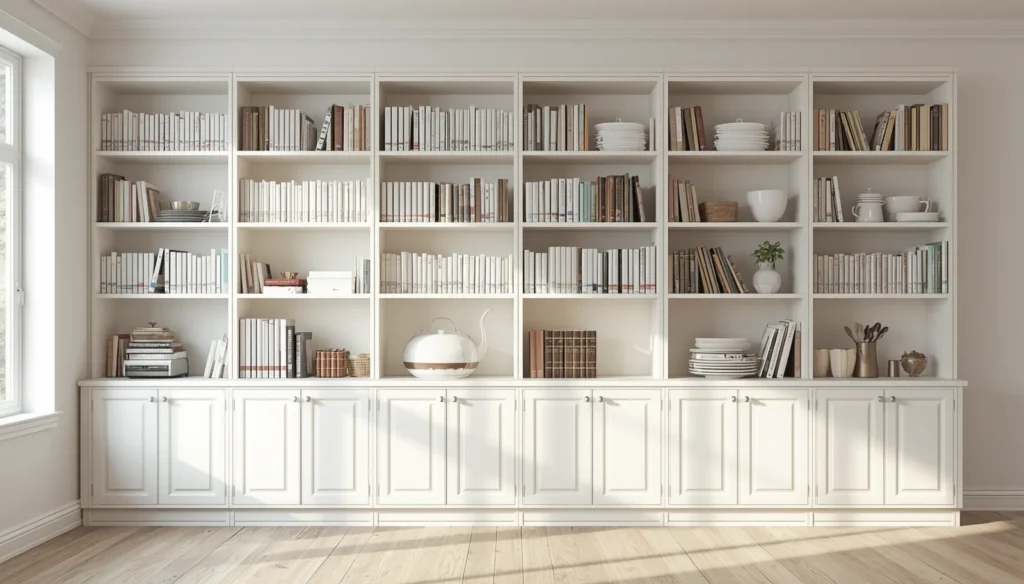
Most kitchens waste the shelf inside a base cabinet on mismatched lids and forgotten gadgets. Clearing that space and dedicating it to cookbooks changes the ergonomics of cooking. You kneel once, scan spines horizontally, and pull exactly what you need without stretching.
Protecting Books Below the Counter
This setup raises a legitimate concern about moisture and spills. The solution is a thin silicone mat cut to shelf dimensions. It creates a waterproof barrier that also stops books from sliding backward when you pull out a neighbor. Base cabinet shelves near the dishwasher should get extra attention because humidity spikes during drying cycles.
The Sorting Logic That Saves Time
Arrange books by cuisine geography rather than author name or spine color. Mediterranean titles cluster together. East Asian volumes sit in their own block. When you crave a specific flavor profile your hand moves instinctively to the right section. The muscle memory builds faster than you expect.
3. The Slim Vertical Tower Between Counter and Wall
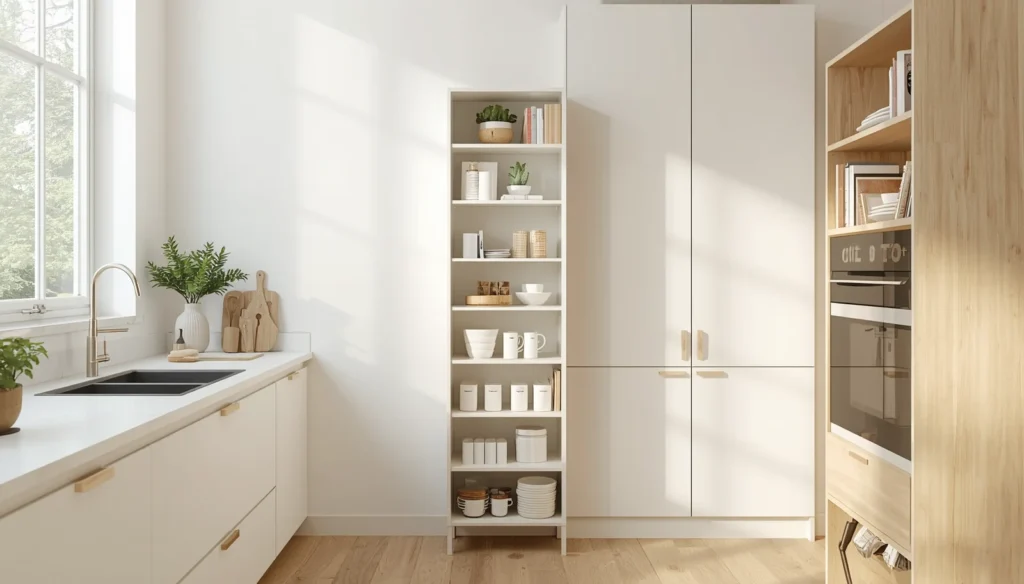
That twelve-inch gap between a counter end and the wall often sits empty. A narrow floor-to-counter book tower fits there and holds roughly twenty cookbooks without claiming floor space. The books stand with covers facing outward so each title acts as a small piece of kitchen art.
Making the Narrow Format Work
Tall thin book towers demand a slight backward tilt to stay stable. A three-degree angle cut into the shelf brackets does the job. Without it the whole unit feels precarious every time you pull a heavy hardcover from the upper slot. The tilt also reduces glare on glossy dust jackets when under-cabinet lights hit them.
A Real Kitchen Tested This
My colleague Maris had a twelve-inch dead zone beside her refrigerator for three years. She installed a painted pine tower with five shelves and moved her entire Italian cooking library there. Within weeks she noticed she cooked from those books more often simply because the covers were visible while she chopped vegetables. The visual reminder triggered specific cravings. Her Marcella Hazan books went from quarterly rotation to weekly. Integrating such layouts with kitchen fireplace ideas further elevates the room’s aesthetic and functional appeal.
4. The Floating Shelf Above the Coffee Station
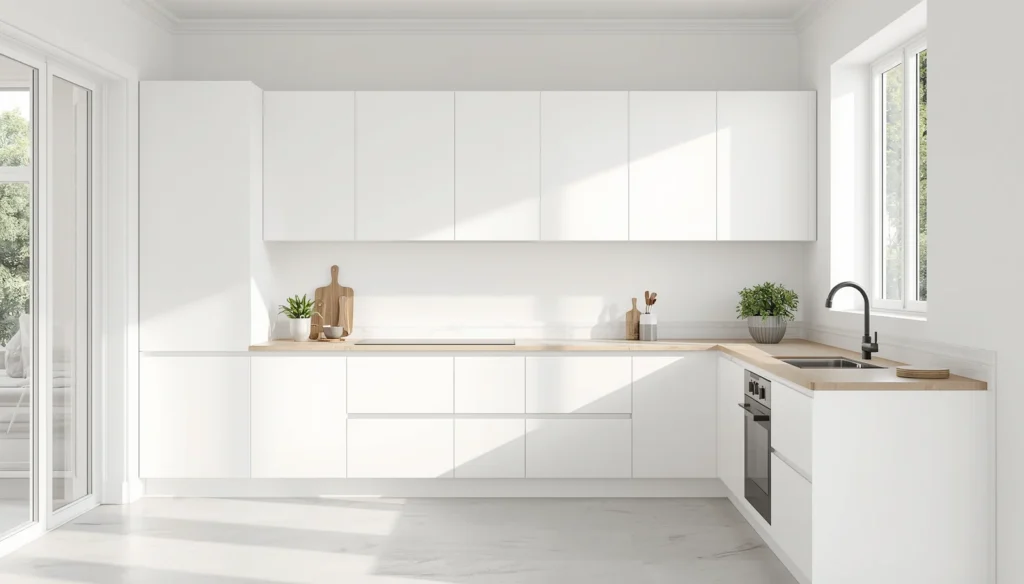
Morning routines deserve their own cookbook cluster. A single floating shelf above a dedicated coffee and breakfast nook holds baking books, brunch guides, and pastry references. These books face steam from the espresso machine so protective covers become non-negotiable.
Managing Morning Humidity
The steam plume from an espresso wand rises and spreads laterally about ten inches above the machine. Mounting the shelf at least fourteen inches above the steam source keeps books out of the direct moisture path. A small USB-powered fan tucked behind the books runs during morning hours and solves the residual humidity problem quietly.
The Aesthetic Choice That Also Protects
Clear acrylic book jackets cost a few dollars each and stop coffee splatter from staining clothbound covers. They look intentional rather than fussy when every book on the shelf wears the same treatment. The uniform transparency lets the original spine designs show while adding a subtle gloss that catches morning light nicely.
5. The Cookbook Rail Along the Backsplash
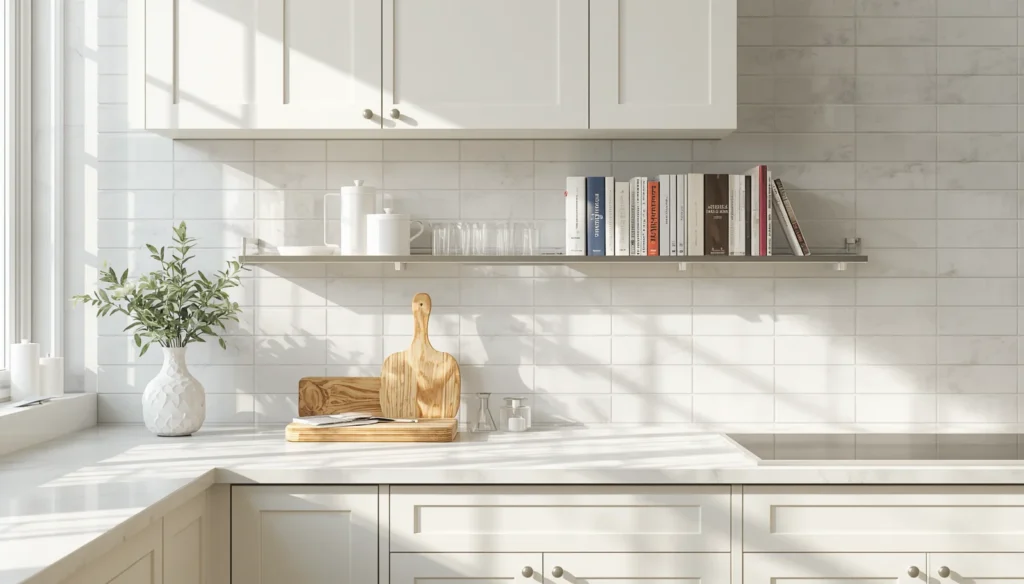
This idea borrows from commercial kitchen thinking. A slim metal rail mounted along the backsplash holds a single row of books facing outward. The books lean against the wall and their bottom edges rest on a narrow ledge. The whole system takes up less than four inches of depth.
Why Rails Beat Shelves for Very Small Kitchens
A rail removes the visual weight of a shelf bracket entirely. The wall feels open while the books float at exactly the right height for reading while standing. The tradeoff comes in capacity. A rail holds six to eight books comfortably before the line gets too long for the wall. That limitation is actually useful because it forces curation.
Installation Details That Prevent Disaster
The rail must screw into studs or use heavy-duty drywall anchors rated for at least fifty pounds. Cookbooks are dense and eight large volumes can weigh over thirty pounds. A rail that pulls out of the wall mid-cooking session leaves a mess of torn drywall and damaged books. The fasteners matter more than the rail design itself.
6. The Island Bookshelf Built Into the Seating Overhang
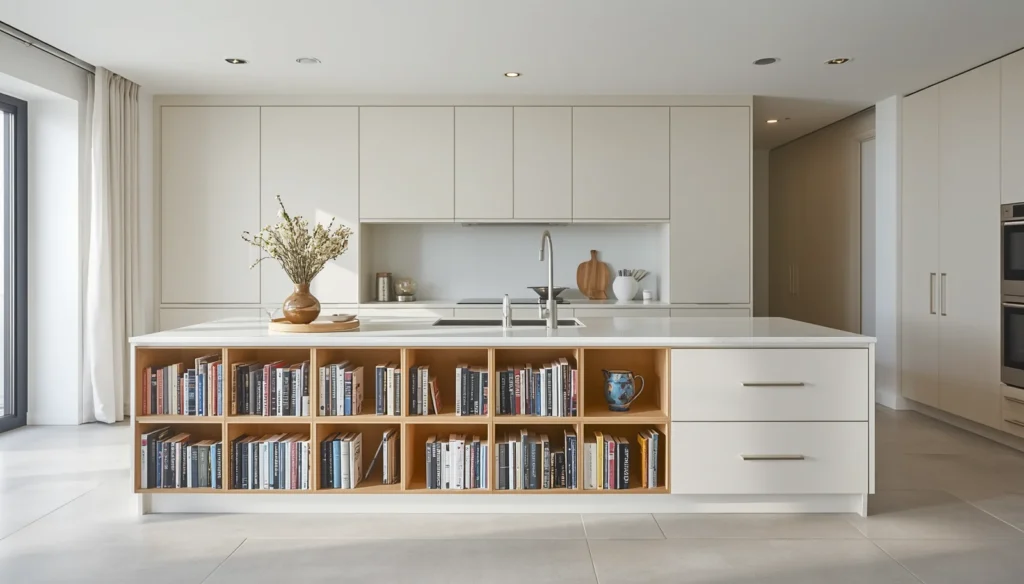
Kitchen islands with an extended counter for stool seating create a hidden opportunity. The overhang’s underside can support a shallow shelf facing inward toward the kitchen work zone. Books tuck under there completely out of sight from the dining area but instantly reachable from the prep zone. This hidden storage is perfect for books, and for a complete setup, consider modern cabinet layouts that also incorporate entertainment units.
The Invisible Library Concept
This shelf disappears from the main sightlines of the room. Guests never see it. The books stay protected from direct sunlight which fades spines over time. The location under the counter also keeps them away from splattering oil during stovetop cooking. This layout works beautifully in open plans, especially when paired with kitchen fireplace ideas to anchor the room’s seating area.
Weight Considerations for Overhang Shelves
The overhang itself must be engineered to carry the additional load. A shelf holding fifteen cookbooks adds significant weight to a cantilevered section of counter. Brackets hidden underneath should tie back into the cabinet structure rather than relying solely on the countertop material for support. Stone counters handle compression well but perform poorly under tension without proper bracing.
7. The Glass-Front Upper Cabinet Conversion
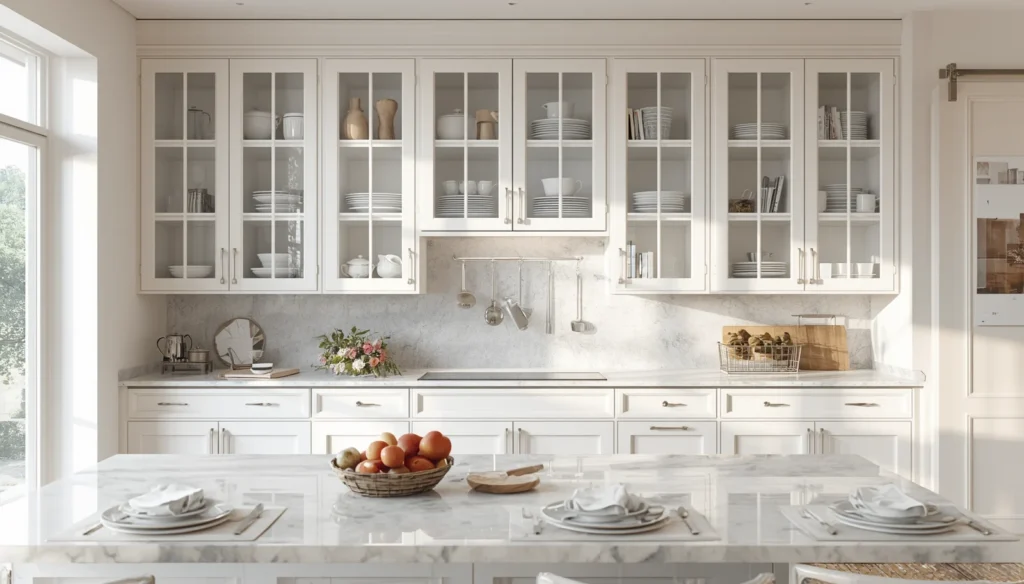
Standard upper cabinets with solid doors hide books and make them invisible. Swapping solid door panels for glass fronts transforms those same cabinets into display cases without any structural changes. The books stay clean, visible, and protected from kitchen air.
Glass Type Makes a Functional Difference
Tempered glass handles heat stress from nearby cooking appliances without risk. Frosted or reeded glass diffuses direct sunlight that could bleach spine colors over years of exposure. Clear glass works only on cabinets that never receive direct afternoon sun. The choice between these glass types depends entirely on the kitchen’s orientation.
Organizing for Visual Calm Behind Glass
Visible books need intentional grouping or the cabinet looks chaotic. For more traditional kitchen ideas, group by spine color in gentle gradients rather than strict rainbow order. Group by spine color in gentle gradients rather than strict rainbow order which feels forced. Alternate vertical book stacks with small horizontal piles of three to four slim volumes. A single ceramic object breaks up the paper monotony and signals that a human arranged this space.
8. The Rolling Library Cart Parked Near Prep Zones
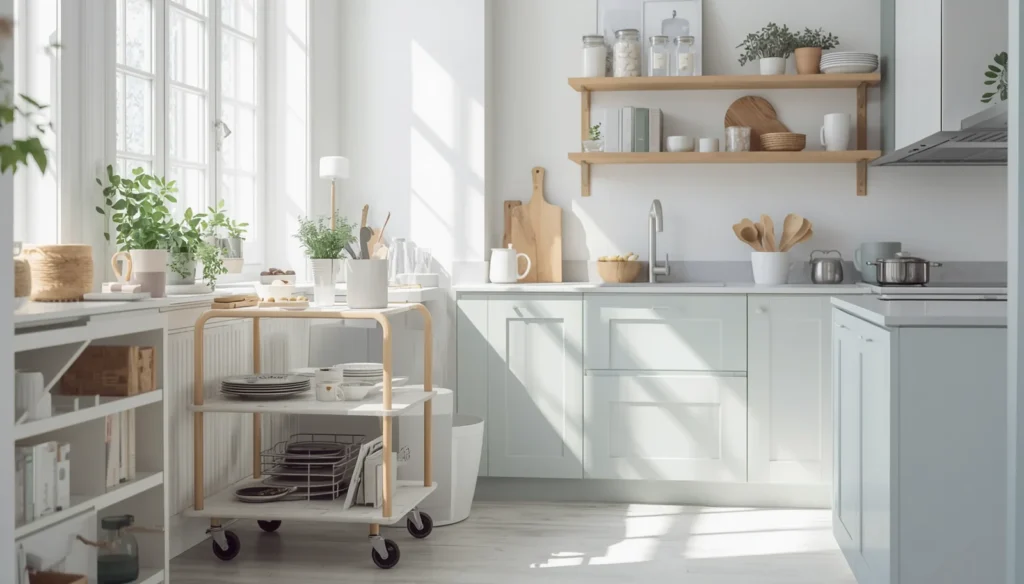
A compact bar cart repurposed for cookbooks solves the problem of fixed shelving in a kitchen where workflows shift. The cart rolls to the baking zone during holiday prep then moves beside the grill for summer cooking. The mobility changes how you think about book access.
Choosing a Cart That Handles Book Weight
Most bar carts are engineered for bottles and glassware not dense paper. Look for carts with solid steel frames and shelves rated for at least twenty-five pounds each. Casters need locking mechanisms that engage firmly. A cart that rolls while you pull a book creates a minor hazard near hot surfaces.
A Caterer’s Approach to Cart Organization
A caterer named Leo I knew kept his cart organized by meal sequence rather than cuisine. The top shelf held books for appetizers and first courses. The middle shelf carried main dish references. The bottom shelf stored dessert and baking manuals. He never searched for a book mid-service because the cart’s layout mirrored the dinner’s timeline.
9. The Deep Windowsill Book Ledge
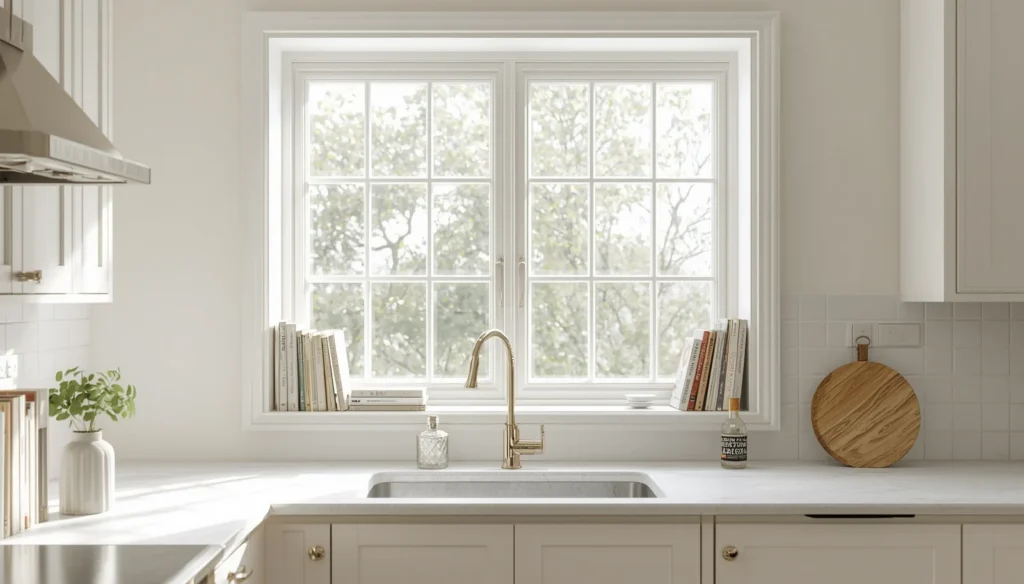
Kitchens with deep windowsills above the sink inherit a natural bookshelf. The sill must extend at least eight inches from the window to hold standard cookbooks without tipping. The natural light makes reading recipes easy but also threatens book longevity if left unmanaged.
Managing Sunlight Damage
Direct UV exposure fades spines and weakens paper fibers over months of exposure. A UV-blocking window film cuts harmful rays without darkening the kitchen noticeably. The film costs little and installs with soapy water and a squeegee. Books on a windowsill without this protection will show visible fading within a single summer.
Moisture From the Sink Below
Splashes from the sink reach upward surprisingly far during active dishwashing. A small acrylic shield attached to the sill’s front edge deflects water droplets before they hit book covers. The shield needs to be only three inches tall and it can be completely transparent. Without it you will find warped covers on the bottom edges of every book within months.
10. The Staircase Wall Shelf in Open-Plan Kitchens
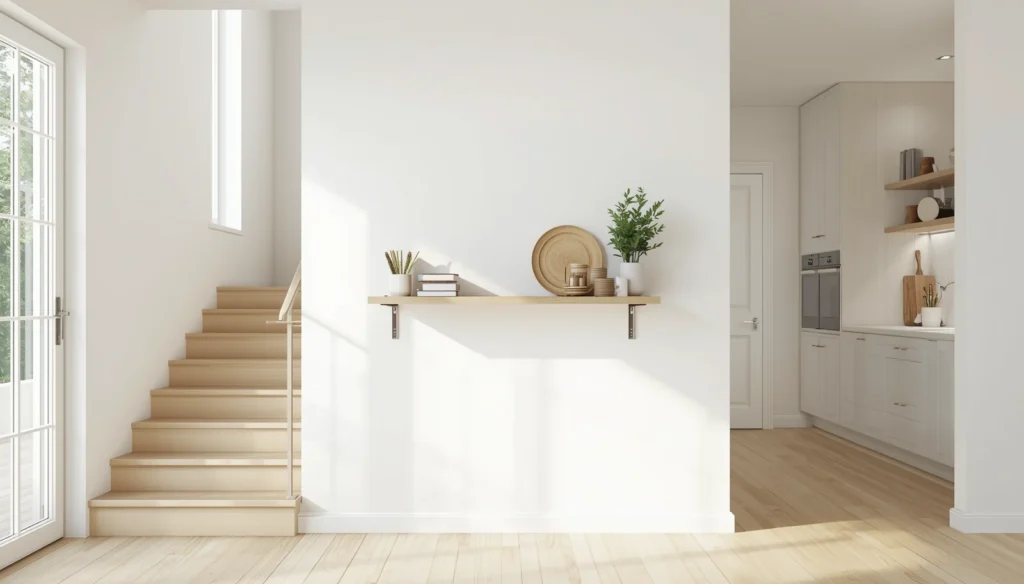
Open-plan homes where the kitchen flows into a split-level living area often have a staircase wall adjacent to the cooking zone. That wall offers vertical real estate that nobody thinks to use. Shallow shelves running up the staircase wall hold a growing cookbook collection without encroaching on kitchen floor space.
Shelf Depth and Traffic Flow
The shelves must stay under six inches deep to avoid becoming head-bump hazards on the staircase. Slim cookbooks fit easily. Thicker volumes sit with their covers facing out rather than spine-out to stay within the depth limit. The ascending arrangement naturally draws the eye upward and makes the collection feel larger than it is.
The Unexpected Benefit of Staircase Placement
Books placed on a staircase wall get browsed by anyone walking upstairs. That includes dinner guests who spot a title and start a conversation about a shared culinary interest. The books become social catalysts rather than passive storage objects. Several dinner party menus in my own home emerged from guest-initiated cookbook discoveries on those stairs.
11. The Dedicated Baking Book Alcove
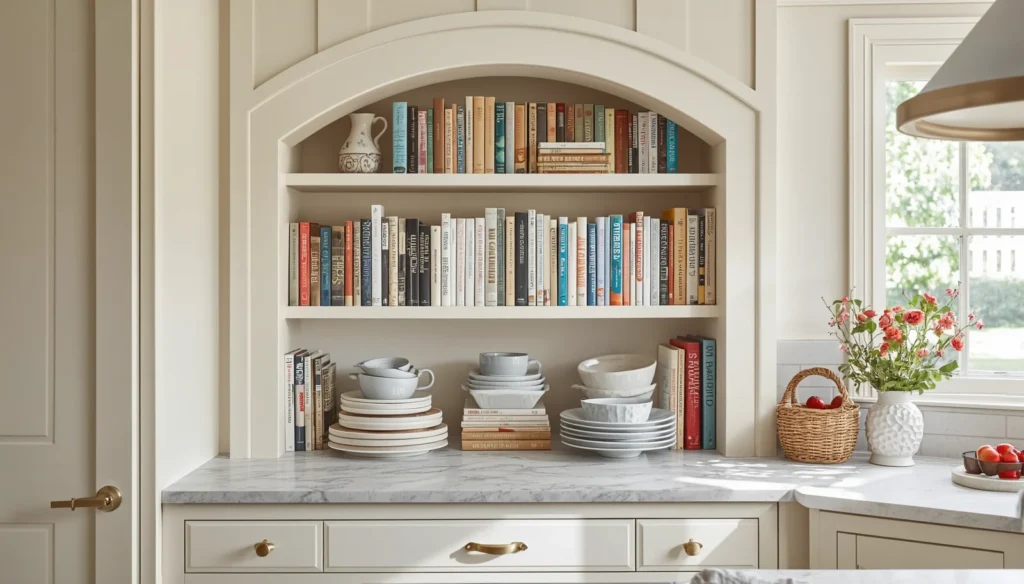
Baking books have different physical demands than savory cooking books. They are often wider, heavier, and filled with precise measurements that demand a lay-flat surface nearby. A dedicated alcove near the oven with a small counter extension solves these specific needs.
Designing the Alcove for Flour and Butter
Baking generates fine particulate flour dust that settles everywhere. The alcove should position books slightly above counter height so flour dust falls to the counter rather than onto book tops. A small retractable shelf pulls out to hold a book open at the recipe page while keeping it away from messy work surfaces.
Why Bakers Need a Separate Book Zone
The pace of baking differs from stovetop cooking. You consult the book, measure, return to the book, mix, and consult again. The repetitive movement pattern benefits from a dedicated station where the book never moves. Moving a heavy baking book across a flour-dusted counter between each step creates frustration and mess. The alcove eliminates that friction entirely.
12. The Magnetic Side-of-Fridge Book Panel
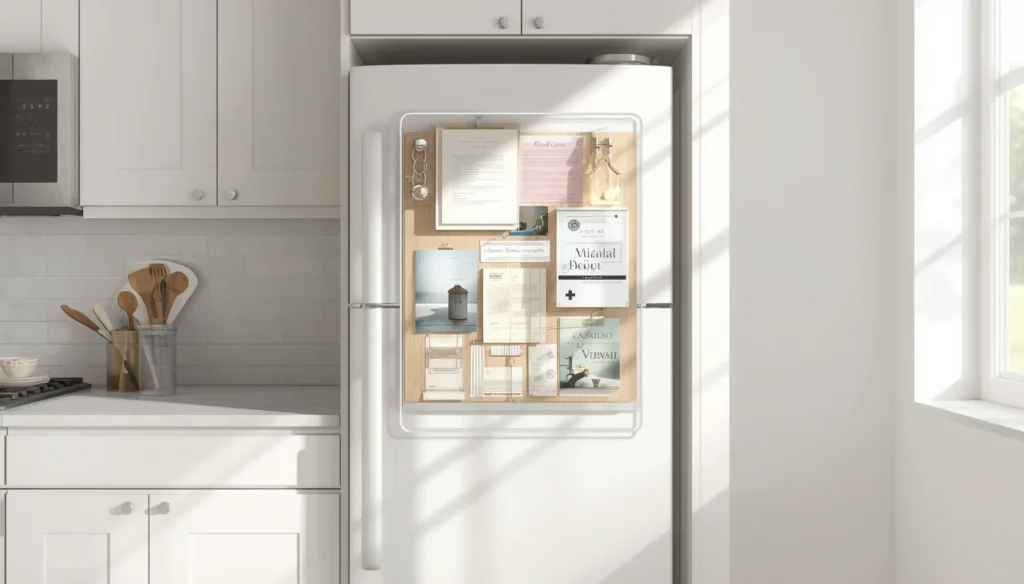
The side of a refrigerator presents a large vertical surface that most kitchens leave blank. Magnetic panels designed specifically for book display attach to that surface and hold slim to medium cookbooks with their covers facing outward. The system takes up zero floor and zero wall space.
Magnetic Strength and Book Weight
Standard decorative fridge magnets cannot hold a two-pound cookbook. The panels that work use rare-earth magnets embedded in steel strips that distribute weight across a larger surface area. Each panel typically holds three to five books depending on size. Testing the hold before loading books prevents the crash that wakes everyone at midnight.
Which Books Suit Fridge Display
Paperbacks and slim hardcovers under one pound work best. Heavy encyclopedic volumes strain even strong magnetic panels over time as fridge doors vibrate slightly with every opening and closing. Reserve this display for frequently used reference books that benefit from being always visible at eye height.
13. The Corner Shelf System With Rotating Access
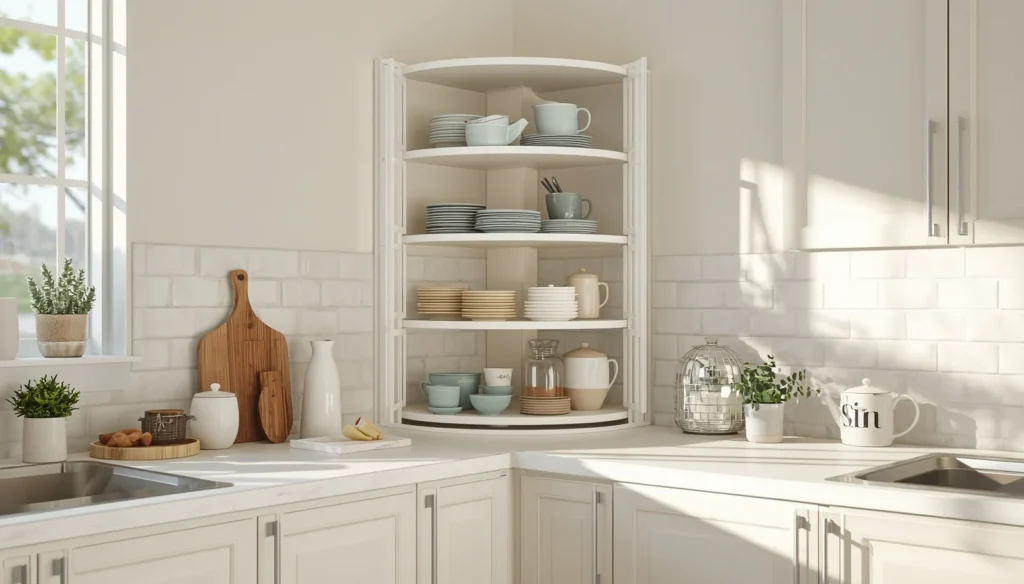
Kitchen corners create awkward storage dead zones. A series of triangular corner shelves stacked vertically turns that wasted space into a cookbook library that wraps around the corner. The books face into the room at a forty-five-degree angle which makes spines readable from multiple positions.
Solving the Corner Depth Problem
Standard corner shelves push books deep into the corner where they disappear from view and become impossible to retrieve. The solution involves stepped shelf depths where each shelf above is slightly shallower than the one below. The top shelf holds fewer books but keeps them all visible. The bottom shelf holds more but requires a slight lean to see every title.
A Small Bakery’s Corner Solution
A neighborhood bakery near my old apartment had a tiny back kitchen with exactly this corner shelf setup. The head baker kept her pastry and bread books in a three-tier corner system that held roughly forty volumes. She could scan every spine from her worktable without taking a step. The arrangement saved her perhaps ninety seconds per recipe consultation which compounded across a twelve-hour baking shift.
14. The Appliance Garage Top Shelf
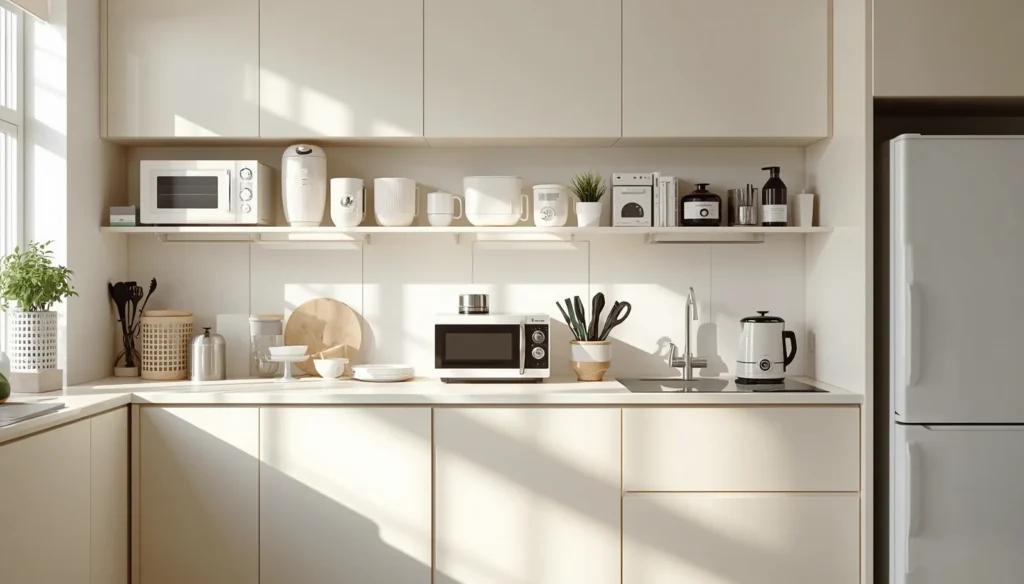
Appliance garages with roll-up doors occupy valuable backsplash real estate in many kitchens. Their flat tops sit unused while offering a perfect shallow shelf surface. Books placed here stay at eye level and benefit from the garage’s structure which blocks side splashes from the counter. While managing appliances, many homeowners are now opting for integrated cabinet designs that blend technology with traditional storage.
Heat Considerations From Below
Appliances inside the garage generate heat when in use. Coffee makers and toasters push warm air upward through the garage ceiling. A thin insulating mat between the garage top and the books prevents heat transfer that could dry out book bindings over time. The mat costs very little and cuts into nobody’s renovation budget.
Curating a Small Top-Shelf Collection
The appliance garage top accommodates perhaps six to eight books. This constraint demands ruthless editing. The books that earn this prime real estate should be the ones you want to grab when you have thirty seconds before guests arrive and need a quick reference. Entertaining books, cocktail guides, and short recipe collections suit this location perfectly.
15. The Full Cookbook Wall as Kitchen Architecture
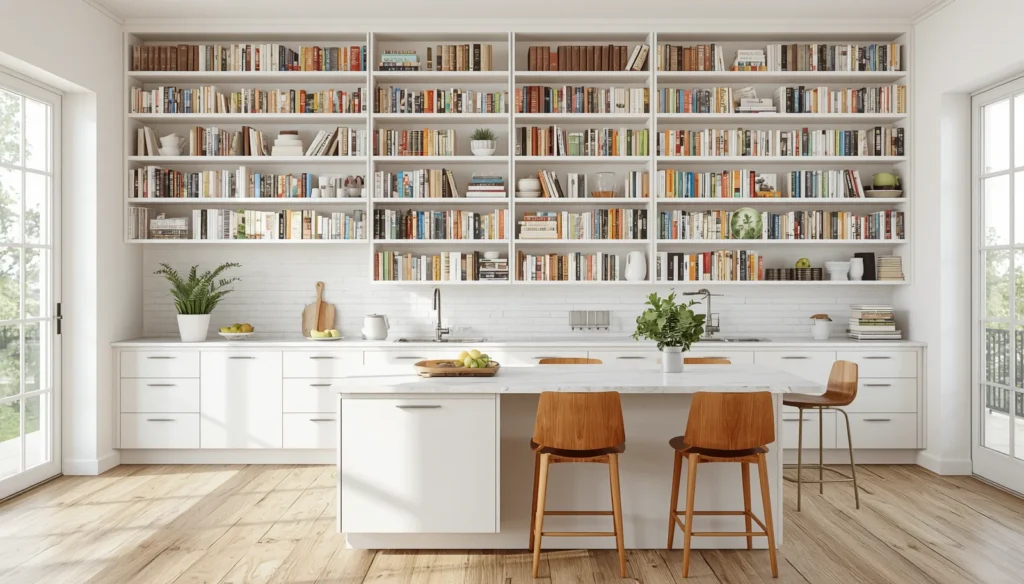
A full wall of books becomes a defining architectural feature when executed with proper depth and lighting. If you love traditional kitchen ideas, this setup replaces upper cabinets perfectly. The wall replaces upper cabinets entirely on one side of the kitchen and houses several hundred cookbooks. This is the long-game solution for serious collectors who cook from their library daily.
Structural Requirements Nobody Discusses
A wall of books spanning eight feet wide and eight feet tall holds enormous weight. The total load can exceed eight hundred pounds. Standard wall studs and drywall cannot support this without reinforcement. Blocking between studs and a ledger board anchored into the wall structure distributes the weight safely. Shelving material must be solid hardwood or thick plywood because particleboard shelves sag visibly under cookbook loads within a year.
Lighting That Preserves and Displays
Integrated LED strip lighting recessed into the underside of each shelf illuminates spines without generating the heat that ages paper. The color temperature should sit around 3000K which renders book covers accurately without the clinical feel of cooler light. Motion-sensor switches keep the lights off during daylight hours and activate them when someone approaches the wall to browse.
The Collection That Lives Here
A collector named Anika built this exact wall in her renovated kitchen three years ago. She organized her five hundred cookbooks chronologically by publication decade rather than by cuisine or author. The arrangement told a story of how cooking changed across generations. She reported that cooking from books published in different decades within the same week taught her more about culinary evolution than any food history course. The wall itself became a timeline.
Wrap Up
The best kitchen bookshelf does one job relentlessly: it puts the right book in your hand before the garlic burns. Every idea above starts from that practical truth and builds outward toward protection, visibility, and flow. Start by moving your most-used books closer to where you actually cook and watch how your relationship with the collection changes. The shelves will tell you what works if you pay attention.
FAQs
How do I protect cookbooks from kitchen grease and moisture?
Position shelves away from the direct splash zone of the cooktop, use clear acrylic book jackets on frequently used titles, and install a small ventilation fan if humidity from boiling or dishwashing consistently reaches the bookshelf area.
What is the best height for a kitchen cookbook shelf?
Mount the shelf so the book you reach for most sits at eye level while you are standing at your primary prep surface, which typically places the shelf center between fifty-four and sixty inches from the floor depending on your height and counter configuration.
Should I store cookbooks with spines facing out or covers facing forward?
Spines out maximizes capacity on deep shelves while covers forward works better on shallow shelves under six inches deep where the book face becomes visible at a glance and encourages impulse browsing during cooking sessions.
Disclaimer
The content shared by Fall Rugs is solely for research and informational purposes. Fall Rugs is not a professional interior design or home renovation consultancy, and the information provided should not be considered professional advice for home improvement or decor. All ideas and suggestions are based on current trends and general knowledge in the home decor industry.