
TL;DR
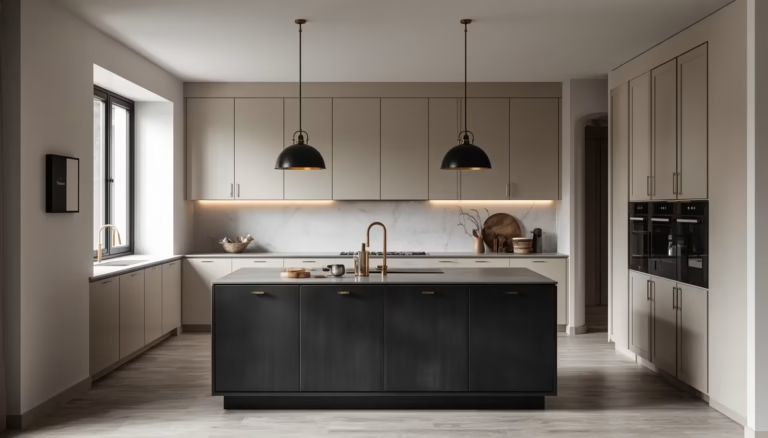
Dark grey kitchens focus on tactile textures and the sophisticated layering of charcoal, slate, and anthracite tones. By prioritizing matte finishes and integrated smart lighting, homeowners create moody yet functional spaces that balance industrial grit with high-end comfort.
Introduction
The shift toward moodier, more grounded interiors has reached a peak as we enter 2026, with dark grey kitchens leading the charge in high-end residential design. Moving away from the sterile whites of the past decade, designers now embrace the depth and emotional weight that charcoal and slate palettes provide. You will find that a well-executed dark kitchen does not feel small or cave-like; instead, it offers a sense of permanence and architectural intent. This discussion explores how to master these deep tones while ensuring your culinary space remains vibrant, welcoming, and technologically advanced.
1. Matte Charcoal Cabinetry with Anti-Fingerprint Technology
The primary concern for anyone adopting a dark palette is the visibility of oils and smudges on flat surfaces. In 2026, the industry has solved this through nanotech-coated matte laminates and lacquers that actively repel skin oils. These surfaces provide a soft, velvet-like appearance that absorbs light rather than reflecting it, which helps the cabinetry recede into the walls and makes the room feel more expansive.
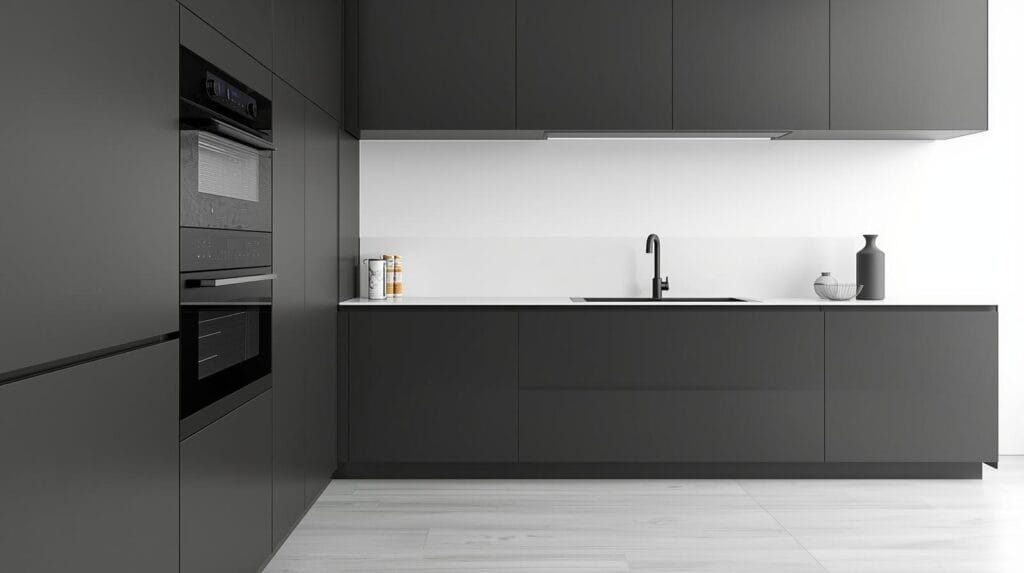
Choosing a matte finish over a high-gloss one is essential for achieving a contemporary look that feels expensive rather than flashy. When I worked on a loft renovation in Chicago, the client initially feared that matte charcoal would feel flat. We countered this by using laser-edged panels that create incredibly tight seams, resulting in a monolithic look that appeared to be carved from a single block of stone.
The Importance of Tactile Feedback
Beyond the visual appeal, the physical sensation of these modern surfaces adds a layer of luxury that glossy finishes lack. Texture plays a huge role in how we perceive color. A matte charcoal door feels warmer to the touch than a cold, shiny surface, which helps bridge the gap between industrial aesthetics and domestic comfort.
Maintaining Depth Without Gloss
To keep the dark grey from looking muddy, it is helpful to select a shade with a slight blue or green undertone. These cool base notes react beautifully with natural morning light, preventing the kitchen from feeling dull during the early hours. At night, warm artificial light brings out the grey’s richness, creating a dual-toned experience throughout the day.
2. Incorporating Contrasting Natural Stone Islands
A dark grey kitchen requires a focal point to break up the visual weight of the cabinetry. A large island wrapped in a contrasting natural stone, such as a white Calacatta marble or a light grey quartzite, serves as a functional piece of art. This juxtaposition between the dark perimeter and the bright center draws the eye and provides a clean surface for food preparation.
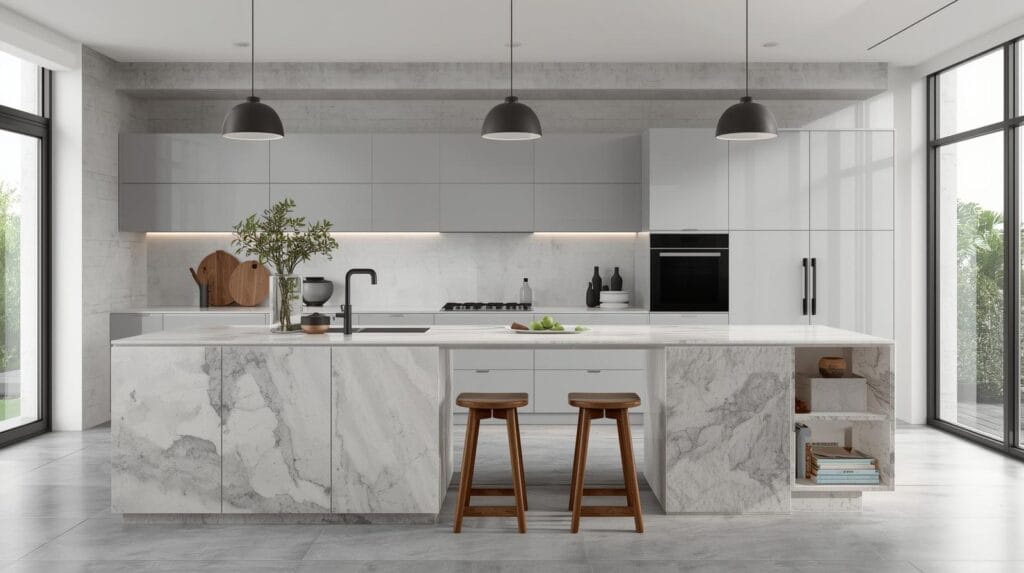
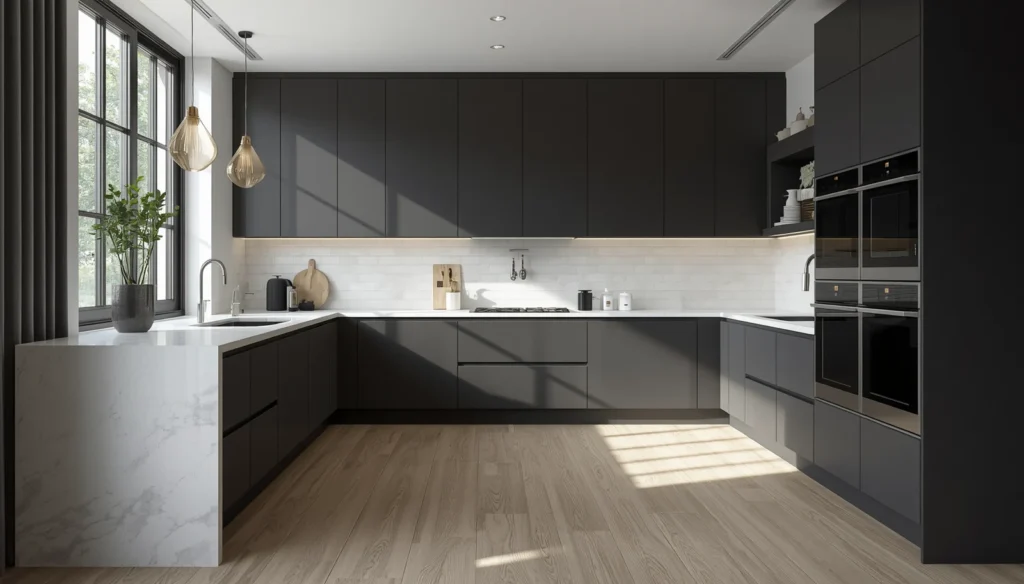
In recent years, the trend has moved toward “waterfall” edges where the stone flows down the sides of the island to the floor. This technique hides the cabinet carcasses and emphasizes the material’s veining. Using a stone with bold, dark grey veins on a white background creates a literal bridge between the two primary colors of the room, ensuring the design feels cohesive rather than fragmented.
Selecting the Right Veining Pattern
When choosing stone for a dark grey environment, the movement within the slab is more important than the base color. Busy, frantic patterns can clash with the minimalism of charcoal cabinets. Instead, look for long, flowing veins that mimic the natural erosion of riverbeds, as these provide a sense of calm and organic flow.
Durability and Maintenance of Light Surfaces
While aesthetics matter, the practicalities of a working kitchen cannot be ignored. Using a high-quality sealant on natural marble or opting for a premium engineered quartz ensures that the bright island remains stain-free. The contrast only works if the lighter surface stays pristine, providing that crisp “pop” against the moody backdrop of the surrounding units.
3. Integrating Warm Metallic Hardware and Accents
Dark grey acts as a perfect neutral canvas for metallic finishes. While chrome and stainless steel can make a charcoal kitchen feel overly cold or clinical, warm metals like unlacquered brass, copper, or honey bronze provide a necessary glow. These accents act like jewelry for the room, catching the light and adding a layer of sophisticated detail.
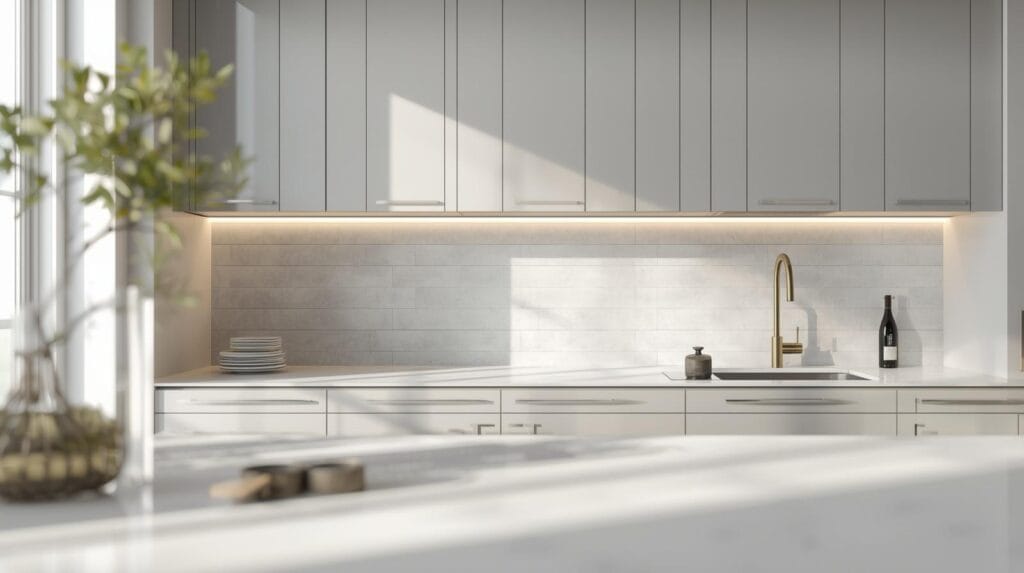
I recently observed a project where the designer swapped standard black pulls for oversized brushed brass handles on slate-colored drawers. The transformation was immediate; the kitchen went from looking purely functional to feeling like a high-end furniture gallery. The key is consistency, as mixing too many metallic tones can detract from the intentionality of the dark grey theme.
The Evolution of Living Finishes
Unlacquered brass is particularly popular in 2026 because it develops a patina over time. In a dark grey kitchen, this changing finish adds a sense of history and lived-in charm. It prevents the space from feeling like a sterile showroom, suggesting that the home is a place of activity and growth rather than just a design statement.
Strategic Placement of Metal
Do not limit your metallic accents to just handles and faucets. Consider thin metal inlays in the cabinetry or a brushed copper kickplate at the base of the island. These subtle touches reflect light at different heights, ensuring that the lower half of the kitchen feels just as considered and bright as the eye-level surfaces.
4. Layered Architectural Lighting and LED Channels
A dark kitchen lives and dies by its lighting plan. Without a layered approach, charcoal cabinets can easily disappear into the shadows, making the space feel oppressive. The modern 2026 approach utilizes recessed LED channels hidden under countertops and inside shelving to create a “halo” effect that defines the edges of the furniture.
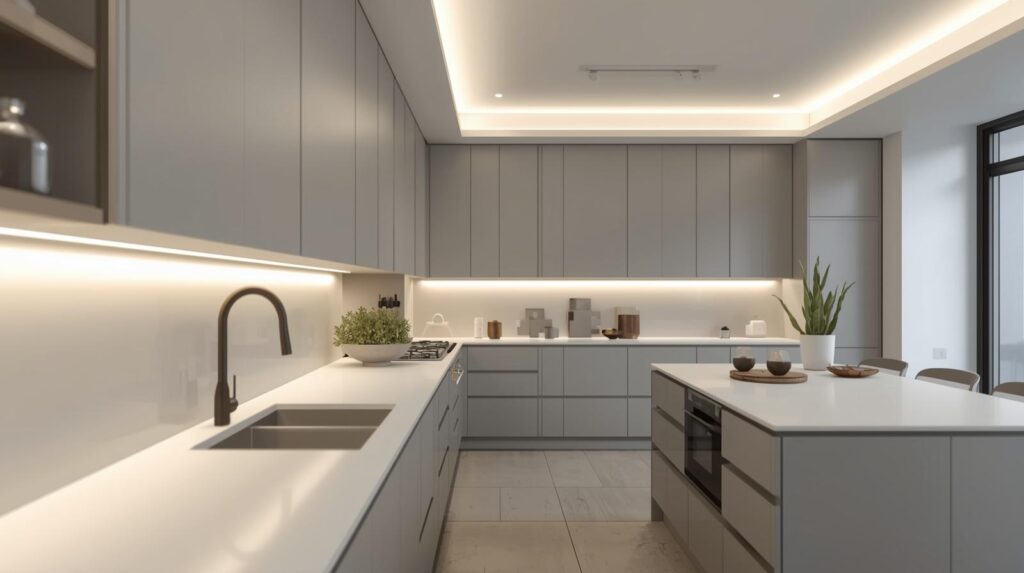
Using warm-toned LEDs (around 2700K to 3000K) is vital because it prevents the grey from looking blue or clinical. When light washes down the face of a dark cabinet, it highlights the texture and depth of the material. This technique also provides essential task lighting without the need for bulky, visible fixtures that might clutter the minimalist aesthetic.
Creating Depth with Backlighting
Backlighting open shelving or glass-fronted cabinets is another effective way to add dimension. By illuminating the wall behind the dark grey frames, you create a sense of transparency. This makes the cabinetry feel lighter and less imposing, which is especially useful in smaller kitchens where every inch of perceived space counts.
The Role of Statement Pendants
While hidden LEDs do the heavy lifting, a set of sculptural pendant lights over the island serves as the visual anchor. Choose designs with a dark exterior and a gold or white interior. This ensures that the fixture blends with the kitchen’s palette while providing a bright, focused beam of light onto the work surface below.
5. Tonal Layering with Multi-Shade Grey Palettes
The most successful dark kitchens do not rely on a single shade of grey. Instead, they utilize tonal layering, which involves mixing different depths of the same color family. For example, you might pair anthracite floor-to-ceiling cabinets with a mid-tone smoke grey island and a light silver grey backsplash.
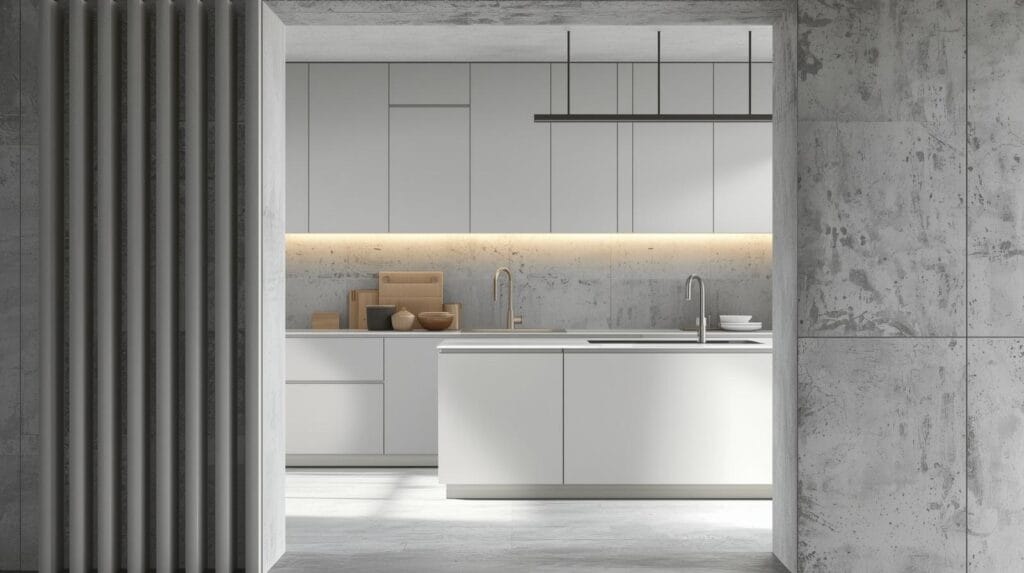
This variety creates a sophisticated, three-dimensional look. It mimics how light and shadow play across natural landscapes, making the kitchen feel more organic. When everything is the exact same shade of charcoal, the room can feel flat and two-dimensional, losing the architectural interest that a dark palette is supposed to provide.
Mixing Textures Across Tones
To enhance the tonal layering, vary the textures of each shade. You could use a rough-hewn slate tile for the floor in a medium grey, paired with ultra-smooth charcoal cabinetry. The difference in how these surfaces catch the light adds a rhythmic quality to the room that keeps the eye moving and engaged.
Preventing a Monochromatic Meltdown
The risk of a monochromatic grey kitchen is that it can become monotonous. To avoid this, introduce “breaks” in the color. This could be a single shelf of warm oak or a collection of ceramic bowls in an earthy terracotta. These small deviations emphasize the greyness of the rest of the room by providing a point of comparison.
6. Biophilic Integration and Indoor Greenery
Dark grey provides a stunning backdrop for the vibrant greens of indoor plants. In 2026, biophilic design is no longer just an afterthought; it is integrated into the kitchen’s structure. Think built-in herb planters in the island or a dedicated “green wall” that stands in stark contrast to the moody charcoal cabinetry.
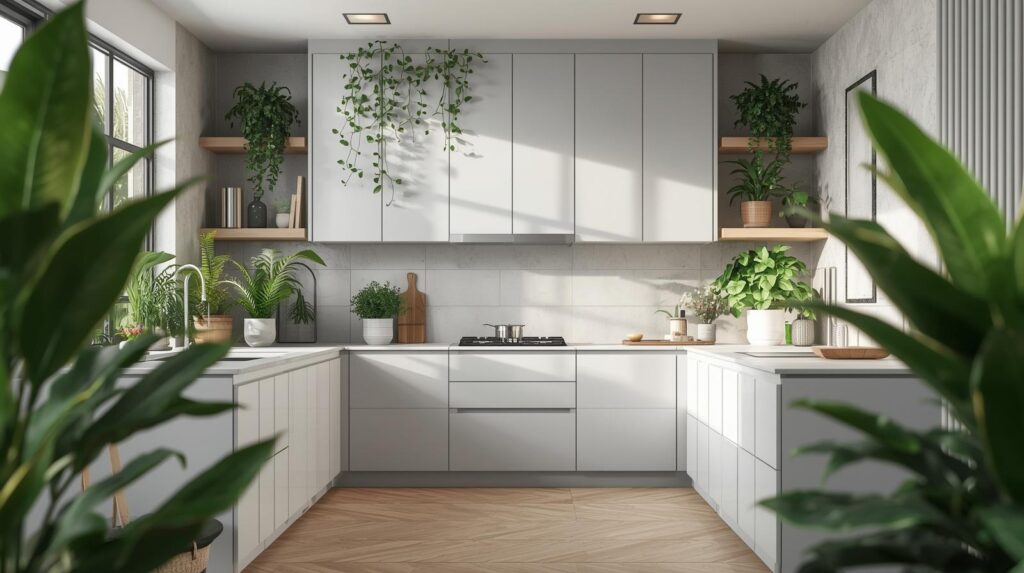
The organic shapes of leaves and vines soften the hard lines of a modern kitchen. In a space dominated by stone, metal, and engineered wood, living elements provide a necessary breath of fresh air. They also help to clean the air and improve the mood of the cook, making the kitchen a more restorative environment.
Choosing the Right Foliage
Not all plants work well with a dark grey aesthetic. Broad-leafed varieties like Monstera or Fiddle Leaf Figs provide a dramatic, sculptural look that matches the scale of modern cabinetry. Alternatively, trailing plants like Pothos can be placed on top of high cabinets to drip down like green waterfalls, breaking up the verticality of the grey walls.
Functional Greenery
Incorporating a microgreen station with integrated UV lighting is a popular choice for 2026. This allows you to grow fresh ingredients year-round while adding a bright, glowing focal point to the kitchen. The high-tech look of an automated planter fits perfectly within the sleek, futuristic vibe of a dark grey modern home.
7. Industrial Elements with a Refined Edge
Dark grey is the natural heir to the industrial design movement, but the 2026 version is much more polished than the “exposed brick and pipes” look of the past. Think blackened steel frames for glass cabinets, polished concrete floors, and integrated concrete sinks. These materials offer a raw, honest aesthetic that feels permanent and sturdy.
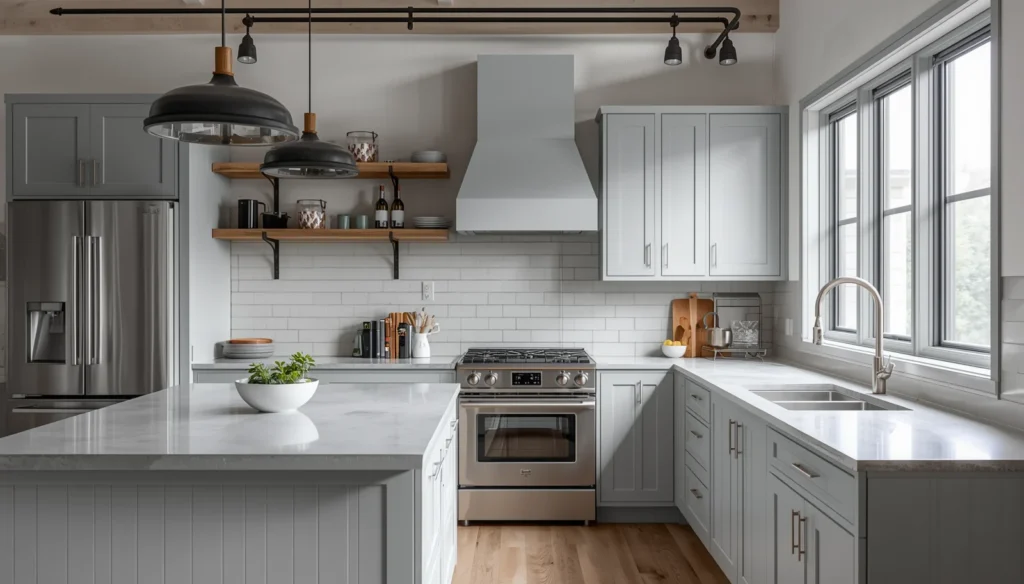
The key to making industrial elements work in a sleek home is refinement. Instead of rough, dusty concrete, use a micro-cement finish that is smooth to the touch and has a subtle sheen. Instead of rusted iron, use powder-coated aluminum that provides the same visual weight but with a much cleaner finish.
The Beauty of Poured Surfaces
A poured concrete countertop in a deep slate grey is a bold choice that pays off in character. Unlike quartz or granite, concrete can be cast with integrated drainboards and seamless sinks. Over time, it develops a unique map of use that tells the story of the home, which stands in beautiful contrast to the perfection of factory-made cabinets.
Metal Mesh Accents
Consider replacing standard glass cabinet inserts with fine metal mesh. This allows a glimpse of the items inside without putting everything on full display. It adds an industrial texture that plays well with the light, creating a shimmering effect that changes as you move through the kitchen.
8. Floor-to-Ceiling Cabinetry for a Monolithic Aesthetic
To truly lean into the dark grey trend, many homeowners are opting for “wall-of-storage” designs. This involves floor-to-ceiling cabinetry with no visible toe kicks or crown molding. The result is a seamless, monolithic block of color that acts as a secondary wall rather than a piece of furniture.
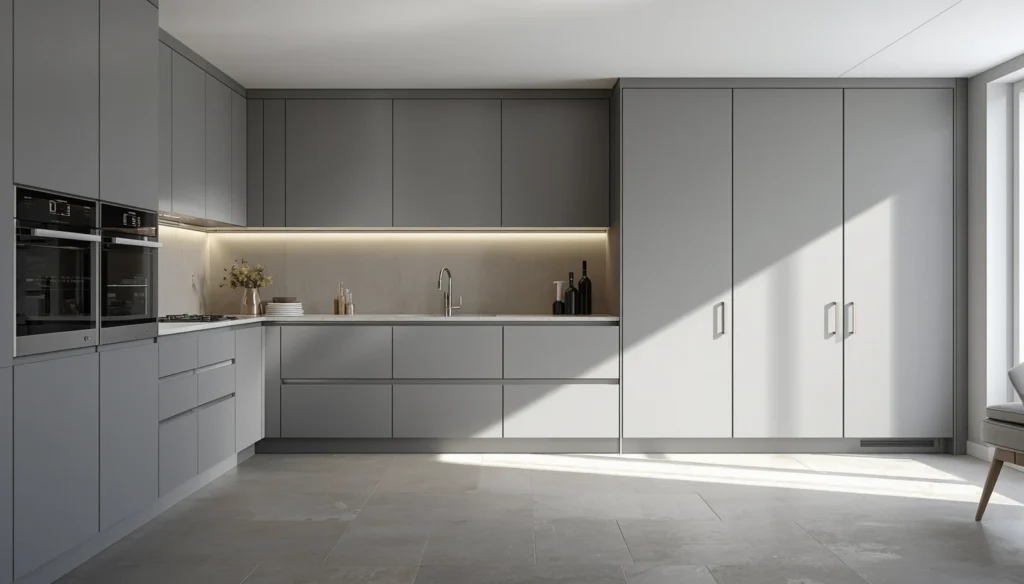
This approach maximizes storage and eliminates the visual clutter of multiple small units. In a large open-plan living area, a dark grey kitchen wall can act as a sophisticated backdrop for the dining and lounge sections. By hiding appliances behind matching panels, the kitchen essentially disappears when not in use.
Eliminating Visual Noise
Handle-less designs are crucial for the monolithic look. Use “push-to-open” mechanisms or recessed finger pulls that are integrated into the cabinet doors. This keeps the surface entirely flat, allowing the color and texture of the charcoal finish to be the primary focus without the distraction of protruding hardware.
High-Level Storage Solutions
With cabinets reaching the ceiling, accessibility becomes a priority. Integrated library ladders on a sliding track are a stylish and practical solution for 2026. A ladder finished in a dark wood or black metal adds a vertical element that breaks up the horizontal lines of the cabinetry and provides a sense of grand scale.
9. Hidden Pantries and Secret “Dirty Kitchens”
As we spend more time entertaining at home, the “social kitchen” has become a priority. This has led to the rise of the hidden pantry or “back kitchen.” Behind a set of dark grey cabinet doors lies a secondary space where messy prep work and loud appliances are kept out of sight.
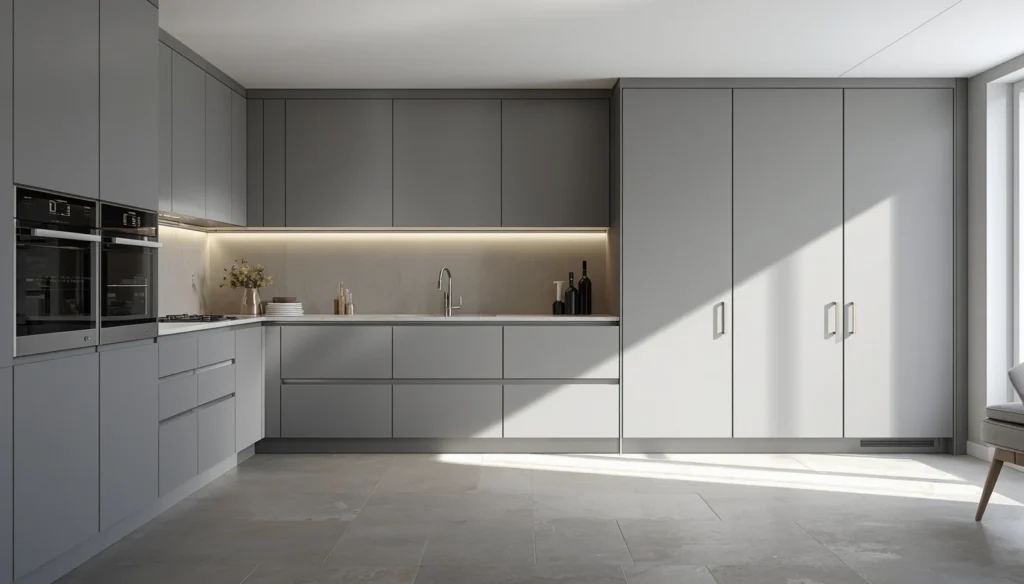
This allows the main kitchen to remain a pristine, sleek environment for hosting. In 2026, these hidden rooms often feature the same dark grey palette but with more utilitarian materials. It is a clever way to maintain a minimalist aesthetic without sacrificing the functionality required for heavy cooking or large gatherings.
Seamless Integration
The entry to these hidden spaces is often a “pocket door” that slides back into the cabinetry, making the transition feel like a secret passage. This adds an element of surprise and luxury to the home. It also allows for a much larger fridge and freezer setup that would otherwise overwhelm the design of the main room.
The Multi-Purpose Scullery
These secondary spaces are not just for storage. Many now include a second dishwasher, a deep sink for soaking large pots, and even a dedicated coffee station. By moving these high-traffic items out of the main area, the dark grey kitchen remains a calm, uncluttered sanctuary for the family to gather.
10. Mixing Dark Grey with Warm Wood Tones
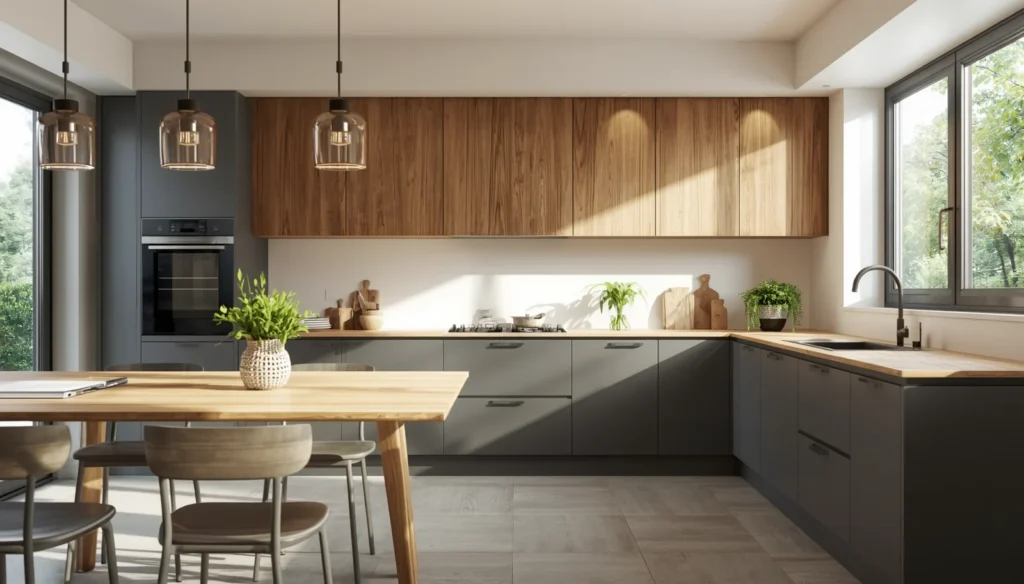
While a purely grey kitchen is striking, many people find that adding a touch of natural wood makes the space feel more approachable. Dark grey pairs exceptionally well with walnut, charred oak (Shou Sugi Ban), or even reclaimed timber. The warmth of the wood grain balances the coolness of the grey, creating a harmonious and balanced atmosphere.
A common application is to have dark grey perimeter cabinets with a solid wood island top or a series of open wooden shelves. This breaks up the solid blocks of color and introduces a natural pattern that is unique to every home. The contrast between the matte, manufactured surface of the cabinets and the organic texture of the wood is a hallmark of high-end 2026 design.
Finding the Right Wood Species
Walnut is a perennial favorite for pairing with charcoal because its deep, chocolatey tones are rich enough to hold their own against the dark grey. If you prefer a more dramatic look, charred oak provides a blackened texture that aligns with the industrial side of grey while still offering the tactile benefits of timber.
Balancing the Proportions
The key to this look is moderation. Too much wood and you lose the “sleek grey” impact; too little and the wood looks like an accident. Aim for a ratio of about 80% grey to 20% wood. This ensures that the kitchen feels modern and dark while benefiting from the psychological warmth that only natural materials can provide.
Wrap Up:
Designing a dark grey kitchen in 2026 requires a careful balance of light, texture, and high-quality materials to avoid a gloomy atmosphere. By prioritizing matte finishes, warm metallic accents, and integrated greenery, you can create a space that feels both cutting-edge and timelessly elegant. Remember that the most successful designs are those that embrace the moodiness of charcoal while providing enough contrast to keep the room functional and inviting.
FAQs Section:
Does a dark grey kitchen make a small house look even smaller?
Not necessarily, provided you use reflective surfaces for your backsplash and implement a comprehensive lighting plan that eliminates dark corners. Using floor-to-ceiling cabinetry can actually make a ceiling feel higher by creating long, uninterrupted vertical lines.
What is the best countertop color for charcoal cabinets?
White or light grey marble and quartz are the most popular choices because they provide a sharp contrast that makes the cabinetry pop. If you want a more integrated look, a concrete countertop in a slightly different shade of grey offers a sophisticated, textural alternative.
How do I prevent my grey kitchen from feeling too cold or clinical?
Introduce warm elements like brass hardware, wooden shelving, or soft fabric bar stools to provide tactile and visual warmth. Layered lighting with a warm color temperature (around 3000K) is also essential for creating a cozy, welcoming environment in a dark-toned room.
Disclaimer:
The content shared by Fall Rugs is solely for research and informational purposes. Fall Rugs is not a professional interior design or home renovation consultancy, and the information provided should not be considered professional advice for home improvement or decor. All ideas and suggestions are based on current trends and general knowledge in the home decor industry.