

TL;DR
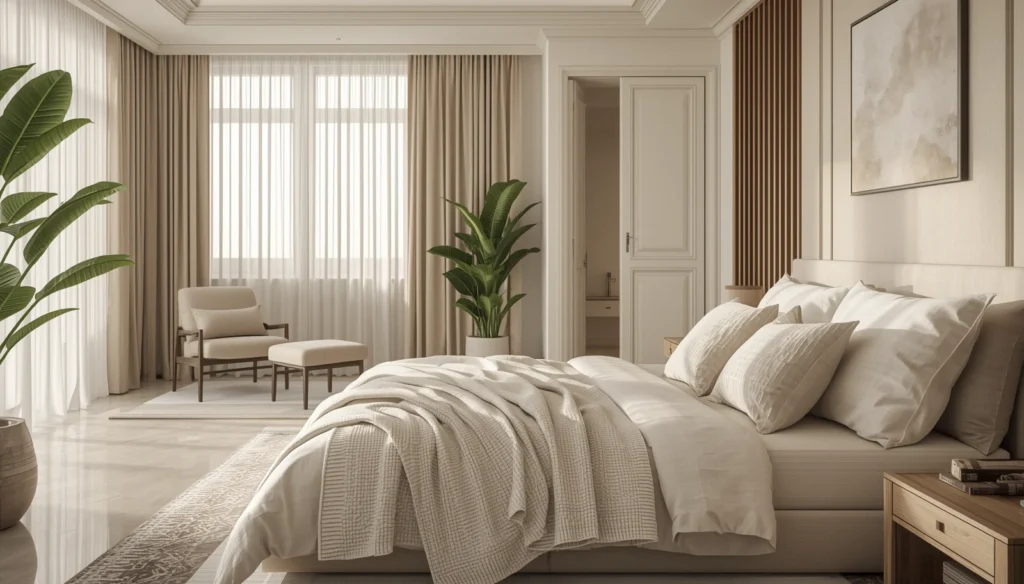
An elegant bedroom comes from balance, not excess. The right mix of color, lighting, bedding, texture, furniture placement, rugs, art, and small details can make a room feel calmer, more polished, and more personal.
Introduction
A bedroom can look expensive without being filled with expensive things. The real difference often comes from proportion, restraint, texture, and how each piece relates to the next. A plain room starts to feel refined when the bed looks intentional, the lighting feels warm, and the surfaces have breathing room.
The strongest bedroom designs also respect daily life. A beautiful room that collects clutter by noon doesn’t stay beautiful for long. These elegant bedroom ideas focus on comfort, visual calm, and details that hold up after the first week of styling.
1. Start With a Calm, Layered Color Palette
Color decides the mood before furniture gets a chance to speak. Elegant bedrooms usually begin with a controlled palette, often built around warm whites, soft taupe, muted grey, greige, ivory, clay, mushroom, olive, charcoal, or deep navy. These shades give the eye somewhere peaceful to land and let texture carry the room instead of loud contrast.
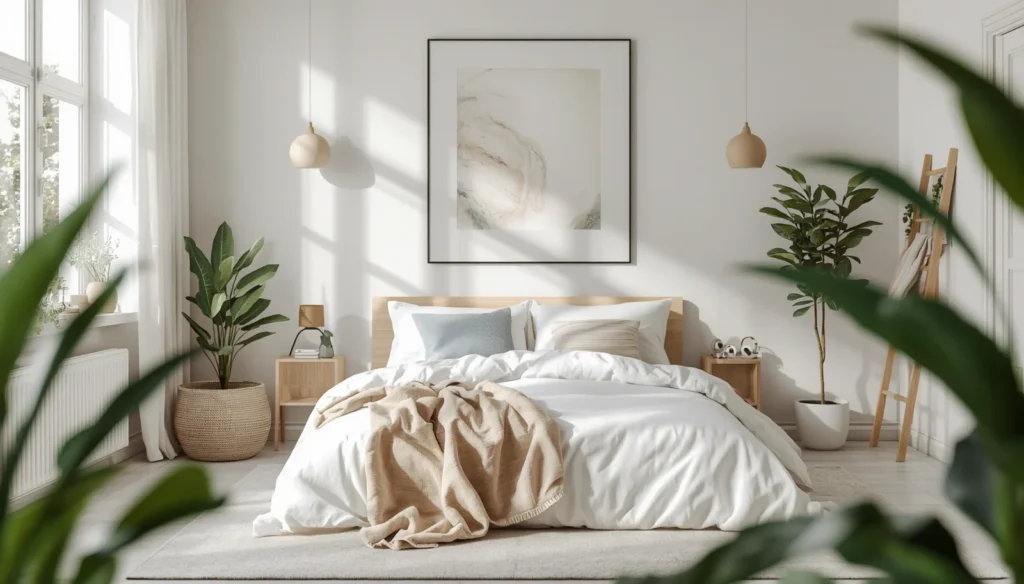
The mistake many people make is choosing one flat neutral and repeating it everywhere. That can turn a bedroom into a blank box. A better approach is to layer related tones. Cream walls, oatmeal bedding, walnut furniture, and a slightly darker rug can create depth without making the room busy.
Use Contrast With Restraint
Contrast gives an elegant room definition. A black metal lamp, a dark wood nightstand, or a deep velvet cushion can stop a pale bedroom from feeling washed out. The trick is to repeat the darker note in two or three places so it feels planned rather than random.
A client project in a compact city apartment showed this well. The room had off-white walls, beige curtains, and pale flooring, but it looked unfinished. Adding a charcoal headboard, antique brass lamps, and a framed ink drawing changed the whole feeling. Nothing was flashy, yet the room suddenly had weight.
2. Make the Bed the Visual Anchor
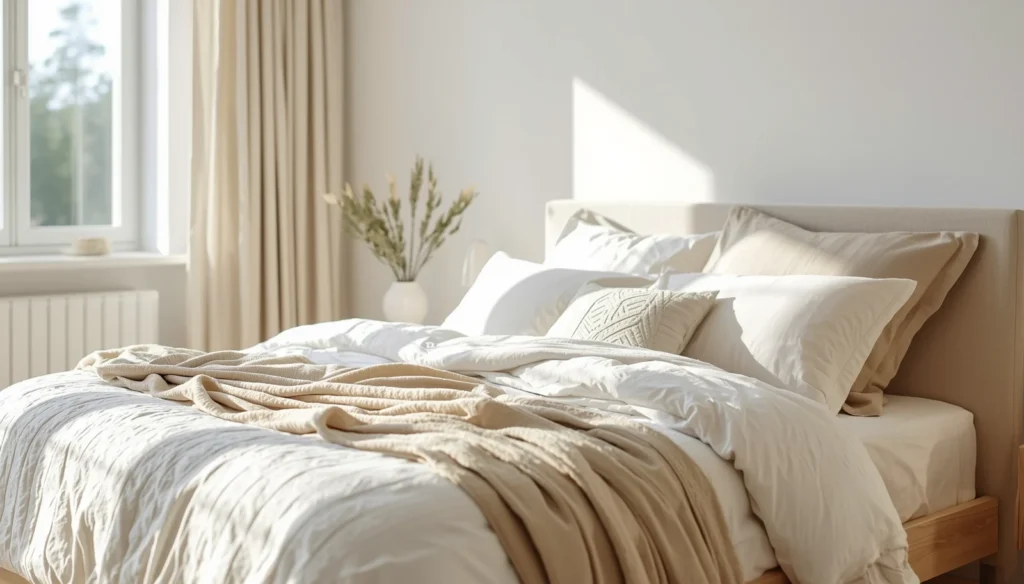
The bed is the largest object in most bedrooms, so it must carry the design. An elegant bed doesn’t need heavy ornament or dramatic height. It needs scale, clean lines, and bedding that looks inviting without looking staged. A simple upholstered headboard, a timber frame, or a softly curved silhouette can set the tone for the whole space.
Bedding should feel layered, not crowded. Crisp sheets, a duvet with natural loft, two sleeping pillows, two larger back pillows, and a folded throw at the foot of the bed often look better than a pile of cushions that gets thrown on the floor every night. Luxury bedroom design works best when beauty and habit can live together.
Choose Bedding That Moves Naturally
Cotton percale gives a cooler, hotel-like finish. Linen feels relaxed and textured. Cotton sateen has a softer sheen, which can suit a more polished room. The fabric matters because it changes how light moves across the bed during the day.
White bedding remains popular because it looks clean and flexible, but warmer shades often feel more lived-in. Ivory, stone, pale grey, sand, and soft blush can still look refined while hiding small signs of daily use better than pure white.
3. Upgrade Lighting Beyond a Single Ceiling Fixture
Lighting can make a modest bedroom feel considered, and poor lighting can make costly furniture look flat. A central ceiling light alone rarely creates elegance because it throws light down from one source. Bedrooms need layers: ambient lighting for the whole room, task lighting for reading, and accent lighting for mood.
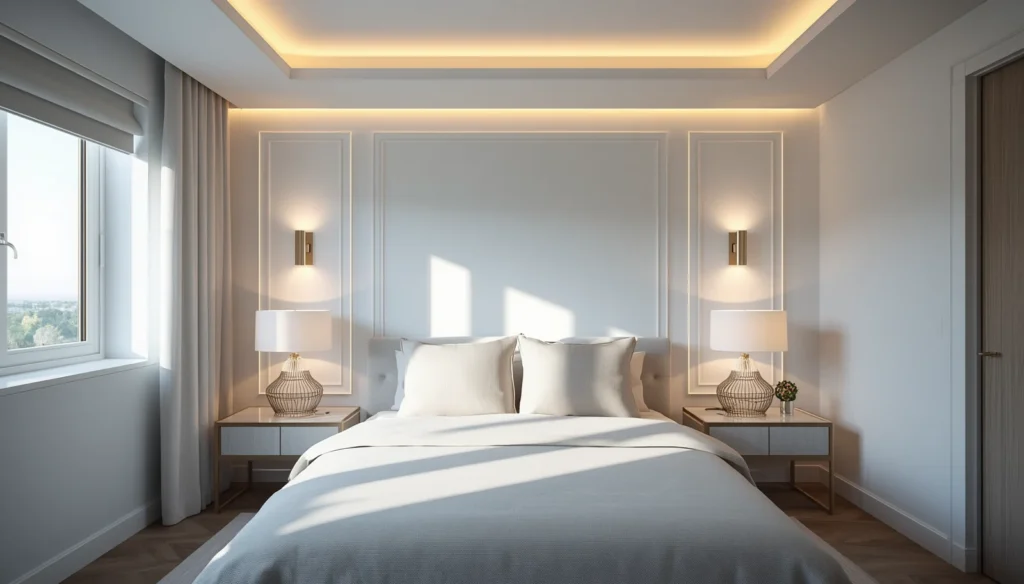
Bedside lamps, wall sconces, picture lights, shaded pendants, and low-watt bulbs can soften the space. Warm light usually works better than cool light because it flatters fabrics, wood, skin tones, and wall color. A dimmer switch is a small detail that changes how the room feels at night.
Match the Light Source to the Activity
Reading lamps need focused light, while decorative lamps need glow. A tall ceramic lamp can add shape to a nightstand, while a wall sconce frees surface space in a narrow bedroom. In rooms with low ceilings, shaded lamps and upward-facing wall lights often feel more graceful than a large hanging fixture.
A bedroom in a family home once had good furniture but felt harsh every evening. The issue wasn’t the decor. It was the bright ceiling bulb. Replacing it with two shaded lamps and a dimmable pendant turned the same room into a softer retreat.
4. Bring in Texture Before Adding More Decor
Texture is what makes neutral bedrooms feel rich. Smooth cotton, nubby linen, wool rugs, velvet cushions, woven baskets, matte ceramics, brushed metal, rattan, oak, walnut, and plaster finishes all add quiet movement. Without texture, even a well-chosen color palette can feel thin.
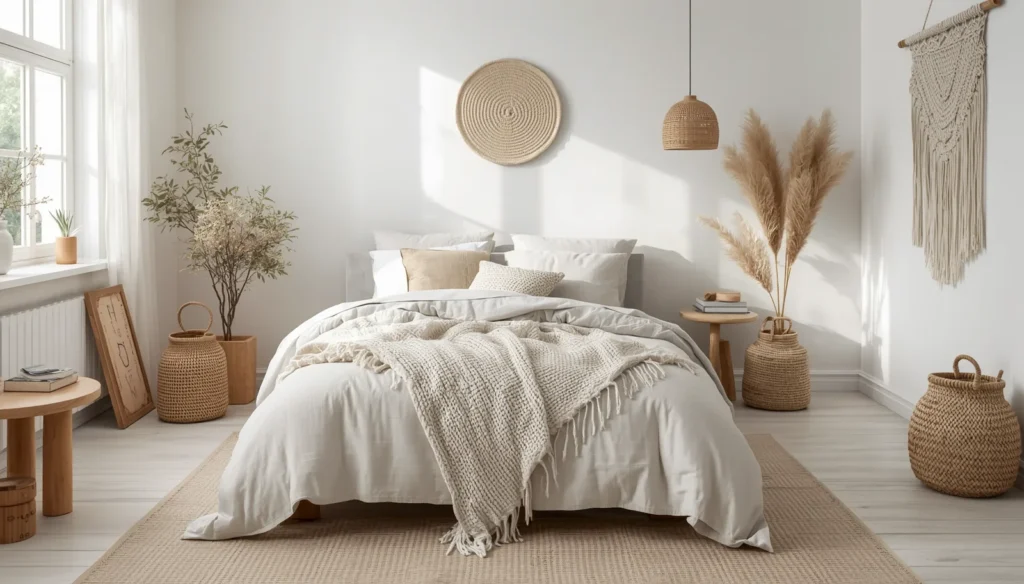
Elegant rooms rarely depend on lots of small ornaments. They rely on material contrast. A boucle chair beside a smooth timber dresser, a wool rug under a crisp bed, or a linen curtain against a painted wall can do more than a crowded shelf of accessories.
Let Natural Materials Soften the Room
Natural materials age better visually because they develop character. Wood grain, woven fibers, stone surfaces, and handmade ceramics all bring slight irregularities that make a bedroom feel less manufactured. That lived-in quality matters, especially in rooms designed for rest.
Texture also changes the sound of a space. Rugs, curtains, upholstered headboards, and layered bedding absorb echo. A quieter room often feels more expensive because it feels settled and private.
5. Use a Rug to Frame the Bed Properly
A bedroom rug should do more than fill the floor. It should frame the bed and connect the furniture. When a rug is too small, the room can look chopped into pieces. When it is scaled well, the bed area feels grounded and complete.
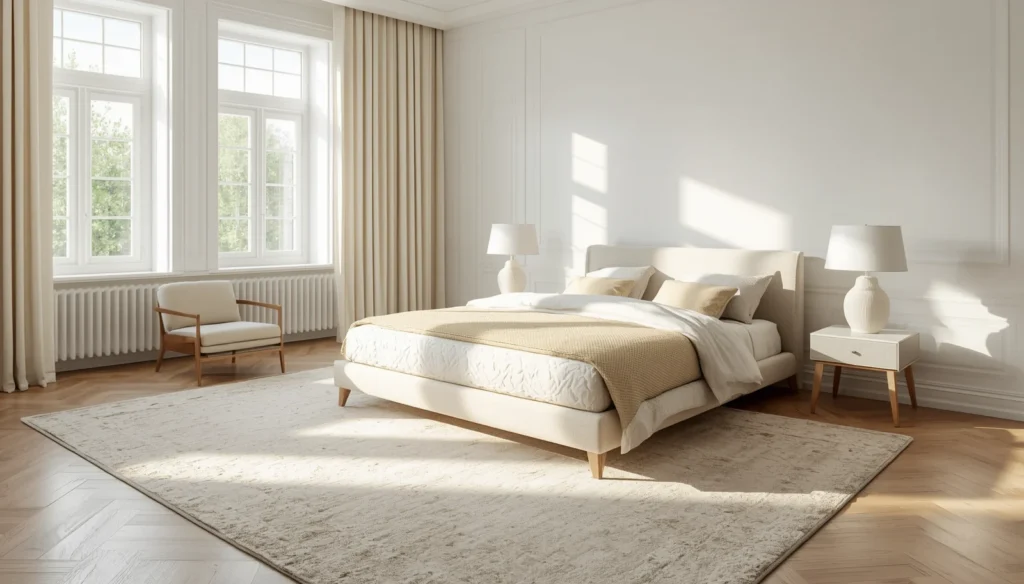
The most polished layout usually places a large rug under the lower two-thirds of the bed, extending beyond both sides and the foot. In smaller rooms, runners on each side can work well. The goal is to give your feet a soft landing while making the bed feel like part of a planned composition.
Pick Pattern Based on the Room’s Energy
A quiet room can handle a subtle pattern, such as faded medallion, fine stripe, tonal geometric, or soft floral. A room with patterned wallpaper, bold curtains, or detailed bedding often needs a calmer rug. Balance matters more than matching.
Fall Rugs often frames bedroom styling around comfort, softness, and visual warmth, which suits this kind of design thinking. A bedroom rug should support the mood of the room, not fight for attention. The best choice usually feels good underfoot and still looks calm when the bed is unmade.
6. Create Symmetry, Then Break It Gently
Symmetry gives bedrooms a sense of order. Matching nightstands, paired lamps, aligned pillows, and centered artwork can make the room feel composed. This is especially useful in the bedroom because the bed naturally asks to be treated as the central feature.
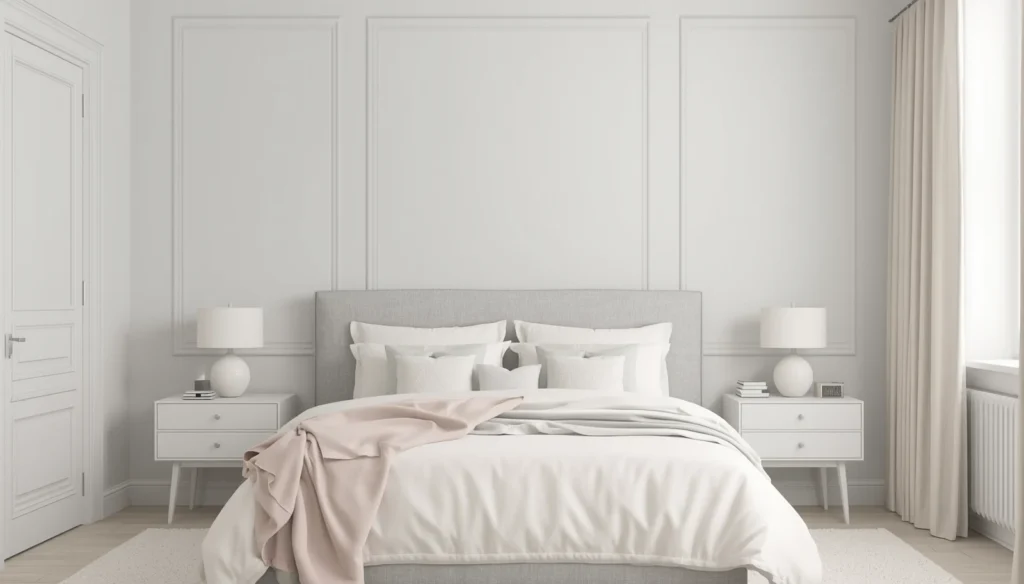
A fully symmetrical room can feel stiff if every detail matches too perfectly. The more interesting approach is to build a symmetrical base, then break it with one or two human details. A different object on each nightstand, a single branch in a vase, or a slightly uneven stack of books keeps the room from feeling like a showroom.
Keep Nightstands Useful and Edited
Nightstands collect clutter faster than almost any other bedroom surface. Elegant styling starts by deciding what earns a place there. A lamp, a small tray, a book, a glass, a candle, or a ceramic bowl can be enough. The surface should serve the routine, not just the photograph.
Closed storage helps when the bedroom needs to stay calm. Drawers hide chargers, tissues, lip balm, reading glasses, and other small items that interrupt the visual mood. Good design often comes down to where the ordinary things go.
7. Add Curtains That Feel Full and Intentional
Curtains affect height, softness, privacy, light, and acoustics. Thin panels hung too low can make even a good room feel unfinished. Fuller curtains, mounted higher and wider than the window, make the wall feel taller and the window feel more generous.
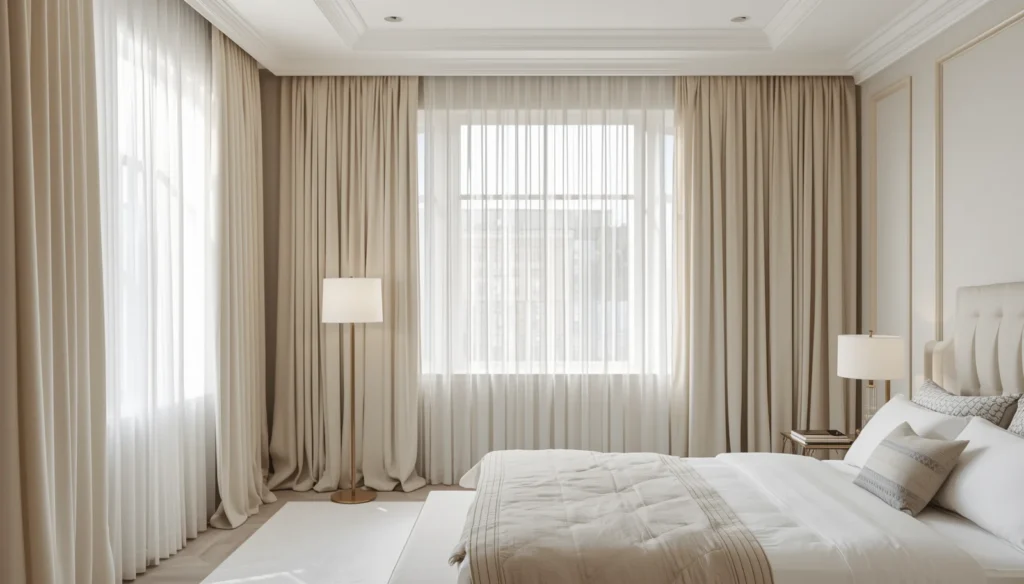
Fabric choice shapes the mood. Linen gives a relaxed, airy look. Velvet adds depth and drama. Cotton blends feel clean and practical. Sheer curtains filter daylight beautifully, while lined curtains improve privacy and help the room feel restful at night.
Use Length to Create Polish
Curtains should usually touch the floor or break slightly at the bottom. Panels that stop above the floor can look accidental unless the design calls for a crisp cafe style. In bedrooms, full-length curtains tend to feel more elegant because they visually stretch the room.
Color matters too. Curtains close to the wall color create softness, while a slightly deeper shade adds framing. Pattern can work, but it should connect with the bedding, rug, or art so the room feels collected.
8. Choose Art That Sets a Mood, Not Just a Theme
Bedroom art should feel personal, quiet, or emotionally interesting. It does not need to match the bedding exactly. In fact, art that only repeats the room’s color scheme can feel flat. Better pieces bring tone, memory, landscape, line, or contrast.
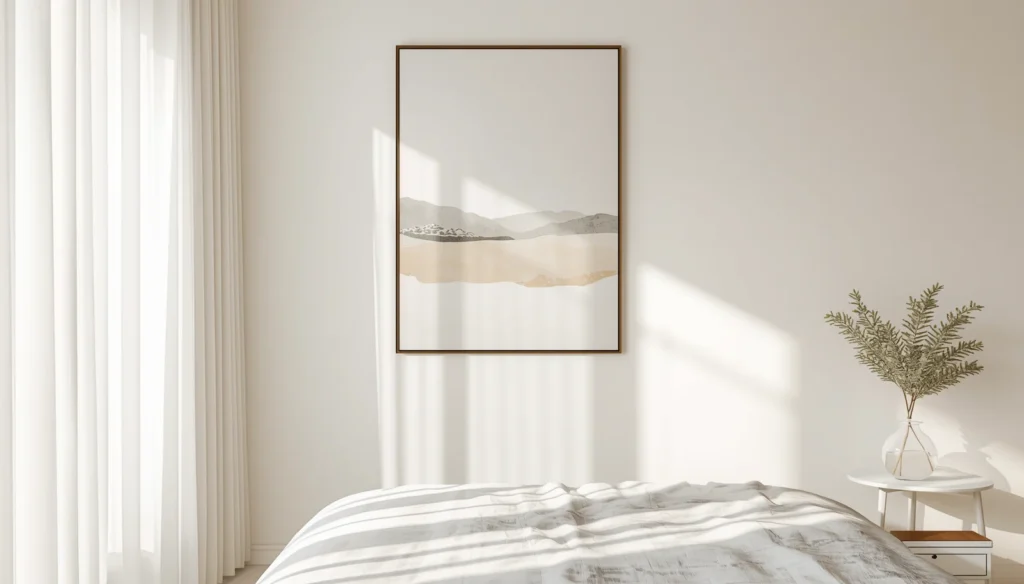
Large art above the bed can create focus, but scale is important. A tiny frame above a wide headboard often looks lost. One large piece, a pair of framed works, or a low gallery arrangement can work, depending on the wall and bed height.
Avoid Visual Noise Near the Bed
The wall behind the bed should support rest. Busy posters, crowded gallery walls, or harsh colors can make the room feel active when it should feel settled. Soft abstracts, botanical studies, black-and-white photography, muted landscapes, textile art, and simple line drawings often work well.
Art also gives a bedroom a point of view. A neutral room with thoughtful artwork feels designed. The same room without it can feel like a rental waiting for someone to arrive.
9. Edit Furniture for Space, Flow, and Proportion
Elegant bedrooms need enough empty space for the room to breathe. Too much furniture makes a bedroom feel smaller, even when every piece is attractive. The bed, nightstands, dresser, chair, bench, wardrobe, and storage pieces should all earn their place.
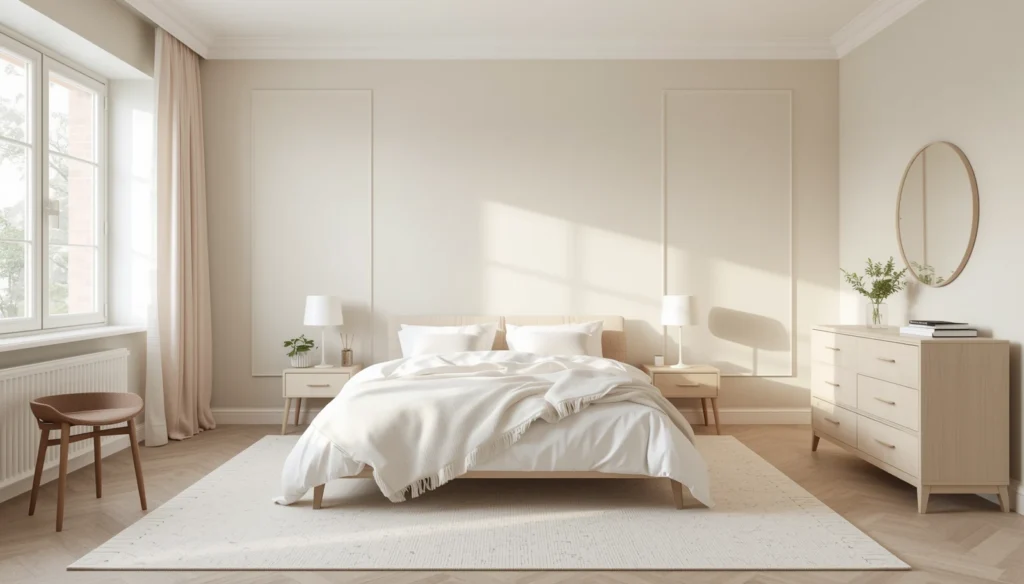
Proportion matters as much as style. A tall bed needs nightstands with enough height. A large room can carry a bench or lounge chair. A small bedroom may look better with floating shelves, slim bedside tables, or a dresser that doubles as a vanity.
Leave Clear Walking Paths
A room feels calmer when movement is easy. Tight gaps beside the bed, blocked wardrobe doors, and furniture that forces awkward turns all create low-level irritation. That irritation affects how restful the room feels, even when the decor looks good.
In one townhouse bedroom, removing a bulky accent chair did more for the design than adding new accessories. The room gained floor space, the rug became visible, and the bed felt more important. Editing can be the most elegant decision in the room.
10. Finish With Small Details That Look Collected
The final layer should feel personal, not overworked. A ceramic lamp, a framed photograph, a linen throw, a scented candle, a tray, a small vase, or a stack of books can make the room feel complete. These details should carry texture, memory, or usefulness.
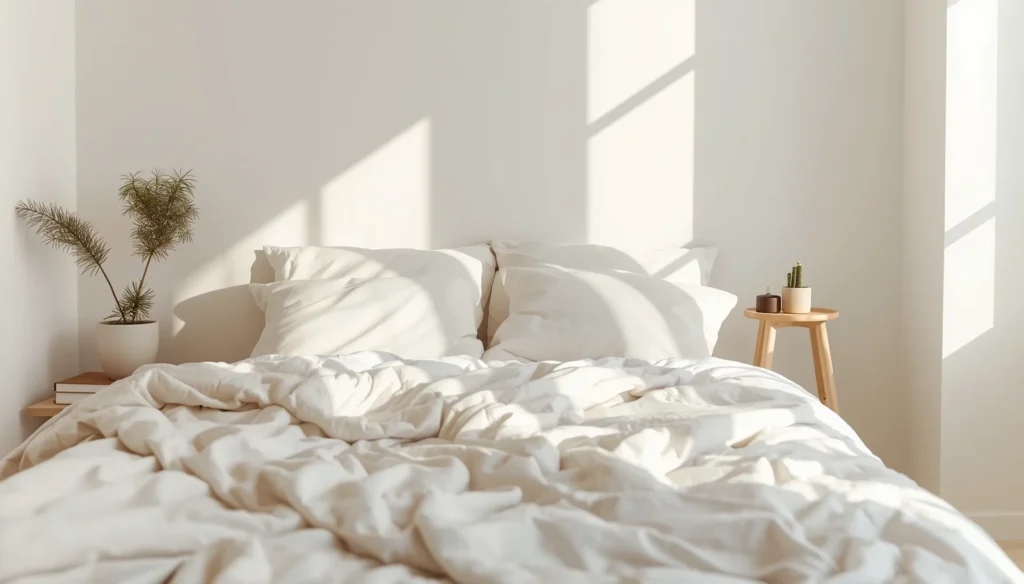
Elegant finishing also depends on restraint. Too many decorative items compete with the bed, curtains, rug, and lighting. A refined room often has fewer objects, but the objects have better shape, material, and placement.
Use Scent, Sound, and Daily Rituals
A bedroom is not only visual. A soft rug underfoot, a clean cotton sheet, a quiet lamp, a lightly scented candle, and a clear bedside table all shape the experience. These sensory details make the room feel cared for.
The best bedroom decor ideas survive regular life. They don’t require a full reset every morning. When the storage works, the bedding is manageable, and the lighting suits the evening routine, elegance becomes part of the room’s behavior.
Wrap Up:
Elegant bedroom design is built through color, scale, texture, lighting, and restraint. A calm palette, a well-dressed bed, soft curtains, a properly sized rug, and edited surfaces can change the room without making it feel forced.
The goal is not to copy a showroom. The goal is to create a bedroom that looks refined, supports rest, and feels natural to live in. Start with the pieces that shape the room every day, then add smaller details only when they improve the mood.
FAQs Section:
What makes a bedroom look elegant?
A bedroom looks elegant when the colors feel balanced, the bed is well styled, lighting is soft, furniture fits the room, and surfaces are edited. Texture, symmetry, and good proportions often matter more than expensive decor.
Which colors work best for an elegant bedroom?
Warm neutrals, soft greys, muted greens, ivory, taupe, charcoal, navy, and gentle earth tones work well in elegant bedrooms. These colors create calm and allow bedding, rugs, wood, metal, and artwork to stand out naturally.
How can I make a small bedroom feel elegant?
Use fewer furniture pieces, choose a calm color palette, hang curtains high, add layered lighting, and select a rug that frames the bed well. A small room feels more refined when storage is hidden and every visible item has purpose.
Disclaimer
Disclaimer: The content shared by Fall Rugs is solely for research and informational purposes. Fall Rugs is not a professional interior design or home renovation consultancy, and the information provided should not be considered professional advice for home improvement or decor. All ideas and suggestions are based on current trends and general knowledge in the home decor industry.