

TL;DR
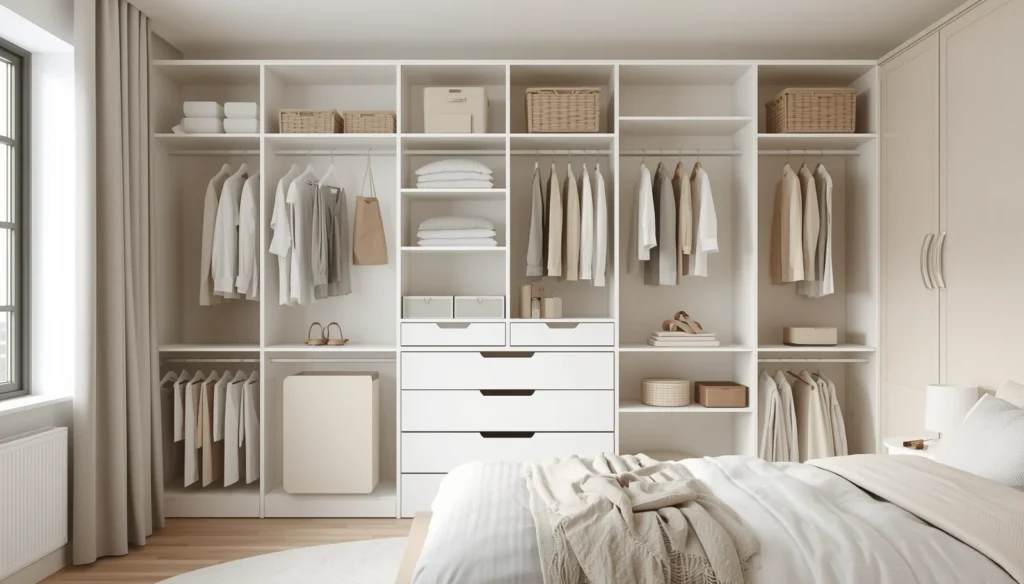
A smart wardrobe is less about having a huge bedroom and more about using every inch with purpose. The right mix of hanging space, shelves, drawers, lighting, doors, and seasonal storage can turn even a tight closet into a calm, practical dressing area.
Introduction
A bedroom wardrobe can look full even when half of its space is doing nothing useful. Most closet problems start with poor zones, fixed shelves, wasted height, and storage that doesn’t match real clothing habits. Smart wardrobe design solves those problems by treating the closet like a daily-use system, not just a box with doors. These bedroom wardrobe ideas focus on practical space gains, cleaner routines, and design choices that still look polished in a lived-in home.
1. Build the Wardrobe Around Your Daily Dressing Pattern
A good wardrobe starts with the clothes you reach for most, not with the shape of the room. Shirts, trousers, workwear, nightwear, folded knits, shoes, bags, and bedding all need different storage depths and heights. When a wardrobe ignores those habits, clutter returns fast because every morning becomes a small search mission.
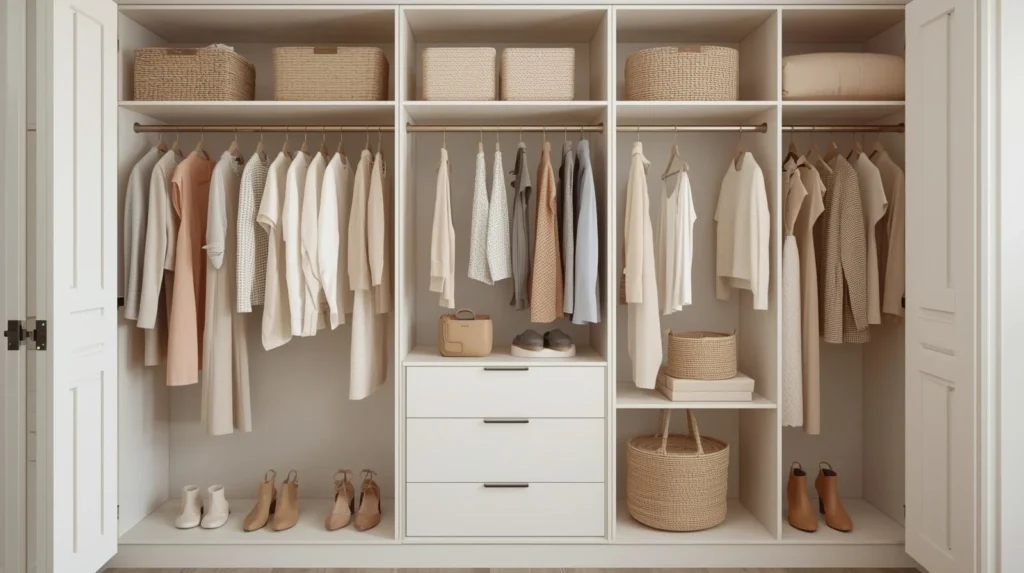
The smartest layout keeps daily pieces between shoulder and waist height. That zone should hold the items used five or six times a week because it takes the least effort to reach. Formalwear, spare linens, luggage, and off-season clothes can sit higher or lower because they don’t need prime space. This one shift often creates the feeling of a larger closet without adding a single cabinet.
A client-style example shows the difference. A couple in a narrow city apartment had a six-foot wardrobe that always looked packed. The problem wasn’t too many clothes. Their work shirts were hung behind bulky winter coats, while gymwear lived in a deep top shelf basket. Once the wardrobe placed weekday outfits in the center, coats to one side, and occasional items above, the same closet felt almost new.
2. Use Double Hanging Rails to Capture Wasted Height
Most wardrobes waste the lower half of the hanging bay. Long dresses and coats need full height, but shirts, blouses, skirts, folded trousers, and children’s clothes do not. A double rail turns one tall hanging section into two working levels, which can nearly double the usable hanging capacity in that part of the closet.
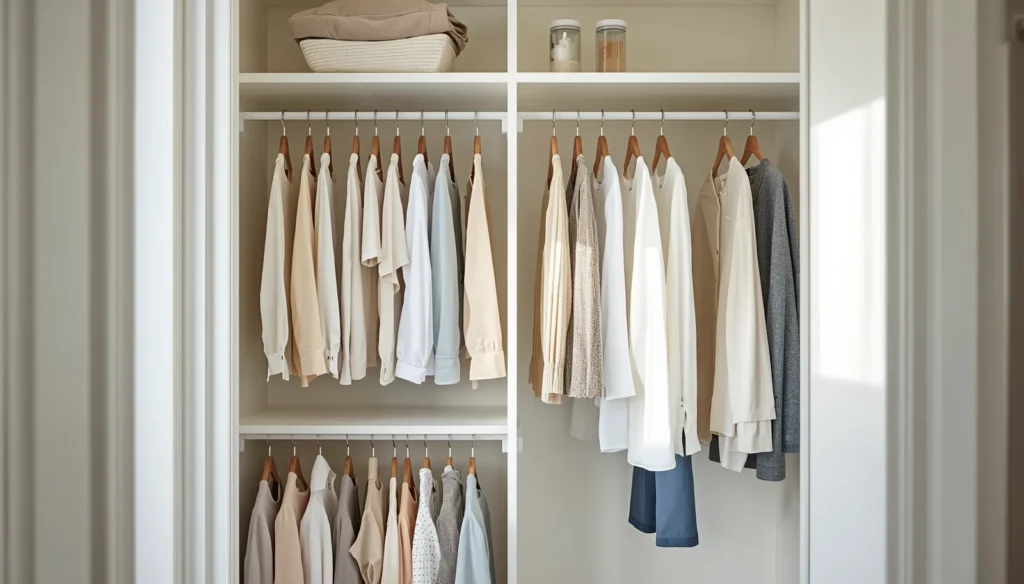
The trick is to split hanging space by garment length. Short pieces work well on upper and lower rails, while one narrow full-height section can remain for long coats, dresses, robes, or occasionwear. This keeps the wardrobe flexible instead of forcing every item into the same vertical format. It also prevents that familiar pile of shoes, bags, and loose items from collecting under shirts.
Double hanging works best when the lower rail still allows easy access. If the bottom rail sits too low, clothes brush the floor and look messy. If it sits too high, the lower row becomes awkward. A balanced wardrobe leaves breathing room under each row, so garments hang cleanly and the closet stays easier to maintain.
3. Choose Sliding Doors Where Swing Space Is Tight
Door style changes how a bedroom feels. Hinged wardrobe doors work well in larger rooms, but they can steal floor space in smaller bedrooms, especially when the bed sits close to the closet. Sliding wardrobe doors keep the access path clear because they move sideways rather than outward.
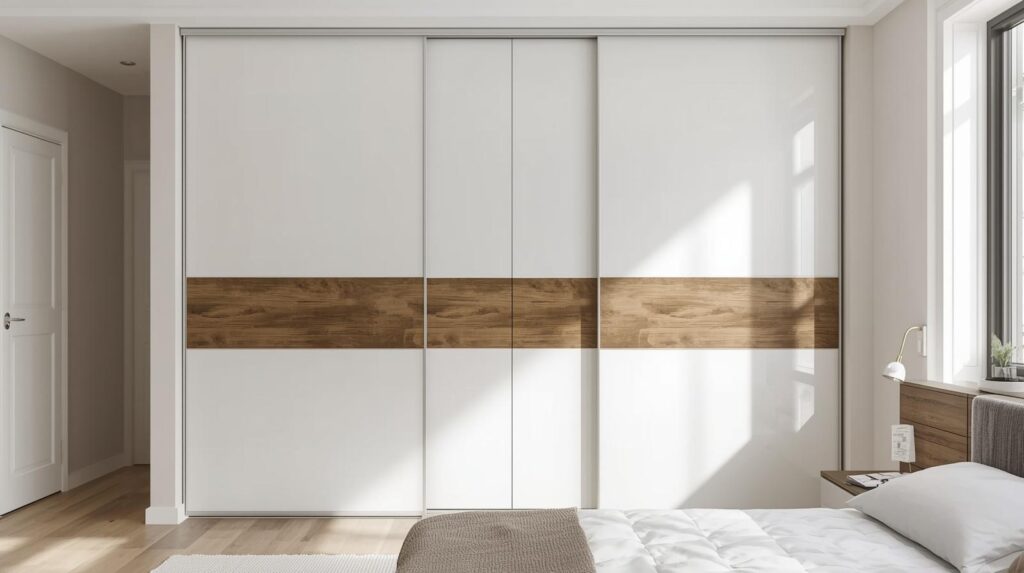
Sliding doors also support a cleaner visual line across a wall. In a compact bedroom, that matters more than many people expect. Large uninterrupted panels reduce visual noise, while mirrored or softly finished doors can make the room feel wider. The closet becomes part of the wall rather than a bulky cabinet competing with the bed, nightstands, and windows.
There is one trade-off. Sliding doors usually open one section at a time, so internal planning matters. Items that are often used together should sit behind the same door opening. Daily shoes, work clothes, and underwear drawers should not be split across different sliding sections if that forces constant back-and-forth movement.
4. Add Drawers Inside the Wardrobe Instead of Extra Furniture
A separate dresser can crowd a bedroom and still leave the wardrobe disorganized. Internal drawers solve both issues because they bring folded storage into the closet footprint. Socks, undergarments, sleepwear, scarves, belts, and small accessories stay contained, while the room keeps more open floor space.
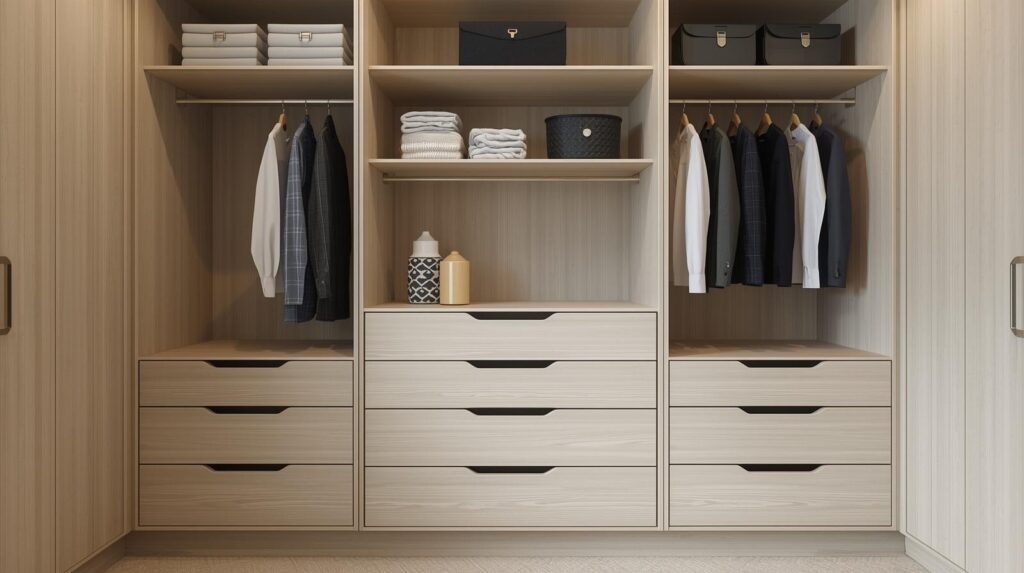
Drawer depth deserves careful thought. Very deep drawers look generous, but they often become layered storage where smaller items disappear. Medium-depth drawers usually work better for clothing because they allow visible rows and easier sorting. Shallow top drawers can hold jewelry trays, watches, sunglasses, or grooming items if the wardrobe also acts as a dressing station.
This idea works especially well in shared bedrooms. One side can contain hanging space with lower drawers, while the other side can hold more shelves or longer hanging. The wardrobe then reflects how each person actually uses clothing. A uniform design may look neat in a showroom, but a personalised interior keeps the closet neat after months of real use.
5. Take Shelving All the Way to the Ceiling
The top of a wardrobe often becomes dead space, especially when freestanding units stop short of the ceiling. Dust collects, boxes drift upward, and the room looks unfinished. A floor-to-ceiling wardrobe turns that awkward gap into high storage for items used only a few times a year.
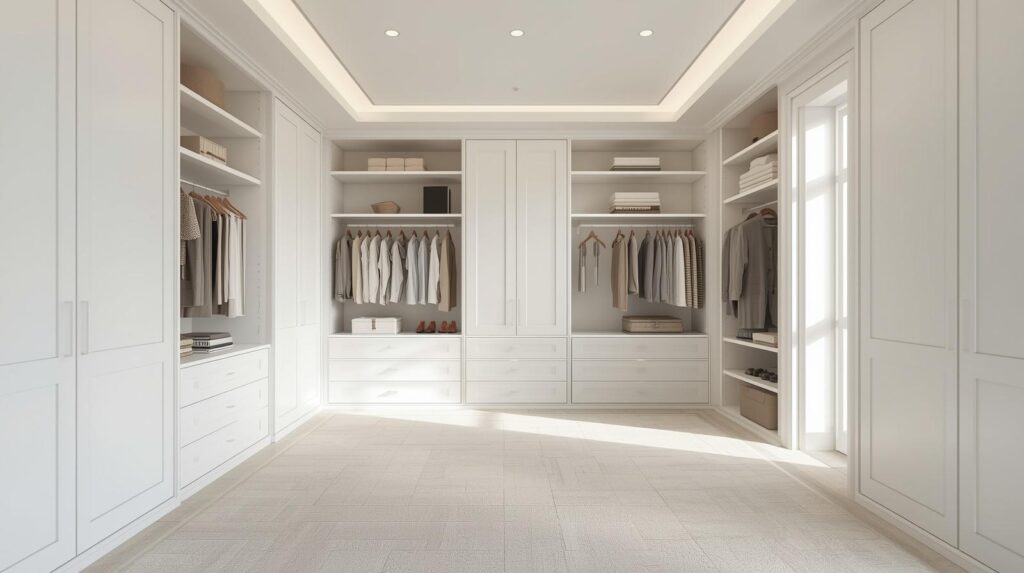
Upper shelves work best for lightweight seasonal storage. Extra blankets, spare pillows, travel bags, festive décor, winter knitwear, and summer linens can live there in labeled fabric boxes or clear containers. The point is not to store daily clothing out of reach. High storage should relieve pressure on the central wardrobe zone, not create a new frustration.
Built-in wardrobes handle ceiling height especially well because they can align with walls, skirting, and cornices. In older homes, ceilings and floors may not be perfectly level, so custom fillers or trim can hide small irregularities. That detail gives the wardrobe a calm, architectural look rather than the appearance of furniture squeezed into a corner.
6. Use Open Niches for Items That Need Air and Access
A fully closed wardrobe can hide clutter, but it can also trap everyday items in places where they become inconvenient. Open niches add a practical middle ground. They give space for bags, folded jeans, display baskets, perfumes, books, or a small dressing mirror without exposing the whole closet interior.
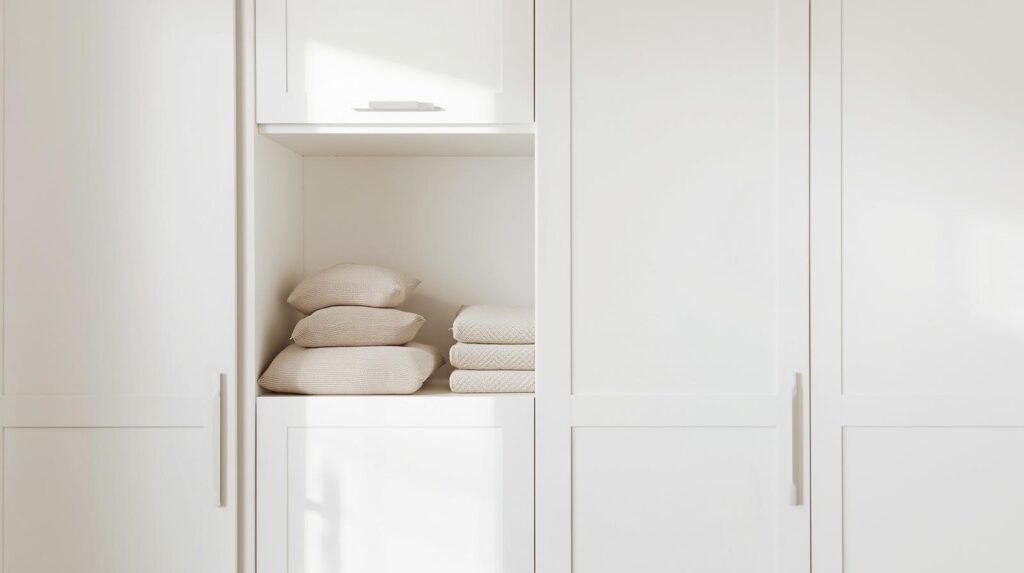
Open sections work best when they have a clear purpose. A single waist-height niche can act as a landing spot for tomorrow’s outfit or a tray for keys and watches. A lower open shelf can hold two or three daily shoes, while the rest stay behind doors. This prevents the bedroom floor from becoming the real storage zone.
The risk is visual clutter. Open niches should not become catch-all shelves. When they’re used with restraint, they add rhythm to a wardrobe wall and make the room feel less heavy. Closed storage brings calm, while open storage brings convenience. A smart wardrobe balances both.
7. Bring Light Into the Closet Interior
Poor lighting makes even a large wardrobe feel frustrating. Dark corners hide black trousers, navy shirts, belts, and small accessories. People then pull out half the closet to find one item, and the wardrobe slowly loses order. Interior lighting fixes that problem at the source.
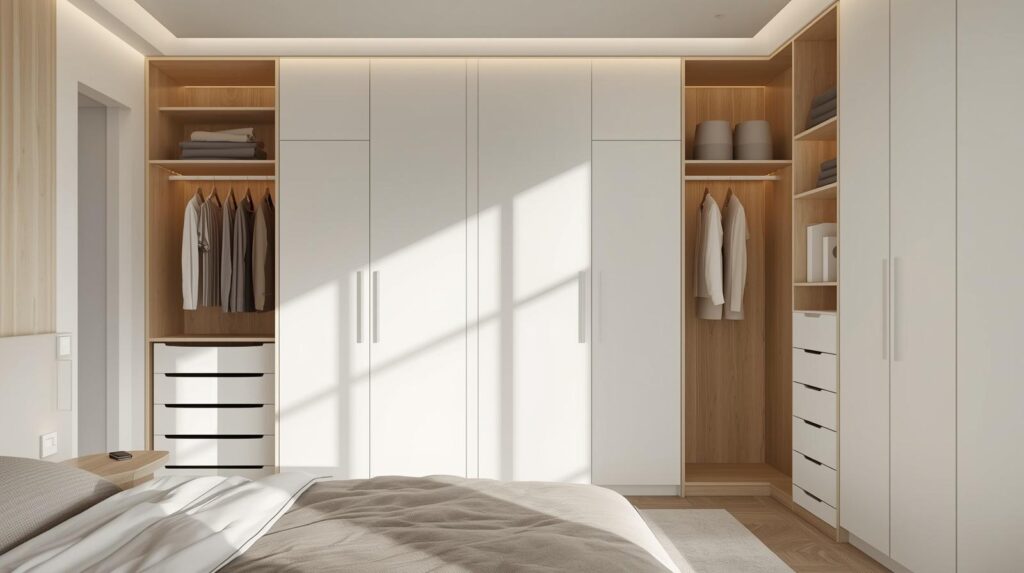
LED strip lights work well along vertical sides, under shelves, or above hanging rails. Motion sensors add convenience because the light turns on when the door opens. Warm white light often feels softer in a bedroom, while neutral white can show clothing colors more accurately. The right choice depends on the room’s mood and how often the wardrobe supports outfit planning.
Lighting also changes behavior. When the closet interior is visible, people fold better, return items to the right place, and notice duplicates before buying more. That second-order effect matters. A lit wardrobe doesn’t only look better. It quietly reduces overbuying and helps the closet stay edited.
8. Add Pull-Out Features for Narrow and Deep Spaces
Narrow spaces often seem useless until pull-out storage enters the plan. A slim pull-out rail can hold scarves, ties, belts, or necklaces. A pull-out trouser rack keeps folded trousers visible without stacking them. Shoe trays can slide forward from the bottom of a deep wardrobe, so the back row no longer becomes forgotten storage.
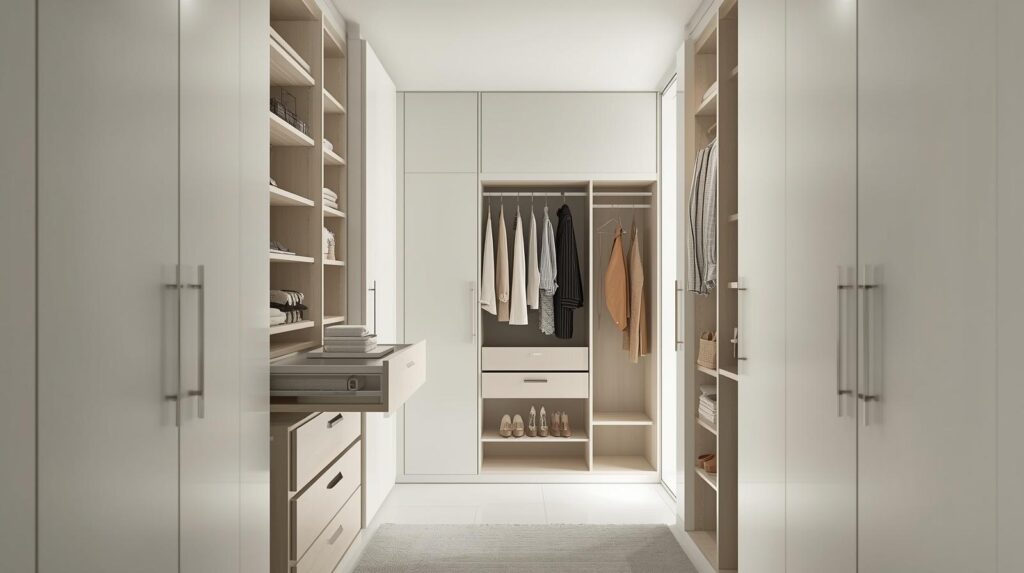
Pull-out elements work because they bring depth toward the user. Deep shelves create problems because items at the back vanish behind the front row. Sliding trays, baskets, and racks solve that by making the full depth visible in one movement. They are especially helpful in wardrobes with 22 to 24 inches of depth, where fixed shelves can feel like tunnels.
These features do need discipline. Too many pull-outs can raise the cost and reduce simple shelf space. The better approach is targeted use. Add them only where the wardrobe has a repeated problem, such as tangled accessories, hidden shoes, or trousers stacked so tightly that no one wants to pull them out.
9. Create a Seasonal Rotation Zone
Closets become crowded when every season competes for the same prime space. Heavy coats, beachwear, wool scarves, linen shirts, rainwear, and occasion outfits rarely deserve equal access all year. A seasonal rotation zone keeps the active wardrobe lighter and easier to use.
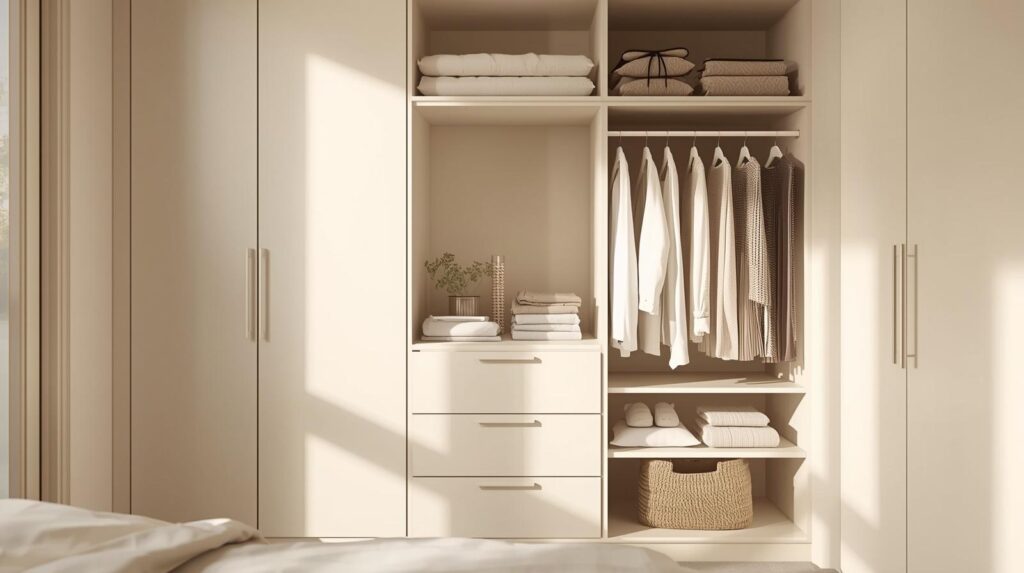
The upper shelf, under-bed storage, or a high side cabinet can hold off-season clothing in breathable bags or structured boxes. Before storing, items should be clean and fully dry because moisture and fabric odor become harder to fix after months in a closed space. Delicate knits should lie flat rather than hang, since hanging can stretch shoulders over time.
A real-world case makes this feel practical. Mariam, a teacher living in a two-bedroom apartment, kept all four seasons in one wardrobe because she disliked storage boxes. Her closet looked full, yet she wore the same twelve pieces weekly. After moving winter coats and heavy shawls to labeled upper boxes during summer, her morning routine became faster and she stopped rebuying items she already owned.
10. Design the Wardrobe as a Room Feature, Not an Afterthought
A wardrobe takes up a large visual area, so it should contribute to the bedroom rather than merely occupy it. Color, finish, handle style, door rhythm, and panel proportion can make storage feel calm and intentional. When the wardrobe matches the room’s architecture, the bedroom feels more spacious even before the doors open.
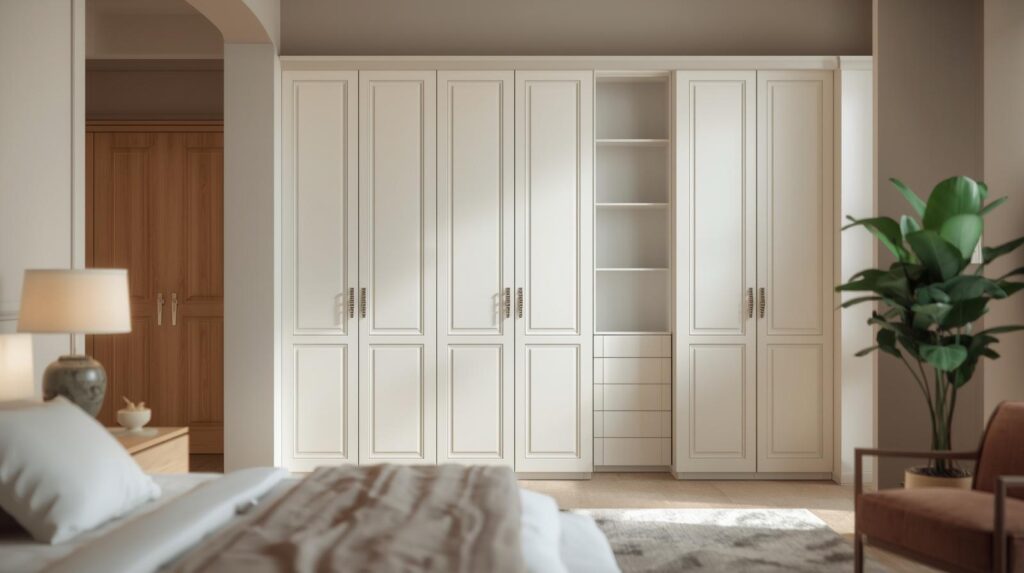
Soft neutrals, wood tones, fluted panels, muted paint, and handleless fronts can all work, depending on the home’s style. Mirrored panels can brighten a darker room, while matte finishes reduce glare and fingerprints. In a small bedroom, a wardrobe that blends with the wall often feels lighter than a high-contrast unit.
The interior still matters more than the exterior. A beautiful wardrobe with poor zones becomes a beautiful problem. The best designs connect both sides: an exterior that supports the room’s mood and an interior that supports daily habits. That combination creates a closet that feels useful, not just attractive.
How to Match Wardrobe Ideas to Bedroom Size
Small bedrooms benefit from vertical storage, sliding doors, mirrored finishes, and internal drawers. These features protect walking space and reduce the need for extra furniture. The goal is to keep the floor open while giving every category a defined place inside the wardrobe.
Medium bedrooms can handle a mixed design with hinged doors, open niches, double rails, and a few display shelves. This size allows more personality, but restraint still matters. Too many exposed sections can make the room look busy, especially when clothes, bags, books, and décor all sit in view.
Large bedrooms can support walk-in-style wardrobe walls, dressing corners, island drawers, or full-height custom cabinetry. Size does not guarantee order, though. Large closets often hide clutter because there is enough room to avoid decisions. Even in a generous room, zones, lighting, seasonal rotation, and edited categories remain the real drivers of function.
Materials and Finishes That Hold Up in Daily Use
Wardrobe materials should handle touch, weight, and movement. Laminates, painted MDF, engineered wood, veneer, glass, and mirrored panels all have different strengths. A high-contact family bedroom may need a finish that resists fingerprints and wipes clean easily. A guest bedroom can accept more delicate textures because it sees lighter use.
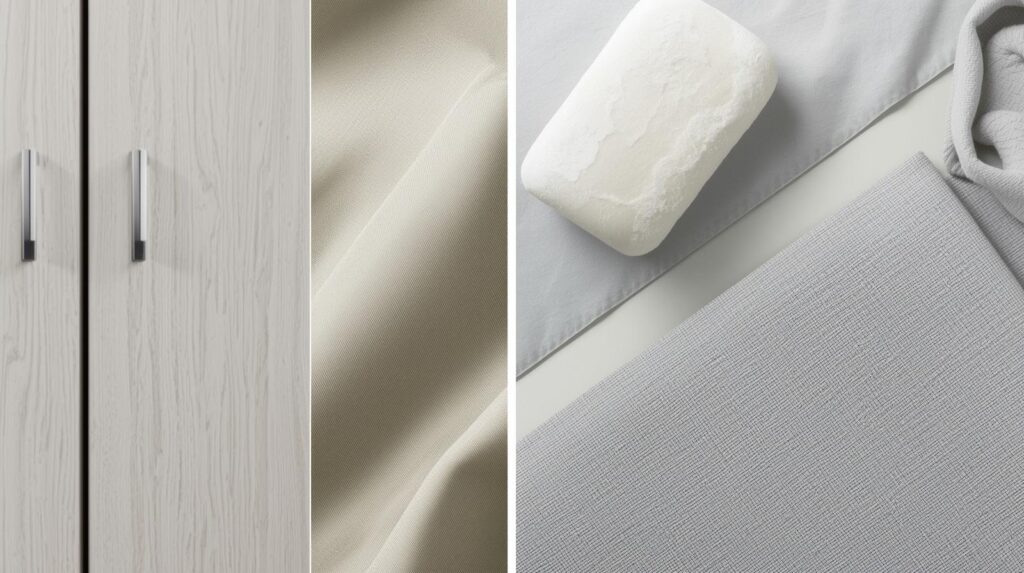
Inside the wardrobe, shelves need enough strength to hold stacks of denim, bedding, and storage boxes without bowing. Hanging rails should feel solid, not decorative. Drawer runners matter too, since weak hardware turns daily use into irritation. Good wardrobe design often fails at the small mechanical points before it fails visually.
Ventilation deserves attention as well. Clothes need air, especially in humid climates or rooms with limited sunlight. Small gaps, breathable storage, and occasional airing reduce stale odors. A tightly packed wardrobe with no airflow may look efficient on paper, but fabrics suffer when storage leaves no room for movement.
Common Wardrobe Mistakes That Shrink Closet Space
The first mistake is treating every shelf as general storage. General storage becomes clutter because no category owns the space. A shelf for folded knits behaves differently from a shelf for handbags or bedding. Clear zones reduce decision fatigue because the wardrobe tells the user where each item belongs.
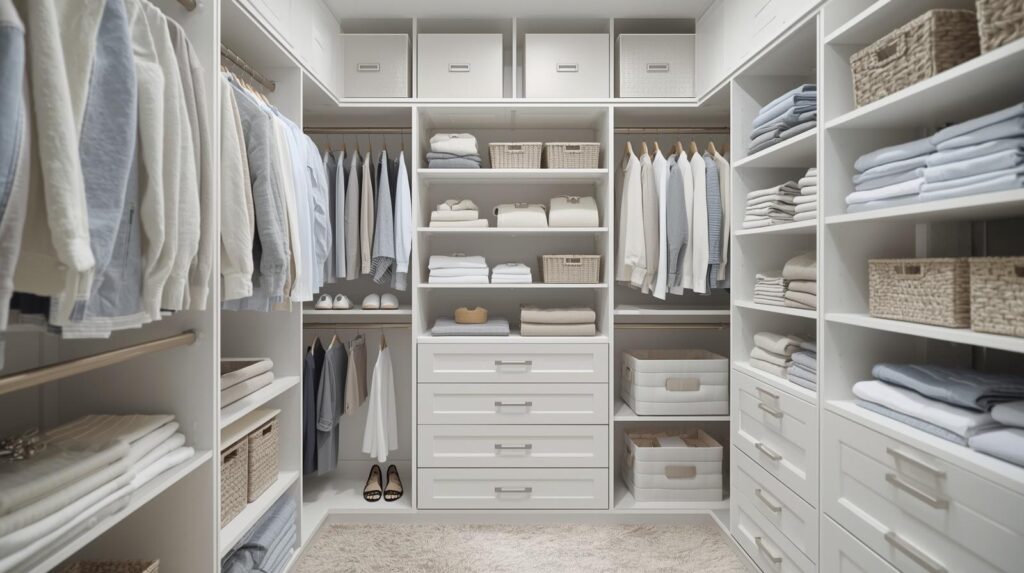
The second mistake is storing too many rarely used items at eye level. Prime space should serve daily life. When occasional items take the best positions, the wardrobe feels crowded even if it has enough total capacity. Moving low-use pieces upward, downward, or into secondary storage often solves the issue without buying anything new.
The third mistake is ignoring maintenance. Wardrobe systems are not permanent decisions. Clothing habits change with jobs, seasons, body changes, travel patterns, and lifestyle shifts. A closet that worked two years ago may now fight the routine. Small adjustments every few months keep the wardrobe aligned with real life.
How to Keep a Smart Wardrobe Organized After the First Week
A closet reset feels satisfying, but the real test comes after laundry day. Storage should make returning items as easy as removing them. If a drawer needs perfect folding to close, it will fail. If a basket sits too high for daily use, it will become neglected. A sustainable wardrobe works with human habits rather than against them.
Use fewer categories, not more. Too many micro-zones create pressure and slow down daily routines. Shirts, trousers, knitwear, activewear, sleepwear, accessories, shoes, and seasonal pieces are usually enough for most bedrooms. Once those main groups work, smaller divisions can appear naturally.
The wardrobe should also leave a little empty space. A closet packed to full capacity has no room for laundry cycles, new purchases, repairs, or temporary outfit planning. Ten to fifteen percent breathing room can make the difference between a system that lasts and one that collapses after a busy week.
Wrap Up
Smart bedroom wardrobe ideas work because they respect both space and behavior. Double rails, ceiling-height storage, internal drawers, sliding doors, lighting, pull-outs, and seasonal zones all solve different closet problems. The strongest wardrobe design starts with daily routines, then builds storage around them. A bedroom feels calmer when the closet supports real life instead of hiding daily clutter behind closed doors.
FAQs Section:
What is the most space-saving wardrobe idea for a small bedroom?
Sliding doors combined with floor-to-ceiling storage usually save the most space in a small bedroom. They protect walking room while using vertical height that often goes wasted.
How can I organize a wardrobe with too many clothes?
Start by moving off-season and rarely worn items out of the central zone, then group daily clothing by type. A wardrobe feels easier to manage when the most-used pieces sit at the easiest height.
Are built-in wardrobes better than freestanding wardrobes?
Built-in wardrobes often use space more efficiently because they can fit wall height, corners, and awkward gaps. Freestanding wardrobes work well for renters or rooms where flexibility matters more than a custom fit.
Disclaimer
The content shared by Fall Rugs is solely for research and informational purposes. Fall Rugs is not a professional interior design or home renovation consultancy, and the information provided should not be considered professional advice for home improvement or decor. All ideas and suggestions are based on current trends and general knowledge in the home decor industry.