
TL;DR
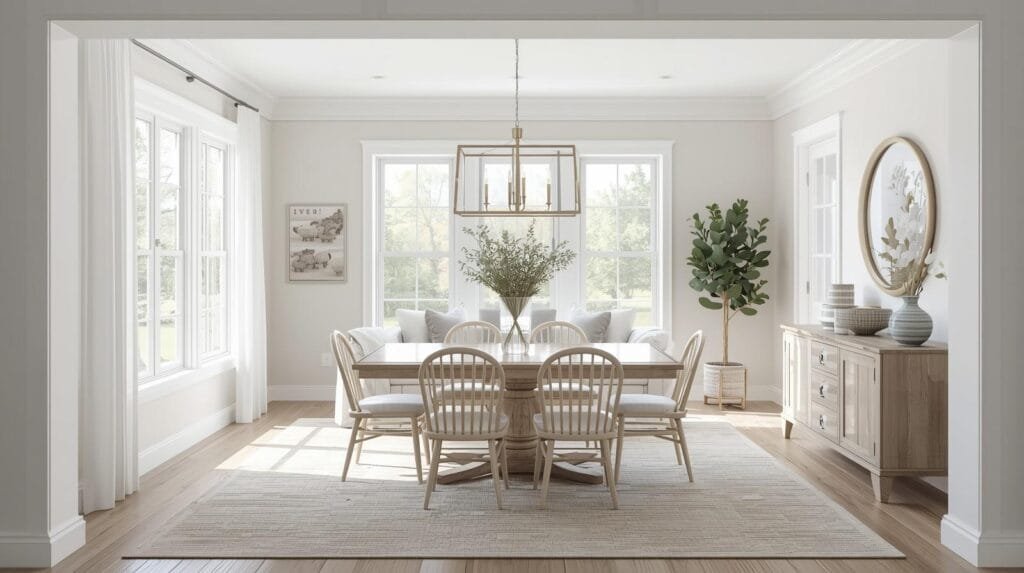
Achieving a sun-drenched gathering space requires balancing crisp white wall treatments with rich, organic textures. Homeowners can establish this aesthetic by pairing salvaged wood dining tables with striking matte black iron elements. Melding historic architecture with minimalist layout principles creates a welcoming room optimized for natural sunlight.
Introduction
Does your current eating area feel dark, cramped, or disconnected from the rest of your home? Transforming this central space into an inviting environment relies heavily on how you capture light and display organic materials. Many homeowners crave the cozy familiarity of rural architecture but want to avoid looking cluttered or outdated. Introducing intentional layout choices balances historical charm with crisp, contemporary minimalism. You will gain a clear view of how specific textures, lighting setups, and furniture choices create an airy gathering space.
The Fundamental Pillars of Bright Aesthetics
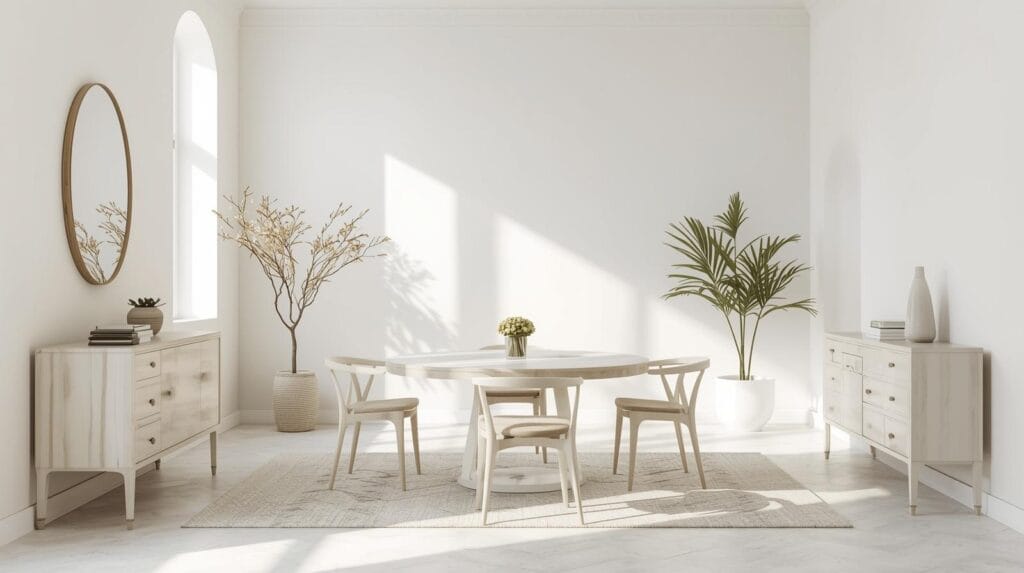
Bright spaces do not happen by accident; they require a deliberate commitment to reflective surfaces and open layouts. The traditional rustic style often leaned into heavy, dark timbers and crowded knick-knacks that absorbed daylight. Modern iterations reverse this tendency by coating walls in high-reflectance white paint while keeping structural beams exposed. This juxtaposition anchors the room without making the ceiling feel low or oppressive.
Texture fills the visual void left by a minimal color palette. Instead of relying on vibrant hues to create interest, designers introduce tactile variety through rough-sawn lumber, woven rugs, and matte metal finishes. A soft linen table runner draped over an unpolished oak table provides enough contrast to engage the eye. This strategy ensures the room feels alive and layered rather than sterile or cold.
Spatial breathing room forms the final piece of the foundation. Leaving ample clearance between the walls and your seating arrangement allows light to pass uninterrupted across the floor. When furniture sits too tightly together, shadows accumulate, making the entire room appear smaller than its actual physical dimensions.
Maximizing Natural Light
Natural illumination serves as the primary driver for these interior layouts. Large windows left unadorned or framed with sheer cotton curtains permit maximum daylight to bounce off light-colored flooring surfaces. When structural columns or overhead beams exist, painting them a soft off-white or leaving them in a pale, natural state preserves the open feeling of the floor plan.
Mirrors placed opposite light sources amplify this effect significantly. A large, iron-framed wall mirror catches afternoon sunbeams and redistributes them into darker corners of the eating area. This simple placement strategy minimizes the need for overhead artificial lighting during daytime hours while broadening the visual depth of the room.
Material Selection
Sourcing genuine components remains the foundation of authentic interior styling. True rustic design embraces imperfections like visible wood grain, knots, and slight weathering. Incorporating a reclaimed white oak table instantly introduces history and character into a freshly painted room, making the environment feel grounded.
Stone and ceramic details complement these wooden structures beautifully. Handcrafted clay vases, soapstone coasters, or a marble-topped sideboard introduce cool, smooth surfaces that balance the warmth of timber. Combining these contrasting natural elements creates a rich sensory experience that feels sophisticated yet entirely unpretentious.
1. The High-Contrast Minimalist Aesthetic
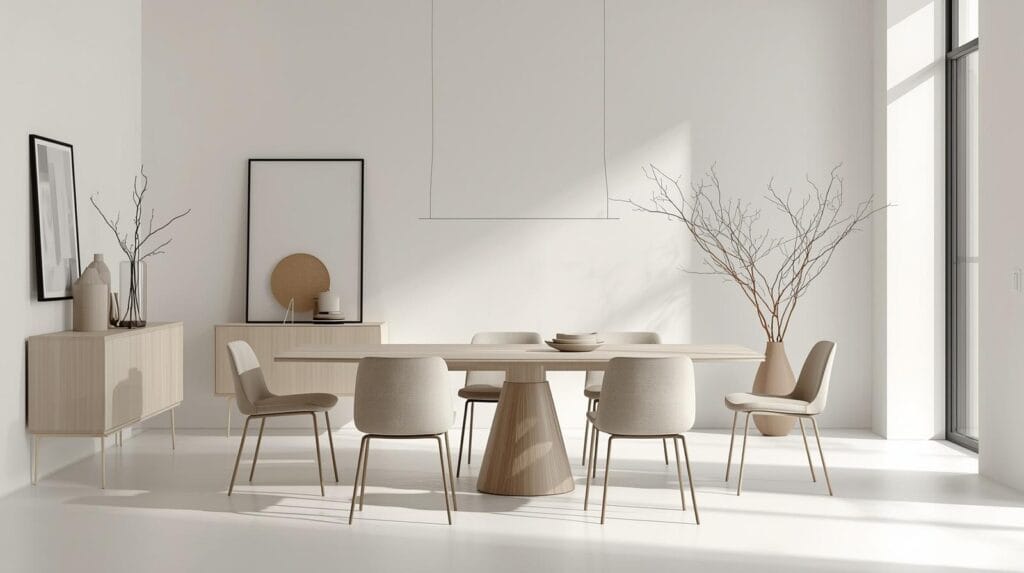
Clean lines dominate this specific layout style, which strips away the fussy ornamentation often found in older country homes. Walls remain stark white, creating a gallery-like backdrop for carefully selected furniture pieces. The focus shifts entirely to the silhouette of the chairs, the thickness of the tabletop, and the geometry of the lighting fixtures. This approach appeals directly to those who appreciate order and open space.
Contrast acts as the secret ingredient that prevents a white room from fading into anonymity. Introducing dark elements in small, controlled doses draws the eye across the space, defining the boundaries of the dining area. Think of these dark accents as structural ink strokes on a clean canvas, giving the architecture a crisp, modern definition.
The balance must favor light tones by a wide margin to maintain the desired airy feeling. A good rule involves keeping eighty percent of the room light or neutral, leaving the remaining twenty percent for dark grounding features. This ratio guarantees a striking visual impact without sacrificing the cheerful, sunlit mood of the home.
Integrating Matte Black Accents
Wrought iron window frames, dark metal chair legs, and black hardware provide the necessary visual weight to anchor a sunlit room. A slender black iron chandelier suspended over a light wood table breaks up the vertical space beautifully. This element grounds the ethereal qualities of the white walls without blocking the flow of daylight.
Cabinet pulls and window latches offer smaller opportunities for this high-contrast treatment. Swapping out shiny chrome or polished brass for oil-rubbed bronze or matte black immediately modernizes older built-in hutches. These small details pull the room together, creating a unified theme that feels intentional and highly curated.
Choosing Shiplap and Vertical Panels
Wall texturing prevents flat surfaces from looking cheap or unfinished. Horizontal shiplap casting subtle shadows creates a sense of width, while vertical board and batten draws the eye upward to suggest higher ceilings. Painting these wood panels in a satin or eggshell finish allows light to bounce softly across the room.
The spacing of the wooden planks influences the overall mood of the dining area. Wide planks evoke a traditional, historical feel reminiscent of historic barns and farmhouses. Narrower tongue-and-groove boards offer a sleeker appearance that aligns perfectly with contemporary minimalist preferences, bridging the gap between past and present.
2. The Rustic Coastal Overlap
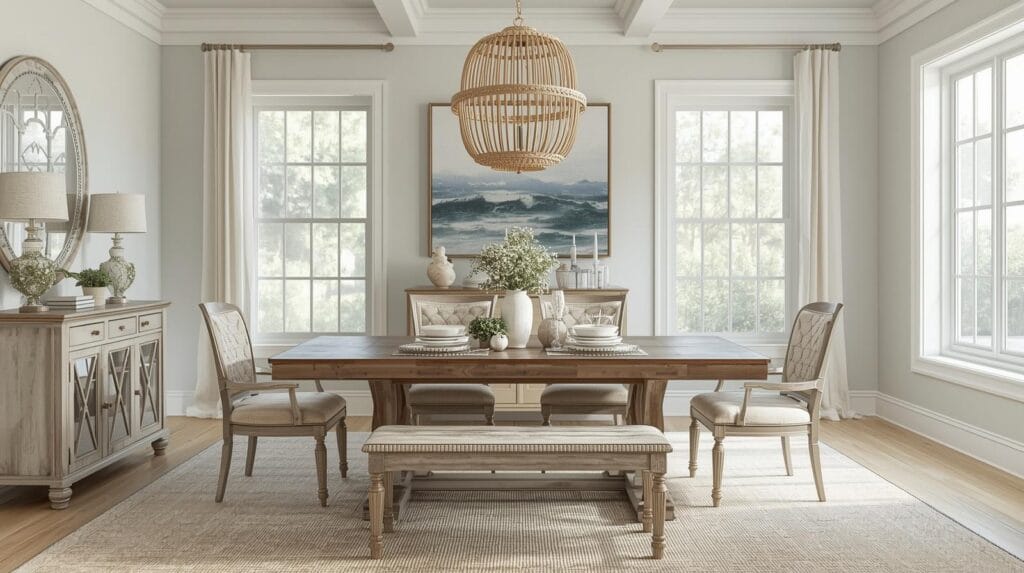
Geographic blending often yields the most relaxed interior spaces, particularly when mixing inland rural elements with seaside sensibilities. This variation ditches the stark contrasts of modern minimalism in favor of a softer, sun-bleached color palette. The resulting atmosphere feels like a weekend retreat, emphasizing comfort, warmth, and relaxation above all else.
Air circulation and visual softness define every choice in this layout profile. Heavy furniture pieces disappear in favor of lighter variations, such as tables with tapered legs or whitewashed finishes. The overall mood mimics the ease of a coastal morning, where nothing feels too precious or fragile to use daily.
Families with young children often prefer this approach due to its forgiving nature. The distressed textures and casual fabrics naturally conceal the minor wear and tear of daily living. A scratch on a whitewashed table merely adds to its coastal charm rather than ruining a pristine finish.
Working with Bleached Woods
Driftwood tones, pale ash, and pickled pine replace the dark walnut or mahogany finishes seen in traditional dining rooms. A bleached pine table reflects overhead light beautifully, contributing to the overall brightness of the room. These lighter wood species hide dust and scratches remarkably well, proving excellent for busy households.
Flooring choices should mirror this light timber philosophy. Wide-plank engineered oak with a matte, low-gloss finish creates a continuous plane of light beneath the furniture. This choice prevents the floor from acting as a dark visual sink, ensuring that brightness extends from the ceiling down to the baseboards.
Layering Textiles and Woven Linens
Softness enters the room through natural fibers rather than heavy upholstery. Slouchy linen slipcovers on end chairs introduce a casual elegance, while a chunky jute rug underfoot defines the dining zone. These materials absorb harsh acoustic echoes, making dinner conversations feel intimate despite the open, airy architecture.
Window treatments in a coastal farmhouse space require a delicate touch. Replacing heavy velvet drapery with unbleached cotton or linen panels allows the evening breeze to move the fabric, adding subtle motion to the room. This connection to the outdoor climate reinforces the breezy, unhurried spirit of the design.
3. The Industrial Farmhouse Fusion
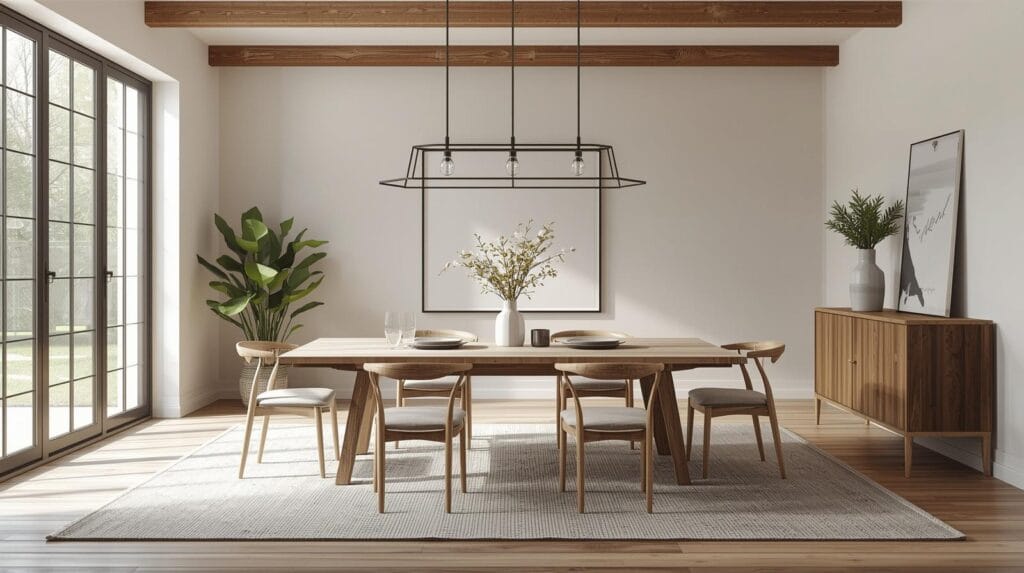
Urban loft elements frequently find a comfortable home within rural design frameworks. This hybrid style marries the warmth of weathered wood with the gritty utility of early twentieth-century manufacturing spaces. The primary factor lies in selecting items that look functional, sturdy, and time-tested.
This design solution prevents the dining room from feeling overly delicate or museum-like. It welcomes heavy iron casters on sideboards, utilitarian light switches, and visible bolting on furniture joints. The brightness of the walls ensures these heavy industrial pieces feel integrated rather than overbearing.
Achieving success with this fusion requires strict editing to avoid a chaotic, cluttered look. Choose one or two major industrial statements, such as a metal-framed hutch or a factory pendant light, then keep the surrounding furniture simple. This restraint allows the unique architectural details to stand out without competing for attention.
Exposed Brick and Steel Hardware
A whitewashed brick accent wall offers incredible depth while maintaining the bright theme of the home. Pairing this texture with raw steel brackets or oil-rubbed bronze fixtures creates an appealing tension between old-world masonry and clean metalwork. This combination gives the dining room an immediate sense of permanence.
The mortar style on exposed brick also plays a significant role in the final look. A sloppy over-grout technique introduces historical texture, making the wall look like it survived a century of use. Painting over this irregular surface with a warm white color softens the industrial edge, keeping the focus on illumination.
Salvaged Tables as Centerpieces
An authentic factory workbench or a thick utility table repurposed for dining creates an instant conversation starter. The dents, scars, and deep grain patterns of salvaged timber tell a story that mass-produced furniture cannot replicate. Surrounding this historic piece with lightweight, modern metal chairs keeps the look contemporary and balanced.
The finish on a salvaged table should remain matte to preserve its historical integrity. Polyurethane coatings can sometimes create an artificial plasticky sheen that ruins the authentic feel of old wood. Opt instead for a hand-rubbed wax or oil finish that protects the timber while highlighting its hard-earned patina.
4. The Scandinavian Minimalist Farmhouse
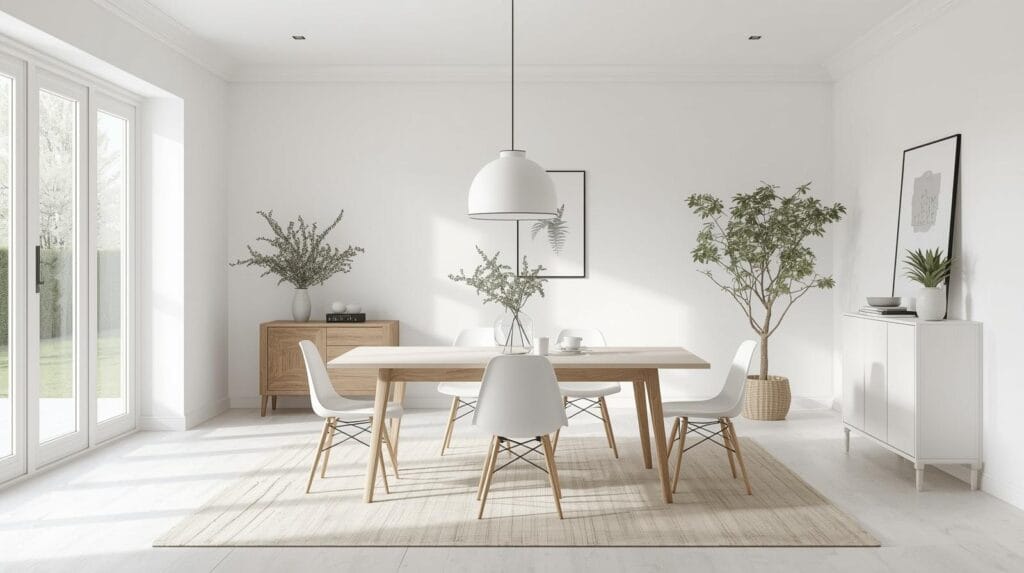
This hybrid approach blends the cozy warmth of North American rural life with the clean, functional design principles of Northern Europe. The resulting space prioritizes utility, comfort, and an absolute absence of unnecessary clutter. Rooms utilizing this style feel incredibly peaceful, offering a calm sanctuary away from modern distractions.
Pale color palettes dominate the environment, with a strong emphasis on light gray, soft white, and pale yellow undertones. Furniture pieces favor slender silhouettes and curved wooden elements, which soften the sharp angles of the architecture. The space feels intentionally light, making it an excellent choice for smaller homes or apartments with limited square footage.
Functional storage solutions hidden within the walls keep visual noise to an absolute minimum. Instead of open shelving filled with decorative objects, this style favors closed cabinetry that blends directly into the wall panels. This clever integration ensures the dining area remains tidy, calm, and visually open at all times.
Monochromatic Textures and Clean Lines
Visual interest comes from the subtle variation of similar tones rather than contrasting colors. Pairing a matte white dining table with pale beech wood chairs creates a delicate, sophisticated layer of texture. A sheepskin throw draped over a chair adds seasonal warmth and a tactile element that invites people to sit longer.
The absence of ornate trim work defines the windows and doorways in this design profile. Clean, drywall returns or simple flat stock molding frames the views of the outside world without drawing attention to the joinery. This minimalism keeps the focus entirely on the quality of light entering the home.
Functional Furniture Choices
Every piece of furniture must justify its existence through daily utility and comfort. Extendable dining tables featuring hidden leaves allow the space to adapt quickly from quiet family dinners to larger weekend gatherings. Chairs are selected for their ergonomic support, ensuring guests remain comfortable throughout long evening conversations.
5. The Botanical and Greenery Infused Layout
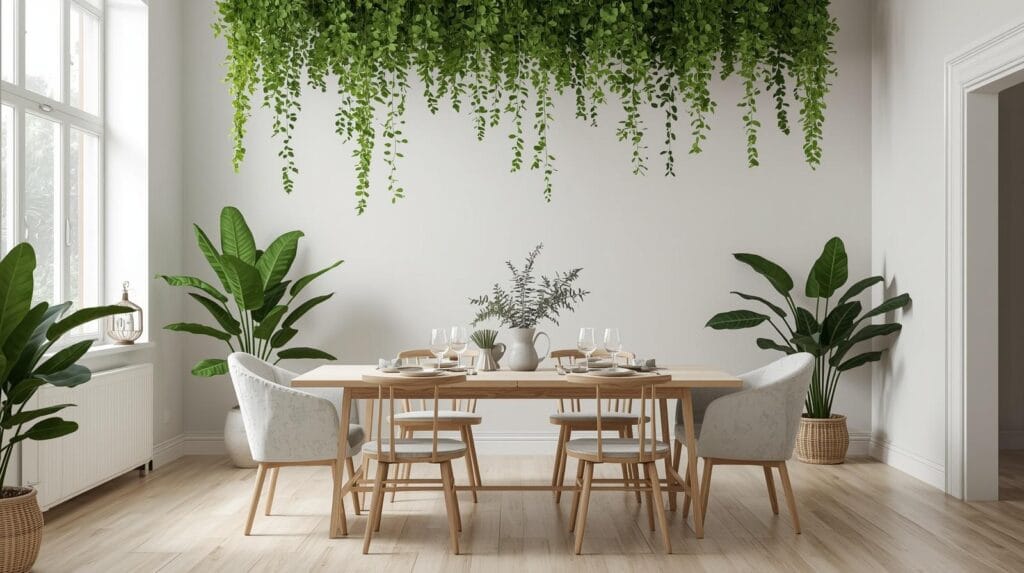
Introducing living plants into a bright dining area reinforces the connection to the natural world that sits at the heart of farmhouse living. Sunlight bouncing off white walls provides the perfect environment for indoor flora to thrive, creating a vibrant, living backdrop. This layout strategy infuses the room with movement, freshness, and natural color.
The presence of plants breaks up the rigid geometry of tables and sideboards with soft, organic shapes. Trailing vines cascading from the top of a cabinet or a tall fiddle-leaf fig standing in a sunny corner brings a sense of energy into the room. This natural color palette replaces the need for synthetic artwork or colorful wallpaper.
Careful placement ensures that plants complement the dining experience rather than obstructing it. Avoid placing overly tall or fragrant plants directly in the center of the dining table where they might block sightlines or interfere with the aroma of food. Instead, utilize peripheral surfaces like window sills, sideboards, and hanging planters.
Bringing Outdoor Elements Inside
A collection of potted herbs placed along a sunny window sill provides both visual beauty and fresh ingredients for meals. Olive trees in woven baskets add a Mediterranean farmhouse touch that harmonizes perfectly with light oak furniture. These living accents make the dining room feel like an extension of a sun-drenched garden veranda.
Seasonal clipping offers an easy way to update the room throughout the year. Flowering branches in early spring, bright green ferns in mid-summer, and dried wheat stalks in autumn keep the dining decor aligned with nature. This constant evolution ensures the space never feels stagnant or frozen in time.
Earthy Accent Tones
To complement the living greenery, incorporate accent colors derived directly from nature into the surrounding decor. Soft sage green, terracotta, and warm ochre work beautifully on linen napkins, seat cushions, or ceramic tableware. These muted earth tones provide a gentle contrast that enriches the bright white background without overwhelming it.
Lighting Design for Airy Spaces
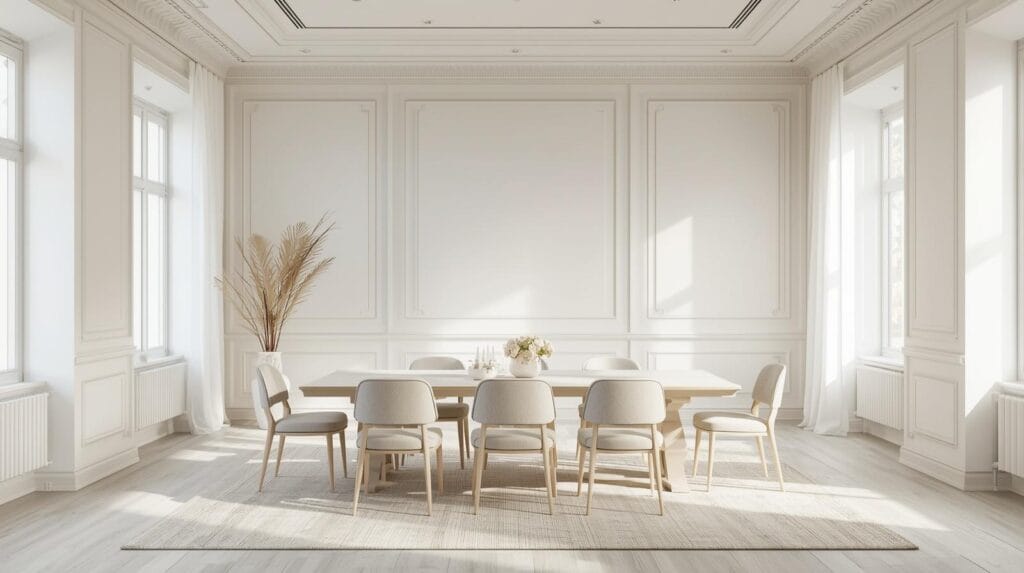
Artificial illumination must work in tandem with natural sunbeams to maintain a cheerful atmosphere after dusk. Relying on a single center light bulb often creates harsh shadows in the corners, shrinking the perceived size of the room. A layered approach ensures every corner receives adequate illumination, mimicking the diffused quality of daytime light.
Dimmer switches represent a critical addition to any dining environment. They allow the space to transition from a bright, functional workspace during the afternoon to a soft, glowing room for evening meals. Controlling the intensity of light preserves the airy feeling while introducing necessary warmth when the sun goes down.
The choice of bulb temperature dictates the final mood of the room. Cool white bulbs can make a white room look like a sterile medical facility, while overly yellow bulbs muddy the clean paint colors. Selecting bulbs in the two thousand seven hundred to three thousand Kelvin range strikes the perfect balance, maintaining brightness while offering a welcoming glow.
Statement Chandeliers and Pendants
The fixture hanging over the center of the table serves as the primary visual anchor for the design. Oversized woven wicker baskets, open-frame lanterns, or clear glass globes provide illumination without creating a heavy visual obstruction. The goal involves selecting a fixture that commands attention while remaining translucent enough to let light pass through.
The hanging height of the fixture influences the intimacy of the dining experience. Suspending a chandelier approximately thirty to thirty-six inches above the tabletop focuses the light directly on the gathering space. This placement draws people together visually, creating a cozy room within a room effect under the bright ceiling.
Layered Ambient Lighting
Wall sconces flanking a sideboard or a mirror add secondary layers of light that eliminate corner shadows. Table lamps placed on a buffet server introduce a warm, eye-level glow that mimics the comfort of a living room. Combining these varied light sources allows you to customize the atmosphere based on the occasion and the time of year.
Furniture Curation and Spatial Balance
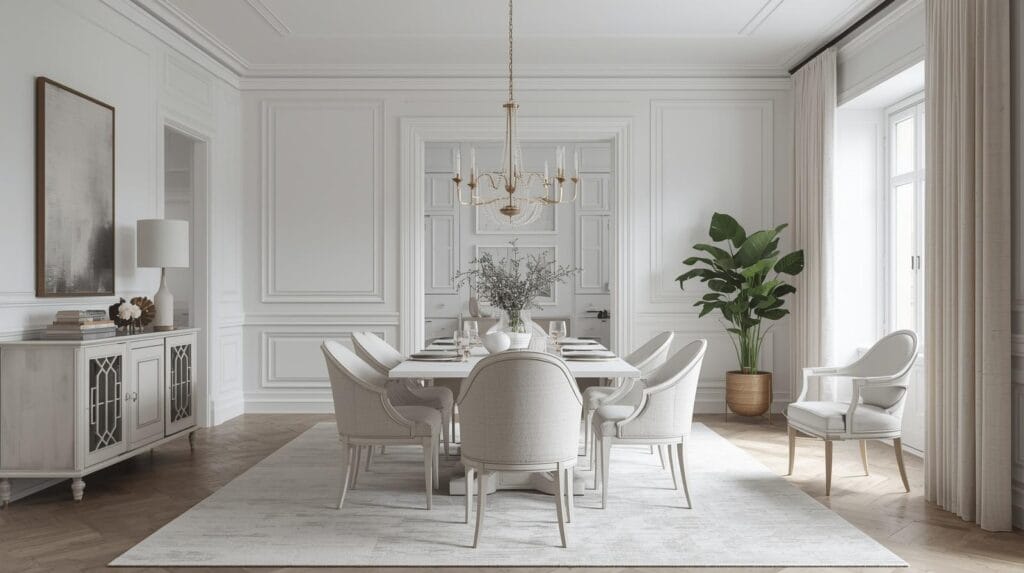
The arrangement of furniture determines how freely people and light move through the environment. Cramming a massive table into a tight room suffocates the design, regardless of how bright the walls are painted. Leaving ample breathing room around each piece ensures the layout feels intentional, spacious, and relaxed.
Mixing furniture styles prevents the room from looking like a retail showroom display. Combining a rustic wooden table with mid-century modern chairs or a vintage church bench creates a curated, lived-in appearance. This contrast shows confidence, indicating that the room evolved naturally over time rather than being purchased all at once.
The scale of the furniture must match the architectural proportions of the home. High ceilings can handle chunkier table legs and taller hutches, while standard eight-foot ceilings benefit from lower profiles and slender furniture silhouettes. Paying attention to these spatial relationships ensures the room feels balanced and comfortable to inhabit.
Bench Seating Dynamics
A long wooden bench placed against a wall or along one side of the table offers great spatial flexibility. Benches slide completely under the table when not in use, opening up floor space for better traffic circulation. They also evoke a communal, casual dining experience reminiscent of old farmhouse gatherings.
Adding a custom tufted pad or loose linen cushions to a wooden bench enhances comfort during long family dinners. This addition provides another opportunity to introduce subtle textures and neutral patterns like classic ticking stripes. The bench becomes a versatile design asset that balances utility with cozy textile layering.
Storage Solutions and Display Cabinets
An antique hutch or a clean-lined modern sideboard painted a soft charcoal gray provides crucial storage without cluttering the room. Displaying white ironstone pitchers or clear glassware behind glass cabinet doors reinforces the bright theme. Keeping everyday clutter hidden inside drawers ensures the dining room retains its serene, minimalist appeal.
Floating shelves made from thick planks of reclaimed timber offer an alternative storage solution for compact spaces. They provide a place to stack daily dinnerware while keeping the floor beneath them entirely clear. This floating design maintains a sense of openness, allowing light to wash across the wall surface unobstructed.
Real-World Implementation: Case Study of a Complete Renovation
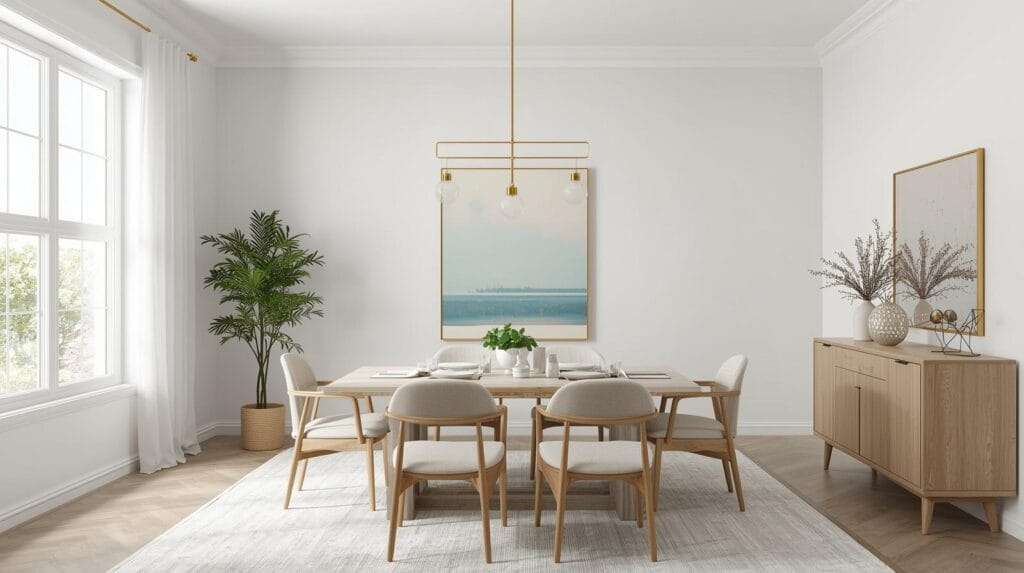
Examining a specific project demonstrates how these principles function outside a design studio. In a suburban home located in Columbus, Ohio, a dark, formal dining room featured heavy cherry wood paneling, dark green wallpaper, and a single brass chandelier. The homeowners wanted a bright, family-friendly space that felt connected to their open kitchen. They stripped the wallpaper, coated the walls in a warm alabaster white paint, and replaced the red-toned flooring with wide-plank European white oak.
The transformation succeeded because the family focused on light management and structural honesty. They kept an existing structural support beam but wrapped it in rough-sawn white pine to match a new custom table. Instead of buying a matching furniture set, they paired the heavy wooden table with matte black metal chairs and installed an open-geometry iron chandelier. The space instantly felt twice its original size, proving that visual brightness alters spatial perception.
The second-order effect of this layout change extended far beyond aesthetics. The family found themselves using the room daily for homework, crafts, and casual morning coffee, rather than reserving it exclusively for formal holidays. By stripping away the dark, rigid elements of the past, they unlocked the true utility of their home floor plan, creating a hardworking space that serves modern family life beautifully.
Wrap Up:
Creating a bright modern farmhouse dining room relies on balancing light-reflecting surfaces with rich, historic textures. Prioritizing natural light, unvarnished wood elements, and strategic high-contrast accents transforms dark spaces into cheerful gathering hubs. Trusting an organic evolution of furniture styles rather than matching sets yields a personal, timeless environment. Focus on spatial breathing room and authentic materials to ensure your dining space remains genuinely welcoming for years to come.
FAQs Section:
How do I make a farmhouse dining room look modern instead of rustic?
Incorporate clean lines by pairing a weathered wood table with minimalist matte black chairs and sleek open-frame lighting fixtures. Avoid excessive country decorations and maintain crisp white walls to balance the historical warmth with contemporary space.
What paint colors work best for a bright modern farmhouse look?
Opt for warm off-whites, creams, and soft grays with yellow or beige undertones rather than stark, cold whites. These complex neutrals reflect daylight beautifully while preventing the room from feeling clinical or cold during overcast days.
Can I use dark wood in a bright farmhouse dining room design?
Yes, dark wood works exceptionally well as an anchoring element when surrounded by high-reflectance walls and pale flooring. Limit dark tones to specific statement pieces, like a salvaged tabletop or exposed ceiling beams, to create grounding contrast.
Disclaimer:
The content shared by Fall Rugs is solely for research and informational purposes. Fall Rugs is not a professional interior design or home renovation consultancy, and the information provided should not be considered professional advice for home improvement or decor. All ideas and suggestions are based on current trends and general knowledge in the home decor industry.