
TL;DR
A tight kitchen entryway demands ruthless prioritization and vertical thinking. You need a slim landing zone for daily essentials, a dedicated shoe strategy that fits the actual floor width, and wall-mounted storage that does not intrude on the cooking walkway. The goal is not a magazine spread. The goal is a functional decompression chamber that stops mudroom chaos from swallowing your kitchen countertops whole.
Introduction
Most homes hand you a problem they never bothered to name. The back door swings straight into the kitchen with no buffer, no closet, and no mercy. You get a narrow strip of wall and perhaps sixteen inches of floor before the refrigerator juts out. Somebody designed that floor plan from a desk without ever carrying a bag of wet groceries through a rainstorm.
I have walked into dozens of those kitchens, and the frustration pattern never changes. A small kitchen entryway does not need to impress a guest walking through the front door. It needs to catch the landslide of daily debris before it hits the dinner prep zone, and it needs to do it with almost no square footage to spare. What follows are twelve ways real people have made that tiny threshold work harder than some walk-in pantries. Each idea has its own logic, its own set of trade-offs, and its own quiet refusal to accept that cramped means doomed.
1. The Slim Floating Shelf That Replaces a Console Table
A traditional entryway console table demands at least twelve inches of depth, and that is a luxury most kitchen back doors cannot afford. A floating shelf mounted at hip height steals only six inches from the wall and still gives you a proper landing pad. The genius here is not the shelf itself, it is what you place on it. A shallow ceramic tray catches loose change and keys without letting them migrate to the kitchen island.
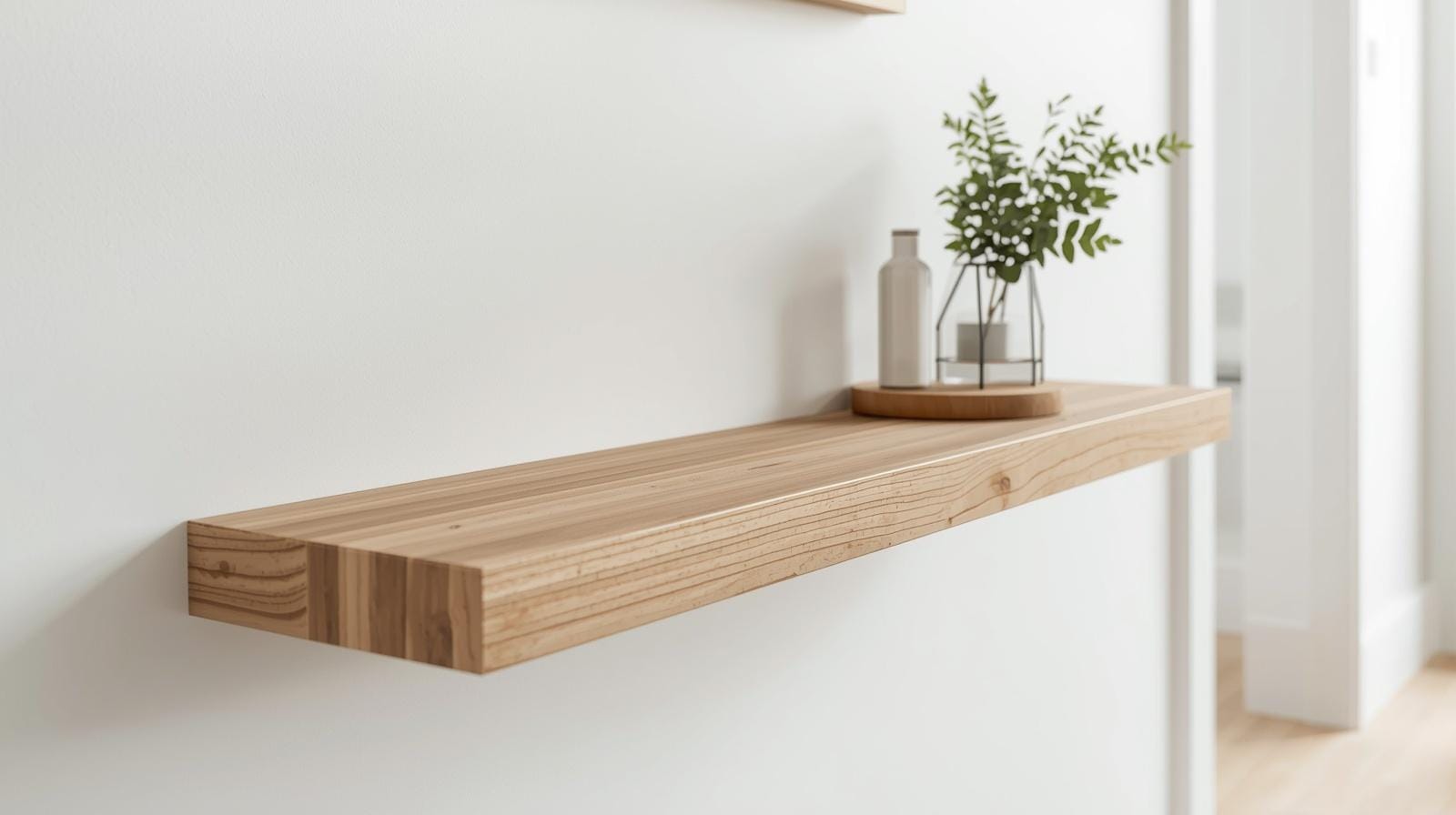
A small lamp on a motion sensor turns on when the door opens, which means you never walk into a dark kitchen holding a toddler and a bag of groceries. I have seen someone mount a vintage brass mail slot right above the shelf so that envelopes slide into a leather catch-all instead of piling on the nearest counter.
The second-order effect of that six-inch shelf is a kitchen counter that suddenly belongs to cooking again. No more pushing aside sunglasses and gas station receipts just to set down a cutting board. The vertical space below the shelf stays open for a narrow shoe solution, which we will get to in a moment.
Mounting height matters more than most people realize. Position the shelf too low and it bumps elbows when someone leans over to untie boots. Position it too high and keys and wallets feel like they are floating at eye level, which just looks strange.
The sweet spot sits roughly four to six inches below the light switch plate, which keeps the landing zone in the natural reach path of someone stepping inside. If the studs in that wall do not cooperate, use heavy-duty toggle anchors rated for at least sixty pounds. A shelf that pulls out of the drywall will cause more damage than the clutter it was meant to solve.
2. The Vertical Shoe Slot That Lives Flat Against the Baseboard
Kitchen entryway floors collect footwear the way river bends collect driftwood. There is simply no stopping it. The trick is to give shoes a designated slot that consumes almost zero square footage. A vertical shoe rack turned sideways against the baseboard uses the narrowest dimension of each pair, which is the toe-to-heel depth, and stacks them upright.
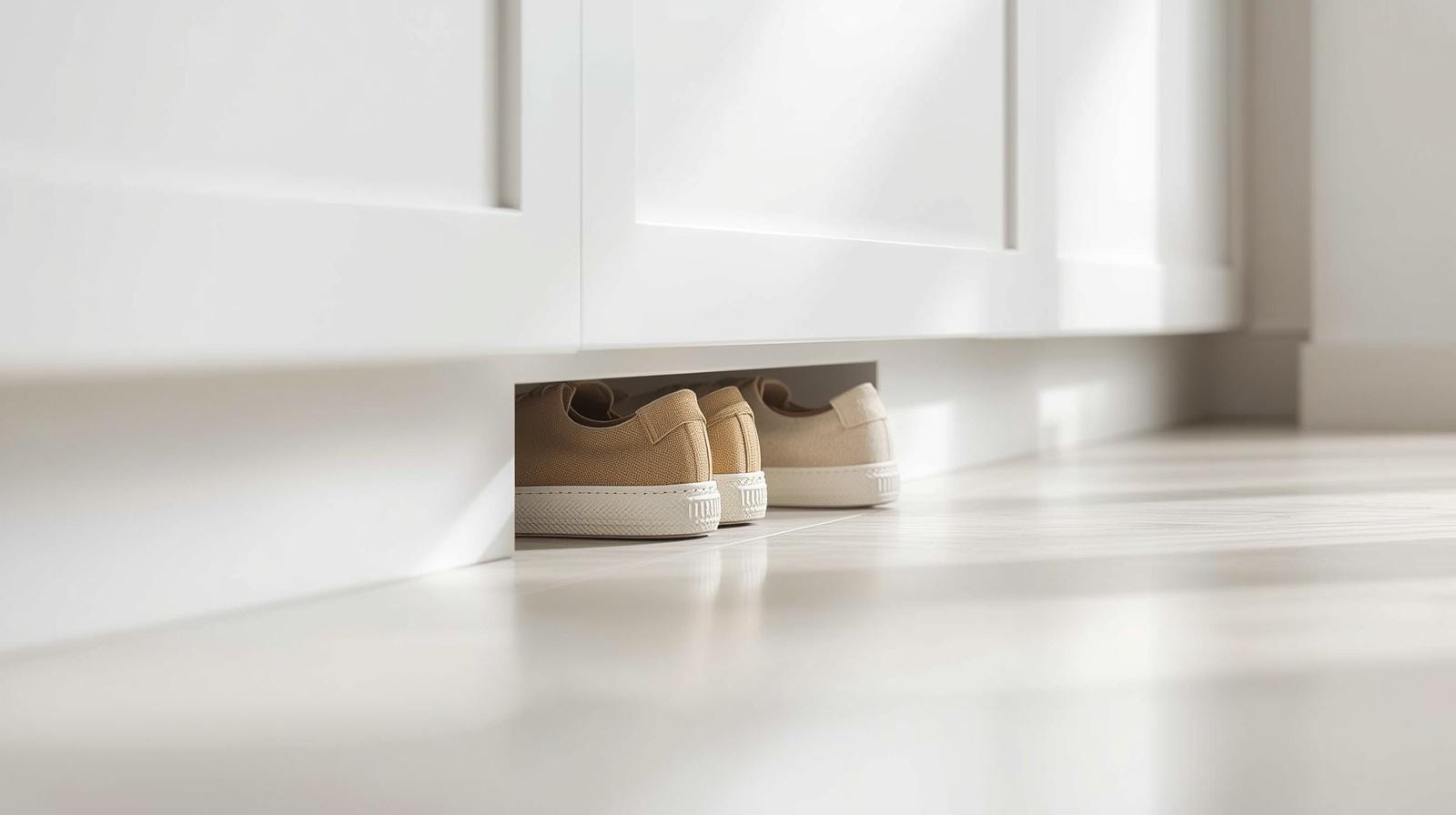
You lose maybe seven inches of floor depth and gain organized storage for four or five pairs. This works especially well in a galley-style kitchen entrance where the hallway feeling leaves no room for a traditional shoe bench.
Why a Basket on the Floor Fails in a Kitchen Entryway
A basket seems sensible until someone kicks it while pivoting with a stockpot full of boiling water. Floor-level containers also become a magnet for cooking splatter and dust kicked up from the walkway. Lifting shoes off the floor vertically, either on a wall-mounted rail or a slim tiered rack secured to the baseboard, keeps them in sight without creating a tripping hazard.
I once watched a client stub her toe so hard on a wicker shoe basket that she fractured it. The basket was gone the next afternoon, replaced by a painted steel rack that hugged the wall like it had always been there.
3. The Inside-Door Command Center Nobody Looks For
The back of the kitchen door is a dormant asset. Most people hang a dish towel there and call it a day. Mounting a slim over-the-door organizer with clear pockets turns that rectangle of hollow-core wood into a family command post. Sunglasses, dog leashes, reusable shopping bags, and that one set of keys everyone shares can each get a labeled pocket.
The transparency matters because hidden storage goes invisible, and invisible storage gets ignored until someone yells about not finding the garage opener. This idea works best when the door opens inward and the organizer does not collide with the doorframe. Measure the gap between the door and the wall when it swings fully open. Most over-the-door units add about two inches of thickness, which fits in most frames but bites you if the clearance is tighter than that.
The One Mistake That Undermines the Whole System
People overload the pockets until the door sags on its hinges. A hollow-core door already has enough stress from daily use. Keep the total weight under fifteen pounds and check the hinge screws once a season. A screwdriver and a three-minute tightening session prevent a door that scrapes the floor and drives everyone quietly insane.
4. The Magnetic Wall Strip for Metal Objects That Vanish Daily
Scissors, nail clippers, the tiny screwdriver you need to tighten a cabinet handle, all of these develop legs in a busy kitchen. A magnetic tool strip mounted near the entryway, at about eye level or just below, catches anything ferrous and keeps it visible. I first saw this in a chef’s home kitchen where the back door led straight into the prep zone.
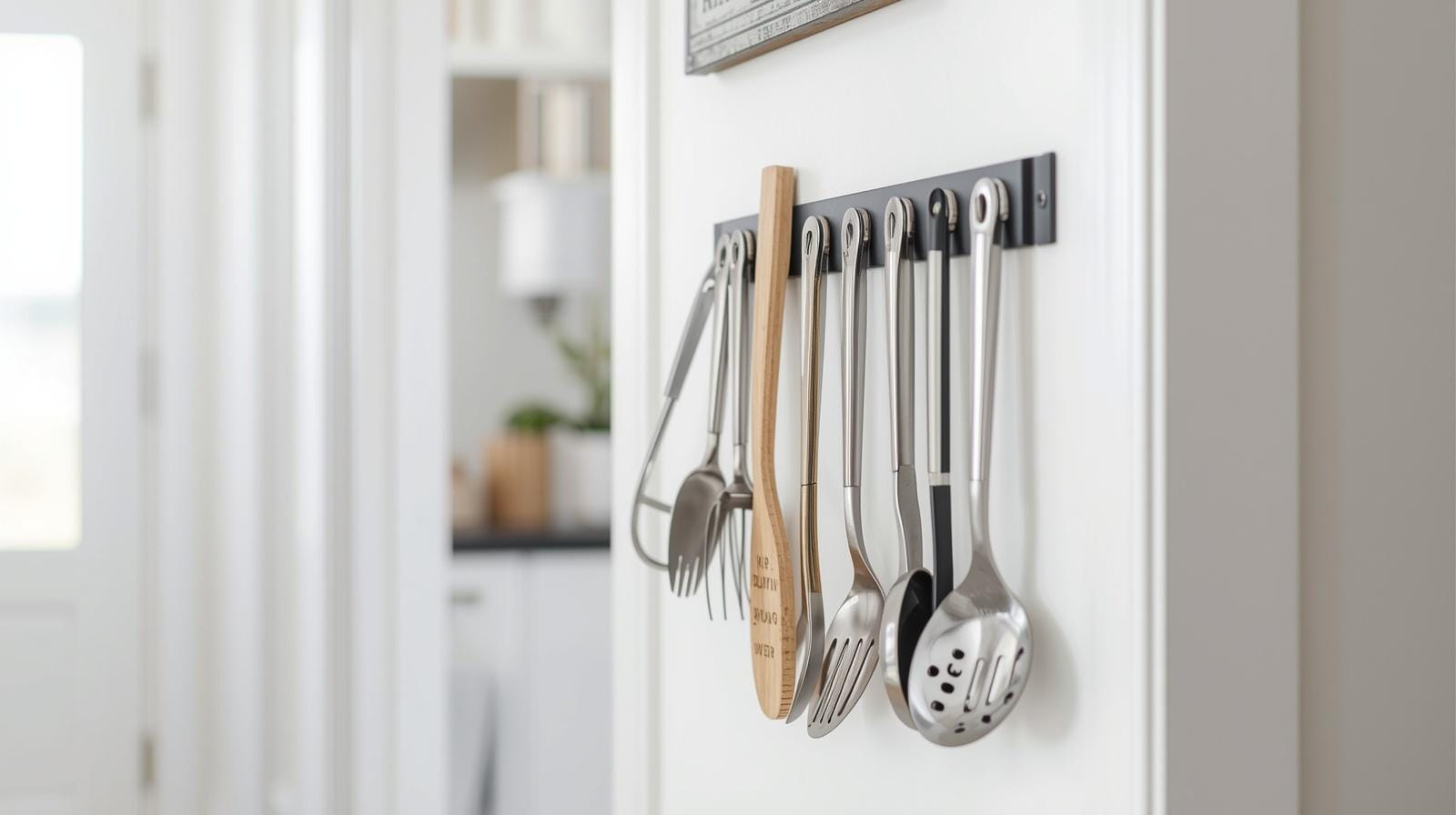
The knife strip was on the opposite wall, but the entryway strip held things no one wanted near food. Car keys, yes, but also metal-handled dustpans, a small flashlight, and a steel comb for the dog. The strip did not scream “workshop.” It blended into the trim because the kitchen already had stainless steel appliances, so the material language matched.
Choose a strip with a strong rare-earth magnet rather than a cheap ceramic one. The cheaper versions drop things when someone slams the door too hard, and a falling pair of kitchen shears near bare feet is a risk worth preventing. This idea also feeds a quiet psychological win.
When every small tool has a visible home, the brain stops scanning surfaces and relaxes slightly. That is not decorative fluff. It is cognitive load reduction, and it matters most in the room where you already manage heat, timing, and sharp objects.
5. The Narrow Bench That Does Two Jobs at Once
A shoe bench in a small kitchen entryway has to earn its footprint. If it does not provide storage underneath, it is just a chair sitting in a walkway. A bench with a lift-top seat or a slatted lower shelf that holds shoe pairs side by side gives you a place to sit while pulling off muddy boots and a place to store them afterward.
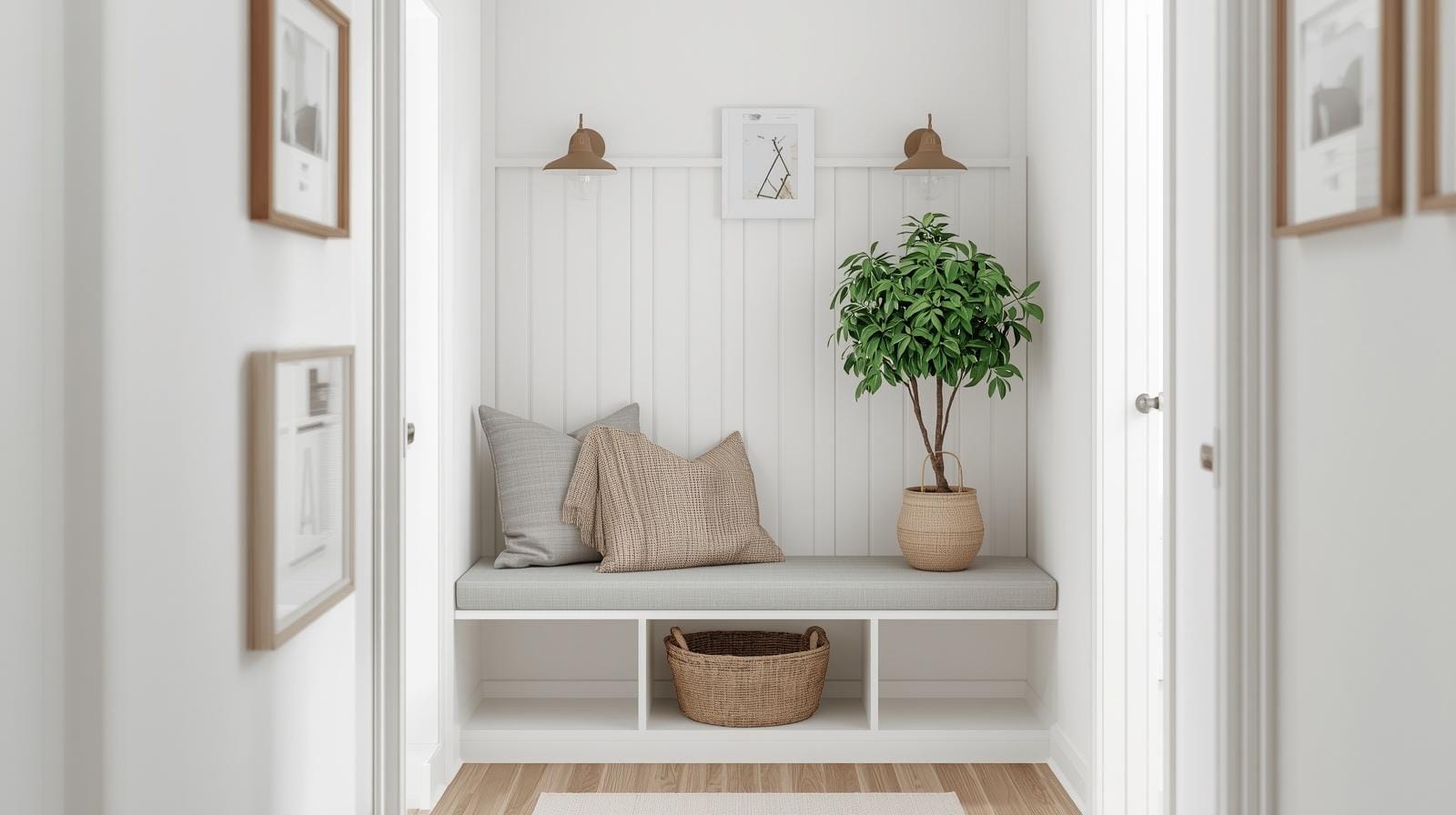
The depth should not exceed fourteen inches. Any deeper and it starts to compete with the path between the sink and the refrigerator, and that is a battle a bench will lose every time. Look for models with legs set back from the front edge, which reduces stubbed toes when someone walks past in socks.
What Happens When You Ignore Traffic Flow
A friend of mine squeezed a beautiful reclaimed-wood bench into her back entryway because it matched the kitchen island. It was twenty inches deep. Within a week, her husband had bruised his hip twice on the corner while carrying laundry baskets. The bench got repurposed to the living room and the entryway reverted to a pile of shoes on the floor.
The aesthetic win did not survive contact with daily life. That sequence taught me more about small-space design than any showroom visit could. Measure the narrowest point of the walkway first, subtract the bench depth, and make sure the remaining clearance is at least thirty inches. If the math does not work, skip the bench entirely and go with the vertical shoe slot from earlier.
6. The Ceiling-Mounted Pot Rack That Steals No Floor Space
Ceiling height over a kitchen entryway often sits unused while countertops drown in bulky items. A suspended pot rack hung from the ceiling above the entry path, provided there is enough headroom, pulls large cookware out of cabinets and frees lower storage for entryway essentials.
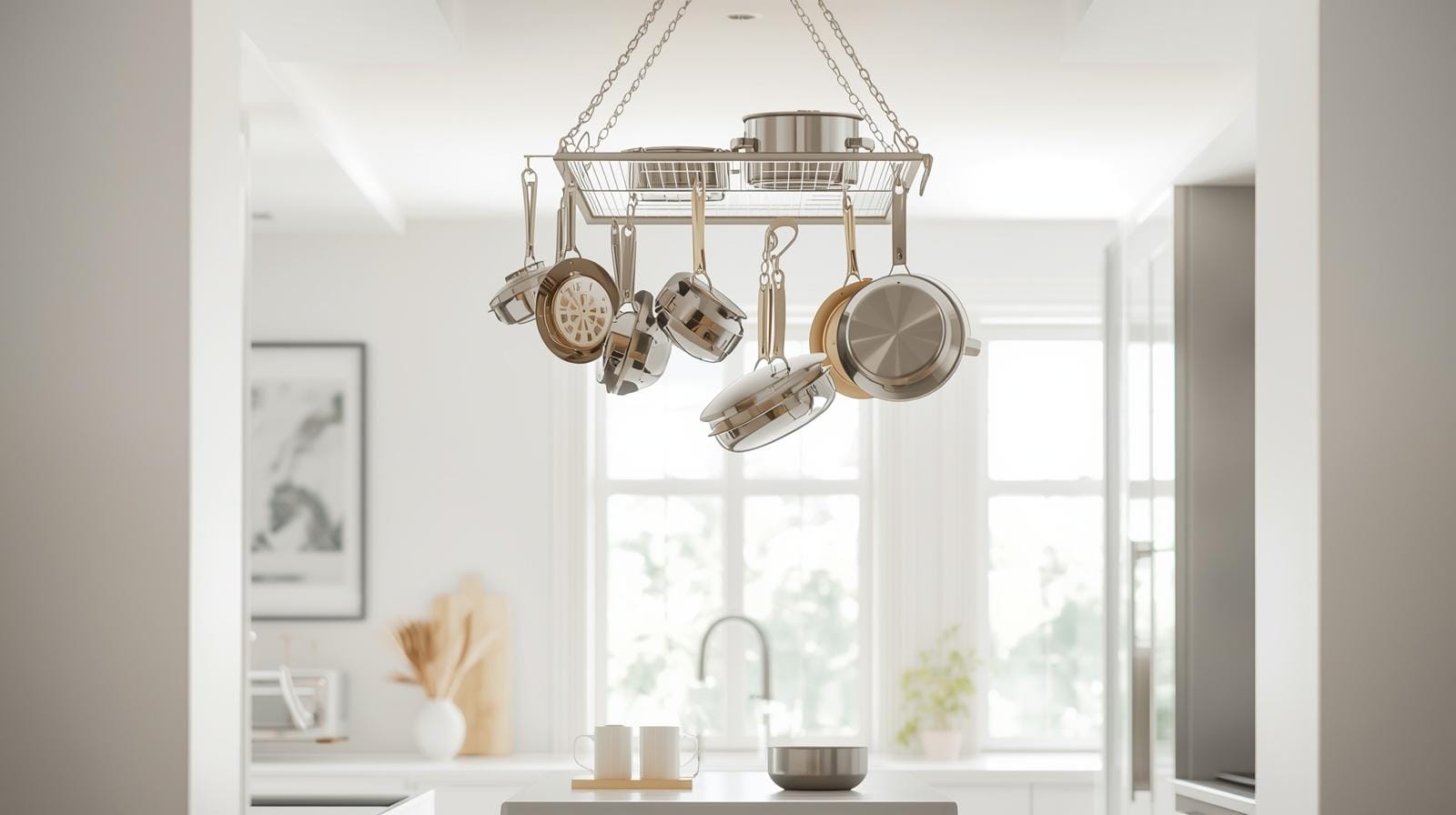
This works only in kitchens with ceilings of nine feet or higher, and the rack must hang at least seven feet off the floor so that no tall visitor gets a cast-iron skillet to the forehead. The aesthetic leans rustic or industrial, which fits some kitchens and clashes with others. Paint the rack and chain the same color as the ceiling and the hardware visually recedes.
The Second-Order Storage Effect
When pots and pans move upward, the deep lower cabinet nearest the entryway suddenly opens up. That cabinet becomes the spot for a boot tray, a basket of winter accessories, or a hideaway recycling bin. The pot rack does not directly organize the entryway, it enables a cabinet reorganization that does. That is the kind of systemic thinking that separates a catalog photo from a kitchen that actually functions across multiple seasons.
7. The Peg Rail That Grows With the Family Schedule
A simple wooden rail with pegs, mounted along the wall beside the door, has been working hard in farmhouses for centuries. The modern kitchen entryway version uses fewer pegs spaced farther apart so that each family member gets a designated hook. One peg holds a canvas tote bag.
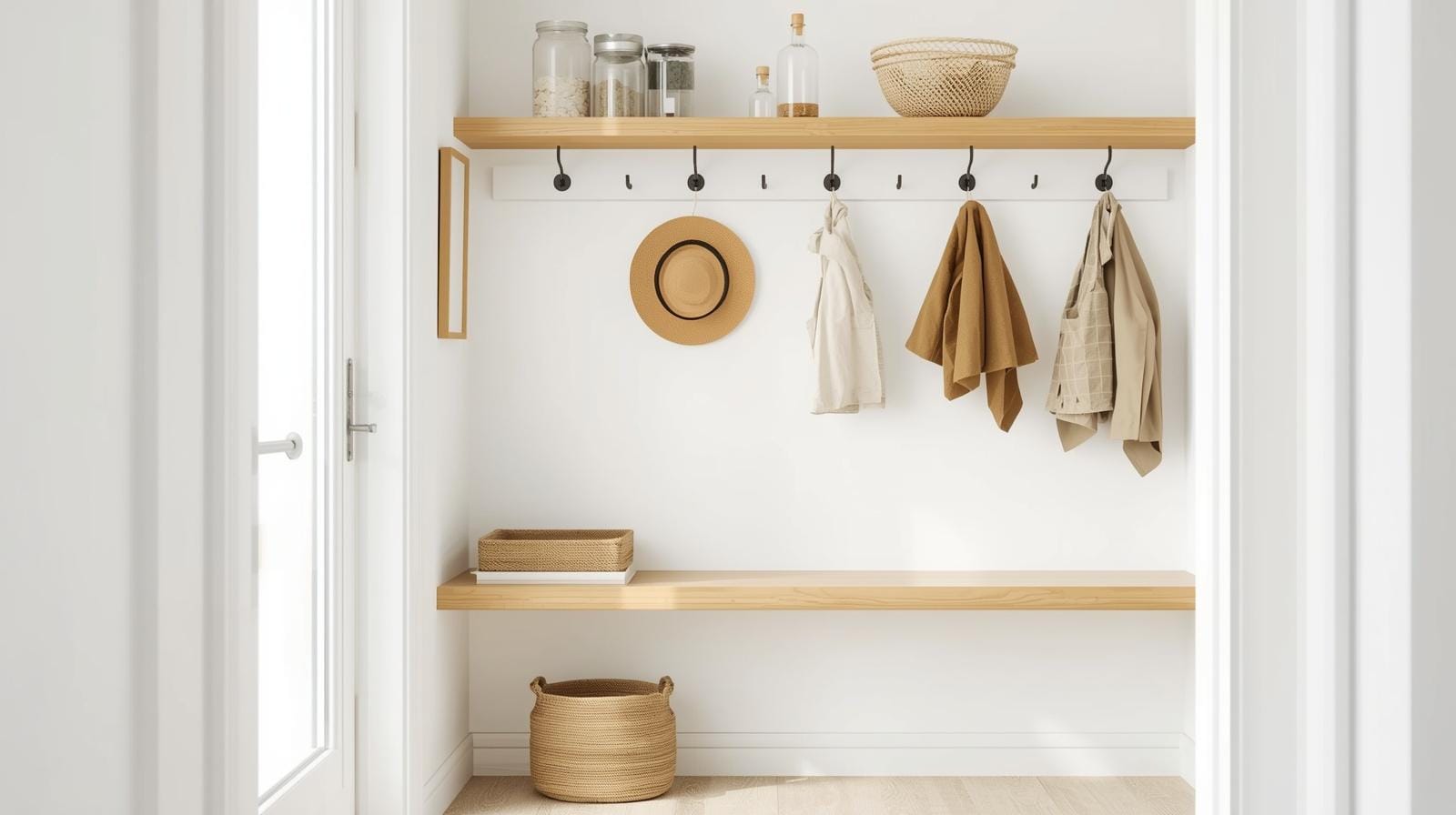
Another holds a light jacket. The one nearest the door holds the dog leash. The spacing keeps items from overlapping and tangling, which is the silent killer of entryway function. When pegs are too close together, coats pile on top of each other until no one can find anything. Then the system collapses.
Shaker Pegs Versus Standard Hooks
Shaker pegs taper outward at the tip, which means bags and scarves slide on easily but do not slip off when someone brushes past. Standard double hooks can catch sleeves and yank jackets to the floor. The difference sounds petty until you have watched a kid’s backpack fall three times in a single morning rush.
Mount the rail into studs at a height that the shortest family member can reach without stretching too far. If children are involved, a second lower rail teaches a quiet lesson in autonomy. A four-year-old who can hang her own coat is a four-year-old who builds confidence and spares you one tiny daily frustration.
8. The Wall-Mounted Fold-Down Desk for Bill Paying and Menu Planning
The kitchen entryway does not need to be a full home office, but a tiny fold-down surface mounted to the wall serves as a temporary paperwork station. This keeps mail, school permission slips, and grocery list notepads off the kitchen table. The desk folds flat against the wall when not in use and adds less than two inches of depth.
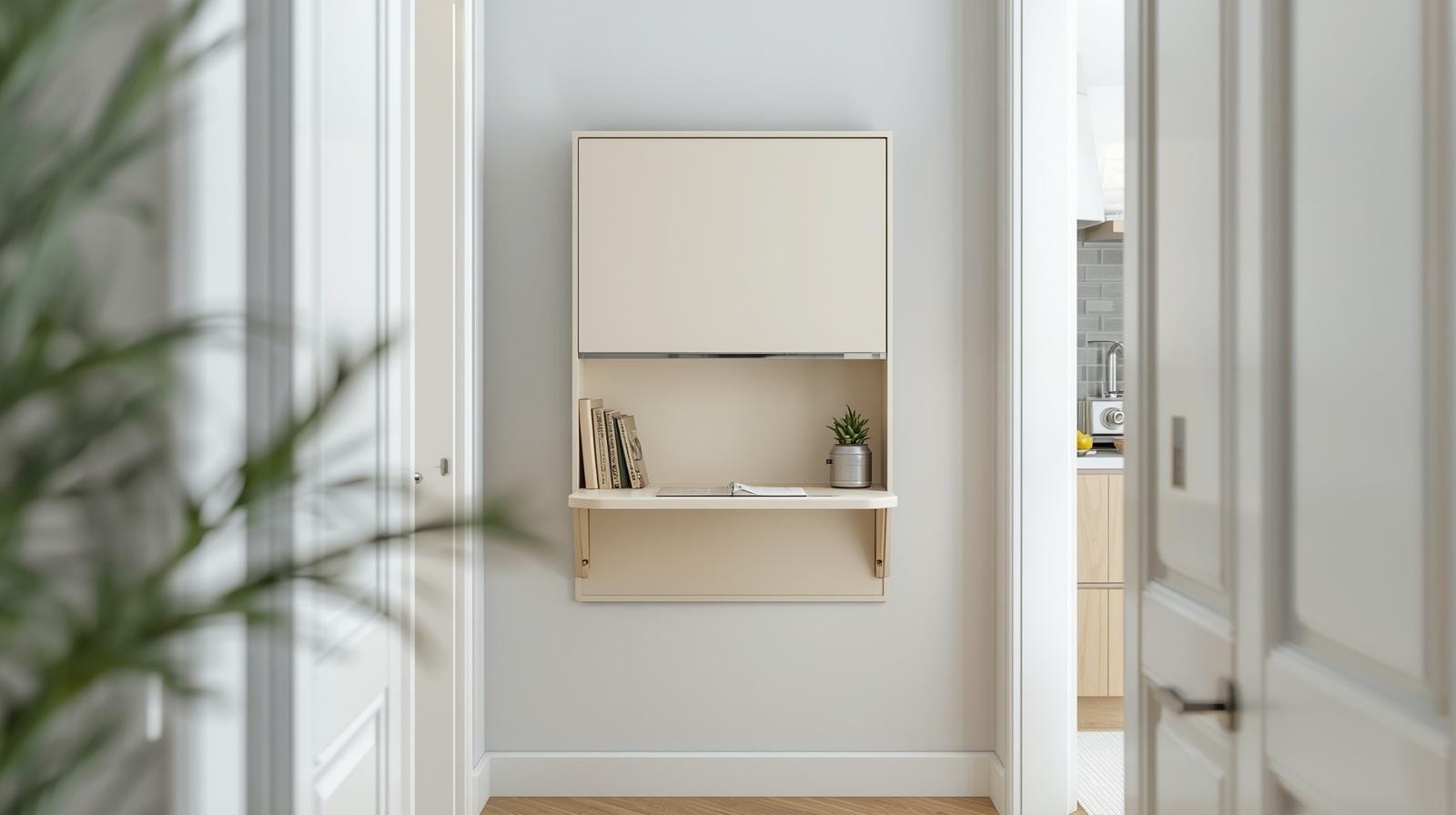
Drop-leaf brackets with a locking mechanism prevent accidental collapse. This idea suits a household where the kitchen table doubles as a workspace and dinner prep keeps losing territory to paperwork. The entryway becomes the buffer zone where administrative life gets processed and then put away.
Mount the desk at standard writing height, around thirty inches from the floor, and pair it with a slim wall-mounted organizer above it for stamps, pens, and a charging cable for the one device everyone argues over. A small corkboard tile painted the wall color adds a pin-up surface without looking like a college dorm room. The goal is a station that disappears when closed but works instantly when flipped open, no clearing required.
9. The Open Cubbies Built Into Dead Wall Cavity Space
Some kitchen entryways sit next to a pantry wall or a shallow closet that backs up to the garage. Opening that wall and installing recessed cubbies between the studs creates storage without stealing floor depth. This is a minor construction project, not a peel-and-stick fix, but the payoff is enormous.
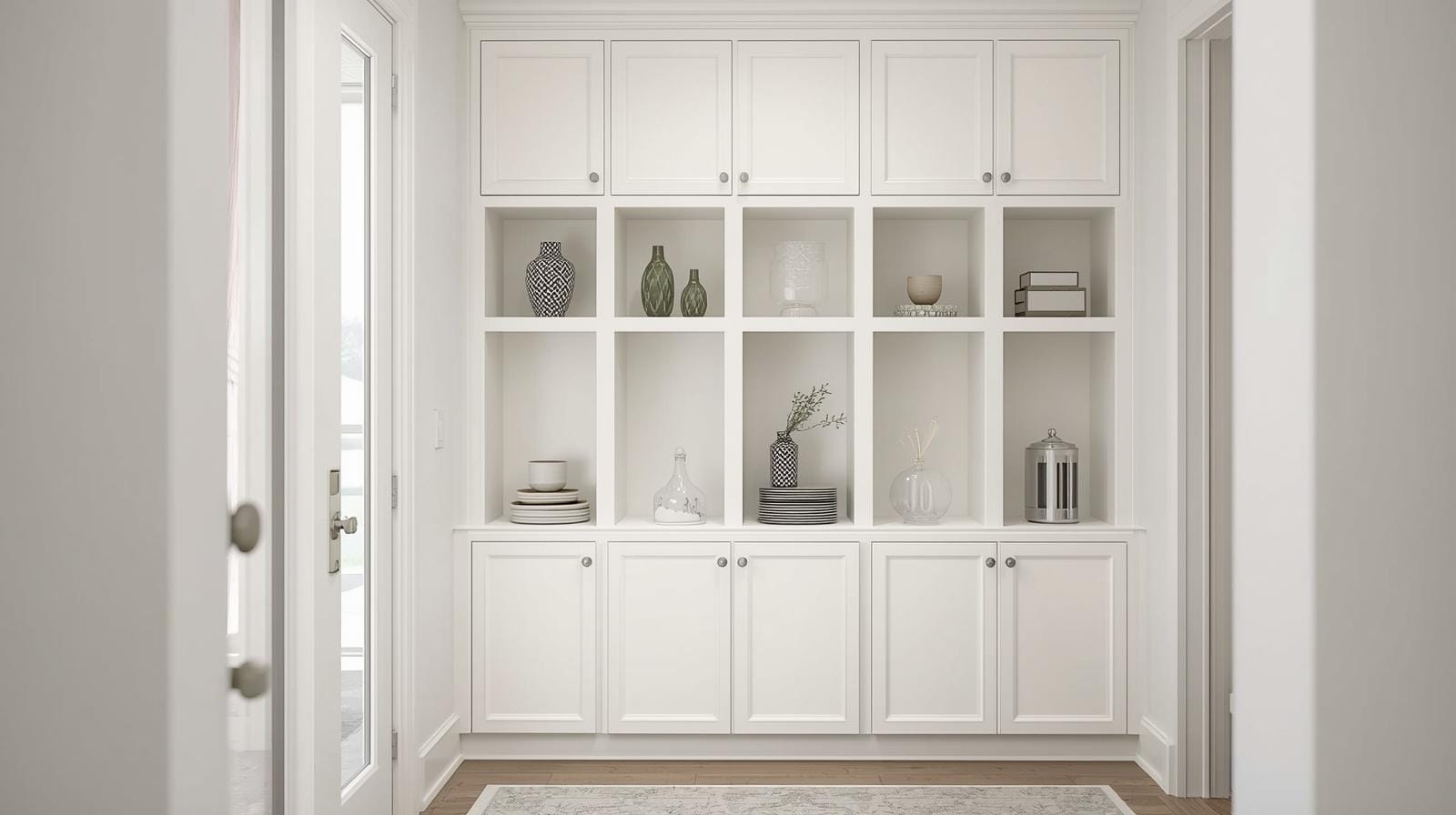
Each cubby can hold a wire basket for hats and gloves, a shoe pair, or a stack of folded reusable grocery bags. Frame the opening with trim that matches the kitchen cabinetry so it looks intentional rather than like an unfinished repair. The depth is limited to three and a half inches for a standard two-by-four wall, which means you cannot fit bulky winter coats, but you can fit everything else that normally ends up on the floor.
When the Wall is Load-Bearing
If the wall holds up the floor above, you cannot simply cut into it without a structural plan. A contractor can add a header and create a deeper niche if there is budget and willpower, but for most people the shallow between-stud cubbies deliver eighty percent of the benefit without touching a single beam. That trade-off keeps the project realistic for a weekend warrior who knows how to patch drywall and use a stud finder. For those looking to go a step further, exploring modern archway ideas can also help define the transition between the entry and the kitchen without adding physical bulk.
10. The Rug That Defines the Entryway Boundary Psychologically
A flat-woven rug or a low-pile indoor-outdoor runner placed right inside the door does something no shelf or hook can do. It tells the brain, “This is the entry zone, and here is where wet shoes stop.” The kitchen and the entryway feel like separate rooms even though they share the same floor. This same boundary-pushing logic applies if your kitchen opens onto a tiny outdoor area; even a small balcony garden or clever narrow kitchen ideas can feel like a seamless extension of your prep space if organized correctly.
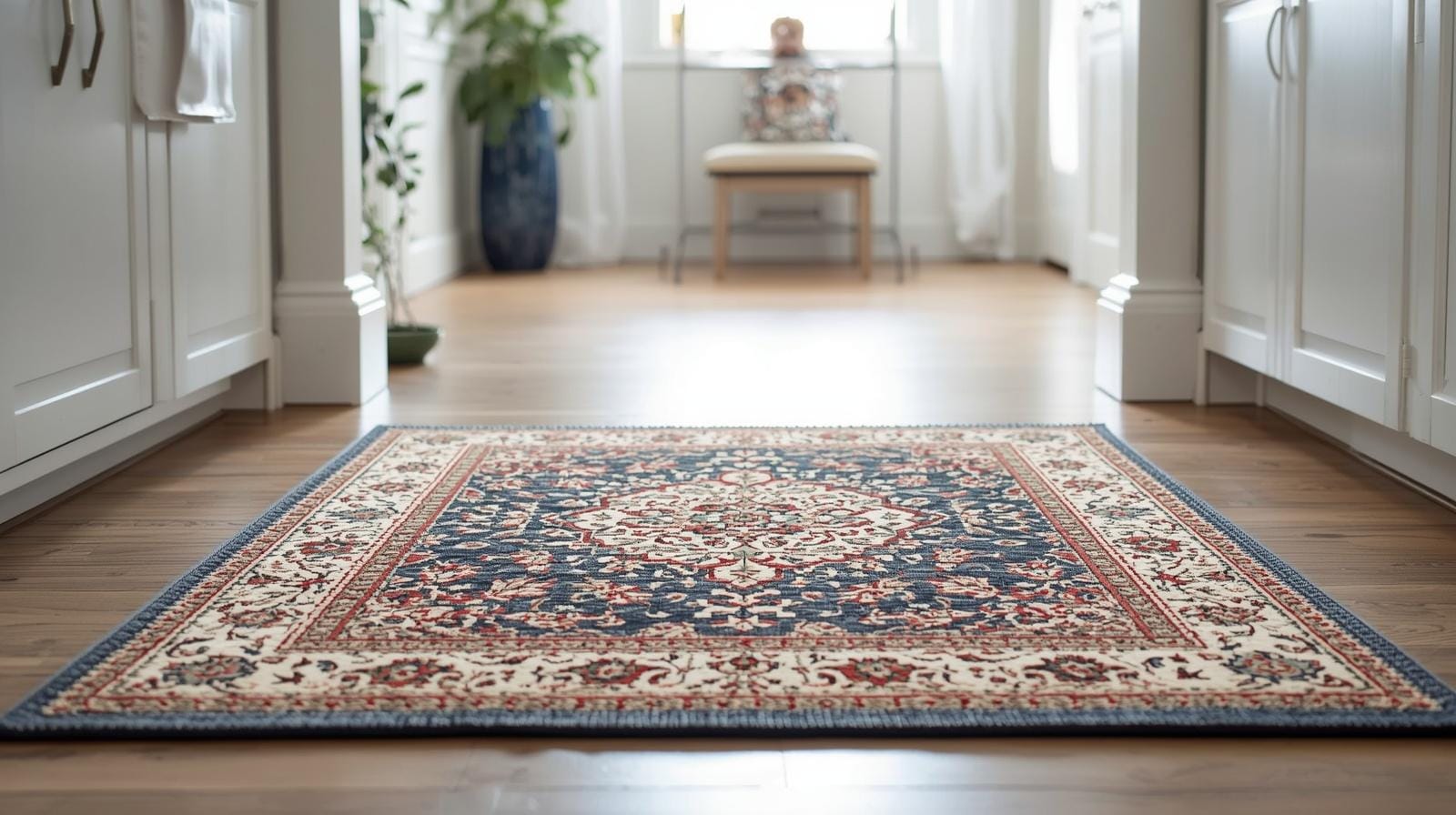
Pick a rug with a tight weave that a vacuum can handle without getting chewed up. Avoid rubber-backed mats in a cooking zone because they off-gas when heated by a nearby oven or dishwasher vent, and the smell is unpleasant. A natural fiber like jute or a washable cotton flat-weave holds up better and lays flatter under foot traffic. For those looking to add greenery to these tight transitions, a kitchen herb garden is the perfect way to use that vertical entryway light.
The Color Strategy No One Discusses
A dark rug hides kitchen spills and shoe grime, which sounds wise until you realize you cannot see the dirt accumulating. A rug that shows nothing is a rug that never signals when it needs cleaning. A mid-tone pattern, something with a mottled herringbone or a low-contrast geometric print, hides the daily debris while still letting you spot a wet coffee spill before it molds. This is the kind of detail you only learn after lifting a rug months later and recoiling at what thrived underneath. For more inspiration on layouts, check out these narrow kitchen ideas to maximize every inch of your floor plan.
11. The Wall-Hung Coat Flipper for the One Jacket Everyone Needs
A full coat rack in a kitchen entryway takes up too much visual and physical space. But a single wall-mounted coat flipper, a hinged bar with three to five hooks that pivots flat against the wall when empty, holds the daily rotation of outerwear without becoming a permanent sculpture of bulk.
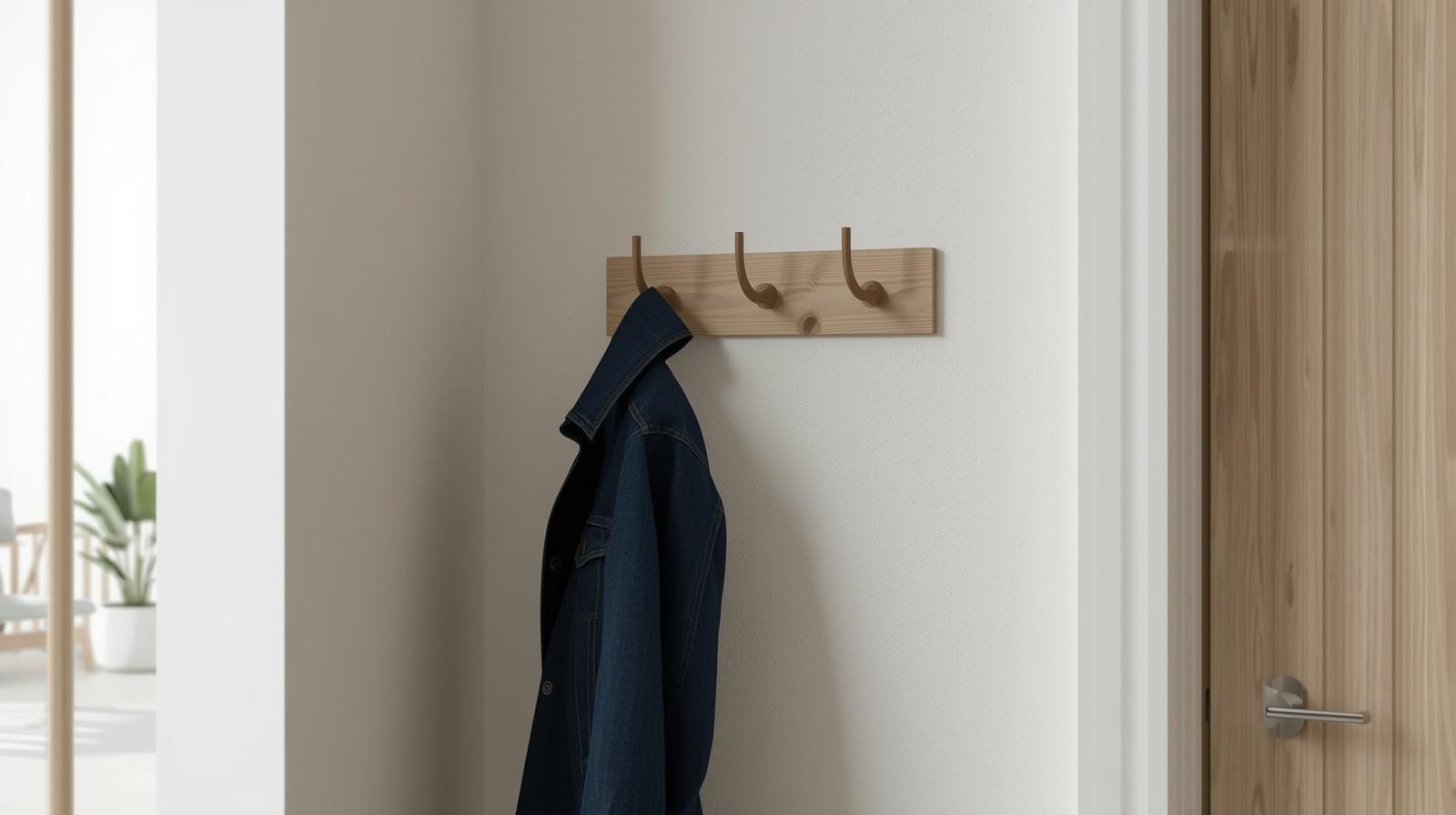
Install it near the door at a height where jackets hang without bunching on the floor. When summer arrives and the jackets disappear, flip it flat and the entryway opens back up. This seasonal flexibility matters in a small kitchen that already feels tight during hot months when windows are open and the air is heavy.
The hardware needs to be robust. A flimsy hinge will sag under the weight of a single wet parka, and once it sags, the hooks lean forward and look broken even when they are not. Brass or matte black steel with a built-in stop mechanism holds its line for years.
Mount into a stud or use snap-toggle anchors in drywall that can handle dynamic weight. Dynamic weight means the load shifts when someone grabs a jacket and pulls sideways, not just the static downward pull. That is the detail that separates a fixture that lasts from one that rips out of the wall by November.
12. The High Shelf for the Stuff You Only Touch Twice a Year
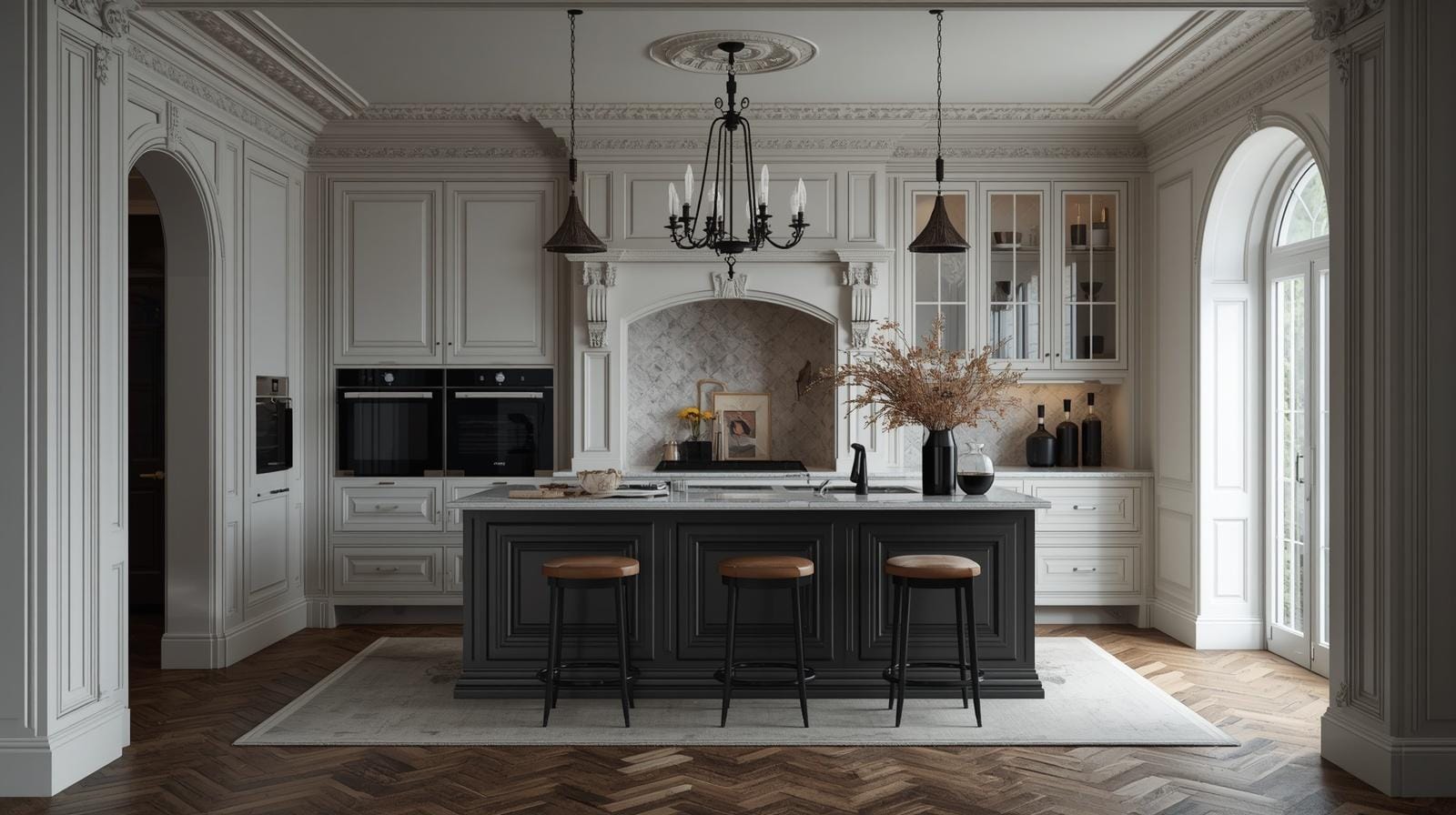
Every small kitchen entryway needs a high shelf running a few inches below the ceiling. This is the overflow valve. Up there go the sun hats in winter, the heavy-duty snow boots in summer, the box of guest slippers, and the spare pack of paper towels. The shelf sits too high for daily access, and that is exactly the point. It absorbs seasonal churn without consuming prime real estate. Style it minimally, a few woven baskets or a single row of vintage hatboxes, so it reads as intentional architecture rather than forgotten clutter. You can even pair these storage solutions with modern archway ideas to create a more polished, architectural look in a cramped space.
How High is Too High
If you need a step stool every single time you retrieve something, the shelf becomes a deterrent. For items you access twice a year, that friction is acceptable. For items you need weekly, it is a design failure. Reserve the high shelf for true deep storage, and do not let anyone talk you into putting the everyday cereal bowls up there because it “looks nice.”
A kitchen entryway that requires a ladder before breakfast is a kitchen entryway that has abandoned its purpose. I have seen that mistake play out in a neighbor’s otherwise beautiful kitchen. The step stool lived permanently next to the fridge, and the floor space it occupied defeated half the gains the shelf was supposed to provide.
Wrap Up
A small kitchen entryway will never feel spacious, but it can feel effortlessly capable. Every one of these twelve ideas buys back a few inches of sanity and reclaims a surface you actually need for cooking. Pick the two or three that match your floor plan’s specific choke points and install them solidly.
The measure of success is a kitchen counter that stays clear through a weekday morning rush without anyone having to police it. That quiet shift changes how the whole kitchen feels, not just the doorway.
FAQs
What is the minimum depth needed for a kitchen entryway storage unit?
Fourteen inches is the practical maximum for a bench or shelf in a tight kitchen entryway, and many functional options like floating shelves and vertical shoe racks work within six to eight inches. Any deeper piece creates a traffic bottleneck between the door and the main kitchen walkway.
How do I stop kitchen entryway clutter from spreading to countertops?
Give every frequently dropped item a designated landing spot in the entry zone itself, such as a wall-mounted tray for keys and a slim shelf for mail. When the entryway lacks those spots, the kitchen counter becomes the default dumping ground, and the only fix is moving the drop zone closer to the door.
Can I install an entryway bench if my kitchen door opens right into the cooking area?
Measure the clearance between the door swing and the nearest counter or appliance. If the remaining walkway is narrower than thirty inches, skip the bench and choose a wall-mounted shoe rack paired with a separate small stool that tucks under a shelf when idle. That pairing gives you a seat without a permanent obstacle in the cooking path.
Disclaimer
The content shared by Fall Rugs is solely for research and informational purposes. Fall Rugs is not a professional interior design or home renovation consultancy, and the information provided should not be considered professional advice for home improvement or decor. All ideas and suggestions are based on current trends and general knowledge in the home decor industry.