
TL;DR
An authentic bohemian dining room pairs structured furniture lines with rich, organic textures to create an inviting, unstudied gathering space. Achieving this style requires moving past uniform matching sets and instead combining mismatched seating, varied textiles, and natural materials like rattan and jute. The secret lies in creating an intentional tension between clean minimalism and relaxed, global eclecticism.
Introduction
Can a dining space feel deeply curated yet entirely relaxed? Many homeowners struggle to merge the clean aesthetics of contemporary design with the warm, expressive nature of global styling. The answer lies in a balanced approach that welcomes natural materials, soft textiles, and thoughtful layers without cluttering the room. By rethinking standard furniture arrangements and focusing on tactile quality, homeowners can create an environment that encourages long conversations and shared meals. This design ethos celebrates imperfections and personal history over sterile showroom perfection.
Redefining the Modern Bohemian Dining Narrative
The contemporary interpretation of bohemian design moves far away from the chaotic, over-saturated spaces of past decades. Instead of piling endless bright tapestries and plastic beads into a room, sophisticated spaces rely on a disciplined palette and clean structural lines. This evolutionary shift honors the free-spirited roots of the movement while acknowledging the calm required for modern living.
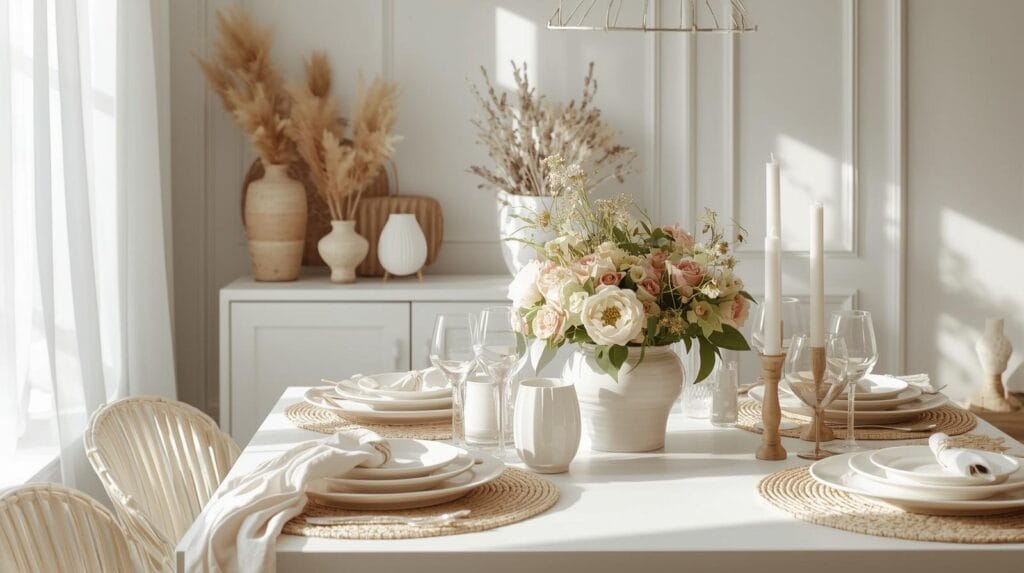
Designers achieve this look by selecting a few high-quality, expressive elements rather than overcrowding every surface. A single beautifully crafted vintage textile or a collection of hand-thrown ceramics carries far more visual weight than an entire shelf of mass-produced novelties. The resulting atmosphere feels light, airy, and grounded all at once.
Consider a project in a historic Chicago loft managed by designer Marcus Vance. The client wanted warmth but feared recreating a cluttered vintage shop look. Vance anchored the large dining area with a heavy, matte-black oak table, then surrounded it with woven cane chairs and an oversized neutral wool rug. The room instantly felt inviting, causing guests to linger long after dinner concluded because the environment offered visual rest rather than constant stimulation.
Harmonizing Clean Lines with Textured Materiality
The true power of this aesthetic comes from the deliberate tension between hard and soft elements. Straight architectural lines provide a frame that holds organic, irregular textures together. Without this structure, a room quickly descends into visual noise; with too much structure, it becomes clinical and cold.
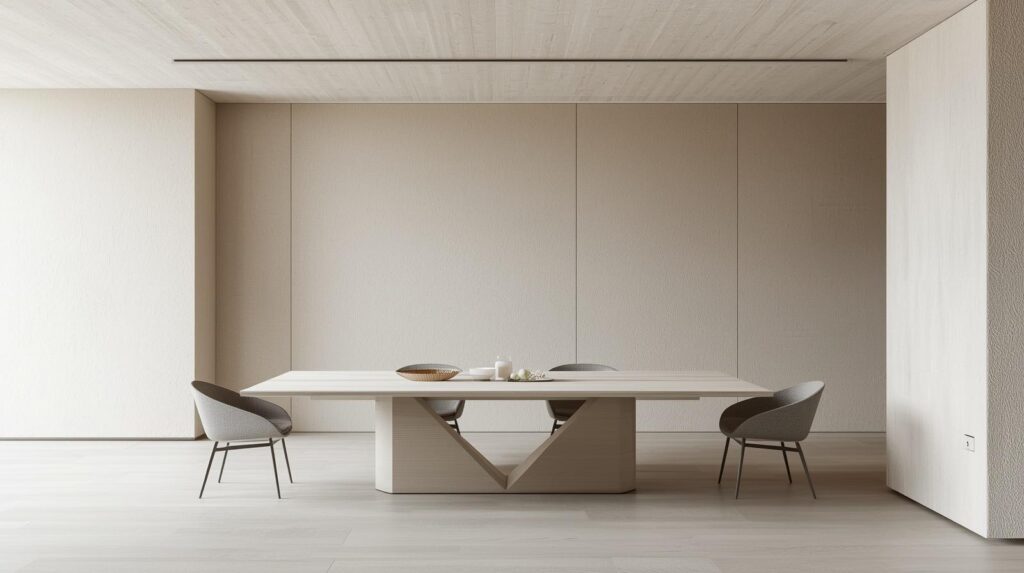
Placing a minimalist mid-century sideboard against a rough plaster wall creates an immediate sensory dialogue. The clean wooden edges of the furniture accentuate the natural variations in the wall finish, turning a simple storage piece into a focal point. This interplay between the geometric and the organic defines the modern approach to bohemian living.
Iron, steel, and powder-coated metals also play an important role in balancing softer materials. Slender black metal legs on dining chairs or a minimalist iron console table prevent woven accents from looking too rustic or rural. This grounding effect pulls the eclectic elements forward, making them look highly intentional.
Selecting the Central Anchor Table
The dining table serves as the physical and visual center of gravity for the entire room. Choosing a solid hardwood piece with a visible grain ensures that natural variations remain a prominent design element. Matte oil finishes show the genuine aging process of the timber, allowing the table to develop a unique story over years of use.
Shape influences the social dynamics of the room just as much as material choice. Oval and round tables naturally soften the traffic patterns within a room, making movement feel fluid and unhurried. They break up the rigid right angles common in standard rectangular floor plans, enhancing the relaxed, communal atmosphere.
The Art of Mismatched Seating
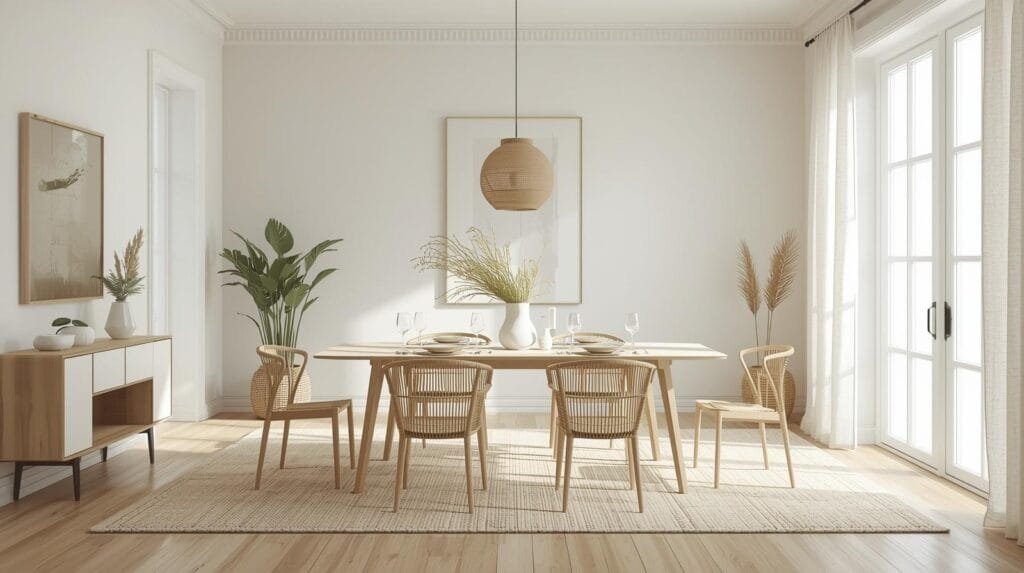
Uniform dining sets often lack the personality required for an authentic bohemian space. Introducing a varied selection of chairs breaks the formality of the room and suggests a collection assembled over a lifetime. Homeowners can pair two comfortable, upholstered host chairs at the ends of the table with lightweight rattan side chairs along the middle.
Successful mixing requires a thread of visual continuity to keep the arrangement looking deliberate. Keeping the seat heights uniform ensures physical comfort, while matching the wood undertones prevents the chairs from clashing. This approach turns functional seating into an eclectic, sculpture-like gallery around the table.
The Grounding Influence of Underfoot Textiles
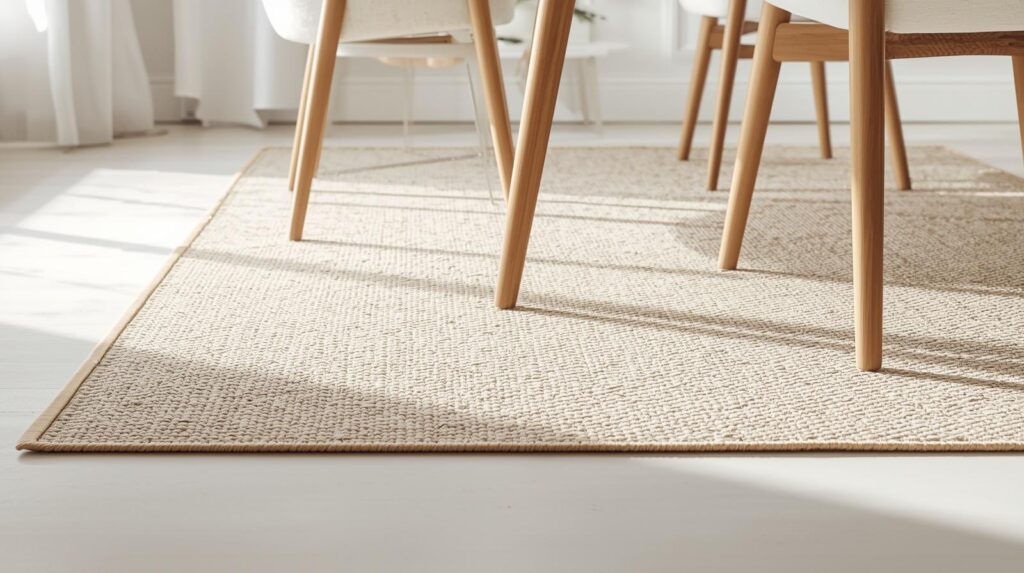
Flooring treatments dictate both the acoustic comfort and the visual boundaries of a dining area. A flatweave wool rug or a tightly woven sisal piece defines the dining zone within an open floor plan, anchoring the furniture group. These flat fabrics allow chair legs to slide easily while absorbing the sharp echoes of conversation and clattering silverware.
Thick shag rugs or high-pile textiles rarely work well beneath a dining table due to practical cleaning realities. Low-profile textiles with subtle geometric patterns or faded historic motifs introduce color without overwhelming the surrounding decor. The weave should feel substantial, providing a tactile transition from bare floors to the dining sanctuary.
Sizing the rug correctly is critical for maintaining an effortless feel. The textile must extend far enough beyond the table edges so that guests can pull their chairs back completely without dropping off the rug border. This detail prevents annoying tripping hazards and maintains the visual proportion of the entire furniture arrangement.
Sculpting Ambient Environments Through Layered Illumination
Overhead lighting must do more than simply illuminate a meal; it creates the emotional climate of the home. Large scale pendants made from bent bamboo, woven rattan, or frosted glass diffuse light outward, softening the features of the room. This central fixture acts as a visual crown, drawing the eye upward and emphasizing the height of the ceiling.
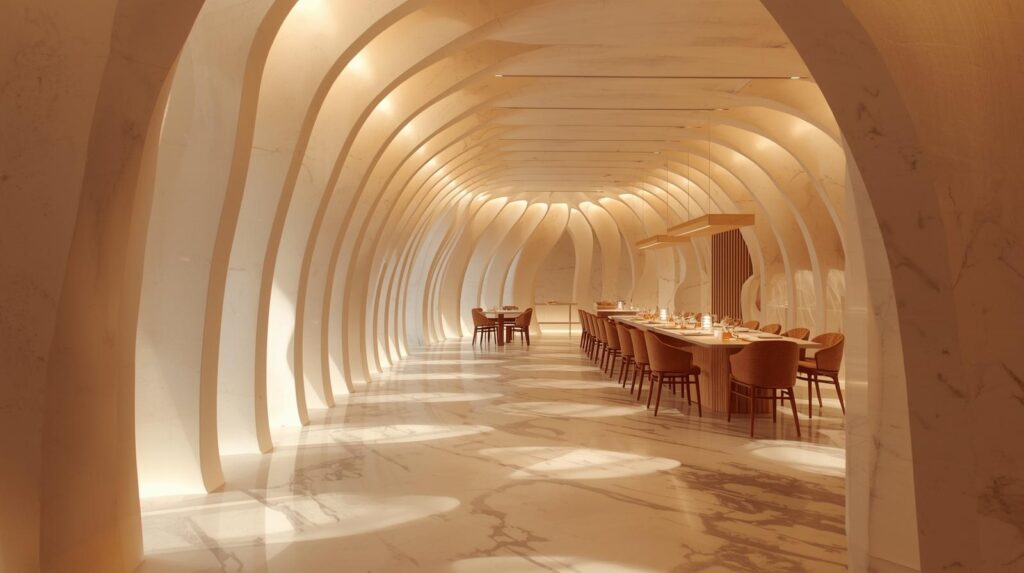
Relying on a single bright light source often leaves the corners of a room dark and uninviting. Positioning low-wattage wall sconces or placing a small ceramic lamp on a sideboard creates soft pockets of light around the perimeter. These secondary sources eliminate harsh shadows, mimicking the inviting glow of a candlelit tavern.
Installing dimmer switches provides immediate control over the mood of the room as evening progresses. Dropping the light levels allows the textures of the wood grains, woven fibers, and fabrics to soften, creating an intimate space where guests feel comfortable relaxing for hours.
Curation and the Organic Color Palette
The foundation of this aesthetic relies on warm, earthy neutrals rather than cold, clinical whites. Tones of ochre, terracotta, soft sage, and rich sienna provide a sophisticated backdrop that complements natural wood and woven materials. These hues absorb light beautifully, making walls feel protective and comforting.
Decorative objects should always emphasize hand-crafted form over industrial perfection. Hand-thrown stoneware pitchers, asymmetrical clay bowls, and matte-glazed vases look beautiful on open shelves or the center of the table. These items reflect the human touch, reinforcing the artisanal spirit of bohemian style.
Living plants introduce an indispensable vitality and movement into the corners of the dining space. Instead of crowding window sills with tiny pots, selecting one or two large statement plants creates a clean, dramatic impact. A mature rubber plant or a flourishing bird of paradise adds rich green color and sculptural interest to the room.
Common Oversteps in Eclectic Design
The most frequent styling error involves overdecorating, which can transform a relaxing dining room into a chaotic curiosity shop. Covering every wall with baskets and hanging macrame leaves the eye with no place to rest, causing subconscious fatigue. True design sophistication requires leaving some surfaces empty to let the hero pieces breathe.
Sacrificing structural quality for a trendy aesthetic is another common pitfall. Fragile vintage chairs or poorly constructed wicker benches might look appealing in photographs, but they fail during actual use. Furniture must always remain stable and functional, supporting guests comfortably without any wobbling or creaking.
A restoration project in a Santa Fe adobe home highlights the danger of sensory overload. The homeowner originally packed the dining room with authentic textiles, hanging clay pots, fringed macrame wall art, and patterned seat cushions. The room felt claustrophobic, and the heavy visual weight caused family members to avoid the space entirely. Designer Clara Reyes remedied the situation by removing eighty percent of the wall hangings, leaving only a single large flatweave rug and one dramatic ceramic vase on a side table. The space instantly transformed into a calm, functional area where the remaining pieces could actually be appreciated.
Maintaining the Tactile Dining Space
Living with natural materials means embracing the inevitable marks of daily life. Untreated timber tables will eventually collect faint water rings, and linen textiles will wrinkle after every wash. These small changes should not be viewed as damage; they represent the beautiful patina of a home that welcomes real use.
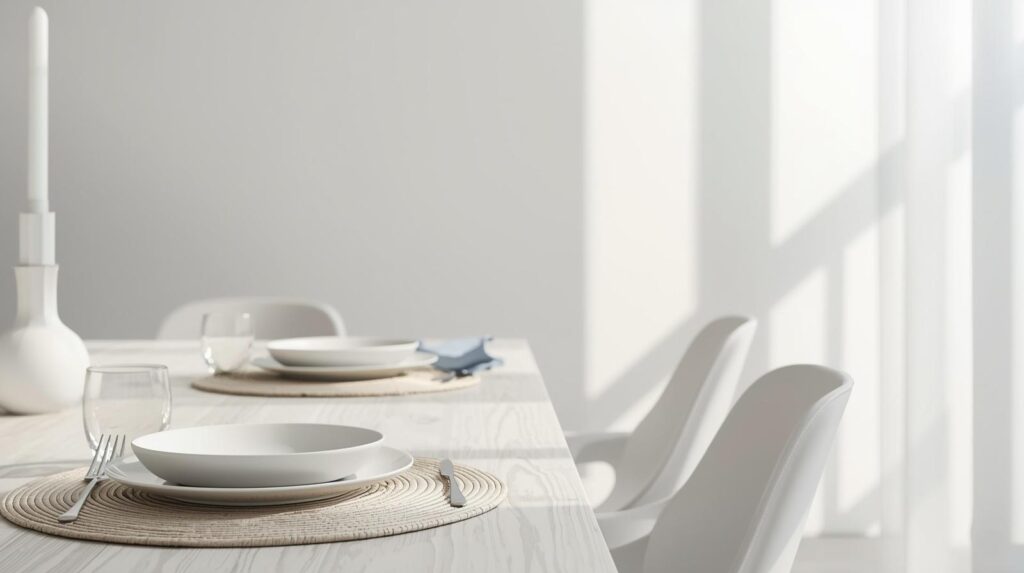
Consistent, gentle care keeps organic materials looking intentional rather than forgotten. Dusting intricate woven light fixtures and treating wooden surfaces with natural beeswax preserves their health and appearance over time. This simple upkeep ensures the space remains clean, fresh, and ready for unexpected company.
Thoughtful choices during the initial selection phase also reduce long term maintenance stress. Choosing fabrics treated with natural stain resistance or opting for high-quality flat weaves prevents minor accidents from becoming permanent disasters. This protective mindset allows you to enjoy the space completely without constant worry.
Wrap Up:
Crafting a sophisticated, relaxed dining space requires a mindful balance between structural modern furniture and rich, organic materials. By layering low-profile textiles, choosing textured lighting, and mixing seating styles, the room becomes a warm sanctuary for gathering. Focus on high-quality pieces that age gracefully and allow the design to develop over time. Ultimately, the most successful rooms feel assembled across years, offering genuine comfort and timeless style to everyone who sits at the table.
FAQs Section:
How do I mix different wood tones in a bohemian dining room?
Keep the undertones consistent, pairing warm woods like oak and walnut together while ensuring each piece has a distinct visual weight.
What type of rug is best for a high-traffic bohemian dining area?
A low-profile flatweave wool rug or a tightly woven jute piece handles moving chairs easily and cleans up quickly after meals.
How can I prevent my boho dining room from looking messy?
Limit decorative accessories to a few high-quality, large-scale items and leave plenty of negative space on walls and shelves.
Disclaimer:
The content shared by Fall Rugs is solely for research and informational purposes. Fall Rugs is not a professional interior design or home renovation consultancy, and the information provided should not be considered professional advice for home improvement or decor. All ideas and suggestions are based on current trends and general knowledge in the home decor industry.