
TL;DR
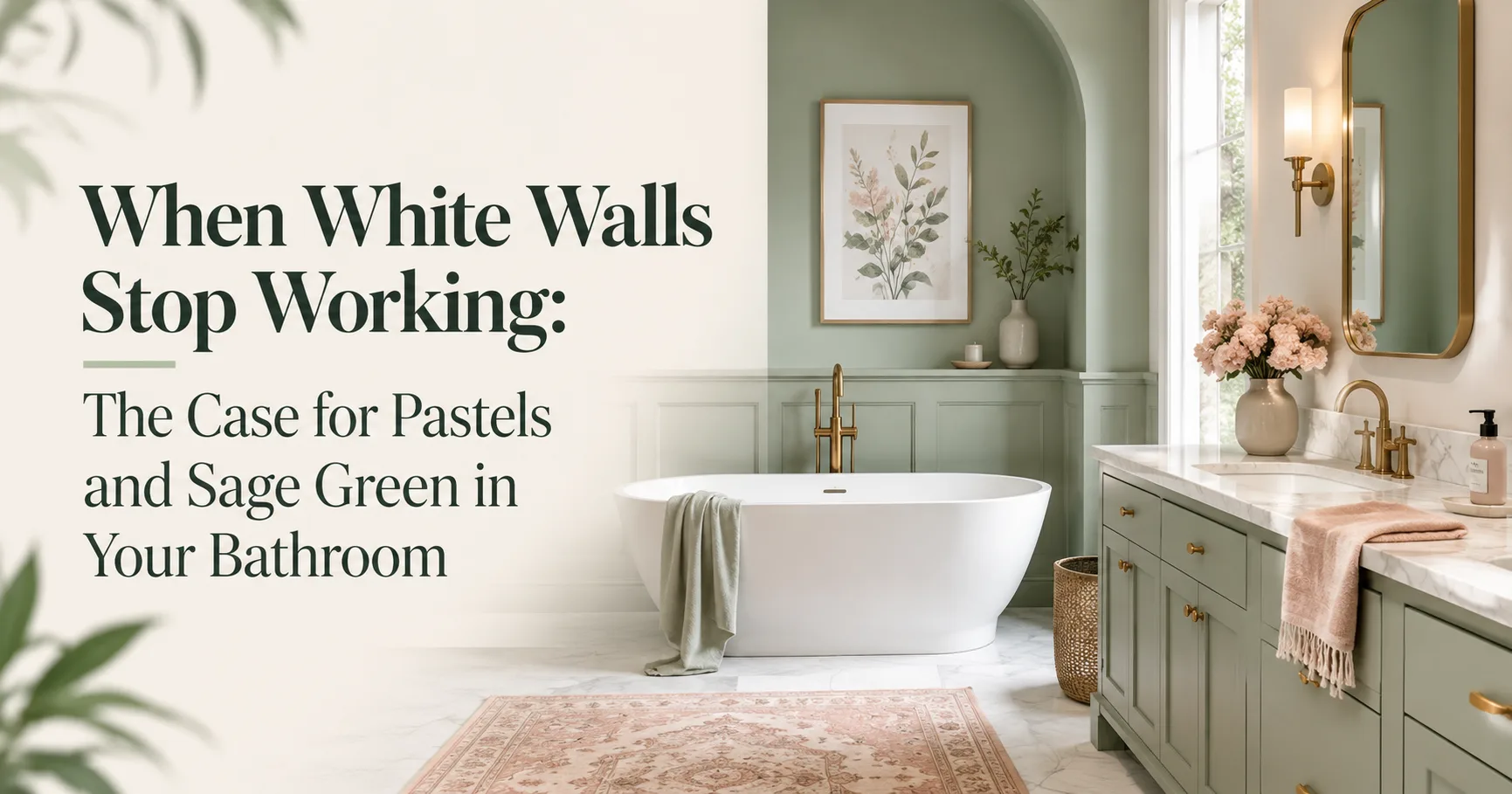
Soft pastels and sage green are replacing stark white as the go-to palette for bathrooms that feel calming rather than clinical. These colors work across tile, paint, textiles, and accessories without requiring a full renovation. The trick is layering warm neutrals alongside them so the space breathes rather than flattens.
Introduction
Has your bathroom started feeling more like a hospital corridor than a place to decompress? That clean, all-white finish that once felt fresh can quietly become the visual equivalent of silence in the wrong room. Soft pastels and sage green have been making serious inroads into bathroom design, not because they follow a passing trend, but because they do something white rarely achieves on its own: they create emotional warmth. This piece covers how these colors behave in real bathroom conditions, what to pair them with, and how to make the shift without gutting your space.
Why White Bathrooms Have Started Feeling Wrong
White bathrooms made sense when the goal was a perception of cleanliness. The logic was straightforward: bright, reflective surfaces would read as sterile and pure. For decades, builders and landlords defaulted to white tile, white grout, and white walls because it photographed well and offended no one.
The problem is that “offending no one” isn’t the same as pleasing anyone. White without warm contrast reads as flat under artificial bathroom lighting, which tends toward blue or harsh yellow depending on the bulb. The result is a room that functions well but feels completely stripped of personality. Interior designers started noticing this disconnect in client feedback long before it became a mainstream conversation.
Soft pastels, particularly dusty lilac, blush, warm sky blue, and pale sage, absorb and reflect light differently. They carry a slight gray or brown undertone that grounds them, preventing the kind of visual assault that saturated color can cause in a small room. They work with shadow and highlight rather than against them.
What Makes Sage Green the Anchor Color
Sage green occupies a specific tonal position that makes it unusually adaptable. It sits at the intersection of green, gray, and sometimes beige, which means it reads as neutral in some lights and richly colored in others. That ambiguity is its strength.
In a bathroom with north-facing or limited natural light, sage green holds its warmth rather than going cold the way certain blues or grays do. It shares a color family with eucalyptus, moss, and dried herbs, which carries an implicit association with calm and the outdoors without requiring any actual plant life in the room.
Taryn Melo, a homeowner in Bristol, repainted her compact terraced-house bathroom in a muted sage and described the change as the room “finally having a temperature.” Before, the white walls simply reflected whatever mood the lighting created. After, the sage absorbed some of that harshness and the room felt finished without feeling decorated.
Undertones Are Everything in Small Spaces
Sage green with a yellow undertone will feel warmer and earthier, leaning toward olive. Sage with a blue undertone feels cooler and cleaner, closer to eucalyptus. In bathrooms, the yellow-undertone variants tend to perform better under warm artificial lighting because they don’t shift toward gray or green-gray under LED bulbs the way cooler sages can.
Test any shade on a generous wall patch before committing. A 4×4 inch paint swatch tells you almost nothing in a bathroom, where the light changes completely between a morning shower and an evening bath. Watch how it reads at three different times of day.
When Sage Works as an Accent, Not a Base
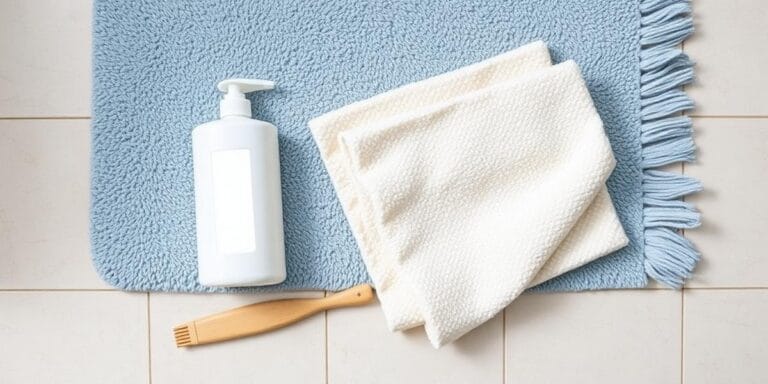
Not every bathroom can absorb a full sage green repaint, especially in rentals or rooms with very fixed tile choices. In those cases, sage works beautifully as a secondary presence: towels, bath mats, a painted vanity cabinet, ceramic accessories, or a single framed botanical print. This approach lets the color do its work without competing with existing finishes.
Layering Soft Pastels Without Creating Clutter
The word “pastel” gets used loosely, and that looseness causes real decorating mistakes. Pastels, properly understood, are hues mixed with significant white. They’re lighter and quieter than their parent colors. Pale pink is not the same as blush; powder blue is not baby blue. The ones that work in bathrooms are the muted, slightly gray-shifted versions, not the sweet, candy-bright versions you’d find in a children’s nursery.
A useful layering strategy pairs one soft pastel as the dominant textile color with sage green as a fixed architectural element or vice versa. If your walls are sage, bring in dusty blush through towels and a hand soap dispenser. If your walls are neutral or white, a sage green bath mat alongside a pale lavender candle and natural linen hand towels creates the same tonal conversation without paint.
The materials you choose matter as much as the colors. Linen, cotton waffle weave, unglazed ceramic, raw wood, and woven baskets all carry the natural, slightly imperfect texture that makes these soft palettes feel intentional rather than accidental. Glossy acrylic or synthetic chrome accessories tend to break the mood.
Avoiding the Flat Pastels Problem
The main failure mode with pastel bathrooms is going too light on contrast. When every surface is soft and similar in value, the room loses definition and reads as washed out. One grounding element is always necessary: a deep-toned wood vanity, charcoal grout lines, matte black hardware, or a dark-framed mirror.
Priya Suresh redesigned her apartment bathroom in Mumbai using pale sage wall paint with dusty terracotta accessories, a dark walnut shelf, and matte brass taps. The terracotta read warm against the cool sage, and the dark wood stopped the whole thing from drifting into formlessness. The contrast did what contrast always does: it gave the lighter colors somewhere to breathe against.
Combining Sage Green With Other Colors
Sage green pairs well with a specific set of neighbors. Warm white and off-white (not stark cool white) work as the dominant neutral. Dusty rose and blush add femininity without becoming sweet. Pale terracotta brings an earthy Mediterranean warmth. Soft ochre or warm sand reads as a natural bridge between the green and any wood tones in the space.
Colors that tend to conflict with sage include anything too saturated or too cool. Bright turquoise fights with it. Royal blue competes. Hot pink overpowers. Stark gray-white can make even the warmest sage feel cold by comparison, which is why the shift away from pure white matters so much when working with this palette.
The relationship between sage green and natural materials deserves its own mention. Rattan, bamboo, solid wood, linen, and stone all occupy the same tonal family. They share the quality of being slightly imperfect, organic, and warm in a way that manufactured materials rarely replicate. Placing a sage-painted cabinet next to a raw wood shelf creates a visual harmony that doesn’t require explanation: the eye accepts it immediately.
Practical Application by Bathroom Type
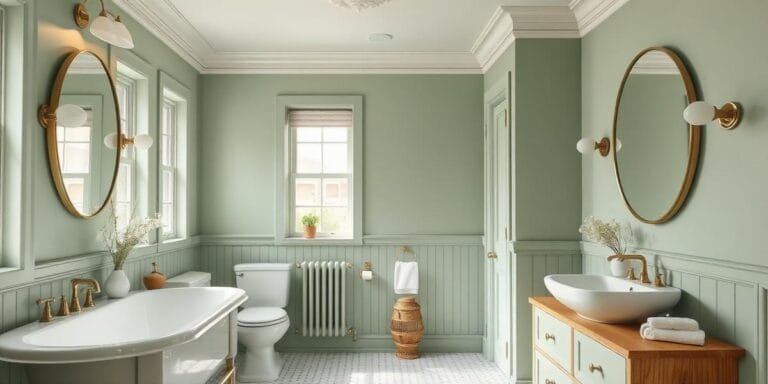
Small bathrooms need restraint. One feature wall in sage, or consistent sage accessories against a light neutral, works better than wrapping all four walls. The eye needs somewhere to rest.
Large master bathrooms can handle more. Full sage walls with warm white trim, linen curtains if there’s a window, and a palette of two or three soft pastels in the textiles create a spa-adjacent atmosphere that pure white never achieves. Some designers carry the sage onto the lower half of the wall only, using a picture rail or painted dividing line, which adds architectural interest without requiring tilework.
Shared family bathrooms benefit from a more neutral base with pastel accents that are easy to swap seasonally. This way the palette doesn’t feel locked in, and the room adapts to different users and moods without a repaint.
Wrap Up
Stark white bathrooms served a purpose, but soft pastels and sage green serve a better one: they make the room feel like a deliberate, human space rather than a clean slate waiting to be decorated. Sage green’s tonal flexibility lets it function as both anchor and accent depending on your constraints. Pastels work when they’re muted, layered with contrast, and supported by natural materials. The shift doesn’t require a renovation, only a more considered approach to color and texture.
FAQs
Does sage green work in a bathroom with no natural light?
Yes, but the undertone matters. Choose a sage with a warm yellow or olive undertone rather than a cool blue-based one, since it will hold its warmth better under artificial lighting without shifting toward gray.
What colors go with sage green in a small bathroom?
Warm off-white, dusty blush, soft terracotta, pale ochre, and natural wood tones all pair well. Avoid cool grays and saturated brights, which tend to fight with sage’s muted quality.
Can I add pastels to a bathroom without repainting?
Absolutely. Towels, bath mats, ceramic accessories, candles, and small-framed art are enough to introduce a pastel palette. A sage green bath mat or blush towel set changes the room’s mood without touching a single wall.
Disclaimer
This content shared by Fall Rugs is solely for research and informational purposes. Fall Rugs is not a professional interior design or home renovation consultancy, and the information provided should not be considered professional advice for home improvement or decor. All ideas and suggestions are based on current trends and general knowledge in the home decor industry.