

TL;DR
Choosing bedroom window coverings requires balancing light blockout, thermal efficiency, and aesthetic design. Selecting heavy three-pass fabrics or layered liners prevents disruptive street light from ruining circadian rhythms. Proper installation close to the ceiling ensures total light exclusion.
Introduction
Why does a tiny sliver of morning light always find your eyes right before your alarm rings? Streetlights and early sunrises constantly disrupt deep sleep cycles, leaving many people chronically tired. Selecting the right window panels resolves this issue by blocking light and absorbing external street noise. Readers will discover how to choose fabrics, calculate measurements, and install panels to secure a dark resting space.
Material Science and Light-Blocking Levels
Heavy window panels utilize specialized construction techniques to prevent light penetration. True blockout options use a thick acrylic layer sprayed onto the backing, while room-darkening styles rely on dense dark threads woven between lighter face yarns. Homeowners frequently confuse these terms, purchasing lightweight linen that lets morning glare seep through thin threads.
Testing fabrics before buying saves time and money. Holding a phone flashlight directly behind a sample in a showroom reveals the weave density instantly. High-quality velvet or synthetic polyester blends absorb light waves, while natural cotton panels require an added liner to achieve the same dark environment during bright summer months.
Understanding the construction behind these fabrics helps buyers avoid purchasing ineffective decorative panels. Manufacturers often list products as light-filtering, room-darkening, or blackout. True light exclusion requires specific layered linings or dense chemical backings that physically stop light photons from passing through the woven threads.
Understanding Fabric Coatings
Many functional panels rely on acrylic backings applied in multiple passes. Single-pass backing dampens glare but lets light shape the fabric, whereas three-pass backing blocks light completely. This thick coating acts as a physical shield, ensuring that no streetlights penetrate the bedroom.
The Role of Fiber Choice
Natural fibers like linen and cotton drape beautifully but possess a loose weave. Synthetic polyester fibers offer tight weaves that block light naturally without requiring heavy chemical backings. Combining a synthetic face fabric with a thick lining provides the best balance of aesthetic appeal and functionality.
- Three-pass backing uses white acrylic layers sandwiching a dark inner layer to block 100 percent of light rays.
- Two-pass coatings block roughly 80 to 90 percent of incoming daylight, leaving a soft glow on the fabric surface.
- IKEA Majgull polyester panels offer excellent budget light blocking for under fifty dollars per pair.
- Pottery Barn Emery linen collections feature heavy, woven liners that drape elegantly while keeping rooms dark.
Proper Measurement and Installation Tactics
Light leaks around the edges of window frames ruin the dark environment required for deep sleep. Standard rods hold panels several inches away from the wall, allowing sunbeams to bounce off the ceiling and floor. Upgrading to specialized hardware and altering your hanging height corrects these common geometric flaws immediately.
Experienced interior decorators recommend hanging rods six inches above the window frame and extending them past the sides. This placement allows fabric to gather away from the glass when opened, maximizing daytime light while sealing the edges during the night. The correct strategy completely alters how a bedroom feels throughout the year.
Accurate measuring prevents the common mistake of buying panels that are too short or too narrow. Curtains must puddle slightly or kiss the floor to prevent light from bouncing off reflective floorboards. Measuring from the top of the rod to the floor ensures a perfect fit that seals the room from external light sources.
Combating Light Leakage
Using a standard straight curtain rod creates a gap on both sides of the window. Curved wrap-around rods pull the fabric flush against the drywall to seal those side openings. This simple hardware adjustment eliminates annoying vertical light lines along the wall.
Hanging Styles and Header Types
Grommet-top panels are easy to slide but let small circles of light escape through the metal rings. Rod-pocket or back-tab designs cover the entire rod, offering superior light exclusion at the top of the window. Pinch-pleated panels mounted on rings with a ceiling track offer the tightest seal possible.
- French return rods curve directly back to the drywall to eliminate side light leakage.
- Adding ten to twelve inches to the window width ensures the fabric wraps comfortably around the frame.
- Pinch pleat headings pull the fabric close to the rod, reducing the gap at the top.
- West Elm pewter finish curved rods cost around eighty dollars and block peripheral light leaks.
Thermal Insulation and Noise Dampening
Thick window coverings do more than block streetlights; they create a barrier against seasonal temperature fluctuations and street noise. Heavy materials trap a layer of air between the cold window glass and the warm bedroom air during winter nights. This insulation reduces draftiness and lowers monthly heating costs significantly.
Sleepers living in noisy urban centers benefit from the dampening effects of dense textiles. Clara, a night-shift nurse in Seattle, installed heavy velvet panels to block the blinding morning sun and muffle traffic sounds. The dense fabric structure absorbed high-frequency city noises, turning her room into a peaceful midday retreat.
The energy savings from high-quality window treatments often offset the initial purchase price within a few seasons. Standard single-pane glass lets heat escape easily, but a thick barrier of insulated fabric keeps interior temperatures stable. This thermal control keeps bedrooms cooler during hot summer days and warmer during freezing winter nights.
Sound Absorption Dynamics
Porous, heavy fabrics like velvet contain millions of tiny air pockets that catch sound waves. This physical structure diffuses street noises, car engines, and neighborhood chatter before they vibrate the glass. While not completely soundproof, thick drapery softens the acoustic environment of a bedroom.
- Multi-layered drapes cut down heat loss through window glass by up to 25 percent during winter.
- Dense velvet and heavy chenille fabrics absorb echoing sound waves inside sparse bedrooms.
- Adding a separate thermal liner to existing lightweight curtains protects delicate front fabrics from sun damage.
- Acoustic tests show that heavy drapery reduces ambient outdoor noise levels by several decibels.
Styling Heavy Panels in Modern Bedrooms
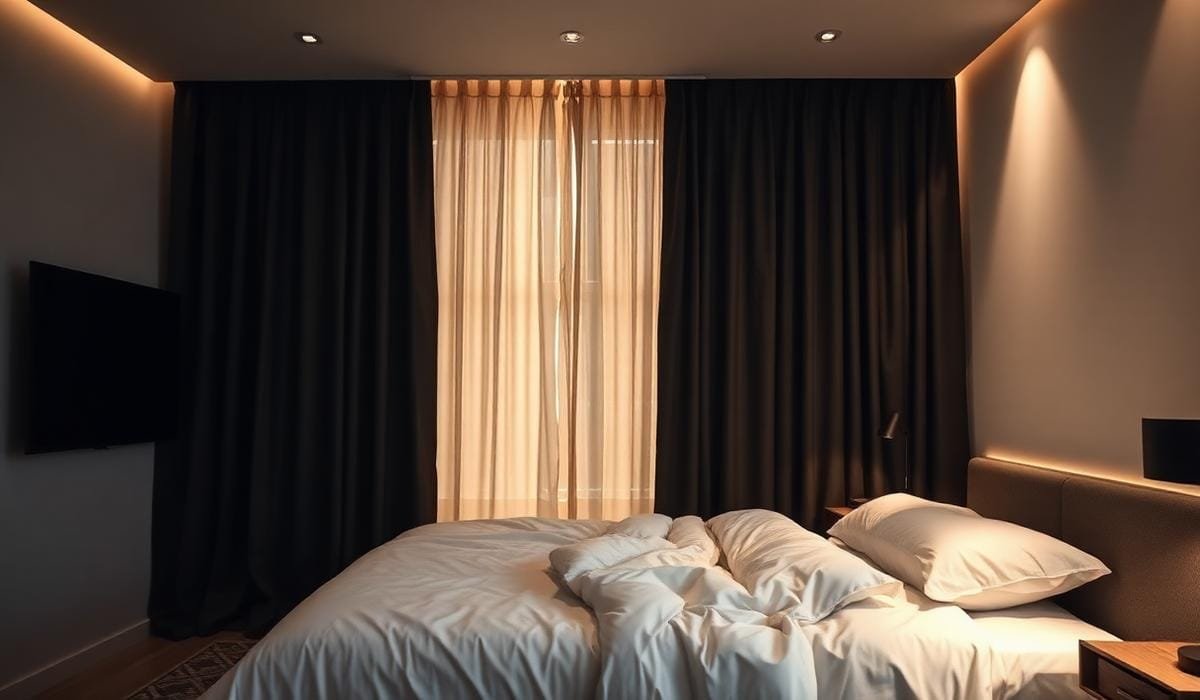
Achieving total darkness does not mean sacrificing bedroom design or opting for institutional-looking fabrics. Homeowners can layer sheer, lightweight curtains underneath heavy panels to enjoy soft daylight during the afternoon while securing darkness at night. This double-rod configuration offers maximum flexibility for lighting control.
Selecting the right color palette keeps a small bedroom from feeling cramped or cave-like. Light-colored fabrics with integrated dark linings offer the best of both worlds: a bright, airy aesthetic when open and total darkness when closed. This design choice prevents heavy fabrics from dominating the bedroom visual space.
Choosing high-quality hardware elevates the entire room design while supporting heavy fabrics. Plastic or thin metal rods will sag under the weight of three-pass lined panels, causing gaps to form in the middle. Sturdy steel or solid wood rods maintain their shape and keep the panels hanging perfectly straight.
Balancing Color and Light
Dark colors absorb light but can make a small bedroom feel visually heavy or dated. White, cream, or soft gray fabrics with hidden black interlinings keep the wall looking clean and modern. This combination satisfies design goals while delivering excellent room-darkening performance.
- Double-rod systems allow users to hang decorative linen sheers behind heavy light-blocking panels.
- Light cream and ivory panels with thermal backing preserve a modern, minimal aesthetic.
- Heavy brass or iron rods with center support brackets prevent heavy drapery from sagging.
- Layered textures, such as velvet panels over bamboo shades, create depth in bedroom design.
Maintenance and Longevity of Darkening Fabrics
Heavy panels collect dust and allergens over time, requiring regular maintenance to keep bedroom air clean. Coated backings cannot go into standard washing machines without melting or cracking the protective layers. Choosing the right material determines whether you face expensive dry-cleaning bills or enjoy simple home care.
Modern manufacturers design beautiful fabrics that mimic high-end linen while remaining fully washable. Checking care labels before purchasing prevents ruinous laundry mistakes. Hanging damp panels back on their hooks allows gravity to pull out wrinkles naturally, avoiding the need for tedious ironing.
Proper maintenance prevents the synthetic backings of insulated curtains from deteriorating over time. Intense sun exposure dries out rubberized coatings, causing them to flake and peel if left uncleaned. Dusting the tops of the folds prevents dirt buildup from degrading the delicate woven fibers.
Safe Cleaning Practices
Washing coated panels incorrectly can melt the acrylic layer or stick the fabric together. Using the gentle cycle with cold water and mild detergent protects the integrity of the light-blocking backing. Air drying is essential, as the high heat of a commercial dryer quickly destroys thermal coatings.
- Vacuuming panels weekly with a soft brush attachment prevents dust from embedding in the fibers.
- Ruggable offers washable drapery lines designed to survive standard home washing machines.
- Acrylic coatings require cool water washes and line drying to prevent the backing from peeling.
- Dry cleaning remains the safest method for delicate silk and heavy velvet window treatments.
Wrap Up
Investing in the right bedroom window treatments directly improves sleep quality and daily energy levels. By selecting dense fabrics, installing wrap-around rods, and maintaining the material, you secure a dark and quiet room. A well-designed window setup keeps the space comfortable through every season. Prioritize proper measurements to enjoy uninterrupted rest tonight.
FAQs Section
What is the difference between blackout and room darkening curtains?
Blackout curtains block 100 percent of incoming light using thick acrylic coatings or dense inner linings, while room darkening curtains block 80 to 90 percent of light to create a soft, dimmed atmosphere.
How do I stop light leaking from the top of my curtains?
Hang your curtain rod several inches higher than the window frame or install a solid cornice board to block light from escaping over the top of the panels.
Can you wash blackout curtains in a washing machine?
Some machine-washable options exist, but panels with heavy acrylic coatings must be washed on a delicate, cold cycle and hung to dry to avoid melting or peeling the backing.