

TL;DR
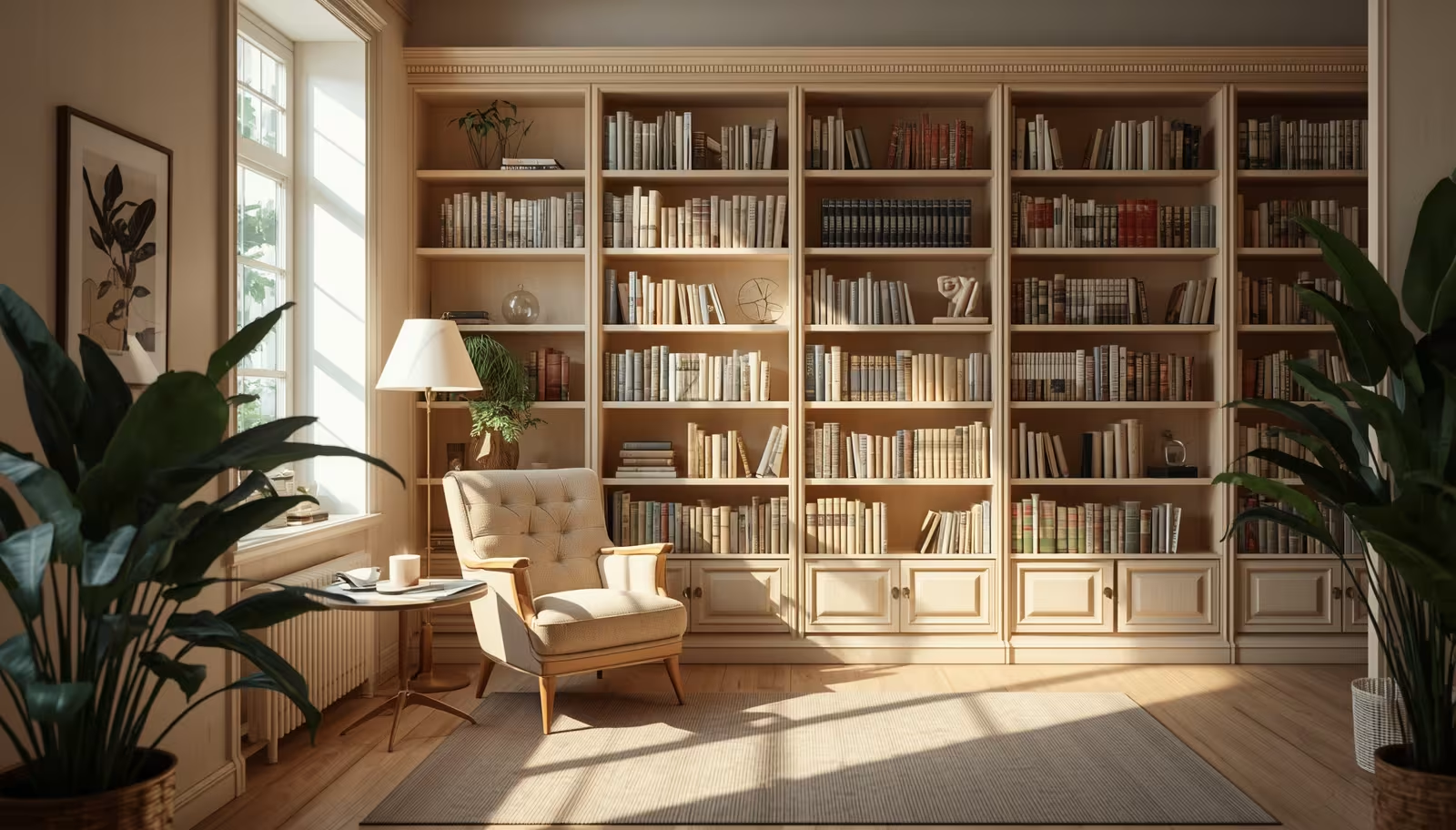
Creating a dedicated reading retreat requires balancing precise acoustic controls, tailored task illumination, and ergonomic seating choices. Successful execution relies on isolating the space from household traffic while managing environmental factors like humidity and light exposure. This systematic approach ensures your books remain preserved while providing an uninterrupted environment for deep cognitive focus.
Introduction
Can a physical space directly influence how deeply you comprehend and enjoy written words? Experienced readers know that a poorly lit corner or an uncomfortable chair breaks immersion faster than an external interruption. Creating a literary retreat involves much more than pushing a chair against a bookshelf and calling it a day. This analysis examines the precise structural and design decisions required to build an environment optimized for extended contemplation.
The connection between environmental design and mental focus requires careful planning of physical factors. When layout choices prioritize physical comfort, the brain drops its background vigilance. This state of relaxation permits a deeper connection with complex material. Our goal involves transforming a standard room into a personal library that functions without friction.
A successful design speaks to the senses through quiet coordination. By controlling light levels, sound bounce, and physical posture, you establish a space that welcomes deep thought. Let us look at the structural choices that separate standard room decoration from true architectural curation.
1. Spatial Geometry and Furniture Architecture
Designing a personal sanctuary demands an initial assessment of floor layout and physical scale. Miscalculating the relationship between a room’s boundaries and its furniture pieces frequently results in a cramped, distracting environment. True comfort emerges when the physical body settles into a state of neutral support, allowing the mind to focus entirely on the text.
Thoughtful layouts allow the eye to rest naturally when looking up from a page. If furniture arrangements feel cluttered, mental fatigue sets in much faster during long study sessions. Setting up a dedicated room means matching the dimensions of the furniture to the architectural frame of the space.
Anatomical Demands of Seating
The selection of a primary chair dictates the longevity of every reading session. A retrospective look at residential design reveals that standard accent chairs often lack the lumbar support necessary for multi-hour retention. When designing a home library for an avid collector in Chicago, the design team replaced standard deep cushions with a molded leather chair featuring a fifteen-degree pitch. This angle redistributes body weight across the sacrum, eliminating neck strain during long periods of analytical study.
Selecting textiles for this central furniture piece requires equal diligence. High-pile synthetic fabrics often retain body heat, causing physical restlessness after an hour of immobility. Natural linen or top-grain leather offers breathability, which helps maintain a steady skin temperature. The physical tactile response of the material influences psychological comfort, grounding the reader in their environment.
Sightlines and Spatial Orientation
Placing the primary seating arrangement away from structural doorways creates a psychological barrier against household noise. A chair positioned directly in a sightline to a hallway forces the brain to remain vigilant to movement. Angling the seating configuration toward a blank wall or a window viewing nature shifts internal focus away from domestic duties.
Consider the spatial footprint of ancillary pieces like side tables and footrests. A common mistake involves using small tables that require bending sideways to reach a teacup or notepad. Raising the table surface to match the height of the armrest prevents spinal twisting. This alignment preserves physical energy and maintains the reader’s focus on the page.
2. Lighting Architecture and Optical Health
Improper illumination causes subconscious fatigue, manifesting as eye strain or unexplained headaches long before a reader finishes a chapter. Achieving optical balance requires separating illumination types into distinct layers that serve separate functional purposes. Relying solely on a central ceiling fixture floods the room with flat light, casting shadows directly across the book.
Good lighting design respects the natural rhythms of day and night. The eyes require different levels of light depending on the time and the paper type. Balancing ambient glow with focused task illumination forms the basis of a comfortable reading room.
Direct Task Illumination
Direct illumination must fall over the shoulder rather than directly from above or frontally. Front-facing fixtures reflect glare off printed paper, which quickly exhausts the optical muscles. An adjustable brass floor lamp utilizing a warm emission spectrum offers the ideal target illumination. Aim for an output of five hundred lumens with a color temperature hovering around twenty-seven hundred Kelvin.
This specific warmth mimics early evening light, which helps prevent optical fatigue. Dimmer controls allow for real-time adjustments as natural exterior light fades. This control proves useful when switching between high-gloss art textbooks and standard matte paperback finishes.
Ambient Balancing and Glare Mitigation
Relying entirely on a single spotlight in a dark room creates high visual contrast. This extreme contrast forces the pupils to adjust continuously whenever the gaze drifts from the page. Soft ambient lighting, such as low-wattage wall sconces or LED strip lights hidden behind cabinetry molding, softens these sharp transitions.
Natural daylight presents another challenge during morning hours. Direct sunlight degrades paper quality and bleaches book spines over time. Installing sheer linen curtains or UV-blocking window films filters harsh rays into soft, indirect illumination. This protection secures the physical archive while preserving comfortable reading conditions throughout the day.
3. Acoustic Insulation and Sound Dampening
Silence is not merely the absence of sound; it is a structural choice achieved through deliberate material selection. Internal household noises like spinning laundry appliances or distant televisions disrupt the deep focus required for complex literature. Building a quiet room requires identifying how sound travels through walls and floors.
Controlling sound requires an integration of dense barriers and soft, absorbing surfaces. Hard angles reflect high frequencies, while open spaces let noise pass through without resistance. Addressing these paths creates a true acoustic shield.
Structural Density and Textile Interventions
Sound waves bounce off hard, flat surfaces, amplifying minor noises into echoes. Bare drywall and exposed hardwood flooring convert a quiet room into a reverberation chamber. Covering sixty percent of the floor surface with a thick wool carpet immediately absorbs mid-frequency vibrations.
Wall spaces benefit from dense floor-to-ceiling cabinetry, which serves as a secondary barrier against neighboring rooms. A wall lined with solid wood shelving and filled with books acts as a sound diffuser. The uneven surfaces of varying book sizes break up acoustic waves rather than bouncing them back into the seating area.
Boundary Sealing and Opening Modifications
Standard interior doors feature a hollow core that allows sound to pass through easily. Replacing these with solid-core wood alternatives reduces incoming noise by half. Adding heavy-duty weather stripping along the frame stops sound leaks through minor cracks.
Windows require similar structural scrutiny if the home sits near a busy thoroughfare. Heavy velvet drapes lined with blackout material serve a dual purpose by blocking external streetlights and deadening traffic noise. A renovation project in a noisy urban townhome demonstrated that replacing single-pane glass with acoustic glazing lowered ambient sound levels by fifteen decibels.
4. Shelving Mechanics and Collection Integration
Organizing a book collection requires an approach that goes beyond basic storage requirements. Structural integrity must take priority, as a single running foot of books can weigh up to thirty pounds. Poorly constructed shelves sag over time, ruining the visual lines of the room and endangering the collection.
The choice of shelving style affects both spatial flow and the preservation of materials. Built-in units provide structural stability but limit future room reorganization. Freestanding modular cases offer flexibility, though they require careful anchoring to prevent tipping hazards.
Load-Bearing Specifications and Materials
Opt for solid hardwoods like oak, walnut, or high-density plywood rather than standard particleboard. Shelves spanning more than thirty-two inches require middle supports to prevent bowing under heavy weight. Securing the entire shelving framework directly to the wall studs ensures structural stability.
Adjustable shelving tracks offer long-term flexibility as the collection grows. Larger reference books and art folios require more vertical clearance than standard fiction novels. Planning for a baseline depth of twelve inches accommodates most formats without wasting valuable floor space.
Spatial Breathability and Visual Curation
A completely packed room can feel visually overwhelming, creating a sense of clutter rather than calm. Leaving twenty percent of the shelf space open allows the room to breathe. Use these open areas to display small sculptures, family heirlooms, or framed artwork.
Sorting books by genre or binding material alters the psychological mood of the space. An organic arrangement based on subject matter reflects a scholar’s library, while sorting by size creates clean lines. Keep frequently read volumes at eye level to avoid bending or reaching during study hours.
Wrap Up:
Designing a literary retreat requires focusing on ergonomic support, proper lighting control, and effective sound dampening. When these elements work together, the physical room fades into the background, leaving only the text. Prioritizing quality materials ensures long-term comfort and preserves your collection for years to come. Your ideal sanctuary is a long-term investment in your personal focus and peace of mind.
FAQs Section:
What is the ideal wall color for a dedicated reading room?
Deep, matte shades like sage green, navy blue, or charcoal reduce light reflection and create a calming, low-contrast background that helps your eyes focus on the page.
How can I create a reading space in a very small apartment?
Isolate a quiet corner using a tall bookcase as a divider, install a dedicated wall-mounted swing-arm lamp, and add a comfortable chair with built-in storage.
Which type of flooring works best for a quiet library room?
Cork flooring or thick hardwood covered by a dense wool rug offers the best sound absorption and thermal warmth for long reading sessions.
Disclaimer:
This content shared by Fall Rugs is solely for research and informational purposes. Fall Rugs is not a professional interior design or home renovation consultancy, and the information provided should not be considered professional advice for home improvement or decor. All ideas and suggestions are based on current trends and general knowledge in the home decor industry.