
TL;DR
Boiling water, white vinegar, or a bleach-and-water solution kills maggots in a trash can within minutes. Sealing food waste in bags before disposal and keeping the lid tightly closed stops blowflies from laying eggs in the first place. Cleaning the bin weekly during summer cuts recurrence dramatically.
Introduction
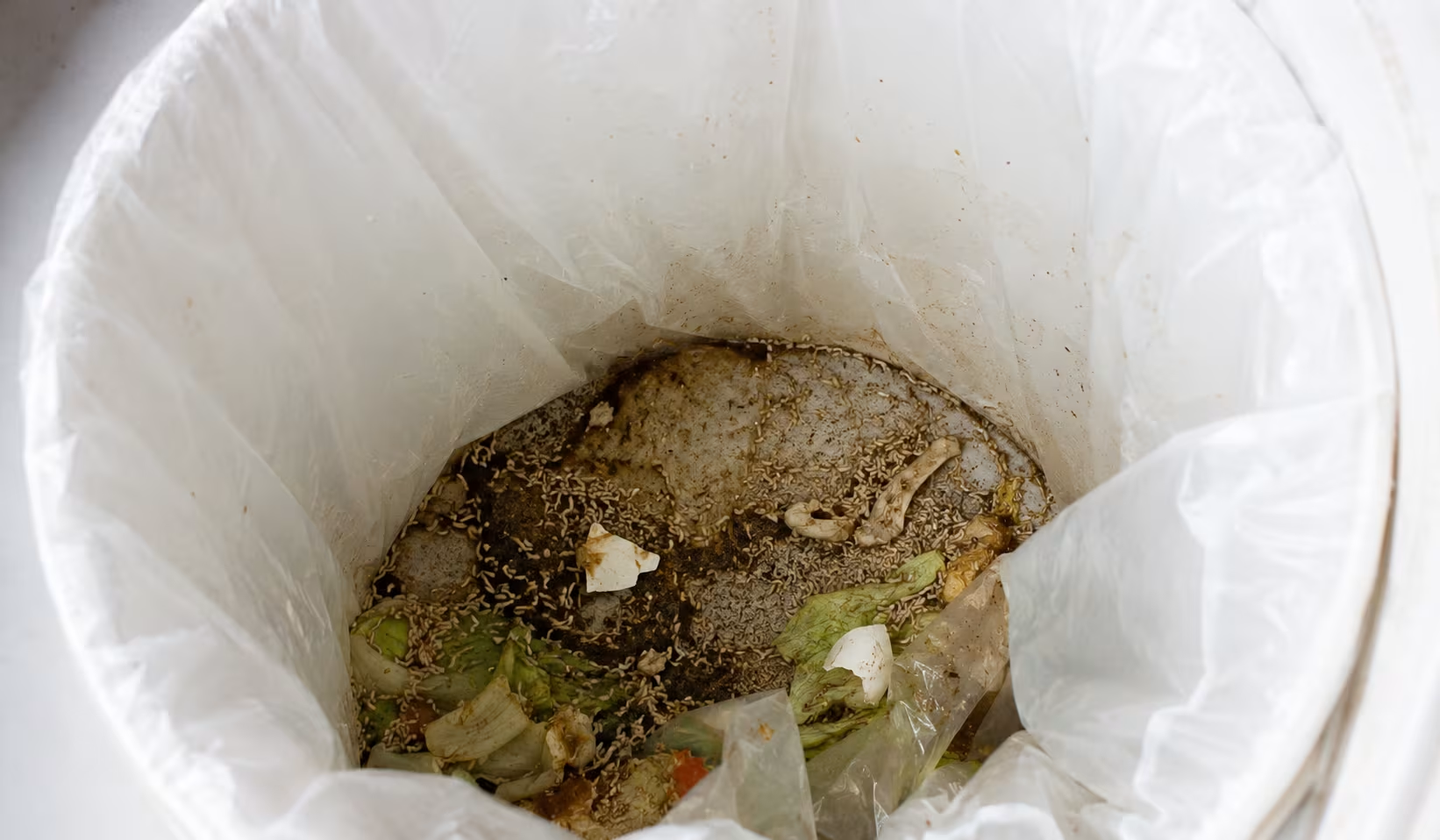
You lift the trash can lid and something moves. Hundreds of small, pale larvae are writhing through the waste, and the smell hits you a second later. Maggots in a trash can are one of the most viscerally unpleasant household problems, but they are also one of the most solvable. This article covers which products and methods actually kill maggots on contact, how to clean and deodorize the bin afterward, and what changes to your disposal habits will prevent blowflies from choosing your bin as a breeding site again.
Why Maggots Appear in Trash Cans
Maggots do not appear from nowhere. They are the larval stage of flies, most often the common blowfly (Calliphora vomitoria) or the housefly (Musca domestica). A female blowfly can lay between 150 and 200 eggs in a single batch, and those eggs hatch in as little as 8 to 20 hours in warm weather. Temperatures above 59°F (15°C) are enough; in a sealed outdoor bin on a summer afternoon in Phoenix or Dallas, conditions become near-ideal within an hour of the lid being lifted.
The trigger is exposed organic matter. Meat scraps, fish packaging, soiled diapers, and uncovered food waste are the primary attractants. A bin with a broken or loose lid in July is essentially an open invitation. Research from the UK’s National Fly Control Network found that bins not cleaned for two or more weeks during summer months were significantly more likely to harbor fly larvae than those cleaned weekly.
Knowing the source makes the fix logical rather than reactive. Kill the larvae, remove the food source, and break the egg-laying cycle. Those three steps together are what actually solve the problem long-term.
Methods That Kill Maggots on Contact
Boiling Water
The most immediate method requires nothing you do not already have. Boiling water poured directly onto maggots kills them within seconds by destroying their soft-bodied tissue through heat. A standard kettle holds roughly 1.7 liters, which is enough for a small domestic bin. For a large 64-gallon outdoor wheeled bin, you may need two to three full kettles.
Pour slowly to ensure coverage across the base and lower walls where larvae cluster. The water cools quickly on contact with a cold plastic surface, so speed matters. Tilt the bin slightly so pooled water reaches every corner. After treatment, let the bin drain fully before moving to the cleaning stage.
White Vinegar and Salt
A solution of undiluted white vinegar with a generous handful of table salt poured over maggots is a reliable low-cost option. Vinegar’s acetic acid content (typically 5% in household brands like Heinz) disrupts the larvae’s moisture balance, while salt dehydrates them further. Results take slightly longer than boiling water, usually 5 to 10 minutes, but the method works without heat and without harsh chemicals.
This approach suits households with young children or pets where bleach exposure is a concern. Spray or pour the solution, wait, then rinse. The smell of vinegar dissipates within an hour of rinsing with clean water.
Bleach Solution
A diluted bleach solution (one part household bleach such as Clorox Regular Bleach to six parts water) poured into the bin kills maggots and disinfects simultaneously. Do not use bleach at full concentration; it damages HDPE plastic bins over time, causing surface cracking that creates rough patches where bacteria and fly eggs lodge more easily in future.
Wear rubber gloves. Work outdoors or in a well-ventilated area. Pour the solution in, let it sit for 10 minutes, agitate with a long-handled brush, then flush the bin thoroughly with a garden hose. Undiluted bleach on skin causes chemical burns, so this step is non-negotiable.
Diatomaceous Earth
Food-grade diatomaceous earth (DE), sold by brands like Harris or Safer Brand, is a powdered silica made from fossilized algae. Sprinkled over live maggots, it lacerates their outer cuticle and causes dehydration within 12 to 24 hours. It is slower than heat or acid, but it has a secondary benefit: a light dusting left on the dry bin floor after cleaning creates a hostile surface for any eggs that hatch later.
DE is non-toxic to humans and pets at food-grade concentrations, making it useful inside bins shared between outdoor areas and kitchen spaces in apartments or narrow urban properties.
Cleaning the Bin After Treatment
Killing the maggots is step one. A contaminated bin still holds the organic residue, fly eggs you cannot see, and the odor compounds that attract more flies. Skipping this step is why so many people deal with the same problem two weeks later.
Rinse the bin with a garden hose to flush out dead larvae and loosened waste. Then scrub the interior walls and base with a stiff-bristled brush and a cleaning solution. A mixture of dish soap and hot water works for routine cases. For heavy infestations or bins that have not been cleaned in months, use the diluted bleach solution described above or a commercial enzyme-based bin cleaner like the ones sold under the Eco-Germ or BioWash labels in the UK and Australia.
Pay attention to the bin lid’s interior surface, the rim channels, and the hinge area. Blowflies often deposit eggs in these recessed spots because the lid protects the eggs from rain and direct sunlight. A small cleaning brush or old toothbrush clears these areas properly.
After scrubbing, leave the bin open in direct sunlight for at least two hours. UV exposure kills residual bacteria and dries any moisture that maggots need to survive. A dry, clean bin interior deters flies almost as effectively as a closed lid.
Preventing Maggots From Returning
Seal Food Waste Before It Goes in the Bin
This single habit change eliminates the problem for most households. Wrapping meat scraps, fish bones, and cooked food in newspaper or placing them in sealed compostable bags before disposal removes the direct scent trail that attracts blowflies. Compostable bags from brands like BioBag or If You Care break down in municipal compost and do not require plastic waste.
In practice: keep a small lidded countertop caddy (sold by OXO and Joseph Joseph, among others) and line it with compostable bags. When full, tie the bag closed and drop it into the outdoor bin. The outer bin never comes into direct contact with raw food waste.
Use Bin Liners Consistently
A correctly fitted bin liner creates a physical barrier between waste and the bin’s interior surface. When the liner is removed for collection, the majority of residue leaves with it. Use liners sized for your specific bin, 13-gallon liners for kitchen bins, 55-gallon liners for large outdoor wheeled containers, so the liner sits flush against the walls rather than sagging and trapping moisture underneath.
Natural Fly Deterrents
A handful of dried bay leaves, cedar chips, or a few drops of peppermint essential oil on a cotton ball placed inside the bin lid deters flies through scent. These are not instant-kill solutions, but they reduce how attractive the bin smells to a passing blowfly. Camphor blocks, used widely in Southeast Asia and South Asia as a traditional insect deterrent, have the same effect and last 4 to 6 weeks before needing replacement.
Some households in Australia and the southern United States have had success with fly-repellent bin stickers from brands like Zero In, which use plant-derived active compounds to reduce fly landing rates.
Schedule Weekly Bin Cleaning in Summer
Maggot problems peak between June and August in the Northern Hemisphere, and between December and February in Australia and South Africa. A quick weekly rinse and wipe-down during these months takes about five minutes and prevents the buildup conditions that make infestation possible. Off-season, a monthly clean is sufficient for most households.
When the Problem Is Bigger Than One Bin
Apartment dwellers with shared communal bins face a different challenge. If your personal bin practices are solid but the shared chute or dumpster is the source, you need to raise the issue with building management. Shared bins in warm climates without adequate ventilation or sealed lids are common problem sites in cities like Miami, Sydney, and Singapore.
A homeowner in Atlanta shared a scenario recognizable to many: her bins were clean, her waste was sealed, but the neighbor’s uncovered bin two feet away was the breeding ground. The flies moved freely between both bins. The solution was coordinated with her neighbor: both bins cleaned on the same day, both using diatomaceous earth as a deterrent layer, both keeping lids latched. The maggot problem in both bins stopped within one collection cycle.
Municipal councils in some UK cities now offer free bin cleaning guidance and subsidized enzyme-spray products to households that report persistent fly infestations, recognizing that the problem spreads between properties and is partly a public sanitation issue, not just a personal hygiene failure.
Wrap Up
Maggots in a trash can are a fast-moving problem with a fast-moving solution. Boiling water or a diluted bleach solution kills larvae immediately, vinegar with salt works if you prefer chemical-free options, and diatomaceous earth handles slower control with a residual protective effect. Cleaning the bin thoroughly after treatment, sealing food waste before disposal, and maintaining a weekly cleaning schedule in summer months stops the cycle from repeating. The problem is rarely about cleanliness alone; it is almost always about access, warm temperatures, and timing. Close the lid, seal the waste, and the blowfly moves on.
FAQs
Does bleach kill maggots instantly?
Yes. A diluted bleach solution (one part bleach to six parts water) kills maggots on contact within minutes and disinfects the bin surface at the same time.
Why do I keep getting maggots even when my bin smells clean?
Flies locate breeding sites primarily by smell, but they also respond to warmth and moisture. Even a bin that smells clean to humans may still carry organic residue in lid hinges, rim channels, or under liner folds that attract blowflies. A thorough scrub of those hidden areas usually resolves recurring infestations.
Is it safe to put maggot-infested bin waste in a compost pile?
No. Maggots will thrive in warm compost and can spread to surrounding areas. Dispose of heavily infested waste through your regular municipal collection in sealed bags rather than adding it to a home compost system.
Disclaimer
This content shared by Fall Rugs is solely for research and informational purposes. Fall Rugs is not a professional interior design or home renovation consultancy, and the information provided should not be considered professional advice for home improvement or decor. All ideas and suggestions are base