
TL;DR
Soft greens, warm whites, and muted blues hold up the longest in bathrooms because they handle steam, low light, and small square footage without feeling cold or flat. Glossy or semi gloss finishes from brands like Behr and Benjamin Moore resist moisture better than matte paint. Color choice matters less than lighting, finish, and how the shade reacts to the specific window placement in the room.
Introduction
Why do so many bathroom repaints look great for six months and then start feeling off? It usually comes down to one thing: the color was chosen under showroom lighting, not bathroom lighting. A bathroom is a small, humid, low-window room, and it treats color differently than a living room or bedroom does. This piece walks through the shades that actually perform well under those conditions, the finishes that survive steam and scrubbing, and a few real mistakes that show up again and again in renovation forums and contractor walkthroughs.
Warm Neutrals Still Win in Small Bathrooms
Warm whites and soft greiges remain the safest long term choice for bathrooms under 50 square feet, and there’s a practical reason for that. Small rooms with limited natural light tend to absorb cool tones unevenly, which can make white tile look grayish blue by late afternoon. Benjamin Moore’s Swiss Coffee and Sherwin Williams’ Alabaster both carry a faint yellow undertone that keeps walls looking bright instead of clinical.
A homeowner in Austin, Texas, repainted a 6 by 8 foot powder room three times in two years before landing on a warm neutral. The first two attempts used cool grays that read blue under the LED vanity bulbs installed by the previous owner. Swapping to a warmer 2700K bulb and a beige toned white solved the issue without touching the tile or fixtures at all.
- Warm whites pair well with brass or matte black fixtures
- Greige tones hide water spots better than stark white
- Undertones matter more than the name on the paint chip
- Test swatches at 7am and 9pm before committing
Why Undertones Trip People Up
Paint chips look different under store fluorescents than they do under a bathroom’s mix of natural light and vanity bulbs. A color that reads neutral on the card can shift pink, green, or blue once it hits your walls. Pottery Barn’s design guides have flagged this exact issue for years, recommending sample boards taped directly to the wall rather than relying on the small chip.
Soft Green Is the Sleeper Pick for 2026
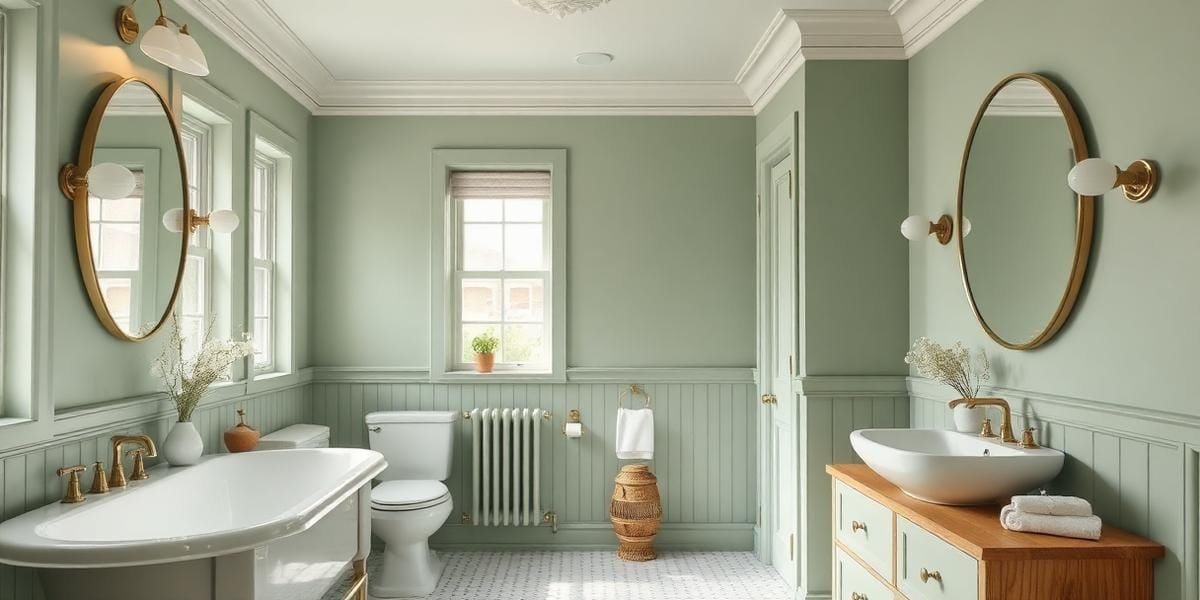
Sage and eucalyptus greens have moved from trend pieces into mainstream bathroom renovations over the past three years, and the staying power makes sense once you look at the psychology behind it. Green sits next to blue on the color wheel, so it carries the same calming effect without feeling as cold or clinical in a small, tiled space.
Farrow and Ball’s Card Room Green and Clare’s shade called Boss are both showing up in renovation photos from Brooklyn brownstones to suburban ranch homes outside Denver. The color works particularly well against white subway tile, which has remained one of the most requested tile patterns through Ruggable’s home trend surveys and similar retail data over the last several years.
- Sage green hides toothpaste splatter and soap scum better than bright white
- Pairs naturally with brushed nickel, matte black, or unlacquered brass
- Works in bathrooms with limited window light because it reads warm, not cool
- Avoid pairing dark forest green with low ceilings under 8 feet, since it can make the room feel shorter
A family remodeling a 1970s ranch in Columbus, Ohio, chose a deep hunter green for a bathroom with a 7 foot 6 inch ceiling. The result felt cramped within a month, and they repainted the upper third of the wall a lighter cream to break up the height. That fix, sometimes called a two tone or wainscoting effect, is now a common workaround contractors suggest before a full repaint.
Muted Blue Works Best With Natural Light, Not Without It
Blue remains one of the most requested bathroom colors, but it’s also one of the easiest to get wrong in a room without a window. Without daylight, many blues turn flat and gray by early evening, losing the calm, spa like quality that drew people to the color in the first place.
Behr’s Blueprint and Sherwin Williams’ Rainwashed both test well in bathrooms with east facing windows, since morning light tends to keep blue tones bright rather than muddy. In windowless bathrooms, a lighter dusty blue paired with warm toned LED bulbs around 3000K tends to perform better than anything in the deep navy family.
- East facing windows favor cooler, brighter blues
- Windowless bathrooms need warmer bulbs to prevent a gray cast
- Navy works well on a single accent wall, not all four walls, in rooms under 100 square feet
- IKEA’s bathroom vanity line in white or oak balances heavier blue tones well
Lighting Fixes That Save a Blue Palette
A common mistake is choosing blue paint and leaving the original cool toned 4000K bulbs in place. That combination almost always reads cold and a little institutional. Swapping to warmer bulbs, adding a dimmer, or layering in a wall sconce alongside the overhead light usually resolves the issue without any repainting at all.
Gray Still Has a Place, But the Shade Matters
Gray bathrooms had their moment roughly between 2015 and 2020, and while the trend has cooled, the color hasn’t disappeared. The shades that still look current lean warm gray or greige rather than the cooler, almost lavender grays that dominated a decade of subway tile showrooms.
West Elm’s home styling guides have pointed to warm gray as a transitional color that bridges modern and traditional bathroom styles, which explains why it still shows up in real estate listing photos across price points. Pairing warm gray walls with wood toned vanities, rather than all white or all black hardware, keeps the room from feeling sterile.
- Cooler grays photograph well but feel cold in person under weak lighting
- Warm gray pairs with both matte black and brushed gold fixtures
- Gray hides hard water stains around faucets better than white
- A gray and white checkerboard floor remains a classic, low risk pattern choice
Bold Color Accent Walls Without the Long Term Regret
Full color commitment scares a lot of homeowners, and reasonably so, since repainting four walls every time a trend shifts gets expensive fast. An accent wall behind the vanity or tub gives the same personality without the same risk, and it costs a fraction of a full repaint.
A renovation case shared in several contractor forums described a Phoenix, Arizona homeowner who painted only the wall behind a freestanding tub in a deep terracotta, keeping the remaining three walls in a warm white. The result let the room feel current without locking in a color that might feel dated within a few years, and repainting that single wall later took under two hours.
- Accent walls cost less and take less time than full room repaints
- Terracotta, deep teal, and burgundy all work well as single wall statements
- Keep trim and ceiling white to prevent the room from feeling smaller
- Test the accent color against your existing tile before committing, since clashing undertones are the most common regret
Wrap Up
The color itself matters less than most people assume going in. Lighting temperature, window placement, ceiling height, and paint finish all shape how a shade actually performs once it’s on the wall, not just on the sample card. Warm whites, soft sage greens, and muted blues with the right bulbs tend to age the best, while bold colors work better as single accent walls than full room commitments. Test any shade on the actual wall, at different times of day, before buying more than a sample can.
FAQs
What is the most popular bathroom color right now?
Warm white and soft sage green are currently the most requested shades among renovation contractors, largely because they photograph well and don’t clash with most existing tile.
Does paint color matter for small bathrooms?
Yes, lighter and warmer shades generally make small bathrooms feel less cramped, while deep, cool colors can make a tight space feel smaller, especially under weak lighting.
What color should you avoid in a windowless bathroom?
Deep cool blues and grays tend to look flat and gray in windowless bathrooms, so warmer tones paired with warm toned bulbs usually perform better.
Disclaimer
This content shared by Fall Rugs is solely for research and informational purposes. Fall Rugs is not a professional interior design or home renovation consultancy, and the information provided should not be considered professional advice for home improvement or decor. All ideas and suggestions are based on current trends and general knowledge in the home decor industry.