
TL;DR
Clean an Oriental rug according to its fiber, dye stability, construction, and condition. Use gentle vacuuming, fast blotting, limited moisture, cool water, and a wool-safe cleaner. Avoid steam, bleach, hard scrubbing, and long damp periods, and send silk, antique, unstable, heavily soiled, or pet-contaminated rugs to an off-site rug specialist.
Introduction
A fine rug can survive for generations, yet one careless cleaning can blur its colors or distort its foundation. The right method starts with identification, not detergent. This approach explains how to assess wool, silk, cotton, fringe, dyes, stains, drying needs, and professional costs. The aim is clean fibers without sacrificing texture, shape, color, or long-term value.
Identify the Rug Before Water Touches It
“Oriental rug” covers hand-knotted and handwoven textiles from Iran, Turkey, India, Pakistan, Afghanistan, China, and the Caucasus. Many have wool pile over a cotton foundation, while fine Qum rugs may contain silk. A sturdy Heriz rug from northwestern Iran usually tolerates more routine handling than a delicate silk rug with dense knots and very fine fringe.
Construction controls the cleaning plan. On a hand-knotted rug, fringe often continues from the foundation instead of being sewn on as trim. The pile also has a direction, so color looks lighter from one end and darker from the other. Pottery Barn and West Elm sell hand-knotted rugs, but a retail label never replaces a close fiber and dye check.
- Read the label for fiber content, origin, backing material, and cleaning code.
- Check both sides for loose knots, dry rot, insect damage, glue, latex, or old repairs.
- Press a cool, damp white cloth on a hidden spot for 10 to 15 seconds.
- Treat dye transfer, brittle fringe, silk pile, and antique age as specialist-cleaning signals.
Remove Dust Without Grinding It Into the Pile
Dry soil causes steady wear because fine sand settles near the foundation and acts like abrasive grit under footsteps. Vacuum busy living-room rugs about once a week and low-traffic rugs every two or three weeks. Rotate the rug every 6 to 12 months so sunlight and walking patterns age the surface more evenly.
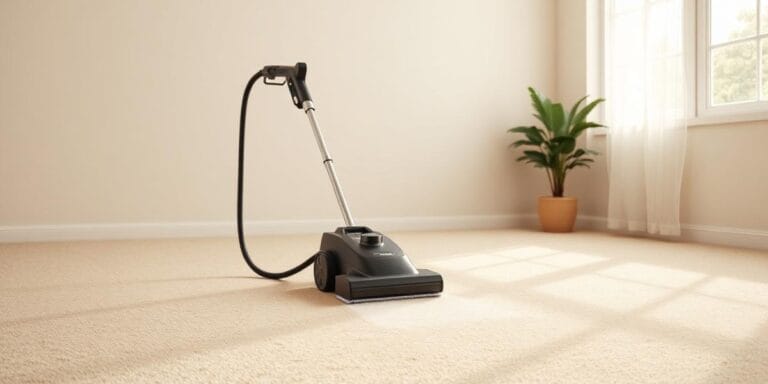
Use suction rather than force. A Miele canister vacuum with adjustable power or a Dyson on a gentle setting can work when the brush roll stays off. Move with the pile direction and stop before the fringe. Ruggable covers can enter a washing machine, but that care method does not apply to a hand-knotted Persian or Turkish rug.
- Set low or medium suction and disable the beater bar.
- Vacuum the front slowly, then clean the back only when the structure feels sound.
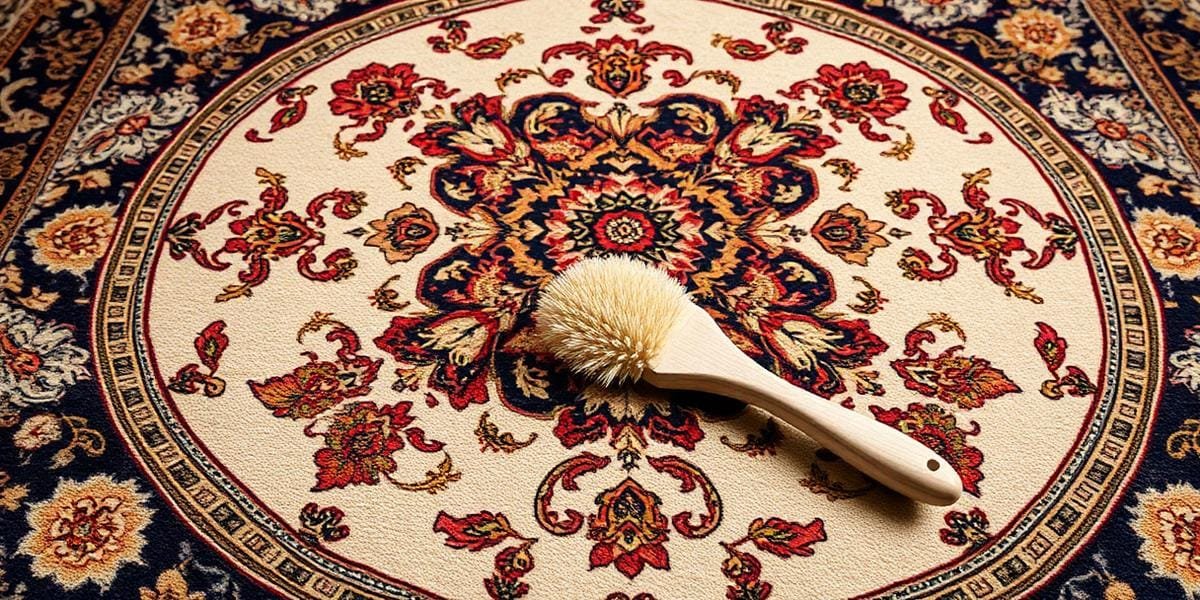
- Brush fragile fringe with a soft upholstery brush instead of a vacuum head.
- Place a felt-and-rubber pad beneath the rug to reduce movement and crushing.
- Repeated high-power edge cleaning can break fringe, so work outward and stop several inches before the ends.
Treat Spills Fast Without Spreading the Stain
Wool naturally resists liquid briefly, then holds moisture once it reaches the inner fiber. Start with dry white cotton towels. Press, lift, and replace them until little liquid transfers. Rubbing spreads pigment across the pile and can felt the wool, leaving a dull patch even after the original stain fades.
For many food spills, mix one teaspoon of a WoolSafe-approved detergent with about one quart, or one liter, of cool water. Test first, then dab from the outside toward the center. In a Boston brownstone, this method removed red wine from a wool Tabriz rug without dye movement. A rented Bissell or Rug Doctor extractor would have added far more water.
- Coffee and red wine: blot first, then use a tested wool-safe solution.
- Mud: let it dry, loosen it with a spoon, vacuum, then treat the mark.
- Candle wax: harden it with a wrapped ice pack and lift pieces gently.
- Pet urine: blot at once, then arrange off-site washing if odor reaches the foundation.
Wash at Home Only When the Rug Passes Every Check
A full wash is rarely the first home treatment for a valuable rug. Water can swell wool, weaken old cotton, release unstable dyes, and trap soil when extraction is weak. Steam cleaners add heat and pressure, which may set stains, distort pile, and lengthen drying time. Silk, rayon, glued backing, and brittle fringe require tighter control.
Home washing suits a small, modern, colorfast wool rug in sound condition, with no urine contamination or structural damage. Karen Finch, founder of the Textile Conservation Centre in the United Kingdom, treated textile cleaning as controlled conservation work. The same principle applies at home: test first, limit change, and stop when the rug reacts badly.
- Work on a clean waterproof surface with good drainage.
- Use cool water, a soft brush, and low-foam wool-safe detergent.
- Brush with the pile, rinse well, and stop if colors bleed or the foundation ripples.
- Dry flat with fans moving air across both sides.
- A Singapore family avoided mildew by reopening a damp rolled rug, raising it on mesh, and running fans above and below.
Know When Professional Cleaning Protects the Rug
A qualified rug cleaner removes dry soil, tests dyes, selects a wash method, controls the rinse, and dries the rug in a purpose-built room or tower. Choose firms that wash rugs off-site rather than treating them on a customer’s floor. IICRC training and long experience with Persian, Turkish, Caucasian, Indian, and Chinese rugs add useful evidence of skill.
Professional off-site washing in the United States often costs about $3 to $8 per square foot. Silk, urine treatment, moth damage, fringe repair, pickup, and insurance cost more. A 6-by-9-foot rug covers 54 square feet, so a base wash may run about $162 to $432. Prices in London, Dubai, Singapore, and Sydney vary by labor and service level.
- Choose professional care for silk, antiques, unstable dyes, floods, mildew, moths, or broken foundations.
- Ask whether the shop removes dry soil before washing and tests every color.
- Request written notes on stains, repairs, shrinkage risk, price, and turnaround time.
- Photograph the front, back, corners, fringe, and existing damage before pickup.
Prevent Sun Fading, Moths, and Furniture Damage
Daily household habits decide how often a rug needs washing. Entry mats catch grit, a fitted rug pad limits movement, and furniture cups spread pressure under narrow legs. Ultraviolet light fades natural and synthetic dyes, so rotate the rug and use curtains, blinds, or UV-filtering film in bright rooms.
IKEA, Pottery Barn, and West Elm sell pads in standard sizes, but fit matters more than the logo. Trim the pad about one inch inside the rug edge so it stays hidden. After cleaning, roll a fully dry rug around an acid-free tube, wrap it in breathable cotton, and store it above the floor in a cool, dry room.
- Remove outdoor shoes during wet winters, dusty summers, and renovation work.
- Rotate rugs every 6 to 12 months and shift furniture slightly.
- Keep plant pots off wool, cotton, and jute foundations.
- Check dark edges beneath sofas and cabinets for moth larvae twice a year.
- Avoid long-term plastic wrapping because trapped humidity encourages odor and mildew.
Wrap Up
Safe Oriental rug cleaning begins with the rug’s fiber, dyes, structure, and condition. Gentle suction, quick blotting, limited moisture, full drying, and steady prevention handle most household care. Steam, bleach, hard brushes, and rushed drying can create costly damage. Silk, antique, unstable, contaminated, or weakened rugs belong with an experienced off-site cleaner.
FAQs Section
Can I use a carpet cleaner on an Oriental rug?
Most rented carpet machines use too much water, heat, pressure, or detergent for hand-knotted wool and silk. Use one only when the rug maker permits it and the dyes, backing, fringe, and foundation have passed careful testing.
How often should an Oriental rug be professionally cleaned?
Many household rugs need professional washing every three to five years. Pets, children, smoke, heavy foot traffic, coastal sand, or visible soil can shorten that period.
Can baking soda damage an Oriental rug?
Baking soda can lodge deep in dense pile and cotton foundations, where normal vacuuming may not remove it. Mixed with moisture, it may also leave residue or affect unstable dyes.