
TL;DR
Most weighted blankets are washable at home if they weigh less than twenty pounds. Heavier items require a commercial laundromat to protect home appliance drums. Success depends on cold water, gentle cycles, and identifying whether your blanket contains glass beads or plastic pellets.
Introduction
Does your heavy bedding need a refresh after months of comforting use? Putting fifteen pounds of dense material into a standard home washing machine can feel like a gamble. You will find out exactly how to clean your blanket without tearing the fabric or burning out your washer motor. Knowing your filler material and weight capacity keeps both your bedding and your laundry room safe.
Checking the Scale and Machine Limits
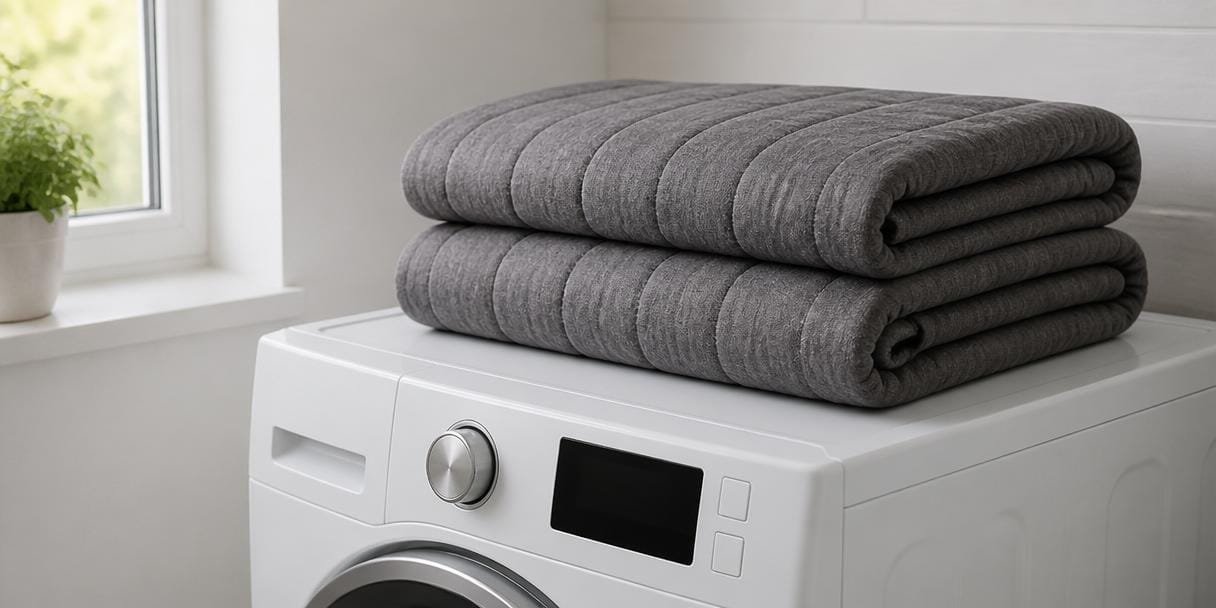
Home washing machines have strict weight thresholds that define their operational safety. Standard residential washers handle a total wet fabric mass of around twelve to fifteen pounds before the suspension system experiences strain. A dry twelve-pound item picks up multiple gallons of liquid instantly during the fill cycle, doubling its actual weight on the spinning drum.
- Standard top loaders with center agitators cause uneven friction and fabric tearing on large items.
- Front-loading machines or high-efficiency top loaders distribute heavy weights more evenly during spin cycles.
- Items exceeding twenty pounds require large-capacity commercial machines at a local laundromat.
During a routine maintenance session in 2025, a homeowner attempted to wash a twenty-five-pound queen-sized sensory blanket in a standard five-cubic-foot Whirlpool washer. The unbalanced load snapped a suspension rod during the high-speed spin cycle, causing four hundred dollars in mechanical damage. Taking heavy bedding to a dedicated laundry facility avoids these appliance failures.
Identifying Your Internal Filler Materials
The tiny elements hidden inside your quilted pockets dictate your entire laundry strategy. Manufacturers like Gravity and Bearaby use distinct materials to provide deep touch pressure stimulation. Premium options use micro-glass beads that resemble fine white sand, which handle high heat much better than synthetic alternatives.
- Micro-glass beads tolerate temperature changes well but require tight stitching to prevent leaks.
- Plastic poly-pellets are prone to melting or clumping if exposed to high heat in a dryer.
- Natural fillers like clay beads or grain blends absorb water permanently and rot if submerged.
A common mistake involves washing a generic budget brand blanket containing organic hulls or metal filings. Water rusts steel shot filler and ruins grain interiors within a single cycle. Always check the white product law tag sewn into the lower seam to verify the internal composition before wetting the fabric.
Choosing the Right Water Temperature and Detergent
Heavy fabrics lock in grime, but harsh cleaning chemicals degrade the structural thread count over time. High heat breaks down the internal polyurethane coating used to reinforce pocket stitching. Gentle liquid cleaners preserve fabric integrity far better than powder varieties.
- Cold or lukewarm water settings keep cotton and minky fabrics from shrinking during processing.
- Mild liquid detergents without enzymes or bleaching agents preserve fiber strength.
- Fabric softeners leave a slick coating on fibers that reduces the breathability of heavy weave structures.
Industrial testing shows that repeated hot water exposure weakens nylon sewing threads by thirty percent over five wash cycles. This degradation allows internal beads to migrate between pockets, destroying the even weight distribution. Stick to a gentle cycle with an extra rinse option to remove all trapped soap residue completely.
Safe Drying Protocols for Structural Integrity
Removing moisture from a dense textile requires patience rather than raw heat energy. Throwing a heavy item into a hot dryer can melt internal plastic fillings and warp outer shells. Air drying remains the safest path, though it requires ample space and air movement.
- Low heat or air-fluff dryer settings prevent synthetic fibers from scorching.
- Clean tennis balls or dryer balls distribute the weight and fluff the outer material.
- Clean concrete surfaces or large drying racks support flat air drying without stretching edges.
A textile specialist processing a weighted blanket from Brookstone discovered that hanging the item on a standard clothesline caused severe stretching. The wet weight pulled the internal stitching downward, gathering all the glass beads into the bottom pockets permanently. Laying the fabric flat on a clean surface preserves the original quilted grid shape.
Outer Shell Fabrics and Spot Cleaning Methods
Many modern heavy blankets feature a two-piece design with a removable duvet cover held by inner ties. This design means you only need to wash the heavy core element once or twice a year. The outer cover handles regular weekly cleaning with your standard bedding sheets.
Handling Microfiber and Minky Covers
Plush minky covers from brands like YnM attract lint if washed with cotton towels. Wash these covers separately in cool water, and skip the dryer sheets to maintain their signature softness.
Managing Heavy Cotton or Linen Outer Shells
Pure cotton weaves wrinkle easily under the pressure of a heavy internal load. Remove the blanket promptly after the final spin cycle to minimize creasing before laying it out to dry.
Wrap Up
Washing your weighted blanket preserves its freshness while maintaining the comforting deep pressure benefits. Success relies on checking your machine capacity, choosing cold water, and using gentle drying techniques. Keeping these steps in mind ensures your favorite sleep accessory stays clean and comfortable for years.
FAQs Section
How often should a weighted blanket be washed?
The inner weighted core requires cleaning only two to three times a year if you use a removable protective duvet cover. Wash the outer cover every two weeks alongside your regular bed sheets to maintain daily freshness.
Can you dry a weighted blanket in a household dryer?
You can use a home dryer only on low heat or air-fluff settings if the total weight falls within your appliance limits. High heat settings melt plastic pellets and ruin the internal grid stitching.
What happens if a weighted blanket leaks inside the washer?
Loose glass beads or plastic pellets can clog your appliance pump drain and scratch the interior steel drum surface. Stop the cycle immediately if you notice a tear, and scoop out the loose filler before draining the water manually.