
TL;DR
Flowers have carried emotional and symbolic weight in painting for over four centuries, from Dutch still life vanitas scenes to Vincent van Gogh’s sunflowers and Georgia O’Keeffe’s close up blooms. These ten works show how artists used petals and stems to talk about mortality, desire, wealth, and identity. Each painting still shapes how galleries, collectors, and home decorators think about floral art today.
Introduction
Why do painted flowers outlast the real ones by centuries? A single canvas from 1889 can sell for more than $40 million, while the actual sunflowers it depicts wilted within a week. This piece walks through ten flower paintings that changed how artists approached color, symbolism, and composition. Readers will come away knowing which works to recognize in a museum, what makes each one historically significant, and how these paintings still influence interior design trends from Pottery Barn prints to gallery wall art.
1. Sunflowers by Vincent van Gogh (1888)
Van Gogh painted several versions of this series in Arles, France, intending them as decoration for the room of his friend Paul Gauguin. The thick, textured brushstrokes known as impasto give the petals a sculptural quality that photographs rarely capture well.
- The National Gallery in London holds one of the most viewed versions
- Van Gogh used chrome yellow paint, a pigment that has since darkened with age due to chemical instability
- The series became a symbol of hope despite Van Gogh’s documented struggles with mental health
- Reproductions of this painting remain among the top sellers in poster shops worldwide
Art historians often point to the limited color palette as the real innovation. Van Gogh stayed mostly within yellows and browns, proving that restraint, not variety, created the emotional punch.
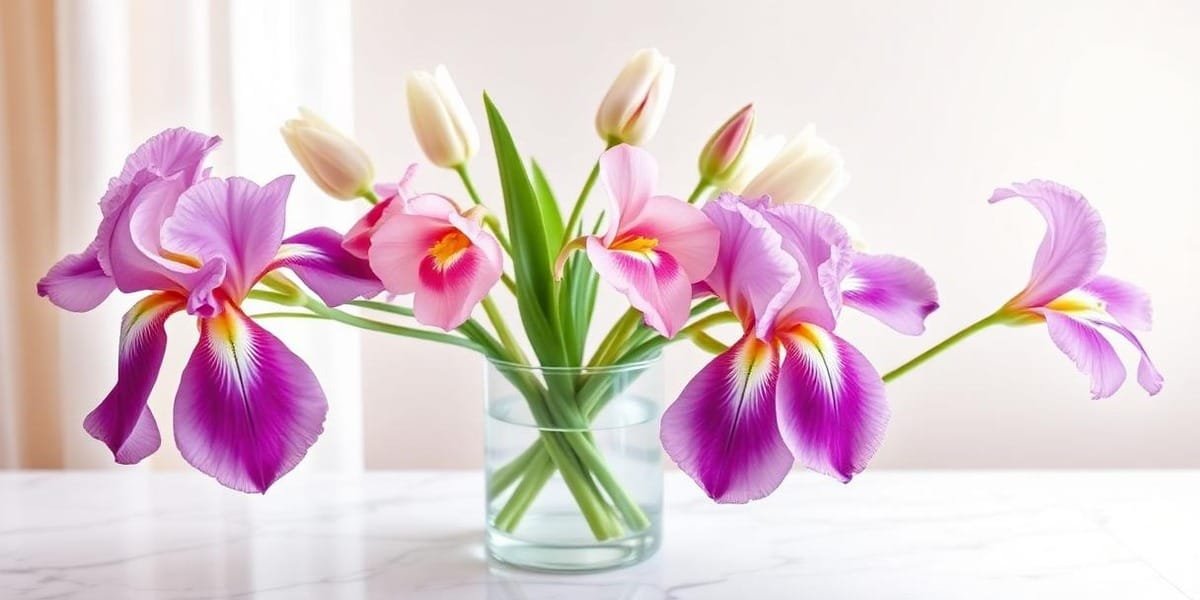
2. Irises by Vincent van Gogh (1889)
Painted during his stay at the Saint-Paul-de-Mausole asylum in Saint-Rémy-de-Provence, this work shows a garden bed of irises rendered in sweeping curved lines. The J. Paul Getty Museum in Los Angeles now owns the piece.
What Makes It Different From Sunflowers
Unlike the warm tones of the sunflower series, Irises leans on cool blues and greens, broken by one white flower that draws the eye. Collector Alan Bond purchased it in 1987 for $53.9 million, a record at the time that signaled flower paintings could rival portraits in market value.
3. Water Lilies by Claude Monet (1840 to 1926)
Monet painted roughly 250 oil paintings of water lilies over three decades, working from the garden he designed himself at Giverny in northern France. The Musée de l’Orangerie in Paris displays eight large scale panels in two oval rooms built specifically for them.
- Monet battled cataracts late in life, which changed his color choices toward reds and oranges
- The garden at Giverny still operates as a public attraction, drawing over 600,000 visitors yearly
- This series helped define Impressionism’s focus on light over precise detail
- The panels measure up to 6 feet tall and 55 feet wide combined, an unusual scale for the genre
Monet’s repetition of one subject across hundreds of canvases set a precedent that later influenced series based artists like Andy Warhol, though Warhol applied it to consumer goods instead of gardens.
4. Roses by Pierre-Auguste Renoir (Various, 1870s to 1900s)
Renoir painted roses throughout his career, often as a warmup exercise before working on larger portraits. He once told fellow painters that flowers let him experiment with color without worrying about getting a likeness wrong.
Why Roses Specifically
Roses gave Renoir a subject with countless petal layers, ideal for practicing soft brushwork and light blending. His rose paintings now hang in collections including the Philadelphia Museum of Art, and they remain popular reference points for art students learning floral technique.
5. Jimson Weed by Georgia O’Keeffe (1936)
O’Keeffe painted this oversized close up of a white flower while living in New Mexico, a region that shaped much of her later work. In 2014, the painting sold for $44.4 million at Sotheff’s, the highest price ever paid for a work by a female artist at that time.
- O’Keeffe denied that her flower paintings were meant as sexual symbolism, despite decades of critics insisting otherwise
- She used a technique of magnifying small natural objects to fill the entire canvas
- The Georgia O’Keeffe Museum in Santa Fe holds the largest collection of her work
- Jimson weed is also called thornapple, a plant that is toxic if ingested
This painting marked a turning point for women artists in the auction market, proving institutional bias around pricing could shift with enough public attention.
6. Vase of Flowers by Jan Davidsz de Heem (1645)
Dutch Golden Age painters like de Heem built entire careers around floral still life, often combining blooms that never flower in the same season to show off technical skill. This particular work mixes tulips, roses, and poppies in a single arrangement, an impossible bouquet in nature but a common trick in 17th century Dutch art.
The Vanitas Symbolism
Many Dutch flower paintings doubled as vanitas works, reminding viewers that beauty and life are temporary. Wilting petals, insects, or dewdrops painted into the scene served as quiet warnings about mortality, a theme that resonated strongly in Protestant Netherlands during the 1600s.
7. Almond Blossom by Vincent van Gogh (1890)
Van Gogh painted this piece to celebrate the birth of his nephew, choosing almond blossoms because they bloom early in spring across the south of France, symbolizing new life. The Van Gogh Museum in Amsterdam now houses the original.
- The composition was influenced by Japanese woodblock prints Van Gogh collected
- He painted it just months before his death in July 1890
- The blue background contrasts sharply with the white blossoms, a technique borrowed from ukiyo-e art
- This remains one of the most reproduced images in nursery and baby gift decor today
8. Bouquet of Sunflowers by Claude Monet (1881)
Less famous than Van Gogh’s sunflower series, Monet’s own take on the subject shows a looser, more atmospheric style. The Metropolitan Museum of Art in New York owns this version, and it offers a useful comparison point for visitors who want to see how two Impressionist contemporaries treated the same flower differently.
Comparing Monet and Van Gogh’s Approach
Monet softened his edges and let color blend at a distance, while Van Gogh built up paint in distinct directional strokes. Standing in front of both side by side, as the Met occasionally arranges in rotating exhibits, makes the stylistic gap obvious even to first time museum visitors.
9. Magnolias by Henri Fantin-Latour (1880s)
Fantin-Latour built his reputation on quiet, realistic flower paintings during a period when French art was shifting toward bolder Impressionist experiments. His magnolia compositions favor accuracy over emotion, appealing to collectors who wanted botanical precision rather than mood.
- Fantin-Latour sold many works directly to English collectors, who favored his restrained style
- He painted flowers almost daily as a disciplined practice, similar to how a musician runs scales
- His work influenced later botanical illustrators working for seed catalogs and garden publications
- Many of his pieces remain in private collections rather than major public museums, which keeps them less visible to casual audiences
10. Flower Carrier by Diego Rivera (1935)
Rivera’s painting shows a Mexican laborer bent under the weight of a massive basket of calla lilies, a scene rooted in the agricultural labor common in central Mexico during the early 20th century. The San Francisco Museum of Modern Art holds this work.
A Different Kind of Flower Painting
Unlike the still life tradition, Rivera used flowers to comment on class and physical labor rather than beauty alone. The bright white lilies contrast against the laborer’s strained posture, turning a decorative subject into social commentary, a move that separated Rivera’s floral work from the European still life tradition entirely.
Wrap Up
These ten paintings show that flowers in art rarely stay purely decorative. Painters used them to process grief, celebrate birth, critique labor conditions, or simply practice color theory before tackling harder subjects. From Van Gogh’s asylum garden to Rivera’s Mexican fields, each canvas carries a story well beyond the bloom itself. Anyone furnishing a home with floral prints or visiting a museum gift shop is, in some small way, still buying into this 400 year old tradition.
FAQs
What is the most expensive flower painting ever sold?
Vincent van Gogh’s Irises sold for $53.9 million in 1987, though Georgia O’Keeffe’s Jimson Weed later set a record for a female artist at $44.4 million in 2014.
Why did Van Gogh paint so many sunflowers?
He intended the series as decoration for a friend’s guest room and used the limited color palette to experiment with how far yellow tones could carry emotional weight.
What do flowers symbolize in classical Dutch paintings?
Dutch still life painters often used wilting petals or insects among the blooms as vanitas symbols, reminding viewers that beauty and life are temporary.
Disclaimer
This content shared by Fall Rugs is solely for research and informational purposes. Fall Rugs is not a professional interior design or home renovation consultancy, and the information provided should not be considered professional advice for home improvement or decor. All ideas and suggestions are based on current trends and general knowledge in the home decor industry.