

TL;DR
A Zen bedroom focuses on the Japanese principles of minimalism, balance, and natural connection to foster deep rest. You can achieve this by reducing visual clutter, using low-profile furniture, and selecting a palette of soft, earthy tones. Prioritizing natural light and organic materials creates a peaceful environment that supports mental clarity and better sleep quality.
Introduction
Does your bedroom feel like a storage unit for your daily anxieties or a true place of rest? Many people struggle to find peace in spaces crowded with heavy furniture and bright electronics. True Zen design offers a way to strip away the unnecessary and reconnect with a sense of calm. You will learn how to use ancient Japanese concepts to build a bedroom that actively helps you decompress after a long day.
1. Embrace Kanso by Eliminating Visual Noise
The Japanese concept of Kanso refers to simplicity and the exclusion of the non-essential. In a bedroom, this translates to more than just cleaning up your laundry. It means evaluating every object to see if it contributes to a sense of peace or if it just takes up space. When you clear the surfaces of your nightstands and dressers, your mind stops processing background data and begins to relax.
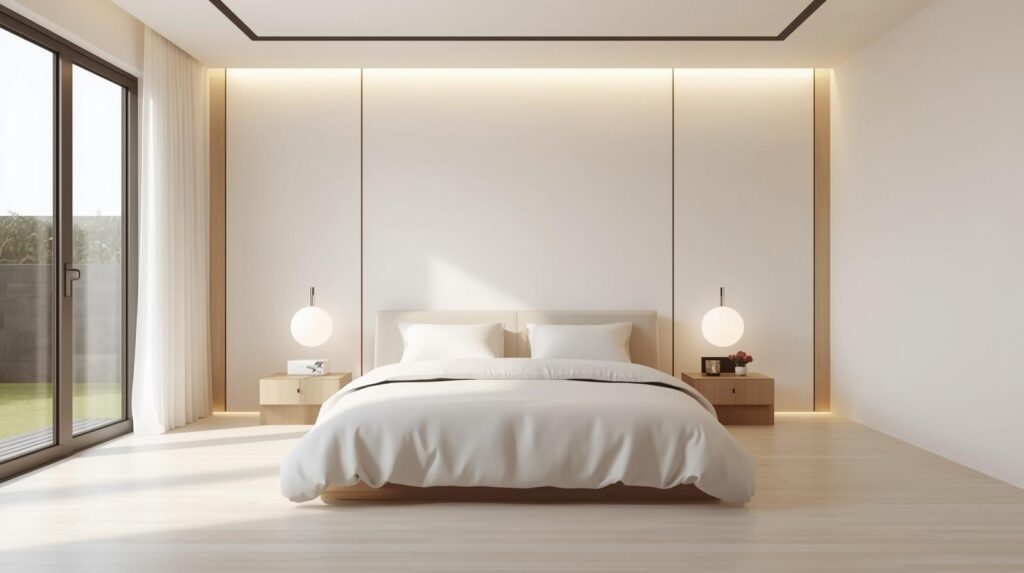
I worked with a client named Julian who had a collection of books and gadgets surrounding his bed. He felt constantly wired and could not pinpoint why his expensive mattress was not helping him sleep. Once we removed the excess items and kept only one lamp and a single ceramic tray, his heart rate visibly slowed when he entered the room. Removing visual noise is the first step toward mental stillness.
Visual clarity allows the architecture of the room to breathe. You should look for storage solutions that hide your belongings behind clean doors or inside drawers. Open shelving often creates a chaotic silhouette that catches the eye and keeps the brain alert. By choosing closed storage, you maintain the minimalist aesthetic while still keeping your necessary items within reach.
2. Shift the Visual Center with Low Profile Furniture
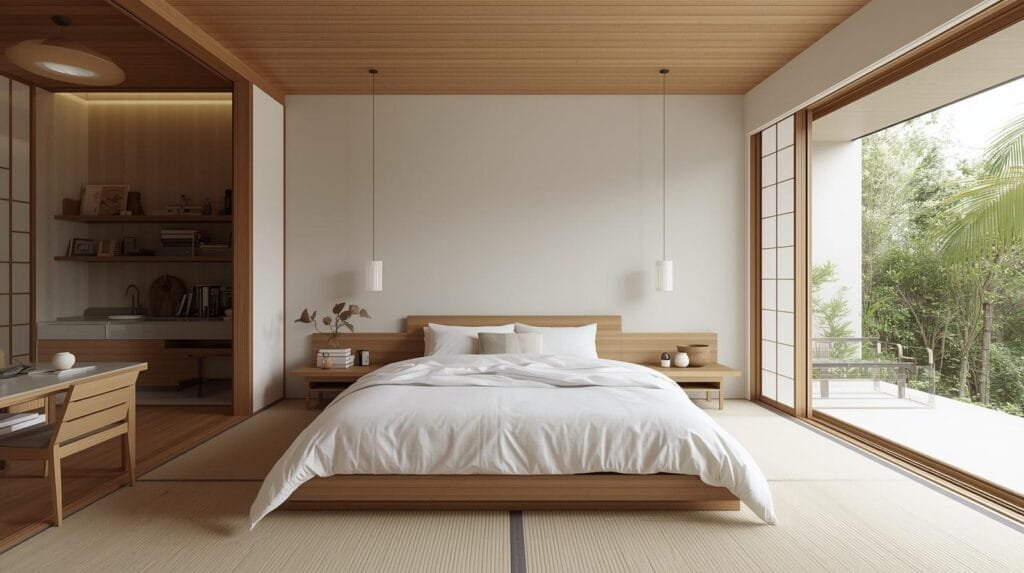
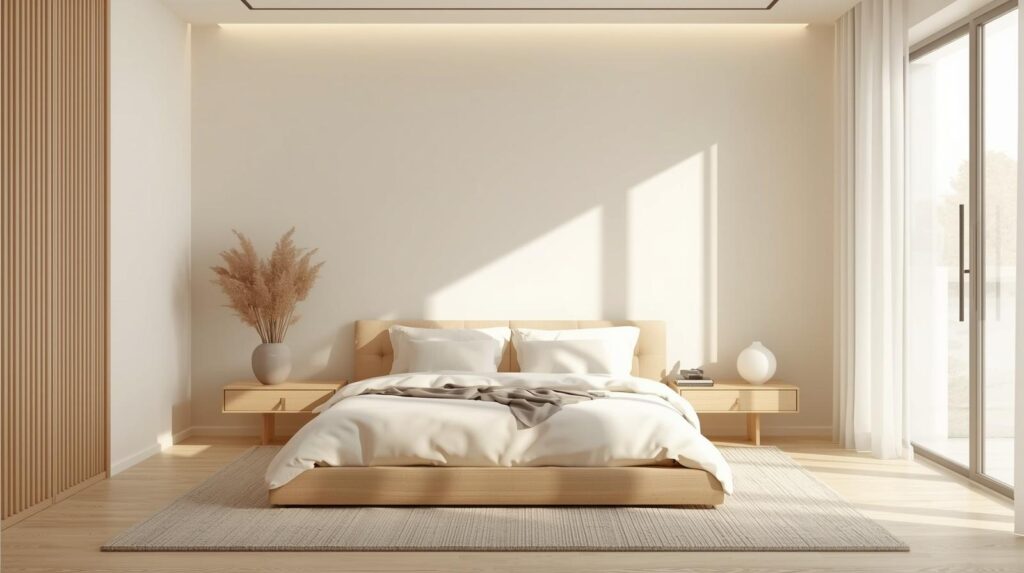
Traditional Zen interiors emphasize a close connection to the ground. This reflects the Japanese custom of living and sleeping on tatami mats. When you choose a low-profile bed frame or a platform bed, you change the entire volume of the room. A lower bed makes the ceilings feel higher and the space feel more expansive and airy.
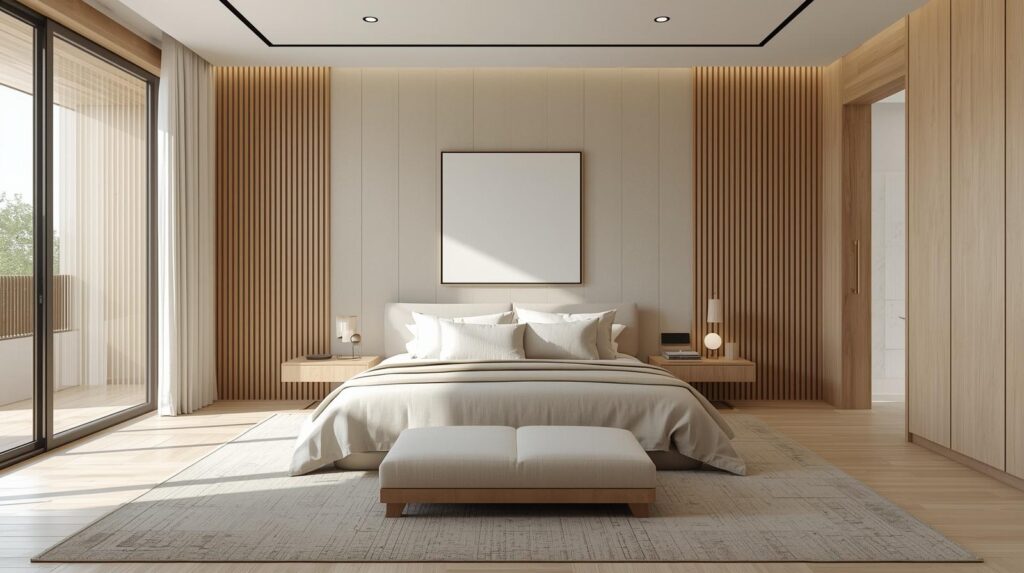
Lowering your center of gravity while you sleep provides a psychological sense of stability and grounding. This design choice often requires a simpler frame, usually made of solid wood with clean lines. You want to avoid ornate headboards or heavy footboards that block the flow of energy through the room. A simple wooden platform serves as a sturdy foundation without demanding your attention.
Balancing Proportions in a Grounded Space
If you choose a low bed, you must also lower the surrounding furniture to keep the proportions consistent. A tall dresser next to a floor-level bed creates a jarring visual height difference. Use low benches or floor cushions to maintain a unified horizon line across the room. This consistency helps the eye move smoothly from one side to the other without hitting obstacles.
Selecting pieces with hidden legs or recessed bases further enhances the floating effect. This look contributes to the feeling of lightness that is central to Zen philosophy. When furniture appears to sit lightly on the floor, the room feels less burdened by weight. You want to create an environment where you feel you can move freely without constraint.
3. Select a Palette of Organic Earth Tones
Color has a direct impact on your nervous system. Zen spaces avoid vibrant, saturated hues that stimulate the brain. Instead, look toward the colors found in a forest or on a beach. Soft beiges, muted greys, and warm taupes provide a neutral backdrop that mimics the natural world. These colors do not compete for your attention, allowing your eyes to rest.
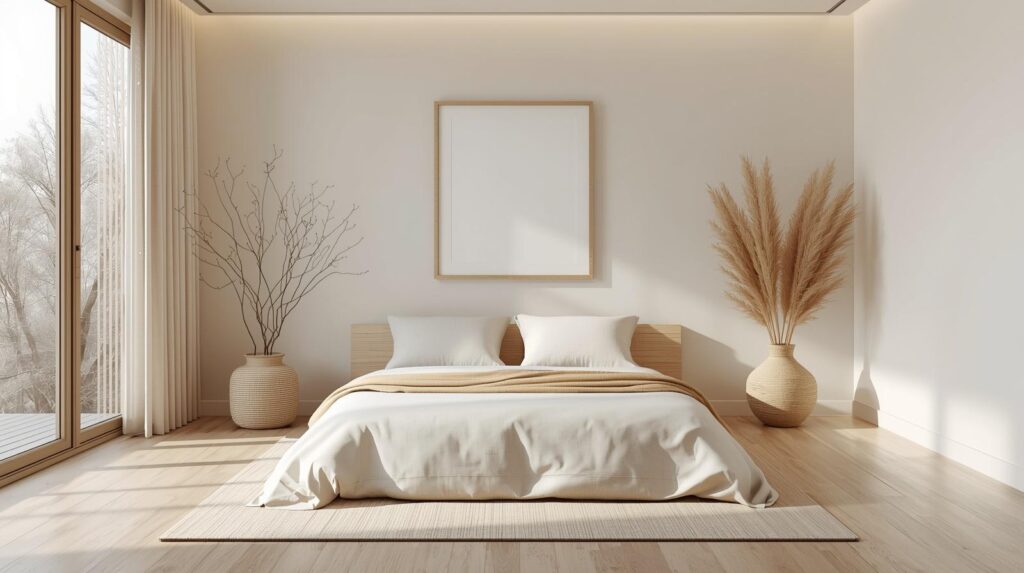
Avoid stark whites that can feel clinical or cold. Warm whites with a hint of cream or stone are better for creating a cozy, inviting atmosphere. You can introduce depth by using different shades of the same neutral color. For example, a tan rug paired with an oatmeal-colored duvet creates a sophisticated look that remains entirely peaceful.
The goal is to blur the lines between your indoor space and the outdoors. If you look out your window and see oak trees, consider using a similar wood tone for your furniture. If your view is of a stone garden, use slate or charcoal accents in your pillows. This continuity creates a sense of belonging within the environment rather than a separation from it.
4. Integrate Biophilic Design through Living Plants
Bringing nature into the bedroom is a fundamental part of the Zen experience. Plants do more than just look good; they actively improve air quality by filtering toxins and releasing oxygen. This creates a fresher, more revitalizing environment for sleep. A single, well-placed plant can serve as a living piece of art that changes subtly over time.

You should choose plants that thrive in low light and require minimal maintenance to keep the space stress-free. Snake plants and peace lilies are excellent choices because they are resilient and have elegant, architectural shapes. Avoid over-cluttering your windowsills with dozens of small pots. A large, floor-standing plant in a corner often makes a stronger, more calming statement than many small ones.
The Psychological Impact of Greenery
Human beings have an innate connection to nature, often called biophilia. Seeing greenery reduces cortisol levels and helps the body transition from a state of work to a state of rest. In my experience, even the simple act of watering a plant can become a grounding ritual that signals the end of the day. It connects you to a rhythm that is slower than the digital world.
Natural light also plays a role in this biological connection. During the day, keep your window treatments light and airy to let in as much sunshine as possible. At night, use blackout curtains to ensure your circadian rhythm remains undisturbed. The balance between natural light and total darkness is essential for a healthy sleep cycle.
5. Prioritize Natural Textiles and Tactile Comfort
The things that touch your skin have a massive influence on how you feel. Synthetic fabrics like polyester often trap heat and feel static, which can irritate the senses. Zen bedrooms rely on natural fibers like linen, organic cotton, and wool. These materials breathe well and regulate your body temperature throughout the night.

Linen is a favorite in Zen design because of its slightly wrinkled, lived-in appearance. It reflects the idea that beauty is found in natural states rather than in artificial perfection. When you crawl into a bed made of high-quality natural fibers, your body instantly recognizes the comfort. This physical relief is a prerequisite for the mental relief you are seeking.
Layering these textures adds visual interest without needing bright patterns. A chunky wool throw over a smooth cotton sheet provides a contrast that is satisfying to both the eye and the hand. Keep the patterns to a minimum, or choose very subtle, organic motifs. Solid colors in varied textures usually look more expensive and feel more intentional.
6. Master the Art of Diffused Lighting
Harsh overhead lighting is the enemy of a Zen atmosphere. It creates deep shadows and can make a room feel cold or clinical. To create a sanctuary, you should use multiple sources of soft, diffused light. This allows you to control the mood and slowly dim the room as you prepare for bed.
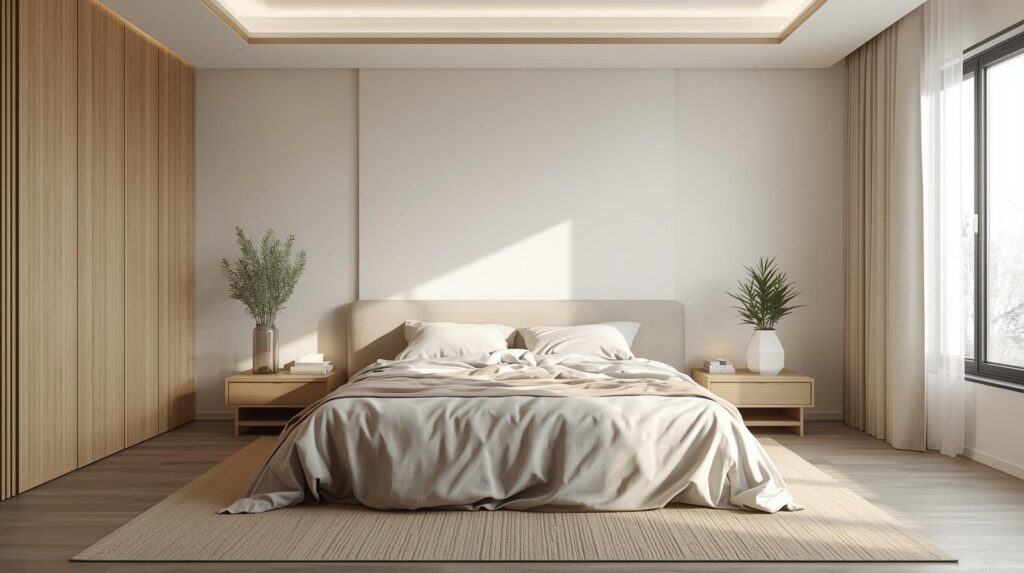
Paper lanterns, like the famous Akari lamps, are perfect for this purpose. The paper shade softens the bulb, spreading a warm, even glow that mimics the sun setting. You might also consider installing a dimmer switch for your main light source. Being able to turn the lights down low in the evening helps your brain start producing melatonin.
Avoid cool-toned or blue-tinted bulbs in the bedroom. These mimic daylight and can trick your brain into staying awake. Use warm-toned LEDs that sit between 2700K and 3000K on the Kelvin scale. This amber glow creates a fireside feeling that is naturally soothing. When you get the lighting right, the walls seem to recede and the room feels like a warm hug.
7. Incorporate Scent and Sensory Balance
A Zen sanctuary should engage all your senses, including your sense of smell. Scent is one of the fastest ways to change your emotional state. Instead of using artificial air fresheners that contain heavy chemicals, look for natural essential oils. Scents like sandalwood, cedarwood, and lavender are deeply rooted in Japanese meditation practices.
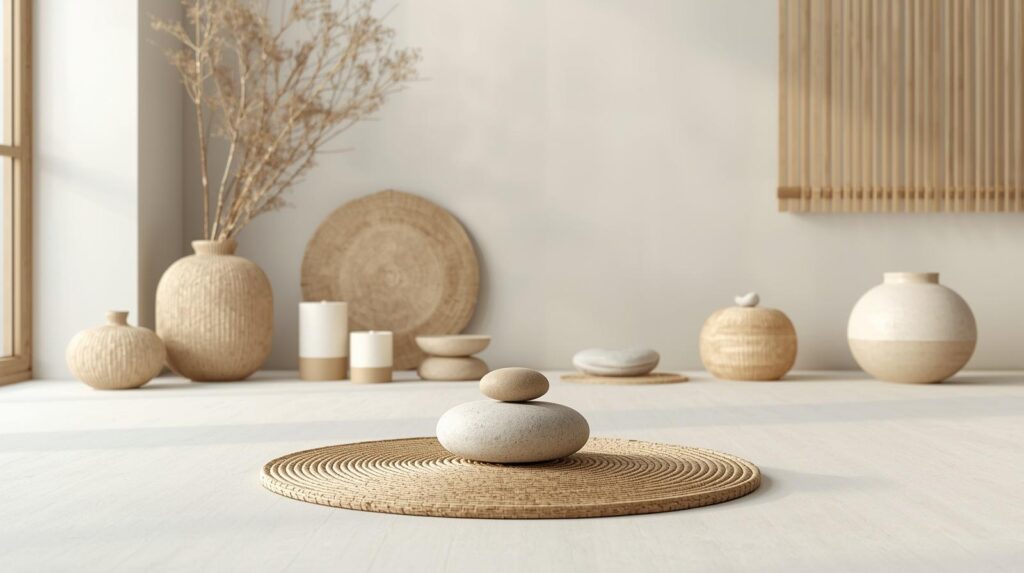
A simple stone diffuser or a bundle of dried eucalyptus can provide a subtle fragrance that does not overwhelm the room. You want the scent to be a background element, not a dominant force. In a home I once visited in Kyoto, the owner kept a small piece of hinoki wood near the bed. The light, lemony scent of the wood was enough to make the entire room feel clean and sacred.
Sound is the final piece of the sensory puzzle. If you live in a noisy city, a small water fountain or a high-quality white noise machine can mask distracting sounds. The goal is to create a consistent acoustic environment. Sudden noises can jumpstart the nervous system, while a steady, natural sound helps the mind drift into a deeper state of relaxation.
8. Respect Negative Space and the Concept of Ma
In Japanese aesthetics, Ma is the beauty found in the empty space between objects. Most people try to fill every corner of their bedroom with furniture or decor. A Zen approach encourages you to leave some areas completely empty. This “emptiness” is not a lack of design; it is a deliberate choice to let the room feel spacious.
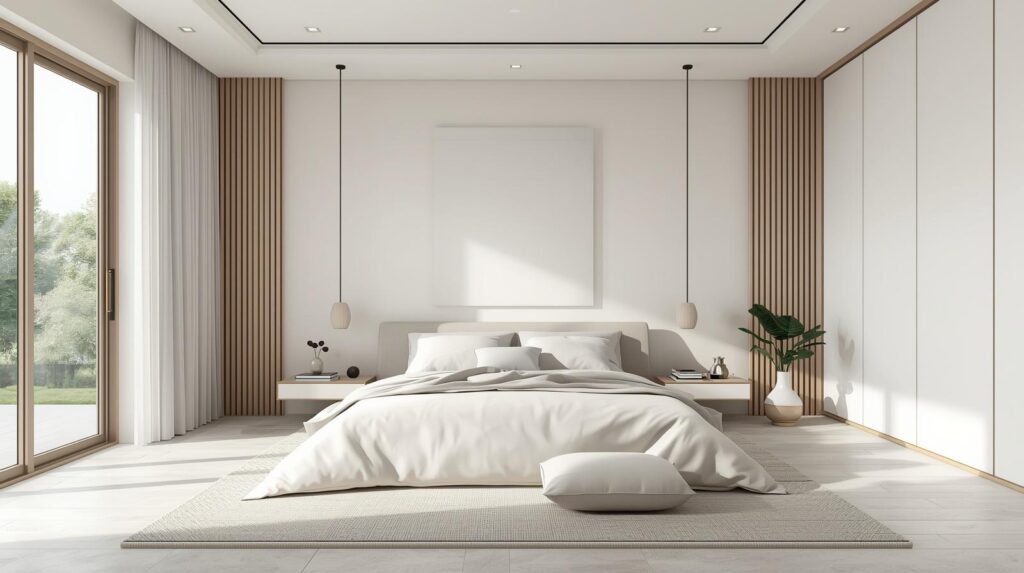
When you leave a wall blank or a corner open, you give your thoughts room to expand. It prevents the feeling of being boxed in or claustrophobic. Look at your floor plan and see where you can remove an unnecessary chair or a small table. You will find that the objects you keep become more meaningful when they have room to breathe.
Creating a Flowing Layout
The way you move through your bedroom affects your daily stress levels. You should be able to walk from the door to the bed without navigating a maze of furniture. Ensure there is plenty of space on either side of the bed. A cramped layout creates friction in your daily routine, which works against the goal of a peaceful sanctuary.
Think about the first thing you see when you wake up. If your eyes land on a cluttered desk or a pile of laundry, your brain starts working immediately. Position your bed so that you wake up facing a window, a piece of art, or a clean, empty wall. This small adjustment can change the entire tone of your morning.
9. Decorate with Organic Forms and Wabi-Sabi
Wabi-sabi is the appreciation of the beauty in imperfection and the natural cycle of growth and decay. In your bedroom, this means choosing decor that looks handmade or weathered. A ceramic vase with a slightly irregular shape or a wooden bench with a visible grain is more Zen than a mass-produced, perfect plastic item.
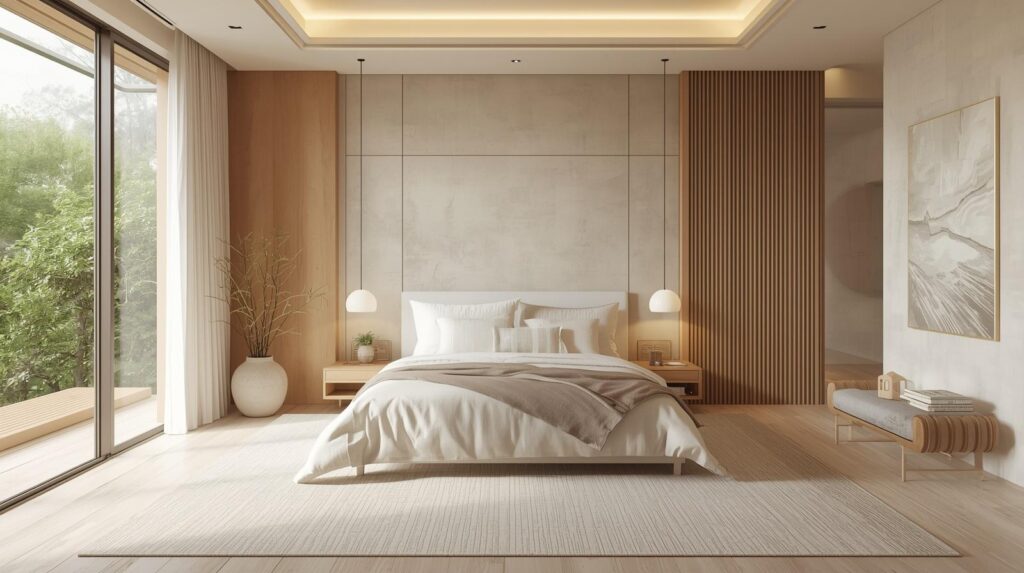
These organic forms remind us that we are part of the natural world. They feel more human and less industrial. You don’t need a lot of art to make a statement. One large piece of art that features a natural landscape or an abstract ink wash can anchor the room. Avoid busy gallery walls that create too much visual data for your eyes to process.
Using natural materials like stone, bamboo, and clay adds a sense of timelessness to the room. These materials age gracefully and develop a patina over time, which only adds to their character. When you surround yourself with things that have a history or a connection to the earth, you feel more settled and secure in your environment.
10. Establish a Digital Detox Zone
It is nearly impossible to achieve a Zen state if your bedroom is filled with flashing lights and charging cables. The bedroom should be a dedicated space for sleep and intimacy, not an extension of your office. Removing the television and moving your phone charger to another room are two of the most effective ways to reclaim your peace.
The blue light emitted by screens interferes with your sleep quality and keeps your mind racing with information. By making the bedroom a tech-free zone, you create a hard boundary between your public life and your private rest. This allows you to focus on your breathing or a physical book before you fall asleep.
I remember a project where we replaced a large wall-mounted TV with a beautiful silk scroll. The owner reported that they started sleeping an hour more each night within the first week. Without the temptation of a screen, they naturally listened to their body’s signals. A Zen sanctuary is ultimately about listening to yourself rather than the noise of the outside world.
Wrap Up
Creating a Zen bedroom is a journey toward understanding what you truly need for rest. By focusing on natural materials, low-profile furniture, and the power of negative space, you build a room that supports your well-being.
Start by removing one piece of clutter today and notice how the energy of the room begins to change. A sanctuary is not built overnight, but every mindful choice brings you closer to a deeper, more restorative peace.
FAQs Section
What are the best colors for a Zen bedroom?
The best colors are soft, muted earth tones like beige, sand, taupe, and sage green. These hues mimic the natural world and help lower your heart rate by reducing visual stimulation.
How can I make my bedroom feel Zen on a budget?
You can start by decluttering all surfaces and removing electronics to create a tech-free zone. Adding a single living plant and using soft, warm-toned light bulbs will immediately change the atmosphere without a large investment.
Why is low-profile furniture important in Zen design?
Low-profile furniture keeps the visual center of the room close to the ground, which creates a psychological sense of stability. It also makes the ceilings feel higher, giving the space an airy and expansive feeling that promotes relaxation.
Disclaimer:
The content shared by Fall Rugs is solely for research and informational purposes. Fall Rugs is not a professional interior design or home renovation consultancy, and the information provided should not be considered professional advice for home improvement or decor. All ideas and suggestions are based on current trends and general knowledge in the home decor industry.