

TL;DR
Measure the planned curtain rod or track, not only the glass or window frame. Record the fitting width, finished curtain length, heading style, and required fullness before buying panels.
Take every measurement twice with a metal tape. Check floors, ceilings, radiators, handles, furniture, and wall space because each can change the final curtain size.
Introduction
Why do correctly labelled curtains sometimes look narrow, short, or awkward once they’re hung? The problem often starts before purchase. Many people measure the visible window opening, then overlook the rod extension, heading type, fullness ratio, and distance to the floor. A difference of only 2 inches, or about 5 centimetres, can affect how the fabric hangs.
Accurate measurements give curtains enough width to form soft folds while keeping the hem at the intended level. They also prevent common fitting problems around radiators, deep window sills, skirting boards, and door handles. The process takes around 15 minutes for a standard window, yet it can protect an order worth anywhere from £30 for basic IKEA panels to several hundred pounds for lined or made-to-measure drapes.
Gather the Right Tools Before Measuring
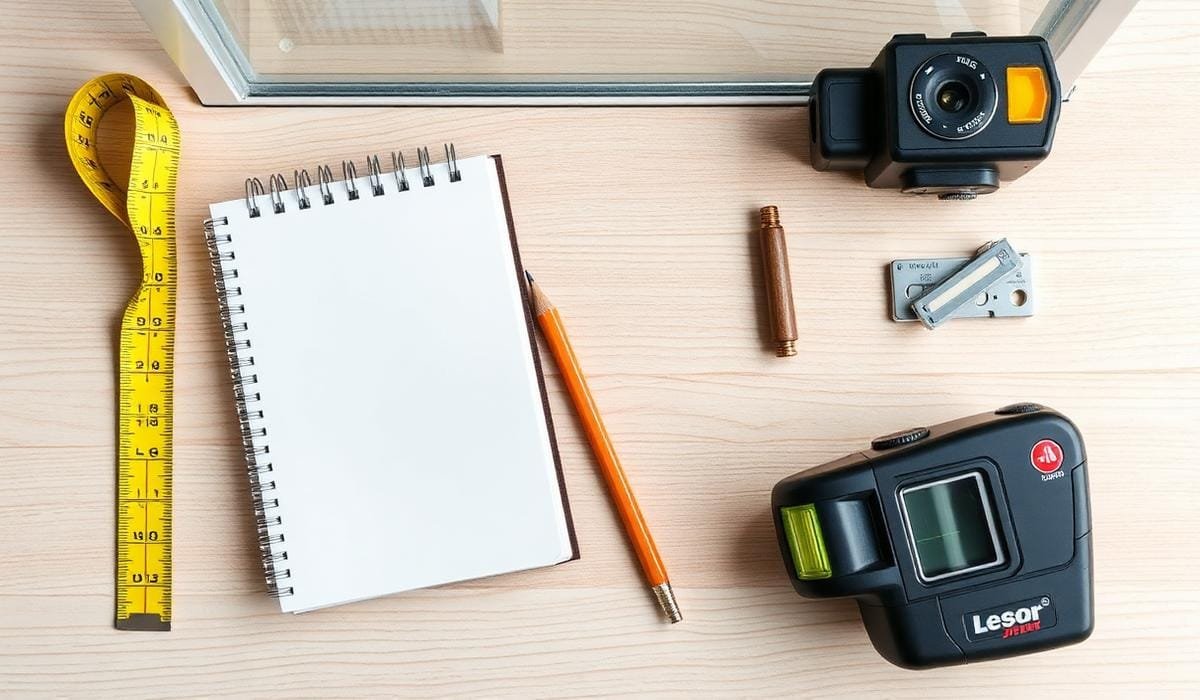
A flexible sewing tape may look convenient, but it can sag across a wide window and produce a false reading. A rigid metal tape measure gives a straighter line across frames, walls, and floors. Professional fitters often record dimensions to the nearest ⅛ inch or 0.5 centimetre, especially when ordering custom tracks, blinds, or pinch-pleat curtains.
Use a stable step stool when checking high fixing points. A spirit level can reveal a sloped ceiling or uneven rod, while a laser measure works well across large openings. Interior designer Emily Henderson frequently uses high-mounted curtains in room projects, but that look still depends on accurate wall and ceiling measurements rather than visual guesswork.
Record these details before visiting IKEA, West Elm, Pottery Barn, or a local curtain maker:
- Window frame width and height
- Available wall space on both sides
- Distance from the frame to the ceiling
- Distance from the planned rod to the floor
- Radiators, handles, sockets, vents, or furniture near the window
Write every measurement in one unit. Mixing centimetres and inches can create expensive errors, especially when a UK supplier lists curtains in centimetres and a US retailer uses inches.
Measure the Fitting Area, Not Only the Window Glass
The glass width does not tell you how wide the curtains must be. Curtains normally hang from a pole or track installed outside the frame. That fitting often extends 3 to 6 inches, or about 8 to 15 centimetres, beyond each side. The extra width lets the open curtains sit beside the glass rather than covering part of the view.
Measure the full planned rod or track width from one outer end to the other. Do not include decorative finials unless the retailer specifically asks for the total pole length. For an existing track, measure the usable gliding area between the end stops. For a pole, measure the section where the curtain rings or eyelets will move.
A practical measuring order looks like this:
- Measure the window frame from left edge to right edge.
- Check the wall space available on each side.
- Add 3 to 6 inches on both sides where space permits.
- Mark the planned bracket positions with a pencil.
- Measure between those marks to find the fitting width.
A Manchester homeowner once ordered a 168-centimetre curtain pair after measuring only the window recess. The installed pole was 210 centimetres wide, so the curtains barely met in the centre and looked flat when closed. Measuring the pole and applying a two-times fullness ratio corrected the problem.
Set the Curtain Rod Height and Width
Rod placement changes both the required curtain length and the apparent size of the window. A rod fixed close to the top of the frame can make a room look compressed. Many decorators place the pole 4 to 6 inches, or roughly 10 to 15 centimetres, above the frame when ceiling height permits.
Rooms with low ceilings often benefit from a higher fitting. A rod placed 1 to 2 inches below the ceiling can draw the eye upward and give the wall a taller appearance. This approach appears in many West Elm and Pottery Barn room displays, where curtains frame the full wall height instead of stopping directly above the window trim.
Check these points before fixing the brackets:
- Allow enough space above the frame for rings, eyelets, or pleats.
- Keep each bracket level with the opposite side.
- Place brackets beyond the frame so curtains clear the glass.
- Check for hidden pipes, wiring, and wall studs before drilling.
- Leave space for finials, nearby cupboards, and opening doors.
In a narrow New York apartment, a 48-inch window may have only 4 inches of free wall on one side because of built-in shelving. Extending the rod by 6 inches on both sides would not work there. An off-centre rod, ceiling track, or compact end cap may fit the room better than a standard decorative pole.
Calculate Curtain Width and Fullness
Curtain width controls how rich or flat the fabric looks when closed. A curtain that matches the rod width exactly has almost no folds. Most installations need 1.5 to 2.5 times the fitting width, depending on the fabric, heading style, and desired appearance.
A 200-centimetre track with two-times fullness needs about 400 centimetres of combined fabric width. When using two panels, each panel should provide close to 200 centimetres of flat width. Product labels can cause confusion because some packages show the width of one panel, while others show the combined width of the pair.
Common fullness ranges include:
- Eyelet or grommet curtains: 1.5 to 2 times the rod width
- Pencil pleat curtains: 2 to 2.5 times the track width
- Pinch pleat curtains: often 2 to 2.5 times the track width
- Wave curtains: commonly around 2 times fullness, based on the track system
- Sheer curtains: 2 to 3 times fullness for softer privacy
Heavy velvet, such as the type used in theatre curtains and luxury hotel rooms, forms deeper folds with less movement. Lightweight linen and voile often need more width because thin fabric can look sparse. West Elm’s linen curtain styles and IKEA’s sheer panels show how fabric weight changes the visual density even when the panel dimensions appear similar.
Never assume that “one pair” fits one standard window. Windows do not follow one universal width, and ready-made panels vary by brand. Check the stated panel width, number of panels in the package, and fullness calculation before adding the product to your basket.
Choose the Finished Curtain Length
Curtain length should match the room’s use, not only its style. Floor-length panels work well in living rooms, bedrooms, and dining spaces where there are no obstacles below the window. Shorter curtains may suit kitchens, work areas, children’s rooms, or windows positioned above radiators and desks.
Measure from the exact hanging point to the intended hem position. For a curtain track, this may be the top or bottom of the track, depending on the hooks. For eyelet curtains, retailers often request a measurement from the top of the pole. Curtain headings differ, so the product’s measuring instructions should guide the final deduction.
Use these finished length targets:
- Sill length: finish about ½ inch or 1 centimetre above the sill
- Below-sill length: finish 4 to 6 inches or 10 to 15 centimetres below it
- Floor length: finish ½ to 1 inch or 1 to 2 centimetres above the floor
- Trouser break: add 1 to 2 inches or 2.5 to 5 centimetres
- Puddle style: add roughly 4 to 8 inches or 10 to 20 centimetres
Floor-length curtains that rest lightly above the surface stay cleaner and open more easily. Puddled fabric creates a formal look, but it collects dust and needs frequent arranging. It is rarely practical in homes with pets, robotic vacuum cleaners, damp floors, or busy walkways.
Measure the left, centre, and right side of the window. Floors and ceilings can slope, especially in older homes in London, Edinburgh, Boston, and Philadelphia. A difference of 1 inch across a wide wall can leave one panel touching the floor while the other appears too short.
Account for Curtain Headings, Hardware, and Obstacles
Curtain headings change where the fabric begins in relation to the rod or track. Eyelet curtains extend above the pole because the metal rings sit below the fabric’s top edge. Pinch pleats and pencil pleats hang from hooks, while rod-pocket curtains wrap around the pole itself.
Measure after choosing the heading style. Buying curtains first and selecting the hardware later can shift the finished hem by several centimetres. Pottery Barn, IKEA, Dunelm, and John Lewis use different product specifications, even when two curtains share the same listed length.
Inspect the area below and beside the window for:
- Radiators and heating vents
- Deep window sills
- Door or window handles
- Skirting boards and decorative moulding
- Sofas, desks, beds, and storage units
Long curtains can block warm air rising from a radiator. A below-sill curtain may also trap heat behind the fabric and direct it toward the glass. Sill-length panels, Roman blinds, or curtains held open with tiebacks may work better where heating performance matters.
A family in Toronto installed 96-inch ready-made curtains above a window with a low radiator. The fabric covered the heater and made the room slower to warm. Moving the rod upward did not solve the obstruction, so they changed to sill-length panels and kept the longer curtains for a bedroom without a radiator.
Measure Bay Windows, Doors, and Unusual Openings
Bay windows need more than one straight width measurement. Measure each wall section or track segment separately, following the shape of the bay. For a curved or bendable ceiling track, record the distance along the planned track route rather than drawing a straight line from one outer corner to the other.
French doors and sliding patio doors also need special attention. Measure the full opening, including the space required for handles and door movement. Curtains stacked near the opening should not block the active door panel or catch in the track.
Use these checks for unusual installations:
- Measure every section of a bay window separately.
- Note each internal and external corner angle.
- Check how far door handles project from the glass.
- Measure the curtain stacking space beside sliding doors.
- Confirm that ceiling-mounted tracks can hold the fabric weight.
A wide patio door may need four panels rather than two, especially when the track exceeds 3 metres. Dividing the fabric into more panels reduces the weight carried by each set of hooks and makes daily opening easier. Commercial curtain tracks from brands such as Silent Gliss also use weight limits, bracket spacing, and glider specifications that affect the installation.
For inside-mount curtains, café curtains, or tension rods, measure the recess at the top, middle, and bottom. Use the smallest width so the hardware does not jam. Older timber frames often vary by several millimetres because of paint layers, movement, and past repairs.
Check Every Number Before Ordering
A final check catches most ordering errors. Read each measurement aloud, confirm the unit, and compare it with the retailer’s size chart. Review whether the listed width applies to one panel or a full pair. This small detail causes a large share of ready-made curtain returns.
Take a photograph of the window with the tape measure visible and save the written dimensions. When ordering custom curtains, label each room and window, such as “main bedroom, left window” or “living room patio door.” Homes with several similar openings can still have different ceiling heights, sill depths, and wall clearances.
Before placing the order, confirm:
- The rod or track width
- The chosen fullness ratio
- The finished curtain drop
- The number of panels
- The heading type and hardware position
Measure twice on different days if the order is expensive. A basic ready-made mistake may cost £30 to £100, while lined, interlined, motorised, or custom curtains can cost several hundred pounds per window. Five extra minutes of checking offers far better value than altering panels after delivery.
Wrap Up
Good curtain measurements begin with the fitting position, not the visible glass. Rod width, installation height, fullness, heading style, and finished drop work together, so changing one can alter the others.
Use a metal tape, record every figure in one unit, and measure the floor at several points. Check obstacles before choosing floor-length fabric, especially radiators, handles, furniture, and sliding doors.
Curtains look balanced when they have enough width to form natural folds and the hem lands where the room requires it. Careful measuring creates that result before a single bracket reaches the wall.
FAQs Section
Should curtains be measured from the window frame or curtain rod?
Measure the curtain rod or track because it controls the required fabric width and hanging length. Measure the window frame first only when planning where the new hardware will sit.
How much wider should curtains be than the window?
The rod often extends 3 to 6 inches, or 8 to 15 centimetres, beyond each side of the window. The combined curtain width usually needs 1.5 to 2.5 times the rod width for suitable fullness.
Should curtains touch the floor?
Floor-length curtains usually finish ½ to 1 inch, or 1 to 2 centimetres, above the floor for clean movement. Formal curtains may break or puddle on the floor, but extra fabric needs more cleaning and care.