
TL;DR
Identify the rug’s fiber and read its care label before adding water or cleaning solution. Remove dry soil first, test for color transfer, use the least moisture the rug needs, and dry both the pile and backing within 24 to 48 hours.
Introduction
Why do large rugs often smell worse after cleaning than before? Too much water, trapped soil, slow drying, and the wrong detergent cause most failures.
Learning how to clean large area rugs starts with material identification, not scrubbing. A washable polyester rug, a hand-knotted wool rug, and a West Elm jute rug may look similar from across the room, yet each needs a different process. The right method removes grit and stains without causing dye bleed, shrinkage, rippled edges, or musty backing.
Identify the Rug Before Choosing a Cleaning Method
An 8-by-10-foot rug covers 80 square feet and can hold several pounds of dry soil before it looks dirty. That soil includes sand, skin flakes, cooking residue, pet hair, and particles carried indoors on shoes. Water turns this loose grit into abrasive mud, so washing before vacuuming drives contamination deeper into the pile.
Start with the care label, fiber content, backing, construction, and age. IKEA’s large STOCKHOLM flatwoven rugs contain wool and carry instructions against home washing. Ruggable uses a removable cover-and-pad system, while many of its 8-by-10-foot covers fit only large-capacity washing machines. Similar dimensions do not mean similar care.
- Polypropylene, nylon, and polyester: Usually tolerate controlled wet cleaning when the label permits it.
- Wool: Needs cool water, low agitation, limited alkalinity, and careful drying.
- Cotton: May shrink, wrinkle, or lose shape when saturated.
- Jute, sisal, and seagrass: Can brown, stiffen, warp, or develop water marks.
- Silk, viscose, antique, and hand-knotted rugs: Usually belong with a trained rug cleaner.
Some labels use cleaning codes. “W” permits water-based products, “S” calls for solvent cleaning, “WS” permits either, and “X” limits care to vacuuming or professional treatment. These codes do not appear on every rug, so consult the manufacturer when the label gives little detail.
Test the Dye and Backing
Mix the cleaner at its intended strength and apply a small amount to a hidden corner. Wait five minutes, then press a clean white cotton cloth against the damp fibers. Stop if color transfers, the texture changes, or the backing becomes sticky. Latex-backed rugs can crack with age, and wet cleaning may speed that breakdown.
Remove Dry Soil Before Washing
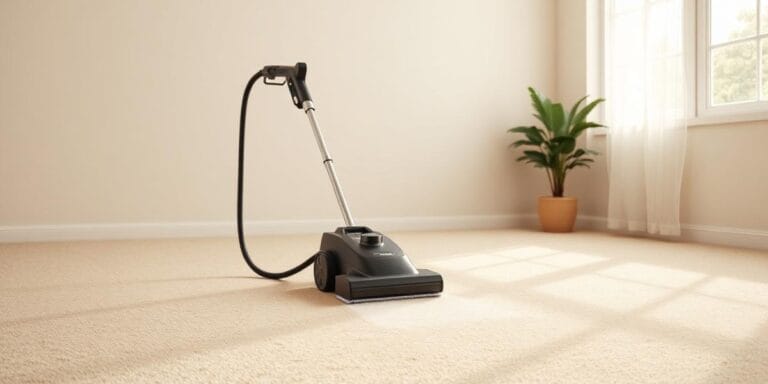
A strong dry-cleaning stage often produces a bigger visual improvement than shampooing. Vacuum the face slowly in overlapping passes, then turn the rug over and clean the underside. Vacuum the exposed floor and rug pad as well. Fine grit often falls through the weave and collects between the rug and hardwood, tile, or laminate.
Choose the vacuum head by pile type. A rotating brush can lift debris from sturdy, low-pile synthetics, but it may pull loops, fringe, or long wool fibers. West Elm advises low suction and no beater brush for pieces such as its Souk Shag Wool Rug and Margo Selby collections. IKEA gives similar advice for its wool rugs.
- Move sofas, tables, and chairs rather than vacuuming around their legs.
- Mark existing stains with removable painter’s tape before rolling the rug.
- Vacuum in two directions on dense, colorfast synthetic pile.
- Clean fringe with gentle suction and a hand tool.
- Remove the pad before any wet treatment.
I once reviewed a living-room cleaning where the owner shampooed a cream rug twice because gray tracks kept returning. The real problem sat underneath. A deteriorating foam pad had released dark crumbs that moved upward whenever the wet extractor passed over it. Replacing the pad and vacuuming both sides solved what extra detergent could not.
Wash Large Synthetic and Machine-Washable Rugs Correctly
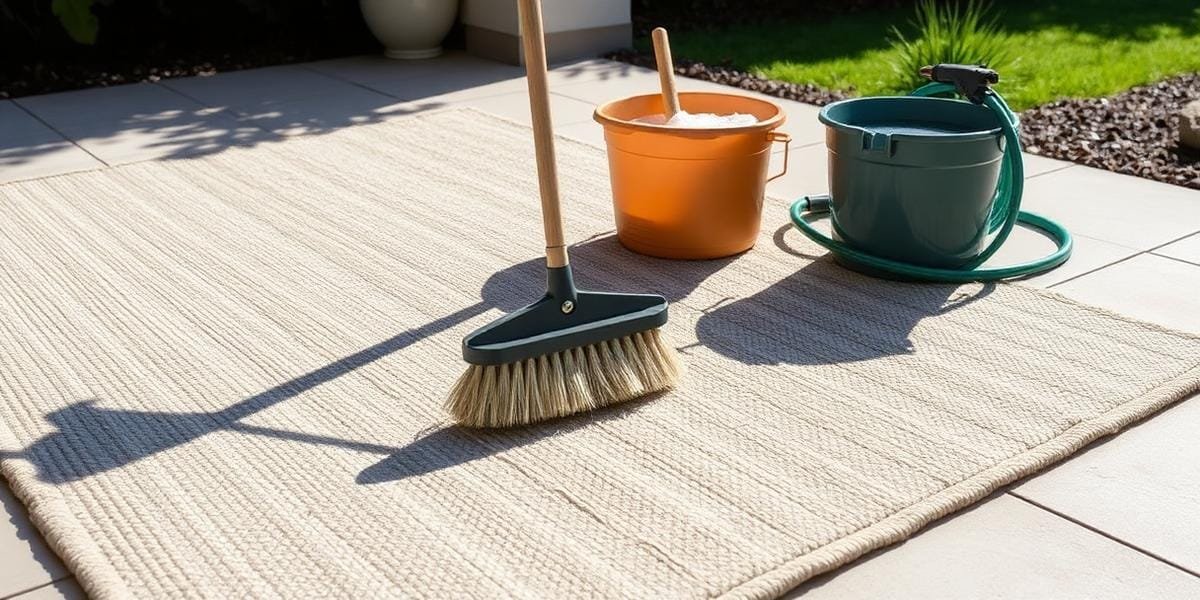
A water-safe synthetic rug can often be washed outdoors on a clean patio, in a garage with drainage, or with a suitable carpet extractor. Do not clean it while it rests directly on hardwood flooring. Moisture can reach the boards through the backing and leave cupping, finish damage, or dark marks.
Use cool or lukewarm water and a low-foam rug detergent. Apply only enough solution to wet the fibers, then work in small sections with a soft brush or extractor. Heavy scrubbing distorts pile and can spread stains. A pressure washer supplies far more force than most residential rugs need and may separate glued backing.
- Vacuum the rug and test the cleaner.
- Pre-treat visible stains with a fiber-safe product.
- Apply diluted detergent in controlled sections.
- Agitate lightly in the pile’s natural direction.
- Rinse or extract until little residue remains.
- Run extra suction passes without releasing more solution.
Bissell machines such as the Big Green can clean many nylon, polyester, polypropylene, and colorfast rugs, but the care label still controls the decision. Rental machines also vary in suction. A weak extractor may leave more water behind than it removes, especially in thick pile.
Ruggable gives different instructions because its cover detaches from the pad. The brand recommends cold water, a delicate cycle, mild non-bleach detergent, and low-heat drying. Fabric softener can coat the fibers. Designer collections linked with Jonathan Adler or Morris & Co follow the care directions for their specific rug type, not the reputation of the designer.
Treat Stains Without Spreading Them
Stain removal works through chemistry, timing, and restraint. Blot liquid with white towels, starting at the outside edge and moving inward. Rubbing pushes contamination across a wider area and roughens the pile. Remove solid material with a spoon or dull scraper before applying any liquid cleaner.
Match the treatment to the spill. Cool water suits many protein-based stains because heat can set them. Grease needs a label-approved detergent that can surround oily residue. Pet urine often responds to an enzyme cleaner formulated for rugs, though enzymes and moisture can damage some wool, silk, jute, or unstable dyes.
- Coffee or tea: Blot first, then use a mild rug-safe detergent.
- Mud: Let it dry, vacuum the soil, and treat the remaining mark.
- Cooking oil: Absorb excess oil before applying cleaner.
- Pet accidents: Treat the rug face, backing, and pad when contamination passed through.
- Wax or gum: Harden and lift the material rather than soaking the area.
Avoid pouring vinegar, dish soap, baking soda, and scented products together. Vinegar and baking soda react with each other, reducing the useful cleaning action of both. Too much dish soap leaves sticky residue that attracts new soil. Fragrance may cover an odor for a day while urine, mildew, or food remains in the backing.
A family in a Denver townhouse treated a dog accident on a polypropylene rug with repeated sprays of deodorizer. The smell returned during humid weather because urine had reached the felt pad. They cleaned both sides of the rug, discarded the contaminated pad, and used an enzyme product approved for synthetic fibers. The odor did not return.
Dry the Rug Before Odors and Mold Develop
Drying is part of cleaning, not the stage that follows it. Water can remain inside dense pile or backing long after the surface feels dry. Environmental guidance calls for wet materials to dry within 24 to 48 hours because prolonged dampness creates conditions that support mold growth.
Remove as much water as possible with extraction passes, a clean squeegee, or absorbent towels. Raise the rug so air reaches both sides. Box fans, ceiling fans, air conditioning, and a dehumidifier speed evaporation. In humid places such as Singapore, Miami, or coastal Queensland, an open window may slow drying by bringing wetter air indoors.
- Turn or rotate the rug several times during drying.
- Aim fans across the surface and beneath raised sections.
- Check corners, fringe, and the center of the backing by touch.
- Keep people and pets off the rug until it feels dry throughout.
- Wash and dry the pad separately before reassembly.
Direct summer sun can dry a synthetic rug quickly, but hours of harsh ultraviolet exposure may fade dyes or make some backing materials brittle. Wool can also change shape when one area dries much faster than another. Use bright shade, moving air, and moderate warmth rather than intense heat.
The mistake I see most often is placing a nearly dry rug back under heavy furniture. Air stops moving, dampness remains beneath table legs or sofa edges, and a sour odor appears two days later. Leave the rug uncovered until its underside feels room-temperature and dry, not cool or clammy.
Know When Professional Rug Cleaning Costs Less Than Damage
Call a specialist for silk, viscose, jute, sisal, valuable wool, unstable dyes, handmade fringe, antique Persian rugs, or strong odors that reached the foundation. Professional plants can dust rugs mechanically, test dyes, wash on a controlled floor, extract water, and dry textiles in rooms designed for airflow.
In many United States markets, professional rug cleaning commonly costs about $2.50 to $7 per square foot. An 8-by-10-foot rug may cost roughly $200 to $560 before stain treatment, pickup, repairs, or odor removal. Local labor rates and fiber type can shift that figure. Cleaning an inexpensive machine-made rug may approach its replacement value, while careful treatment makes sense for a hand-knotted piece.
Ask the cleaner these questions before approving work:
- Will the rug receive a fiber and dye test?
- Does the price include dust removal and drying?
- Will the rug leave the home or be cleaned in place?
- How will the company treat pet urine in the backing?
- Does its insurance cover dye bleed, shrinkage, or fringe damage?
Pottery Barn, IKEA, and West Elm often direct owners of large natural-fiber rugs toward professional care. That recommendation reflects construction risk, not only dirt level. A wet jute rug can develop brown cellulose marks, while viscose may stiffen or show permanent shading after aggressive cleaning.
Wrap Up
The safest way to clean a large area rug depends on its fiber, dyes, backing, and construction. Remove dry soil first, test every product, control the amount of water, and treat stains according to their source.
Synthetic and removable-cover rugs often support home cleaning, while wool, jute, silk, viscose, and handmade rugs need more caution. Give drying the same attention as washing. A clean rug that stays damp can become a more expensive problem than the soil you removed.
FAQs Section
Can I use a carpet cleaner on a large area rug?
Yes, when the rug has colorfast synthetic fibers and its care label permits water-based extraction. Do not use a carpet cleaner on jute, sisal, silk, viscose, unstable wool, damaged backing, or rugs marked for professional cleaning.
How often should large area rugs be deep-cleaned?
Most household rugs need deep cleaning about once every 12 to 18 months. Homes with pets, children, outdoor shoes, allergy concerns, or heavy living-room traffic may need cleaning every 6 to 12 months.
How long does a large area rug take to dry?
A low-pile synthetic rug may dry within 6 to 12 hours with strong airflow and extraction, while thick wool or dense backing may need 24 hours or longer. The pile, center, edges, and underside must all dry within 24 to 48 hours.