

TL;DR
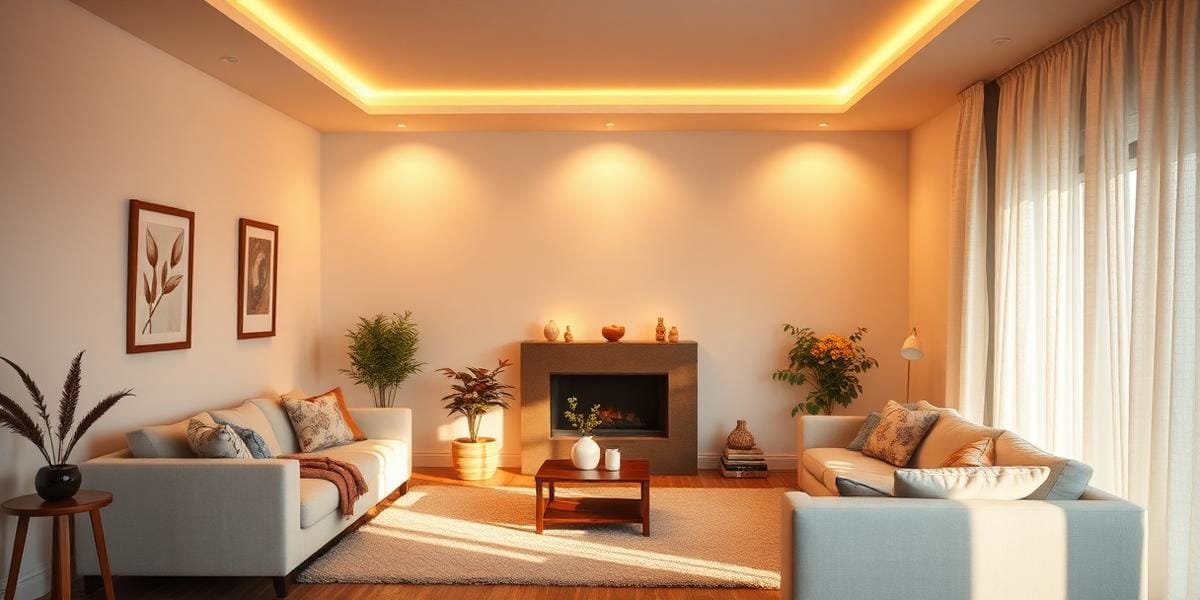
Warm white sits between 2700K and 3000K and gives off a soft, amber glow suited to relaxing spaces. Cool white runs from 4000K to 6500K and produces a brighter, bluer light suited to tasks that need focus. Picking the wrong one won’t ruin a room, but it will make it feel off in ways most people can’t name.
Introduction
Ever walked into a friend’s kitchen and felt like you’d stepped into a hospital waiting room? That’s usually a color temperature mismatch, not bad taste. Light color changes how food looks, how tired you feel by 9 p.m., and even how long you linger in a room. This piece breaks down the actual Kelvin numbers, where each type belongs in a home, and the swaps that fixed real spaces for real people.
What Warm White and Cool White Actually Mean
Color temperature is measured in Kelvin (K), and the scale runs opposite to what most people guess. Lower numbers mean warmer, amber tones. Higher numbers mean cooler, bluer tones. A candle flame sits around 1800K, while an overcast sky can hit 7000K or higher.
- Warm white: 2700K to 3000K, the standard range for most residential bulbs sold at Home Depot and Lowe’s
- Neutral white: 3500K to 4100K, a middle ground often used in bathrooms and home offices
- Cool white: 4000K to 6500K, common in garages, retail spaces, and hospital corridors
- Daylight: 5000K to 6500K, marketed separately by brands like Philips and Cree for task-heavy areas
Philips Hue and GE Lighting both print the Kelvin rating directly on the bulb packaging now, a labeling shift that started gaining traction around 2016 after consumer confusion complaints piled up. Checking that number before checking the wattage saves a return trip to the store.
Why the Color Temperature Changes How a Room Feels
Light color affects melatonin production, the hormone that controls sleepiness. Blue-heavy light, the kind found in 5000K and higher bulbs, suppresses melatonin more than amber light does. That’s the same principle behind the “night mode” setting on an iPhone or a MacBook screen.
A 2014 study from Harvard’s Brigham and Women’s Hospital found that exposure to blue-enriched light in the evening delayed circadian rhythms compared to warmer light exposure. That’s not a reason to fear cool white bulbs entirely, but it explains why a bedroom lit like an operating room can leave someone wired at midnight.
The Kitchen Mistake I See Constantly
A client in Austin once installed 6500K daylight bulbs over her kitchen island because a lighting showroom recommended them for “accuracy.” The result: every dinner photo looked clinical, and her husband complained the space felt cold. Swapping to 3000K under-cabinet strips from Kichler while keeping 4000K over the island fixed the mismatch. Mixing temperatures in one room, without a plan, is the fastest way to make a space feel disjointed.
Room-by-Room Recommendations That Actually Hold Up
Not every room needs the same light, and treating a living room like a laundry room is where most lighting plans fall apart.
- Bedrooms: 2700K warm white supports winding down; brands like Sylvania and Cree sell dimmable versions under $8 per bulb
- Bathrooms: 3000K to 4000K balances flattering skin tones with enough clarity for grooming tasks
- Kitchens: 3500K to 4000K over prep areas, warmer near dining nooks
- Home offices: 4000K to 5000K reduces eye strain during long screen sessions, according to guidance from the Illuminating Engineering Society
- Garages and workshops: 5000K to 6500K maximizes visibility for detail work like woodworking or car repair
A reader in Ohio wrote in after replacing her home office lighting with 6500K bulbs meant for a garage. She reported headaches within two weeks. Dropping to 4500K solved it. Task lighting needs brightness, not necessarily the coldest available temperature.
CRI Matters as Much as Kelvin
Color Rendering Index, or CRI, measures how accurately a bulb shows true colors compared to natural sunlight, which sits at CRI 100. A bulb can be the “right” Kelvin rating and still make skin look sallow or fabric look dull if the CRI is below 80. Brands like Soraa and Philips now advertise CRI 90-plus bulbs specifically for closets, makeup mirrors, and art studios, where color accuracy carries real consequences.
Cost, Lifespan, and the Energy Angle
Warm white and cool white LEDs cost roughly the same to manufacture, so price differences usually come down to brand and CRI rating rather than color temperature itself. A basic Cree 2700K LED runs about $2 to $4 per bulb, while a high-CRI Soraa bulb in either temperature can run $12 or more.
Energy use doesn’t change based on warm versus cool either. A 9-watt LED draws 9 watts whether it’s rated 2700K or 5000K. The real savings story is LED versus incandescent, not warm versus cool. The U.S. Department of Energy estimates LED bulbs use at least 75 percent less energy than incandescent bulbs and last 25 times longer, a fact that matters more for a monthly electric bill than color choice ever will.
When Smart Bulbs Change the Equation
Tunable smart bulbs from Philips Hue, LIFX, and Wyze let a single fixture shift between 2000K and 6500K depending on the time of day. This solves the mixing problem entirely for people who don’t want to commit to one temperature per room. The tradeoff is cost. A four-pack of Hue White Ambiance bulbs runs close to $130, compared to $15 for a four-pack of fixed 2700K bulbs from a hardware store brand like EcoSmart.
Common Mistakes People Make With Warm and Cool White
Most lighting regret comes from a handful of repeatable errors, not bad luck.
- Buying bulbs based on brightness (lumens) alone and ignoring Kelvin entirely
- Mixing 3000K and 5000K bulbs in the same open-plan room without a visual divider
- Installing cool white in a nursery or bedroom, then wondering why bedtime got harder
- Choosing the cheapest bulb without checking CRI, then complaining that clothes look wrong in the closet
- Assuming smart bulbs are one-size-fits-all instead of testing a single bulb before buying a full set
A furniture retailer, similar in approach to West Elm’s in-store lighting displays, often stages rooms with warm white to make wood tones and upholstery look richer in photos. That’s a deliberate merchandising choice worth borrowing at home, especially in living rooms built around wood furniture or a Ruggable area rug meant to look inviting rather than clinical.
Wrap Up
Warm white works best where comfort and relaxation matter most, while cool white earns its place wherever focus and visibility take priority. The Kelvin number on the box tells the real story, not the marketing language wrapped around it. Testing one bulb in a room before committing to a full set remains the cheapest insurance against a lighting mismatch. Get the temperature right and a room stops fighting the mood it’s supposed to set.
FAQs
Is warm white or cool white better for a living room?
Warm white, typically 2700K to 3000K, tends to suit living rooms better because it supports relaxation and makes furniture and skin tones look more flattering.
What Kelvin is best for reading?
A range of 3500K to 4500K balances enough brightness for text clarity without the harshness of pure daylight bulbs, making it a common pick for reading lamps.
Can I mix warm white and cool white bulbs in the same room?
Mixing is possible but usually looks inconsistent unless the temperatures are separated by function, such as warm white for ambient lighting and cool white for a distinct task zone.