
TL;DR
High-quality rugs command premium prices because of intense manual labor, high-grade natural materials, and multi-month production timelines. While mass-produced alternatives offer temporary savings, authentic hand-knotted pieces serve as long-term investments that retain value over decades.
Introduction
Why does a single piece of textile for your floor cost more than a high-end sofa or a major kitchen appliance? Walking through a showroom can cause immediate sticker shock when a beautiful wool or silk floor covering carries a four-figure price tag. Understanding the labor, material purity, and heritage artistry involved changes how you view these interior design elements. This analysis uncovers the real mechanics of textile production so you can make informed buying decisions for your home.
The Massive Disconnect in Manufacturing Methods
The primary factor dictating retail cost is how the textile is built. Machine-woven pieces from mass-market brands use computerized power looms to finish a product in mere minutes, which drastically lowers the cost of entry. In sharp contrast, a genuine hand-knotted piece requires an artisan to tie individual knots across a vertical warp line by line, a process that can take a team of three weavers over a year to complete.
This vast difference in labor hours explains why mass-produced options remain cheap while hand-crafted pieces command investment pricing. Automated looms rapidly spit out hundreds of identical items daily, sacrificing structural strength and pattern uniqueness. Hand-weaving relies on human hands ensuring every knot is tied with consistent tension, creating a durable fabric that withstands decades of constant daily use.
- Machine-tufted designs use a mechanized gun to push yarn into a canvas backing, requiring chemical latex glues to hold the fibers in place.
- Hand-knotted textiles feature hundreds of thousands of individual knots per square meter, offering unparalleled durability without structural adhesives.
- Power-loom variants from large retailers rely on synthetic polypropylene fibers that look decent initially but degrade quickly under heavy foot traffic.
An example of this production split is visible when comparing a standard entry-level synthetic piece from IKEA with an heirloom heritage rug sourced from traditional weaving regions in Jaipur, India. The machine-made item utilizes petroleum-based plastics and automated assembly to hit a double-digit price point. Meanwhile, a traditional hand-knotted Persian piece involves custom-dyed wool spun by hand, demanding months of specialized labor that naturally pushes costs past several thousand dollars.
Material Purity and the Expense of Natural Fibers
The raw ingredients used to spin the yarn play a massive role in the final price of home textiles. Premium manufacturers prioritize New Zealand wool, hand-spun Tibetan wool, and pure mulberry silk because these fibers possess natural resilience, luster, and stain resistance. Synthetic materials like polyester, nylon, and polypropylene are incredibly cheap to manufacture but lack the organic structural integrity and longevity of natural options.
Sourcing these high-grade natural materials involves extensive agricultural and processing costs before the weaving process even begins. Sheep raised in high-altitude environments produce wool with higher lanolin content, making the resulting yarn softer and more resilient against spills. Pure silk requires harvesting thousands of silkworm cocoons, which demands delicate processing that naturally drives up material costs on global textile exchanges.
- Pure mulberry silk reflects light beautifully and possesses high tensile strength, making silk-blend floor coverings highly sought after by collectors.
- Hand-spun wool retains natural lanolin oils, which creates an inherent protective barrier against liquid spills and everyday dirt accumulation.
- Synthetic fibers attract oils and trap grime within their plastic structures, leading to premature matting and discoloration that cannot be cleaned away.
Consider the collections found at specialty design retailers like West Elm or Pottery Barn, where prices scale upward depending on the percentage of natural wool versus synthetic blends. A pure wool piece costs significantly more upfront than its synthetic lookalike because harvesting, scouring, and spinning high-grade animal fibers involves significant agricultural expenses. This material investment directly impacts how long the product remains beautiful in your living space.
Microscopic Detail and the Knots Per Square Inch Metric
In the world of high-end floor art, density serves as a universal baseline for valuation. Knots Per Square Inch, or KPSI, measures the complexity and refinement of a hand-woven design. A low KPSI means the design will look blocky and geometric, whereas a high KPSI allows for intricate, curvilinear floral patterns that mimic fine paintings. Achieving a high knot density requires incredibly thin threads, magnifying the time required to complete the piece.
Weavers must spend far more physical energy and focus when working on dense designs. Packing rows tightly with a heavy iron comb ensures structural permanence but slows daily production down to a few vertical inches. Buyers pay for this extreme density because it translates directly into a clearer design aesthetic and a textile that refuses to flatten out under heavy furniture.
- Low-density items feature under fifty knots per square inch and are relatively quick to weave, resulting in thicker, chunkier textures.
- Investment-grade collector pieces frequently exceed four hundred knots per square inch, requiring precision tools and immense structural patience.
- High KPSI counts mean the rug pile is incredibly dense, preventing dirt particles from settling deep into the foundation where they cause friction damage.
A classic example is the traditional silk rugs from Isfahan or Nain in Iran, where generational artisans spend years completing a single six-by-nine-foot masterpiece. These collectors items achieve such high density that they remain structurally sound for over a century, defying the wear and tear that ruins standard floor coverings. The high price reflects the concentrated human life hours required to pack those millions of individual knots together.
The Hidden Realities of Dyeing and Artistry
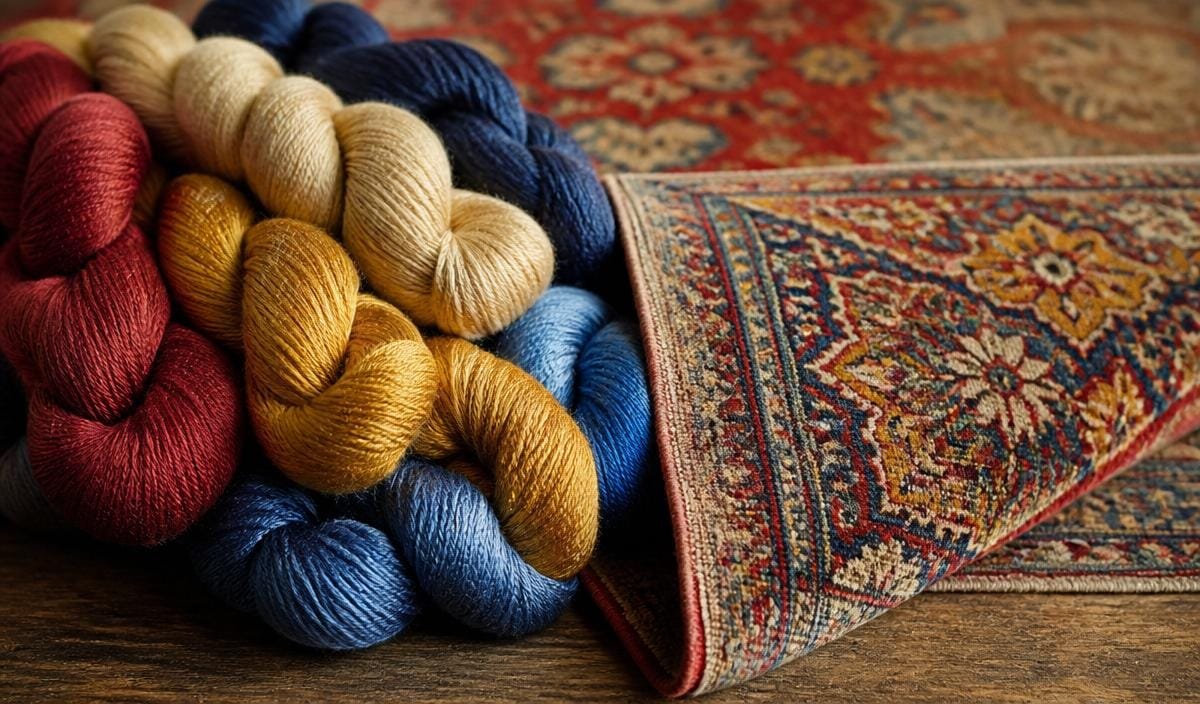
Before a single strand of yarn reaches a loom, color production introduces another layer of significant expense. True master weavers utilize natural vegetable dyes derived from madder root, pomegranate rinds, walnut husks, and indigo leaves. This traditional extraction process takes days of boiling and testing to achieve stable, UV-resistant hues that age gracefully into a sought-after patina rather than fading harshly under sunlight.
Designing the complex paper maps, known as talim or talim charts, requires a master artist who plots every single knot color before weaving begins. This blueprint guides the weaving team through intricate color changes over months of production. The cost of a rug incorporates the intellectual property and artistic mastery of these historic designers who spend weeks perfecting a single symmetry pattern.
- Plant-derived vegetable dyes create subtle color variations known as abrash, which gives authentic textiles their distinctive depth and human character.
- Industrial chemical synthetics produce perfectly uniform colors quickly but often emit volatile organic compounds during their initial lifespan.
- Authentic master-designed charts prevent pattern repetition, making each premium hand-knotted piece a singular work of art that cannot be duplicated.
When looking at brands like Safavieh or specialized antique dealers, the visual difference between a chemically dyed piece and a natural vegetable-dyed piece is stark. The natural dyes interact with changing room lighting throughout the day, creating a dynamic visual experience that synthetic options simply cannot replicate. Paying for a premium rug means purchasing a hand-painted piece of history where color formulation is an elite, guarded discipline.
The Multi-Step Finishing Process and Global Logistics
The journey of a high-end textile does not end when the weavers cut it from the loom. Every premium rug undergoes an extensive washing, shearing, and stretching process to prepare it for international shipping and high-end showrooms. This post-weaving phase requires specialized washing facilities where the textiles are scrubbed with fresh water and natural soaps to soften the wool fibers and bring out the deep luster of the dyes.
Skilled artisans must then use long, flat shears to manually trim the pile across the entire surface, ensuring an even height and crisp design clarity. If the pile is cut too deep, the design is ruined; if it is left too long, the pattern looks blurry. This high-stakes manual detailing adds days of labor cost to the final product before it leaves the origin country.
- Specialized artisans use long, flat shears to manually trim the pile across the entire surface, ensuring an even height and crisp design clarity.
- The textiles are securely pinned to large wooden frames under tension to correct any natural skewing or warping that occurred during the tight weaving phase.
- Global shipping costs, customs duties, and import tariffs from traditional weaving countries add significant layers to the final retail price tag.
A real-world example of this logistical journey occurs with high-end global design brands who manage complex supply chains spanning across Turkey, Pakistan, and Nepal. Before a hand-woven piece reaches a showroom floor in New York or San Francisco, it travels thousands of miles, passing through meticulous quality inspections and professional finishing houses. These behind-the-scenes steps ensure the final product lies perfectly flat and resists shedding when placed under your dining table or bed frame.
Lifespan Expectations and Long-Term Value Assessments
When analyzing the financial commitment of home decor, savvy consumers evaluate the total cost of ownership over decades rather than looking solely at the checkout price. A cheap synthetic piece priced at two hundred dollars might last three years before looking flat, matted, and permanently stained, forcing a replacement cycle. An heirloom-quality wool or silk piece can withstand heavy usage for generations, often appreciating in financial value as it transforms into an antique.
Maintaining these pieces is far more economical over time because natural fibers respond beautifully to deep cleaning. Cheap backing materials present on lower-end products crumble when saturated with water, destroying the item during its first wash. High-quality pieces are built to be washed repeatedly, allowing owners to easily refresh their appearance after years of household spills.
- Cheap machine-made alternatives cannot be easily washed; professional submersion cleaning often dissolves their synthetic backing glues.
- Antique hand-knotted pieces can handle repeated professional hand-washing, easily removing decades of embedded dust and reviving the wool fibers.
- Washable modern concepts like Ruggable offer practicality for pet owners but lack the permanent structural presence of traditional thick-pile rugs.
A practical case study involves a busy household in Chicago that purchased a low-cost synthetic area rug for their main living room. Within twenty-four months, high foot traffic from family members and pets flattened the pile, and simple liquid spills left permanent discoloration, leading straight to the local landfill. They replaced it with an authentic hand-knotted wool piece sourced from a reputable dealer; ten years later, after two professional washes, that wool rug looks as vibrant as the day it was installed.
Wrap Up
Evaluating floor coverings requires shifting your perspective from simple home utility to appreciating functional art. The initial financial outlay for an authentic hand-knotted wool or silk piece covers hundreds of hours of manual labor, premium natural ingredients, and centuries of artistic tradition. Investing in a well-made textile eliminates the frustrating cycle of replacing degraded synthetic options every few years. Choosing quality ensures your floor features a durable, beautiful foundation that anchors your living space for a lifetime.
FAQs Section
Why do hand-knotted rugs cost so much more than machine-made ones?
Hand-knotted pieces require skilled artisans to manually tie every single knot line by line, a process taking months or years to complete. Machine-made options use automated power looms to assemble synthetic fibers in minutes, lacking the structural durability and human artistry of hand-woven textiles.
Is wool a better investment for an area rug than synthetic materials?
Yes, high-grade wool contains natural lanolin oils that resist stains, repel liquids, and bounce back from heavy foot traffic over decades. Synthetic fibers like polyester or polypropylene trap dirt quickly and flatten permanently, requiring frequent replacement.
Can an expensive rug actually appreciate in financial value over time?
Authentic hand-knotted rugs made with natural vegetable dyes and exceptional knot density often increase in value as they age into sought-after antiques. Mass-produced tufted or machine-woven variants lose their utility and financial worth immediately after purchase.