
TL;DR
Wool, cotton flatweave, and quality synthetic rugs work well on hardwood when they have breathable construction and a floor-safe rug pad. Avoid rough, sticky, or moisture-trapping backings, size the rug for the room, and lift it regularly to check for grit, dampness, or color changes.
Introduction
A rug can protect hardwood from chair legs, pet traffic, dropped objects, and everyday grit, yet the wrong backing can leave stains or dull patches. The safest choice depends on fiber, pile height, pad material, room humidity, and how the space gets used. The sections below explain which rugs suit oak, maple, walnut, and engineered wood, plus the mistakes that often cause delayed damage.
Rug Materials That Treat Wood Floors Well
Wool remains a strong choice because its fibers spring back after pressure and hold up in living rooms, bedrooms, and dining areas. A dense wool rug also catches dust before it reaches the finish. Cotton flatweaves feel lighter, cost less, and fit under doors. Polypropylene and polyester resist many household stains, which suits homes with children or pets.
Natural plant fibers need more judgment. Jute and sisal bring texture, but they can shed coarse particles that act like sand beneath the rug. They also absorb moisture faster than many synthetic fibers. IKEA’s LOHALS jute rug works better in a dry bedroom than beside a kitchen sink, where spills and humidity can stay hidden against the floor.
Material Checks Before Buying
- Choose wool for long service life, sound control, and comfort in busy rooms.
- Use cotton flatweaves where doors or chair casters need low clearance.
- Pick polypropylene or polyester for spill-prone spaces, paired with a breathable pad.
- Keep jute and sisal in dry rooms and vacuum beneath them often.
A renovated Boston apartment showed the risk of buying by appearance alone. A coarse sisal rug looked right against white oak but left fine abrasion marks after grit collected underneath. Replacing it with low-pile wool and a felt-natural rubber pad stopped the movement and reduced scratching.
The Backing and Rug Pad Matter as Much as the Rug
Hardwood finishes react badly to certain materials. Cheap PVC, synthetic latex, and adhesive mesh can soften, yellow, or bond to some coatings, especially when heat and moisture build beneath the rug. A separate pad made from dense felt, natural rubber, or a felt-rubber blend gives grip without relying on a permanent coating.
Thickness changes performance. A 1/4-inch felt pad adds comfort under a large living-room rug, while a 1/8-inch pad works better near doors or beneath dining chairs. Mohawk Home’s Dual Surface Felted Rug Pad uses felt for cushioning and a rubber side for grip. Ruggable uses a two-part system, so the pad should be clean and dry before the cover returns.
Pad Details That Prevent Damage
- Look for “safe for hardwood,” “non-staining,” and “natural rubber” on the label.
- Cut the pad about one inch smaller than the rug on every side.
- Skip foam shelf liner, bargain adhesive mesh, and pads with a strong chemical odor.
- Test a pad in a hidden area on fresh oil, wax, or polyurethane finishes.
Freshly finished floors need a full cure before rugs go down. A surface may feel dry within days while deeper layers still release solvents. Covering it too soon can trap vapors and create uneven sheen. Finish makers list cure periods that range from several days to a few weeks, depending on chemistry, temperature, and ventilation.
Match Rug Size and Pile to the Room
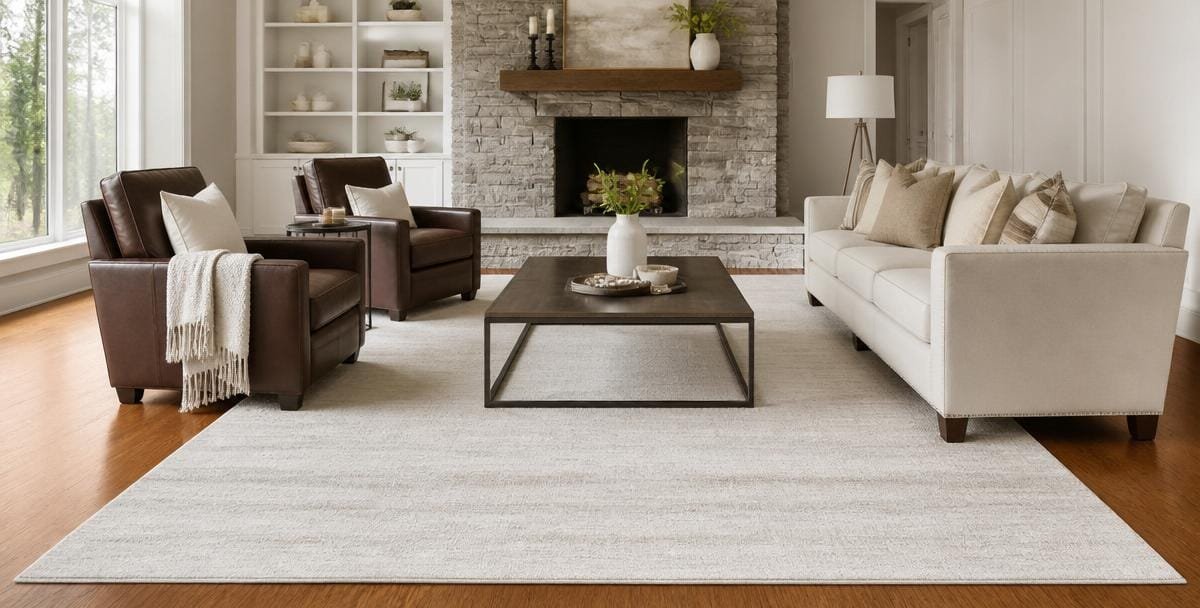
A safe material can still fail when the rug is too small or too thick. Small rugs slide, bunch, and collect dirt around their edges. In a living room, the front legs of the sofa and chairs should usually rest on the rug. An 8-by-10-foot rug often suits a standard seating group, while a 9-by-12-foot size anchors a larger open-plan space.
Dining rooms need more coverage because chair legs move repeatedly. The rug should extend about 24 inches beyond each side of the table, so chairs stay on the surface when pulled back. In hallways, a runner should leave a visible border of wood on both sides. Low pile also reduces trip risk and lets doors clear the rug.
Room-by-Room Choices
- Living room: wool or dense synthetic, medium pile, cushioned felt-rubber pad.
- Dining room: low-pile wool, polypropylene, or washable polyester sized for every chair.
- Bedroom: wool, cotton, or washable fiber wide enough for both sides of the bed.
- Kitchen and entry: flatweave cotton or washable synthetic checked often for water and grit.
A Seattle family placed a 5-by-7-foot rug under a six-seat dining table. Rear chair legs dropped off the rug at every meal, scraping maple and curling the edge. An 8-by-10-foot replacement kept the chairs supported and spread furniture pressure across a larger area.
Brand and Product Options for Different Budgets
Ruggable’s Kamran collection suits households that value machine-washable covers, though its two-part pad needs careful alignment. IKEA’s STOENSE offers soft synthetic pile at a lower price, while LOHALS gives a natural jute look for dry rooms. West Elm’s Souk wool rug and Pottery Barn’s Chunky Wool/Jute rug sit higher in the market and add more texture.
Price depends on size, construction, fiber, and origin. A basic 5-by-8-foot synthetic rug often costs $80 to $350. Washable systems commonly start near $150 and can pass $600 in larger sizes. Hand-tufted or hand-knotted wool may range from about $250 to several thousand dollars. A quality pad often adds $25 to $120.
How the Major Options Compare
- Ruggable fits homes with pets, children, or food spills, but covers can ripple after washing.
- IKEA offers accessible prices, though natural-fiber models need more under-rug cleaning.
- West Elm and Pottery Barn carry heavier wool blends that may shed during early use.
- Measure the room before comparing color, pattern, or collection name.
Price does not measure floor safety. A costly hand-knotted rug can still scratch wood if grit sits beneath it. A modest synthetic rug can perform well for years with the right pad and cleaning routine. Construction, backing, moisture control, and fit matter more than the label.
Cleaning, Sunlight, Humidity, and Long-Term Floor Care
Rugs protect traffic lanes, but they create different light exposure. Sunlight can darken or fade exposed wood while covered boards change more slowly, leaving an outline when the rug moves. Rotate rugs about every six months where practical, and use curtains or UV-filtering film in rooms with strong afternoon sun.
Vacuum both sides of the rug and clean the floor beneath it every one to three months, depending on pets, shoes, and outdoor dust. Lift kitchen and entry rugs after spills. Many wood-floor professionals target indoor relative humidity near 30 to 50 percent because large swings can make boards shrink, cup, or gap. Rugs cannot correct subfloor moisture.
A Care Routine That Catches Problems Early
- Vacuum beneath the rug before grit becomes an abrasive layer.
- Blot spills at once, then lift the rug and pad until all surfaces dry.
- Rotate rugs and furniture to balance wear and light exposure.
- Check for sticky residue, odor, darkening, or finish transfer each season.
Steam cleaning on the floor can push water through the rug and into board seams. Move the rug to a suitable cleaning area or hire a service that controls moisture. A washable cover may feel dry on top while its backing stays damp, so air-dry it fully before placing it back on wood.
Wrap Up
The best rugs for hardwood floors combine a stable fiber, breathable construction, and a pad made for finished wood. Wool, cotton flatweave, and well-made synthetic rugs cover most rooms, while jute and sisal need dry conditions and frequent cleaning underneath. Measure for furniture movement, control moisture, and inspect the floor several times a year. Those habits protect the finish more reliably than brand or price alone.
FAQs Section
What Type of Rug Is Safest for Hardwood Floors?
Wool, cotton flatweave, and low-pile synthetic rugs are safe choices when paired with a non-staining felt or natural rubber pad. Avoid rough backings, adhesive mesh, and materials that trap moisture.
Do Rugs Need Pads on Hardwood Floors?
Yes. A floor-safe pad reduces slipping, protects the finish from friction, and adds cushioning. Choose dense felt, natural rubber, or a felt-rubber blend labeled for hardwood.
Can Rubber-Backed Rugs Damage Hardwood Floors?
Some rubber and PVC backings can discolor, stick to, or dull certain finishes, especially in warm or damp rooms. Use a separate natural rubber pad rated for hardwood and inspect beneath it regularly.