

TL;DR
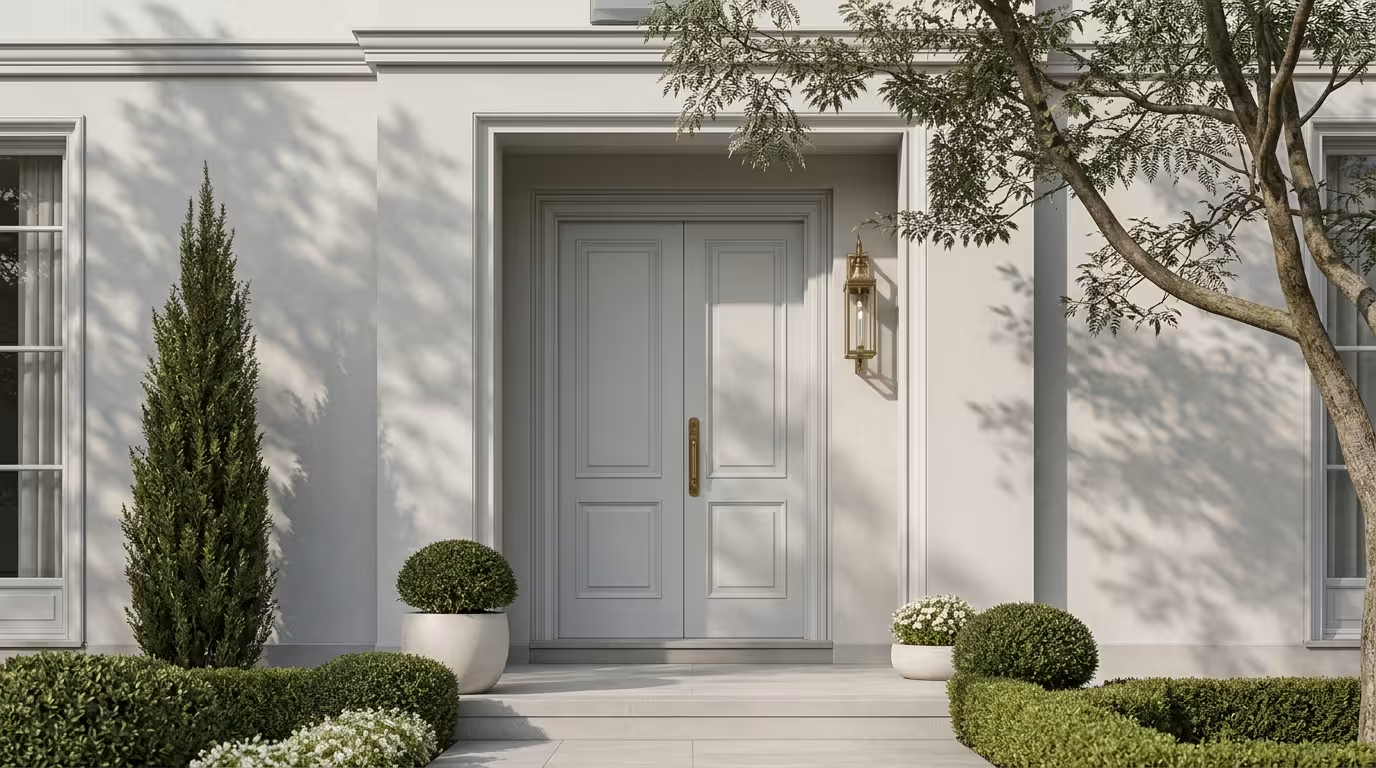
Two panel doors fit modern interiors because the vertical split reads taller, the flat field hides wear, and the proportion sits comfortably with flat casing and matte hardware. They cost roughly the same as builder-grade six panel slabs once installed.
Introduction
Ever stood in a new build and felt the doors were fighting the room? Most spec homes from 2018 to 2024 ship six panel colonial slabs under minimalist trim, and the mismatch shows before the paint color does. This piece walks through why two panel doors solve that, where they fail, what they cost in 2025, and which finishes survive a year of toddlers, Labradors, and a busy Roomba.
The Geometry That Quietly Reads Modern
A two panel door splits the slab into a short top rectangle and a tall bottom rectangle, usually near a 1 to 2 ratio. That single cross rail lands around eye level on an 80 inch slab and near the lever on a 96 inch slab, so the proportion always reads intentional. Six panel and five panel doors repeat smaller frames, which pulls the eye toward Craftsman and Victorian cues.
Designers working on Dwell-style remodels in Portland and Austin reach for the format because it borrows from Shaker cabinetry without copying it. The shadow line around each panel is typically 3/8 inch deep, enough to catch afternoon light through a west-facing window, but shallow enough that a single microfiber pass cleans the whole face.
Where the cross rail should sit
On a standard 80 inch door, the cross rail belongs about 32 inches from the floor. Push it to 36 and the door starts feeling like a half-Dutch piece, which fights flat ceilings. Production lines like Masonite Heritage and JELD WEN Moda 1000 ship the rail pre set, so this is rarely a field decision for homeowners.
Materials That Actually Hold Up at Home
Solid core MDF is the workhorse for interior two panel slabs. At Home Depot in 2025 it runs 180 to 320 dollars per door, takes paint like a car body, and closes with a low thunk instead of a hollow rattle. Hollow core versions exist near 90 dollars, but the top rail tends to telegraph the glue joint after one humid summer in Houston or Tampa.
- Solid core MDF: cleanest paint finish, heaviest swing, quietest close
- Engineered poplar: stable in coastal humidity, accepts stain well
- White oak veneer: warm grain, pairs with wide plank flooring
- Walnut: high cost, custom feel, scratches show without a hardwax oil
A family in Denver swapped twelve hollow core six panel doors for solid core two panel slabs from TruStile during a 2023 refresh. The total landed near 4,800 dollars installed, and the bedrooms went from echoing the hallway to actually muffling a late night TV.
Hardware That Stops Fighting the Door
The flat field of a two panel door works as a backdrop, so the lever becomes the jewelry. Matte black levers from Emtek, Schlage Latitude, and Baldwin Reserve sit cleanly on a white painted slab. On stained white oak, satin brass from Rejuvenation or Rocky Mountain Hardware warms the grain without slipping into gold rush territory.
Skip glass knobs and ornate rosettes here. Both were drawn for the beadwork on Victorian doors and read busy against the calm two panel split. A 2-3/4 inch square rosette is the safer default for almost any build completed after 2015, and it lines up neatly with rectangular cabinet pulls in the kitchen.
Hinges most owners forget
Specify three 4 inch ball bearing hinges per door, finish matched to the lever. Standard two knuckle residential hinges sag on solid core slabs within roughly 18 months, especially on closets that get yanked open twice a day. The upgrade costs about 9 dollars per door at Lowe’s and removes a service call later.
Where Two Panel Doors Genuinely Fail
Honesty matters here. In a 1920s Craftsman in Pasadena with original five panel doors and picture rail intact, dropping a two panel slab in one bedroom looks like a renovation accident. The same logic applies to Tudors with arched casing, English cottages with strap hinges, and farmhouses where batten and ledge doors already define the mudroom.
The second failure mode is short doors. Anything under 78 inches makes the upper panel feel squashed, and the proportion tips into awkward. For 7 foot basement conversions and low attic remodels, a flush slab or a single panel shaker usually photographs better and reads less forced.
Real Costs and a Realistic Phasing Plan
A whole house swap of ten interior doors in a 2,200 square foot home usually lands between 3,200 and 6,500 dollars in 2025. That figure includes new ball bearing hinges, matte black or satin brass levers, and a finish coat of Benjamin Moore Simply White or Sherwin Williams Alabaster. Lead times at TruStile and Sun Mountain sit near 6 to 8 weeks, while big box Masonite stock ships in days.
- Budget tier: Masonite Heritage at Home Depot, around 200 dollars per slab
- Mid tier: JELD WEN Moda 1000, around 380 dollars primed
- Custom tier: TruStile TS1000, 600 to 900 dollars depending on species
A couple in Charlotte phased the project across one year, doing two bedrooms in spring and the main floor before Thanksgiving. Total spend stayed near 4,100 dollars because the same painter handled both visits and the existing flat casing was reused without replacement.
Painting and Finishing Without Lap Marks
Two panel doors reward a careful finish because their flat field shows every brush ridge. Most painters in Atlanta, Nashville, and Minneapolis prime with Zinsser BIN, then spray two coats of Benjamin Moore Advance in a satin sheen. Brushed jobs can look fine on cabinetry, but on doors the long flat panel telegraphs every cutback within six months of light exposure.
For stained white oak slabs, Rubio Monocoat in Pure or Natural is the common pick because it dries fast and re coats easily after a deep scratch. Polyurethane works too, but yellows under south facing light by year three. Plan for one quick refresh coat every four to five years on heavy traffic doors like the laundry and pantry.
Color choices that hold up
White stays the safest default, yet two panel doors handle saturated color better than six panel slabs because the larger flat field reads as a wash rather than a pattern. Farrow and Ball Hague Blue, Sherwin Williams Iron Ore, and Behr Cracked Pepper all photograph cleanly. Match the door, casing, and baseboard in the same color to keep the geometry quiet.
Wrap Up
Two panel doors earn their place in modern homes because the geometry is calm, the surface is honest, and the cost gap over builder grade slabs disappears once hardware is included. Pair them with flat casing, ball bearing hinges, and a lever in either matte black or satin brass. Audit the trim first if the house was built before 1940, since older architecture rarely welcomes the swap.
FAQs
Are two panel doors more expensive than six panel doors?
At the same brand and core construction, the price usually sits within 10 to 20 dollars per slab. Solid core upgrades and finish work drive the real cost difference, not the panel count itself.
Do two panel doors work in small bedrooms?
Yes, as long as the slab is at least 80 inches tall. The vertical split actually makes a 10 by 11 foot bedroom feel taller than a flush slab does in the same opening.
What color works best on a two panel door?
Match the trim color in most modern interiors. Benjamin Moore Simply White, Sherwin Williams Alabaster, and Farrow and Ball Cornforth White all photograph cleanly against oak floors and white oak cabinetry.
Disclaimer
This content shared by Fall Rugs is solely for research and informational purposes. Fall Rugs is not a professional interior design or home renovation consultancy, and the information provided should not be considered professional advice for home improvement or decor. All ideas and suggestions are based on current trends and general knowledge in the home decor industry.