
TL;DR
Burning aromatic sticks often leaves a frustrating trail of dust across tables and shelves. Selecting a thoughtfully engineered stand solves this cleanup problem while adding a functional art piece to your room. Choosing dense materials like heavy brass or wide ceramic dishes ensures your living area remains completely tidy and highly fragrant.
Introduction
Lighting a stick of sandalwood should bring immediate relaxation instead of a lingering worry about the upcoming cleanup. Most traditional flat wooden boat burners fail to catch the dust as it drifts sideways in the slightest draft. Upgrading to a properly designed ash catcher transforms a messy habit into a highly refined daily ritual. You will see how different functional designs prevent damage to your furniture and fit beautifully into a calm home environment.
The Hidden Problem With Standard Incense Burners
Traditional flat wooden boats often leave a grey dusting across your favourite side tables. The issue stems from the angle of the burning stick. As the stick burns down to the core, the grey waste bends outward and inevitably falls past the narrow grooved channel. You end up wiping surfaces daily just to maintain a tidy room.
Airflow plays a massive role in where the residue lands. A slight breeze from an open window or a passing pet alters the dropping path completely. The standard narrow designs fail to account for these environmental variables. They assume a perfectly still room, which simply does not exist in an active living space.
Upgrading your home fragrance accessories requires looking at function first. A proper design captures every particle regardless of drafts or stick length. Moving away from cheap souvenir store options changes how you experience your daily rituals. Your furniture stays pristine while the scent fills the room naturally.
Core Materials That Prevent Mess and Heat Damage
Heavy metals like solid brass offer incredible stability for burning sticks. A heavy metal base will not tip over when bumped, preventing potential fire hazards on your desk. Brass also ages beautifully over time by developing a natural patina from the oils in the smoke. It cleans easily with a soft cloth and a bit of warm water.
Glazed ceramics provide wide surface areas perfect for catching wayward embers. The smooth finish allows you to simply blow the cool dust into the bin without it sticking to the surface. Ceramics offer endless design variations to match specific interior aesthetics. They blend perfectly into minimalist or highly decorated spaces alike.
Heat resistance represents a non-negotiable trait when selecting a base. You need a material that can withstand a glowing ember resting directly on it without scorching. Natural stone and thick glass perform exceptionally well in these high-heat scenarios. Thin plastics or untreated woods will warp or leave dark burn marks over time.
Unique Incense Holders for a Flawless Burn
Finding a piece that perfectly balances visual appeal and absolute functionality takes a bit of digging. You want an accessory that commands attention even when not in use. The market offers several brilliant designs that solve the typical messy fallout. Specific shapes and mechanical approaches exist to keep your tabletops entirely spotless.
The following options represent a shift from disposable items to permanent decor fixtures. Each variation approaches the cleanup problem from a different physical angle. You can select the one that fits your specific spatial constraints and stylistic preferences. They all prioritize catching every single particle of dust before it hits your furniture.
1. The Inverted Brass Cylinder Design
Hanging the stick upside down represents a brilliant shift in how we approach burning. An inverted brass cylinder holds the bamboo core at the top, forcing the fragrant material to burn downward. Gravity does all the heavy lifting here. The grey waste falls straight down in a perfectly vertical line into a deep catch cup.
This method completely eliminates the risk of drafts blowing the residue sideways. I remember dealing with a constantly stained mid-century wooden credenza in my hallway until switching to an inverted style. The heavy metal cup captured the falling debris entirely, saving the sensitive wood finish from further deterioration. It creates a highly controlled environment for your favourite scents.
2. The Extra-Wide Ceramic Basin
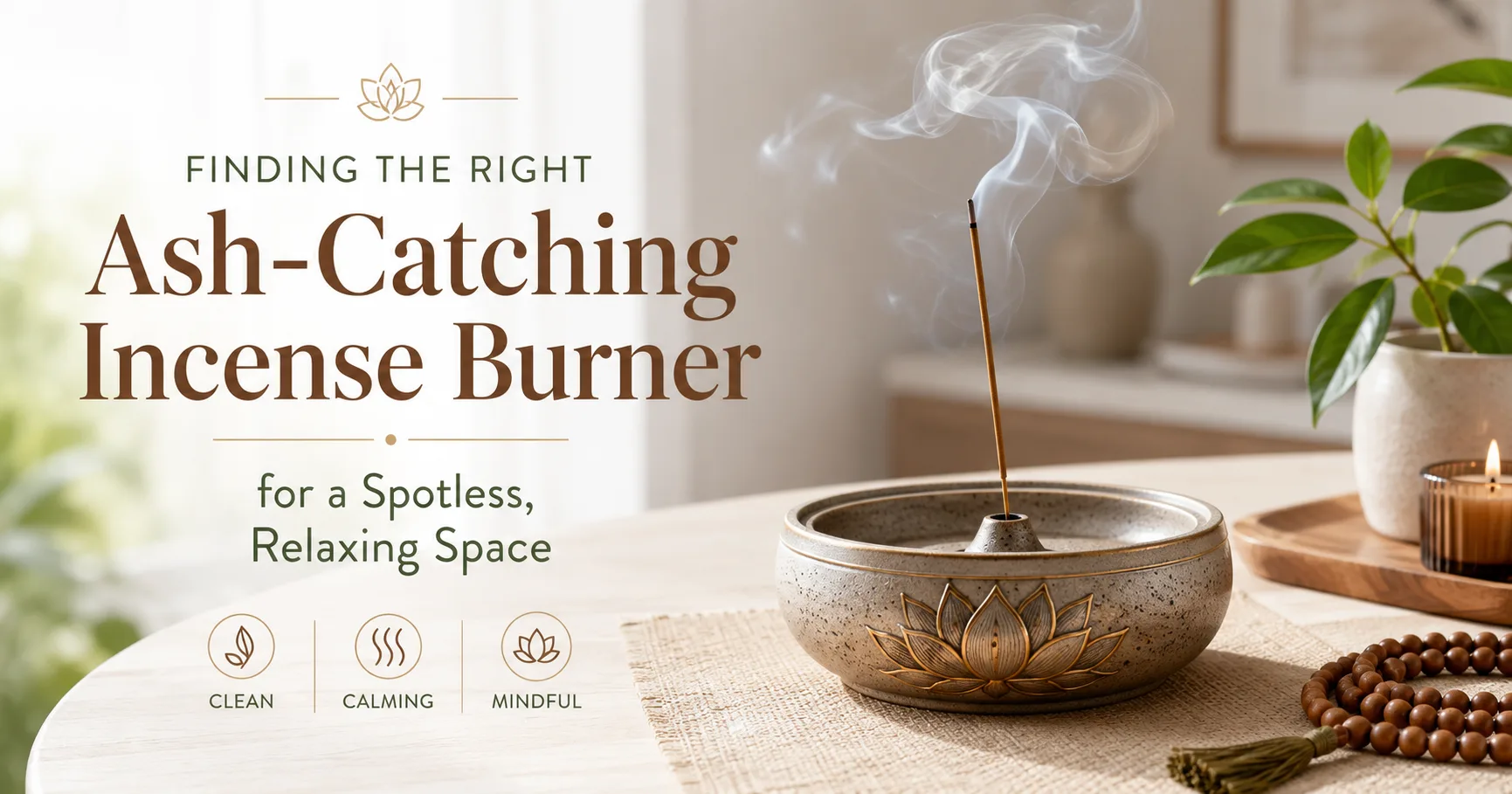
Sometimes the simplest solution involves expanding the target area drastically. An extra-wide ceramic basin mimics a large shallow bowl with a brass pin resting in the dead center. The stick sits upright, giving the falling debris a massive five-inch radius to land safely within the glazed walls.
A large basin design works wonderfully for longer, thicker sticks like Tibetan or hand-rolled Japanese varieties. These thicker styles produce significantly more residue than standard dipped sticks. The wide bowl catches every fragment and serves as a striking centerpiece on a coffee table. Emptying it requires just a quick tip over the trash bin.
3. The Suspended Glass Ash Catcher
Glass brings a sleek, modern touch to the traditional practice of burning resins and sticks. A suspended glass catcher uses a metal arm to hold the stick over a thick glass beaker. Watching the smoke billow and the particles drop into the clear container creates a mesmerizing visual experience.
Cleaning glass requires a bit more frequent attention to maintain its pristine look. The smoke oils will eventually cloud the interior if left unwashed for weeks. Rinsing the beaker with warm soapy water restores the crystal-clear finish instantly. It fits perfectly in contemporary spaces prioritizing transparency and light.
4. The Minimalist Stone Pebble
For those who prefer organic textures, a heavy stone pebble offers understated elegance. These designs feature a naturally shaped river stone or cast concrete block with a perfectly drilled hole. The stone rests inside a slightly larger tray made of matching material to catch the fallout.
The weight of the stone provides unmatched security against accidental tipping. It feels grounded and permanent on a desk or meditation altar. The porous nature of raw stone means it might absorb some oils over time to create a unique, aged appearance. This option suits interiors focused on natural elements and earthy tones.
5. The Vertical Tower Enclosure
Fully enclosing the burning stick offers the highest level of safety and cleanliness. A vertical tower design uses a tall cover with intricate cutouts to house the entire process. The stick stands straight up inside, and the smoke drifts gracefully through the patterned holes.
All the dust remains entirely trapped within the walls of the tower. This style proves incredibly useful in homes with curious pets or active children passing by. You never have to worry about an exposed glowing ember causing accidental burns or damage. The tower itself acts as a sculptural element in the room.
6. The Enclosed Wooden Coffin Box
Traditional aesthetics often meet modern functionality in the enclosed wooden coffin box design. These long rectangular containers feature a hidden compartment for storing sticks and a main burning chamber lined with fireproof material. The stick lays flat horizontally on a fire-resistant cotton mat, a massive departure from standard vertical hanging methods.
The magic happens when you close the heavily carved hinged lid. The smoke escapes slowly through the carved wooden vents to filter the scent evenly into the room. Because the box remains entirely shut during the burn, absolutely zero residue escapes onto your furniture. It acts as a highly secure vault for the burning ember.
7. The Concrete Geometric Block
Industrial design lovers often gravitate toward raw, unfinished materials that carry heavy visual weight. A concrete geometric block offers a brutalist approach to catching falling debris. These holders typically feature a deep angular trough carved right into the center of a heavy rectangular slab.
The stark contrast between a delicate burning stick and a heavy block of concrete creates fantastic visual tension. Concrete provides incredible stability and complete fire immunity. The deep trough easily holds the waste from several sessions before needing to be emptied. It serves as a striking architectural miniature on any modern desk.
How Different Aromatic Types Affect Your Hardware Choice
The specific type of aromatic material you prefer directly dictates the kind of hardware you need to purchase. Traditional bamboo-core sticks drop very predictable, rigid pieces of ash that fall straight down if left undisturbed. These work perfectly with standard vertical pins and narrow bases as long as the air remains still.
Solid resin sticks without a bamboo core, like traditional Japanese Dhoop, burn entirely away and crumble into a very fine, loose powder. This powder scatters much easier than bamboo core residue. Burning solid sticks requires a wide basin or a fully enclosed tower to contain the lightweight dust properly.
Burning raw resin chunks on charcoal discs requires an entirely different thermal setup. I ruined a beautiful glass tray attempting to burn raw frankincense because the intense heat of the charcoal cracked the thin base entirely in half within five minutes. Raw resins require a heavy cast iron or thick brass censer filled with sand to absorb the intense thermal shock.
Strategic Placement for Safety and Scent Dispersion
Where you place your burner dictates how well the fragrance travels through your home. Setting it near a mild cross-breeze helps pull the scent into adjacent rooms naturally. Avoid placing it directly under strong ceiling fans or right next to blasting air conditioning vents. Aggressive airflow causes uneven burning and completely disperses the smoke before you can enjoy it.
Safety dictates keeping the heat source away from draped fabrics or low-hanging plant leaves. A clear vertical path ensures the heat dissipates without warming up anything above it. Placing the base on a solid, level surface like a stone countertop or heavy wooden desk prevents accidental knocks. Always leave a foot of clear space around the entire setup.
The height of the placement also changes your perception of the scent profile. Heavier smoke notes tend to sink toward the floor while lighter floral notes rise toward the ceiling. Positioning the burner at roughly waist or chest height provides the best aromatic experience while you walk through the room. This mid-level placement also keeps the visual element within your natural line of sight.
Establishing a Routine for a Spotless Environment
Buying a highly functional accessory only solves half of the cleanliness equation. Establishing a quick daily habit for emptying the collected dust prevents overflow and accidental spills. Leaving piles of residue to accumulate eventually leads to the very mess you want to avoid. A simple tap into the waste bin every morning keeps the vessel ready for the next use.
Deep cleaning your equipment extends its lifespan and keeps the visual aesthetic sharp. Heavy use leaves behind sticky resin deposits that attract dust and look highly unsightly. Wiping down brass or ceramic surfaces weekly with a damp cloth removes these stubborn oils. Taking two minutes to maintain the piece ensures it remains a beautiful focal point rather than a dirty neglected item.
Storing your unburned sticks near the actual holder creates a dedicated fragrance zone. A small brass tube or wooden box placed beside the main unit keeps everything organized. This prevents loose sticks from shedding colored dust onto your shelves. Creating this little designated station makes the daily lighting ritual feel intentional and clean.
Long-Term Value of Upgrading Your Tools
Spending a bit more on a highly engineered base pays dividends in saved cleaning time. You stop wasting paper towels and surface sprays trying to lift grey smudges off your white furniture. The initial investment in solid brass or thick glass replaces dozens of cheap wooden boats over a decade. It represents a conscious shift toward owning fewer but vastly superior household items.
The peace of mind during the actual burning process changes the entire experience. You no longer cast a nervous glance across the room to check if an ember fell on the carpet. You can light a stick, walk into the kitchen to make tea, and know everything remains perfectly contained. This mental freedom allows you to actually relax and enjoy the calming scent.
Scent plays a massive role in how we perceive our living spaces. Combining beautiful fragrances with a visually pleasing, spotless delivery method creates a truly calming atmosphere. The functional elegance of a proper ash catcher proves that practical items do not have to be ugly. Your home deserves accessories that work flawlessly and look fantastic doing it.
Wrap Up:
Selecting the proper ash-catching stand permanently eliminates the mess associated with burning home fragrances. Upgrading from a cheap wooden boat to a heavy brass or wide ceramic piece protects your surfaces from heat and stains. You can now enjoy your favourite scents in a perfectly clean, highly relaxing environment.
FAQs Section:
How do I stop incense ash from falling outside the holder?
Upgrading to a wider ceramic basin or an inverted brass cylinder ensures all the falling dust stays contained. Placing the stand away from open windows and ceiling fans also stops drafts from blowing the residue sideways.
What is the safest material for an incense burner?
Solid brass, thick cast iron, and heavy concrete represent the safest materials due to their incredible heat resistance and dense weight. These materials will not scorch under a glowing ember and are highly unlikely to tip over accidentally.
How often should I clean my incense holder?
Emptying the loose dust into the trash bin after every single burning session prevents unsightly buildup. Wiping the base with a damp cloth once a week removes sticky smoke oils and keeps the material looking brand new.
Disclaimer:
This content shared by Fall Rugs is solely for research and informational purposes. Fall Rugs is not a professional interior design or home renovation consultancy, and the information provided should not be considered professional advice for home improvement or decor. All ideas and suggestions are based on current trends and general knowledge in the home decor industry.