
TL;DR
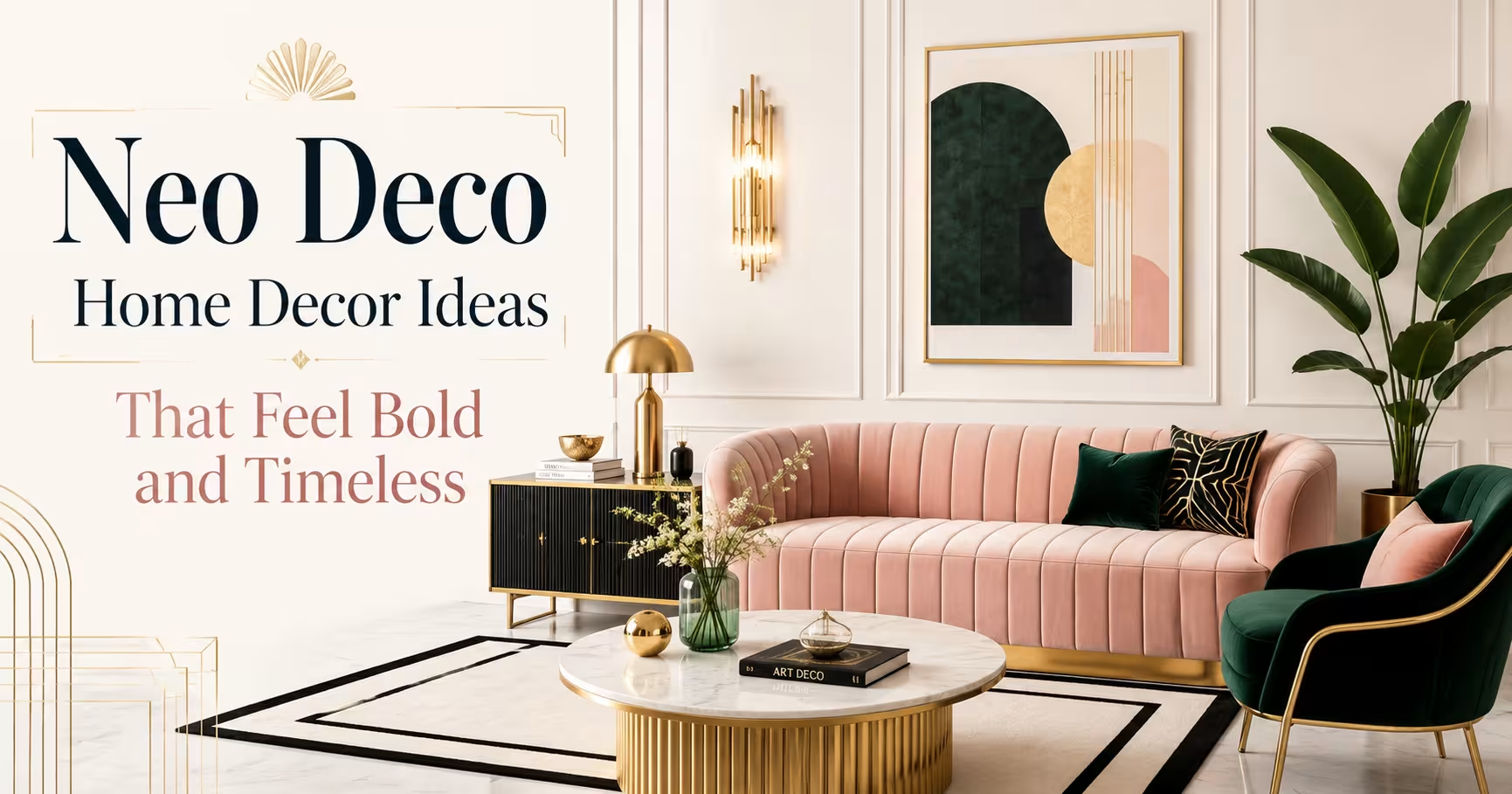
Neo Deco takes the geometric boldness and luxurious material palette of 1920s Art Deco and filters it through a modern, livable lens. It pairs structured symmetry with warm textures, jewel tones, and brass or blackened-steel accents. The result is a home that feels both composed and genuinely comfortable.
Introduction
What happens when one of the most ambitious design movements in history collides with how people actually want to live today? That’s the tension Neo Deco resolves so well. It keeps the visual intelligence of original Art Deco, the strong geometry, the material confidence, the sense of occasion, but strips away the rigidity that made early 20th-century interiors feel more like display rooms than homes. This piece walks through what Neo Deco actually looks like in practice, how to layer it without tipping into costume, and where real-world styling decisions either work brilliantly or fall apart.
What Actually Separates Neo Deco From Classic Art Deco
Original Art Deco emerged in France around 1910 and reached global saturation through the 1920s and 1930s. The style was a deliberate rejection of Art Nouveau’s organic curves, substituting instead the precision of chevrons, sunbursts, stepped arches, and rectilinear grids. Buildings like the Chrysler Building in New York became its most recognizable monuments.
Neo Deco doesn’t replicate that era. It reinterprets it. Where classic Deco leaned toward cold surfaces like polished ebony, chrome, and lacquered veneers, Neo Deco brings in warmer materials: aged brass, smoked oak, bouclé upholstery, and matte ceramic. The geometry remains, but it sits inside rooms designed for daily use rather than public spectacle.
The practical difference shows up quickly when you’re shopping. A classic Deco reproduction often feels stiff, symmetrical to the point of anxiety, and almost uninhabitable. A well-executed Neo Deco room still has structure, but a guest should feel relaxed the moment they sit down. That’s the shift worth understanding before buying a single piece of furniture.
Color Strategy That Holds the Look Together
Jewel tones are the foundation: deep emerald, sapphire blue, burgundy, and forest teal. These colors appeared throughout 1920s design because they photographed dramatically in the monochrome media of the time and looked extraordinary under incandescent light, which still flatters them today.
The Neo Deco version layers those saturated hues against neutrals that feel warm rather than stark. Cream, warm sand, and soft taupe do the structural work without fighting the accent colors. Brands like Farrow & Ball have shades that fit this palette precisely: “Studio Green,” “Hague Blue,” and “Incarnadine” all carry the right depth without crossing into overpowering territory.
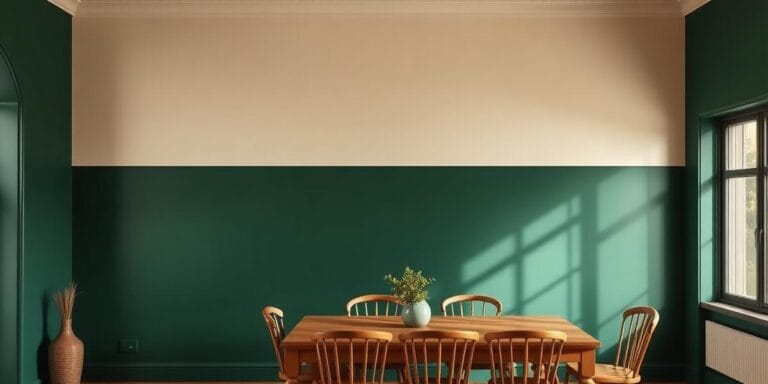
One mistake that repeatedly surfaces in poorly executed Neo Deco rooms is spreading the jewel tones evenly across every surface. The color needs contrast to perform. A single deep emerald wall behind a marble-topped console reads as intentional. Emerald walls, emerald curtains, and an emerald rug in the same room just read as green.
Furniture Choices That Define the Silhouette
The furniture silhouette is where Neo Deco earns or loses its credibility. Look for pieces with clear geometric framing: fluted legs, stepped profiles, and upholstery that’s taut and structured rather than slouchy. West Elm’s geometric-frame sofas and CB2’s Avec collection have both offered pieces that hit this profile without demanding a full period room around them.
Velvet is almost non-negotiable. It catches light in a way that reinforces the glamour dimension, and it pairs beautifully with brass hardware, which acts as the accent metal throughout a Neo Deco scheme. A velvet dining chair in sapphire blue with a brass frame isn’t a costume choice; it’s a well-understood color and material pairing that has a proven track record across multiple decades of high-end interior design.
One real scenario worth mentioning: a design-aware couple in Chicago renovated a 1940s apartment and chose a curved, fluted-front walnut sideboard as the anchor piece in their dining room. Everything else, including the table, the ceiling fixture, the art, organized around that one strong geometric statement. The room didn’t feel cluttered or themed. It felt considered.
Sourcing Furniture Without Overspending
Not every piece needs to come from a luxury retailer. Chairish and 1stDibs regularly carry genuine vintage Deco-adjacent pieces that outperform contemporary reproductions in quality and character. The fluting and joinery on a 1940s French cabinet will almost always exceed what a mass-market reproduction offers at twice the price. Patience in sourcing pays back immediately in authenticity.
When Furniture Choices Backfire
The most common failure point is buying Deco-inspired accent chairs without considering their scale. A pair of low-slung geometric armchairs looks striking in a showroom photograph and suffocating in a real apartment with standard 8-foot ceilings. Proportion matters more in this aesthetic than in almost any other because the style is built on visual precision.
Surfaces, Patterns, and Geometric Detail
Surfaces carry a disproportionate share of the visual work in Neo Deco interiors. Herringbone parquet flooring, chevron tile, and fluted wall panels all contribute to the geometric density that makes the style immediately recognizable. In a kitchen, subway tile arranged in a stacked vertical pattern rather than the usual offset brickwork achieves the same geometric shift with almost no added cost.
Ruggable has produced washable rugs with geometric patterns that sit very close to the Deco aesthetic, making them practical for families who want the look without committing to an expensive silk or wool piece they can’t clean easily. That’s a genuinely useful crossover between design fidelity and real-world function.
Wallpaper in this style deserves more credit than it gets. Brands like Cole & Son and Graham & Brown offer geometric repeat patterns that transform a single accent wall into the dominant design statement in a room. The “Labyrinth” pattern from Cole & Son, for instance, delivers the right level of graphic density without overwhelming a contemporary furniture arrangement.
Lighting as Structural Architecture
Lighting in a Neo Deco interior isn’t decorative in the peripheral sense. It’s structural. The fixture itself contributes to the geometry of the room as directly as the furniture does. A multi-arm brass chandelier with amber glass globes defines the ceiling plane in a way that a recessed lighting grid simply cannot.
Arteriors, a Dallas-based lighting and accessories brand, has built significant catalog depth around exactly this kind of fixture. Their geometric pendants and tiered chandeliers are used regularly by interior designers working in contemporary glamour and Neo Deco registers. Visual Comfort & Co. occupies similar territory at a slightly more accessible price point.
Wall sconces deserve particular attention because they anchor the eye at a human scale, which a ceiling fixture alone doesn’t accomplish. Symmetrically placed sconces on either side of a console or fireplace reinforce the bilateral symmetry that runs through every serious Art Deco-influenced room.
Mixing Metals Without Losing Cohesion
Brass is the primary metal throughout Neo Deco, but mixing it thoughtfully with blackened steel or matte black hardware adds the contrast that keeps a space from feeling monotonous. The rule is simple: choose one warm metal as the dominant and let one darker metal appear sparingly, in drawer pulls, curtain rods, or picture frames. More than two metals in a single room usually breaks the visual logic.
Textiles, Layering, and the Warmth Problem
The one legitimate critique of original Art Deco is that it could feel cold. Polished stone, lacquered surfaces, and chrome hardware added up to rooms that were visually stunning but physically uncomfortable. Neo Deco solves this through textile layering: thick wool throws, velvet cushions, and sisal or jute area rugs that introduce natural texture without disrupting the geometric framework.
Pottery Barn’s performance velvet line and their Studio-McGee collaborations have both produced cushion collections that sit well inside a Neo Deco scheme. The key is choosing cushion covers with geometric embroidery or jacquard weave rather than floral or bohemian prints, which fight the linear discipline of the style.
Linen curtains in a warm ivory or deep jewel tone frame windows without stealing focus from the furniture arrangement. Avoid sheer white curtains; they undercut the richness that Neo Deco depends on and flatten the jewel tones against natural daylight.
A designer working on a home in Melbourne described how a single boucle bench at the foot of a geometric-framed bed unified the entire bedroom scheme. The softness of the boucle offset the structured headboard and the brass bedside fixtures, and the room resolved in a way that a purely hard-material approach never would have achieved.
Wrap Up
Neo Deco works because it asks design to be both bold and honest. The geometry gives it structure, the materials give it warmth, and the color palette gives it the kind of visual presence that a room earns over years rather than an afternoon. Start with one anchor piece, build your color logic around it, and let the lighting do the heavy lifting. The style rewards patience and punishes the impulse to buy everything at once. Get the silhouette right and the details follow.
FAQs
Is Neo Deco the same as Art Deco?
No. Neo Deco borrows the geometric vocabulary and material glamour of the 1920s Art Deco movement but filters them through contemporary comfort standards, warmer materials, and livable proportions. It’s a modern reinterpretation, not a period reproduction.
What colors work best for a Neo Deco interior?
Jewel tones like deep emerald, sapphire blue, and burgundy are central to the palette, balanced against warm neutrals like cream and taupe. The saturated hues work best concentrated on a single statement surface rather than spread evenly throughout a room.
Can Neo Deco work in a small apartment?
Yes, but scale awareness is critical. One strong geometric anchor piece, such as a fluted console or a brass-framed mirror, carries more design weight in a small space than several competing Deco-inspired accessories. Keep the furniture count low and let materials and color do the work.
Disclaimer
This content shared by Fall Rugs is solely for research and informational purposes. Fall Rugs is not a professional interior design or home renovation consultancy, and the information provided should not be considered professional advice for home improvement or decor. All ideas and suggestions are based on current trends and general knowledge in the home decor industry.