
TL;DR
Mixing metal finishes in a bathroom creates depth and personality when done with intention. The key is anchoring the space with one dominant metal, using a secondary finish as an accent, and keeping undertones consistent across the room. Warm metals pair naturally together; so do cool ones, but crossing those temperature lines takes more precision.
Introduction
Does your bathroom feel flat, like every surface is trying too hard to match and somehow still failing? That tension is often the result of forcing a single-metal mandate onto a room that genuinely needs contrast. Mixed metal bathrooms are no longer the territory of design risk-takers; they have become the preferred approach in contemporary residential projects, from renovation flips in Brooklyn brownstones to new-build master suites in Austin.
This article breaks down exactly how metals interact in a bathroom environment, what combinations actually hold up over time, and how to make deliberate choices that look collected rather than accidental.
The Design Logic Behind Mixing Metals
Bathroom hardware sits closer to eye level than almost any other surface in a home. A faucet, a towel ring, a mirror frame: you interact with these objects daily, and your eye registers their relationship to one another almost unconsciously. When every metal is identical, the room can feel corporate, like a hotel that prioritized procurement efficiency over warmth. When metals are mixed without intention, the result reads as budget cuts and indecision.
The sweet spot is a room where metal variation feels chosen. Interior designers often describe this as the difference between a “matched set” and a “curated collection.” A matched set looks purchased; a curated collection looks lived-in and considered. The goal in any bathroom mixing exercise is to arrive at the latter without the former.
Metallic finishes also interact differently with light depending on the time of day and the type of bulb in use. Polished chrome picks up cool, blue-toned light harshly. Unlacquered brass warms under incandescent tones and shifts character under daylight. Understanding this before committing to a combination prevents the common mistake of choosing finishes under showroom lighting that behave completely differently in your actual bathroom.
How Light Temperature Affects Metal Perception
Warm-toned bulbs (2700K to 3000K) favor brass, gold, and bronze finishes, amplifying their richness without washing them out. The same light can make chrome look slightly yellow and dull, which is why chrome bathrooms sometimes feel tired in the evening. Cool-toned or daylight bulbs (4000K to 5000K) make polished nickel and chrome sing, giving them a crisp, clean presence that suits more contemporary or clinical aesthetics.
If your bathroom has a fixed warm bulb situation and you want to bring in a cooler metal like matte black or brushed nickel, position those cooler elements away from direct light sources. A matte black towel bar on a side wall reads beautifully even in warm light because its flat surface doesn’t reflect; it simply grounds.
Choosing a Dominant Metal and a Supporting Cast
Every well-mixed metal bathroom has a hierarchy. One finish gets approximately 60 to 70 percent of the real estate: the faucet, the shower fixtures, the cabinet pulls, the main mirror frame. This is the dominant metal. A second finish accounts for 20 to 30 percent and usually lands on supporting characters: the towel bar, the robe hook, the toilet paper holder, a vanity sconce shade. A third metal, if used at all, appears only in trace amounts: a single decorative piece, a soap dispenser collar, the legs of a freestanding stool.
This ratio is borrowed from color theory’s 60-30-10 rule, and it applies to surfaces and materials with equal reliability. Breaking the rule isn’t impossible, but it demands more confidence and a stronger visual anchor elsewhere in the room, like a strong tile pattern or a statement vanity that redirects attention.
Warm Metal Families: Brass, Gold, Bronze, Copper
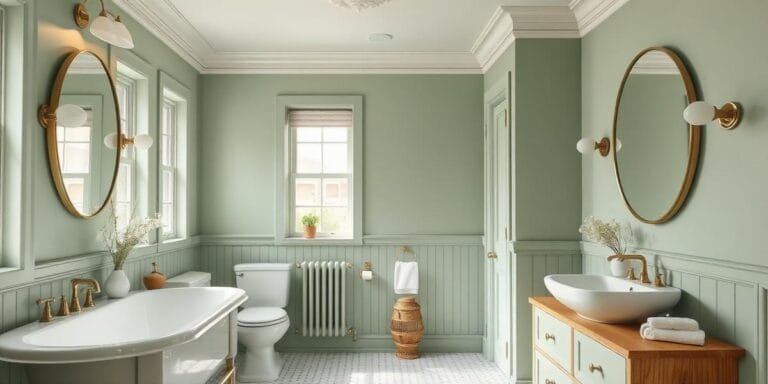
Brass is currently the most versatile warm metal in residential bathrooms, particularly in its brushed and unlacquered forms. It ages gracefully, developing a patina that reads as authenticity rather than wear. Brushed brass paired with oil-rubbed bronze works because both sit in the amber-gold register; the variation in surface texture, one matte and one darker, creates depth without conflict.
Unlacquered brass is a specific choice worth understanding separately. Unlike lacquered brass, which maintains its color indefinitely, unlacquered brass will shift over time. In a heavy-use bathroom, that shift happens within months. Some homeowners love this; others regret it. If you want the warm brass look without the evolution, brushed or satin brass with a protective lacquer coat delivers the aesthetic reliably.
Copper is the wild card in this family. It pairs beautifully with matte black in bathrooms with earthy tile palettes, particularly zellige or concrete-look ceramics. A copper faucet paired with matte black cabinet hardware in a bathroom featuring warm-toned handmade tiles creates a space that feels artisanal without being cluttered.
Cool Metal Families: Chrome, Brushed Nickel, Stainless, Gunmetal
Chrome is the most common bathroom metal in North America and also the most forgiving in combination. It pairs cleanly with brushed nickel because both carry silver-gray undertones; the difference is surface quality, not color temperature. Chrome reflects sharply; brushed nickel diffuses light softly. Together, they create a room with both edge and ease.
Gunmetal and matte black sit at the darker end of the cool family and behave more like neutral anchors than metals in the traditional sense. This is why matte black has become so dominant as a secondary finish: it grounds without competing. A primary chrome or polished nickel bathroom with matte black accents feels modern and intentional precisely because matte black never shouts.
Stainless steel appears most often in fixtures and appliances rather than decorative hardware, but in bathrooms it can read as a design choice when used in a built-in niche, a towel warmer, or an integrated shelf. It pairs naturally with brushed nickel and cool whites.
Real-World Application: Two Bathrooms, Two Approaches
Sarah, a renovation contractor based in Chicago, made an early mistake in a gut-renovated primary bathroom. She selected polished nickel for the faucets and shower system, then chose antique brass cabinet pulls because the client loved the contrast. The combination looked sharp in samples but landed wrong on-site. Antique brass has a yellow-green undertone; polished nickel reads as cool silver. The two finishes looked like they’d been ordered from different decades. The fix was replacing the cabinet pulls with brushed gold, a finish that shares the warmth of antique brass but without the green cast, and suddenly the room read as collected and precise.
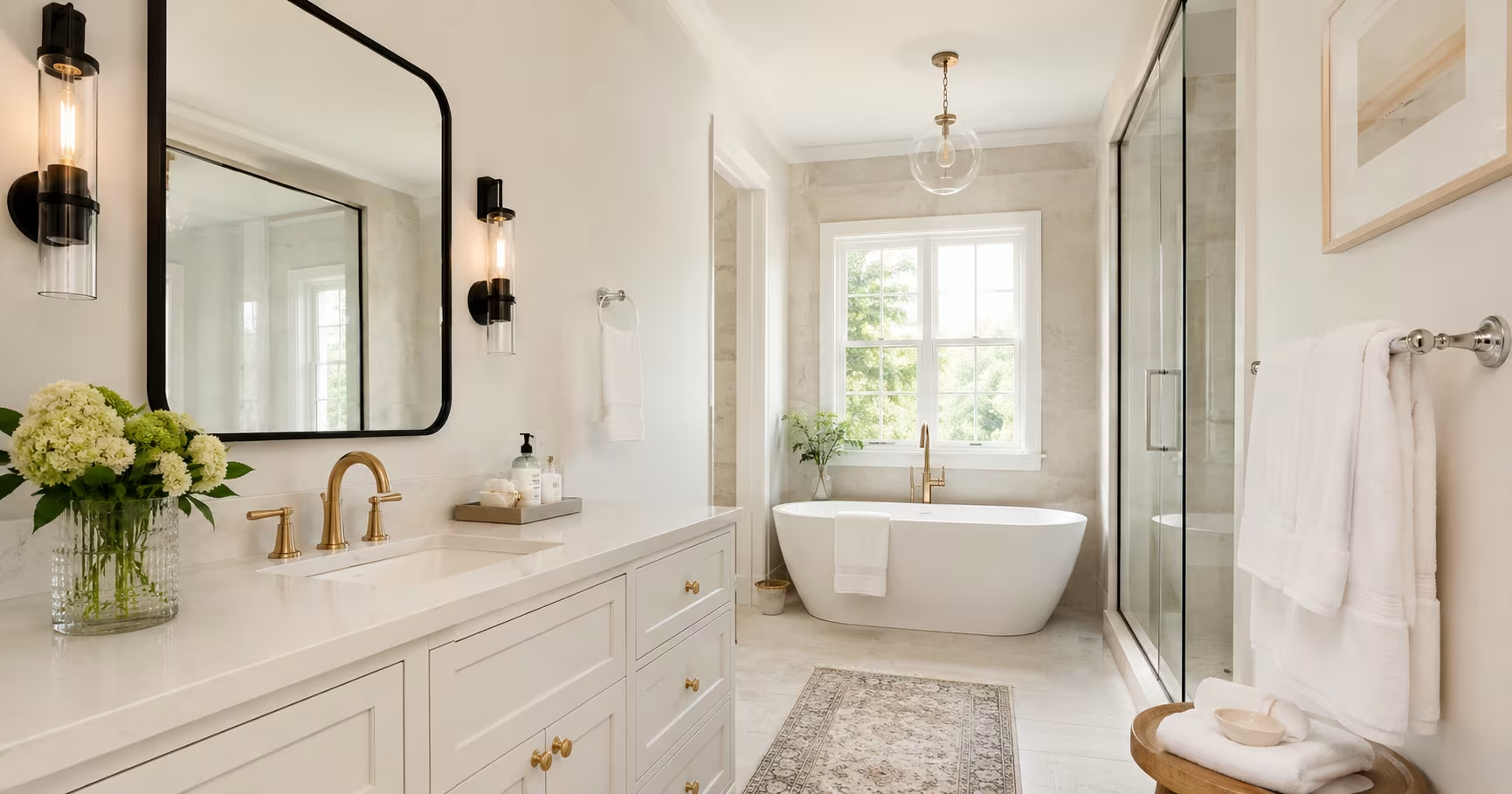
Marcus, a homeowner in Portland, took a different approach in his second bathroom. He anchored the space with matte black: a widespread faucet, a rainfall shower head, and the frame of his round mirror. He then brought in raw brass accessories, a small soap dish, a toothbrush holder, a petite wall sconce with a brass collar. The contrast worked because the two finishes served completely different visual functions. The matte black provided structure and quieted the room; the brass added warmth and human-scale detail. Neither finish competed because they operated at different scales and in different categories of objects.
Common Mistakes and How to Avoid Them
The most frequent error in mixed metal bathrooms is ignoring undertone consistency. Warm metals and cool metals can coexist, but only when the designer is fully aware of the crossing and compensates with other elements, usually through color, lighting, or a strong material anchor like stone or wood. Accidentally mixing a warm brass faucet with a cool chrome mirror frame and a warm bronze sconce in a small bathroom creates a visual noise that no amount of good tile work can fix.
A second mistake is mixing too many finishes at the same scale. If the faucet, the mirror frame, the towel bar, and the cabinet pulls are all different metals, the bathroom feels restless. The eye needs at least one consistent throughline. Pick one of those categories to unify, and let the others vary.
Finish texture matters as much as finish color. High-polish and matte versions of the same metal can actually read as different metals entirely in practice. A polished brass faucet next to a brushed brass towel bar in the same bathroom can look like a mismatch if the contrast is too sharp. When combining polished and matte within the same metal family, use them at different scales or different zones of the room to avoid the appearance of an unintentional mismatch.
Working With What You Already Have
Not every mixed metal bathroom starts from scratch. Many homeowners live with chrome fixtures they can’t immediately replace and want to introduce a warmer finish through accessories. The approach that works most reliably here is adding warmth through portable elements: a brass-framed mirror, brass-handled drawer inserts, a small brass vase near the window ledge. These introductions create warmth without requiring any fixture replacement and can be reversed or updated as the room evolves.
Painting or spraying existing hardware is an option that often comes up, and it can work for decorative pieces. But for fixtures that see daily water contact, spray-painted finishes wear in ways that look unintentional rather than curated. It’s a short-term solution that typically creates a longer-term problem.
Wrap Up
Mixed metal bathrooms succeed when they follow a quiet discipline: one dominant finish, one supporting finish, consistent undertones, and contrast that serves a purpose. The room doesn’t need to match; it needs to make sense. Whether the approach leans warm with brass and bronze, cool with nickel and gunmetal, or crosses temperatures through careful placement, the result should feel like a space that someone thought carefully about rather than assembled in a hurry. Start with the fixtures, commit to the hierarchy, and let the accessories carry the personality.
FAQs
Can you mix brass and chrome in a bathroom?
Yes, but it requires attention to scale and placement. Use one as the dominant fixture finish and the other as an accent on smaller hardware to avoid visual conflict between their warm and cool undertones.
What metal finish is most popular for bathroom hardware right now?
Brushed brass and matte black remain the leading choices in contemporary bathroom design, frequently used together or paired with polished nickel as a secondary finish.
How many metal finishes should you use in one bathroom?
Two finishes work well for most bathrooms; three can succeed in larger or more layered spaces. Going beyond three in a single room almost always creates visual clutter rather than curated contrast.
Disclaimer
This content shared by Fall Rugs is solely for research and informational purposes. Fall Rugs is not a professional interior design or home renovation consultancy, and the information provided should not be considered professional advice for home improvement or decor. All ideas and suggestions are based on current trends and general knowledge in the home decor industry.