
TL;DR
Bathroom lighting upgrades fail when people chase fixtures instead of fixing light placement and layering. Sculptural pendants and cordless table lamps change the room’s proportions without rewiring. The real shift comes from treating the bathroom like a living space, not a surgical suite.
Introduction
Walk into a room where the lighting feels right and your shoulders drop before you notice why. Bathrooms rarely pull that off. Somewhere between the recessed cans and the vanity bar from a big-box store, the whole experience flattened into something functional but forgettable. Fixing it doesn’t mean gutting the walls.
The upgrades worth making involve specific placement choices, smarter fixture swaps, and a willingness to borrow ideas from the rest of the house. This piece walks through what actually works, what backfires, and why a rechargeable lamp on a shelf might matter more than you think.
The Overhead Problem Nobody Talks About
A single ceiling fixture centered in the room casts shadows straight down. That geometry works fine for utility closets. For a space where people shave, apply skincare, or just stand there half-awake at six in the morning, it creates exactly the wrong kind of contrast. Deep shadows pool under the eyes. The corners of the shower feel like a cave. The room shrinks visually because the perimeter falls away into darkness.
The fix isn’t necessarily more wattage. Brightness without direction just turns harsh shadows into washed-out harshness. Photographers understand this intuitively. A softbox positioned at face height reads as natural and forgiving. A bare bulb overhead reads as interrogation lighting. The same principle applies to a bathroom. Moving the primary light source off the ceiling, or at least supplementing it with something at eye level, changes how the room renders skin tones and spatial depth.
Builders default to the single overhead because it meets code cheaply. That doesn’t make it good design. In older homes, the junction box location often dictates the layout for decades unless someone intervenes. Recognizing that the default setup fights against you is the first step toward an upgrade that actually feels different.
Sculptural Pendants as the New Vanity Anchor
Rethinking the Vanity Light Position
Hanging a pendant in front of a mirror used to feel like a boutique hotel gimmick. It’s now one of the cleaner ways to solve the shadow problem without tearing into drywall for sconce wiring. A single sculptural pendant hung at roughly sixty to sixty-six inches from the floor, centered over the sink, pushes light outward and slightly downward. That spread catches the face from multiple angles instead of just the top-down glare of a recessed fixture.
The fixture itself does double duty. A hand-blown glass shade with irregular texture throws light sideways in soft, unpredictable patterns. A ribbed ceramic cylinder channels it more narrowly. Either option gives the eye something to land on that isn’t a chrome faucet or a toothbrush holder. In smaller powder rooms, one well-chosen pendant over a pedestal sink can carry the entire lighting scheme. No secondary fixtures required.
Getting the Scale Right
Scale kills more pendant installations than style does. A shade that looks appropriately dramatic in a catalog spread often measures sixteen inches across. Over a standard twenty-four-inch vanity, that width blocks the mirror and dominates the sightline. The room feels top-heavy immediately. Rule of thumb from field experience: the pendant diameter should not exceed one-third the width of the sink or vanity it hangs above. For a typical bathroom sink base, that usually means staying under ten inches in diameter.
Height matters just as much. Too low and people bump their heads reaching for the faucet. Too high and the light reverts to the same problematic overhead angle. The sweet spot keeps the bottom of the shade roughly at nose height for the primary user. In a household with two very different heights, err toward the taller person’s line of sight and add secondary lighting at the mirror for the shorter user.
Glass, Clay, and Metal Choices
Material dictates light quality more than bulb choice does in many pendants. Clear glass with an exposed bulb creates sharp shadows and visible glare, unless the bulb itself is frosted or the glass carries significant texture. Seeded glass or mouth-blown forms with organic ripples diffuse light gently. Unglazed ceramic shades warm the output considerably, pulling the color temperature toward something closer to candlelight even with a standard LED inside.
Metal shades with opaque sides force all illumination downward into a tight cone. That works beautifully over a freestanding tub where task lighting isn’t the goal but falls apart over a mirror where people need to see their reflection clearly. The bottom opening of a metal shade needs to sit above the tallest user’s head to avoid creating a harsh spotlight effect. In most bathrooms, that constraint pushes metal pendants out of vanity territory and into ambient roles.
Cordless Table Lamps in Wet Spaces
Why This Trend Stuck
Three years ago, cordless table lamps in bathrooms looked like a staging gimmick. Now they solve a genuine problem that hardwired fixtures can’t touch. Most bathrooms lack horizontal surfaces with nearby outlets. Adding a lamp meant running an extension cord behind the toilet or tapping into the vanity circuit, neither of which passed inspection or looked intentional. Rechargeable LED lamps with long battery life and IP44 ratings changed that calculation.
The appeal isn’t just the cord-free look. Lamps sit low, around sixteen to twenty-two inches off the counter or shelf. That height casts light sideways across the vanity, filling in the shadows that overhead fixtures create under the chin and brow. The light level sits exactly where faces need it. It also introduces a softness that sconces and ceiling lights, by nature of being fixed and higher, can’t replicate. The lamp shade diffuses light in all directions at once, mimicking the ambient glow of a living room.
Placement Beyond the Counter
Back-of-toilet shelving, recessed shower niches, and window ledges all become legitimate lamp locations once the cord constraint disappears. A small mushroom lamp tucked into a tiled niche beside the tub transforms bath time lighting without any wiring. Open shelving above the toilet, often dead space visually, gains purpose with a lamp that illuminates the shelf and the wall behind it.
Floor placement works too in larger bathrooms. A slim pharmacy-style floor lamp beside a freestanding tub reads as deliberate rather than improvised. The rechargeable aspect means the lamp migrates. It can move from the vanity counter during morning routines to the tub side in the evening. That flexibility is something hardwired fixtures structurally can’t offer. The trade-off, of course, is remembering to charge it. Most current models with USB-C charging ports run twenty to forty hours on low settings. In daily use, a quick charge every two weeks tends to suffice.
IP Ratings and Real-World Durability
An IP44 rating means the lamp resists splashing water from any direction. That covers steam from a shower, occasional spray from a sink, and the general humidity of a bathroom. It does not mean the lamp can sit inside the shower enclosure or get submerged. IP65 and above rates for direct water jets, but few decorative table lamps carry that designation.
In practice, an IP44 lamp placed eighteen inches or more from the shower opening survives years of daily use without issue. The bigger failure point tends to be the USB port cover. If the silicone flap doesn’t seat fully after charging, moisture creeps in and corrodes the contacts. The lamp still works on battery but becomes impossible to recharge. Checking that cover before placing the lamp back in a steamy bathroom prevents the most common early death these products face.
Layering That Feels Invisible
Task, Ambient, and Accent in One Room
Layered lighting sounds like jargon until someone lives in a single-source bathroom and notices how flat everything looks. Task lighting addresses specific activities: shaving, makeup, tweezing. Ambient lighting fills the room with a comfortable base level of brightness. Accent lighting draws attention to a texture, an art piece, or an architectural detail. A room with all three feels professionally designed even if the fixtures themselves are modest.
The sequence matters more than the fixture count. Start with task lighting at the mirror. Sconces at face height on both sides outperform a single fixture above the mirror every time. Once the face is lit without shadows, add ambient light from a pendant, a semi-flush ceiling mount, or a cordless lamp. Finish with accent lighting, something small and directional like an LED strip under a floating vanity or a picture light over a small print. The accent layer delivers the emotional punch. Without it, the room functions but doesn’t feel finished.
Avoiding the Hospital Effect
Color temperature causes more bathroom lighting disappointments than any other single variable. A 5000K LED in a small, white-tiled bathroom creates an environment that feels sterile, cold, and faintly institutional. That blue-white spectrum mimics midday sun, which sounds appealing in theory. On skin, it highlights every imperfection and drains warmth from the complexion. People look tired and washed out.
Warm white LEDs in the 2700K to 3000K range render skin more faithfully and make tile and stone read as textured rather than flat. The exception is a dedicated makeup area where color matching matters. In that specific case, a switchable fixture that can toggle between 3000K and 4000K gives practical flexibility without condemning the entire room to cool light. Dimmer compatibility matters here too. A fixture dimmed to twenty percent at 2700K feels like candlelight. That same fixture at full brightness provides plenty of task illumination. The range matters more than the maximum output.
Sconce Placement Logic
Height, Spacing, and Mirror Geometry
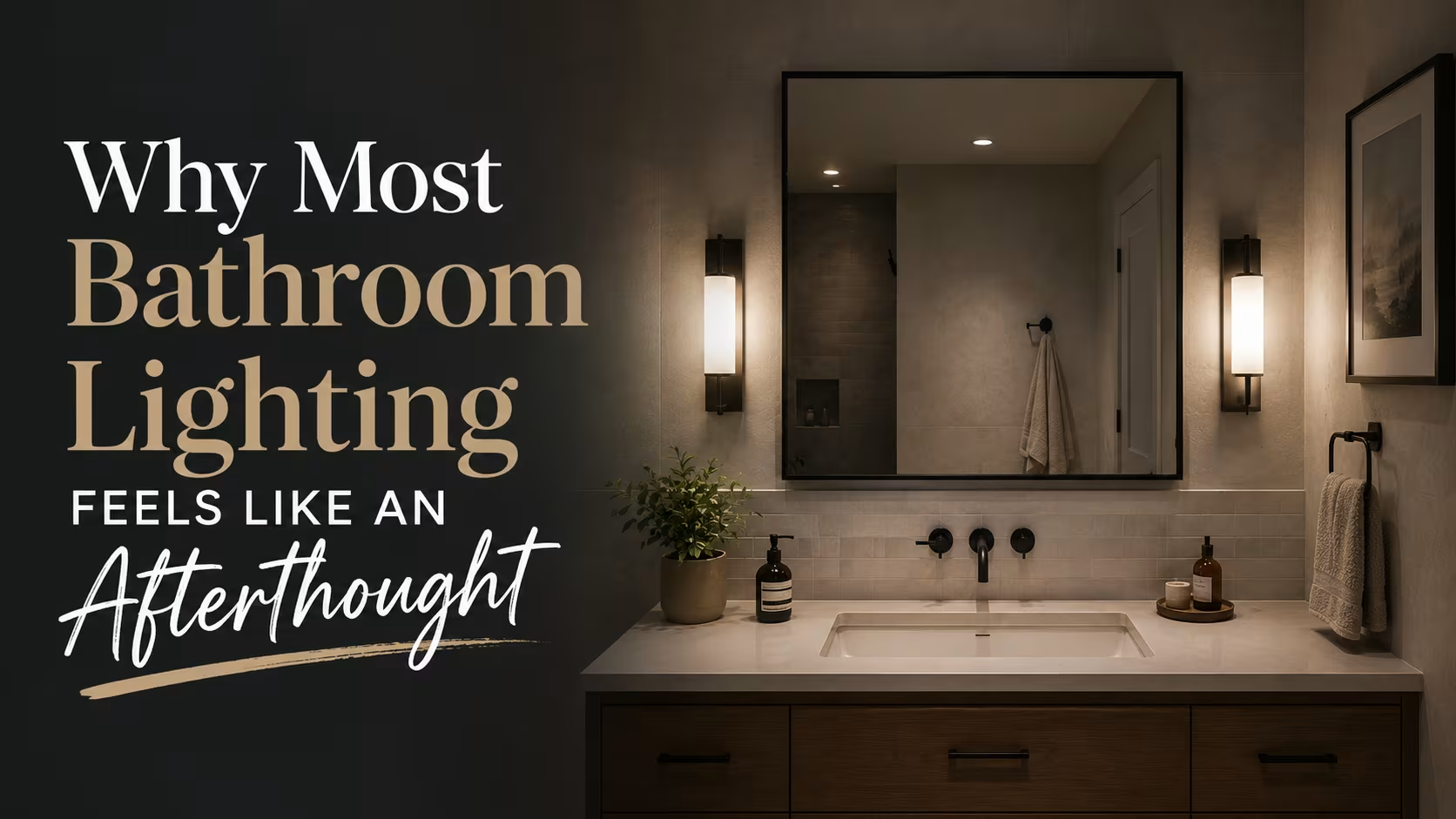
Sconces flanking a mirror should sit roughly thirty-six to forty inches apart, measured from the center of each fixture. That spacing puts light directly beside each eye rather than outside the peripheral vision, where it creates side shadows instead of filling them. The mounting height typically places the center of the shade between sixty and sixty-five inches from the floor. That aligns with the average face height of an adult standing at a vanity.
Mirror width dictates a lot here. A mirror that extends nearly to the vanity edges may force sconces onto the side walls or onto the mirror surface itself. Mirror-mounted sconces, where the fixture attaches through the glass, exist specifically for this scenario. They require planning during mirror fabrication but solve the spacing problem elegantly.
Surface-mounted conduit serves as the fallback for side walls without existing junction boxes. It looks industrial and intentional when done in matching metal finishes, not like a homeowner workaround.
Backplate Size and Wall Proportion
A sconce backplate that’s too small looks like an electrical cover, not a light fixture. The plate needs enough visual mass to anchor the fixture against the wall and the mirror. On a standard bathroom wall with a four-inch junction box, a backplate diameter of five to seven inches provides proportional coverage. Smaller than that and gaps appear. Larger than eight inches and the plate starts competing with the shade for attention.
Finish consistency across backplates, faucets, shower trim, and cabinet hardware ties the room together without demanding matching sets. Brushed nickel sconces work beside polished nickel faucets if the shapes relate. The eye registers silhouette and proportion before it registers finish sheen. Mismatched finishes look like a mistake when the fixture styles clash. They look curated when the forms echo each other across different materials.
Real Rooms, Real Fixes
A couple in a 1920s bungalow had the classic single-bulb ceiling fixture in their only bathroom. The room had a clawfoot tub, a pedestal sink, and a small frosted window. Mornings felt dim and rushed. They wanted to avoid cutting into original plaster walls for new wiring. The solution involved a plug-in wall sconce mounted above a custom wood shelf that sat beside the sink, with the cord run neatly behind the shelf and painted to match the wall.
A rechargeable cordless lamp on the back of the toilet tank added a second light source at counter height. The original ceiling fixture stayed in place, fitted with a warm LED and used strictly for ambient fill when needed. Total cost came in under three hundred dollars. The room went from a cave to somewhere people lingered.
A different project involved new construction with a large double vanity and a twelve-foot ceiling. The builder had installed four recessed cans symmetrically across the ceiling, standard practice for a room of that size. The owners complained that the light felt harsh and flat. Two sculptural glass pendants were hung over the vanity at sixty-six inches from the floor, centered on each sink basin. The recessed cans were retrofitted with dimmable warm LEDs and grouped onto a separate dimmer switch.
The pendants handled task light. The cans dialed back to thirty percent handled ambient fill. A narrow LED strip tucked under the toe kick of the floating vanity provided the accent layer, washing the floor with a soft glow that also served as a nightlight. The three layers operated independently. The room finally felt intentional.
Wrap Up
Bathroom lighting upgrades succeed or fail on placement logic, not fixture expense. The rooms that feel best borrow from living-space lighting instincts: light sources at multiple heights, warm color temperatures, and at least one fixture that isn’t bolted to the ceiling. Sculptural pendants anchor the vanity zone without the hollow shadowing of recessed cans. Cordless lamps introduce warmth exactly where faces and bodies need it. Layering task, ambient, and accent light transforms a utilitarian box into a room with genuine atmosphere. The wiring doesn’t have to change. The thinking behind the light does.
FAQs
Can I hang a pendant light over a bathroom sink without hiring an electrician?
Swapping an existing ceiling fixture for a pendant is straightforward with basic electrical knowledge and a voltage tester, as long as the junction box is rated for the pendant’s weight. Running new wiring to a different ceiling location requires an electrician and a permit in most jurisdictions.
Are cordless lamps bright enough to use as the only light source in a bathroom?
They work best as supplementary lighting rather than the sole source. Most produce between 100 and 300 lumens, enough for ambiance and soft task fill, but a primary fixture or good natural light should handle the main illumination load.
What IP rating do I actually need for a lamp near a shower?
An IP44 rating handles splashes and humidity from normal bathroom use when the lamp stays outside the shower enclosure. Fixtures inside the shower footprint or directly in the spray zone need IP65 or higher to handle water jets safely.
Disclaimer
This content shared by Fall Rugs is solely for research and informational purposes. Fall Rugs is not a professional interior design or home renovation consultancy, and the information provided should not be considered professional advice for home improvement or decor. All ideas and suggestions are based on current trends and general knowledge in the home decor industry.