

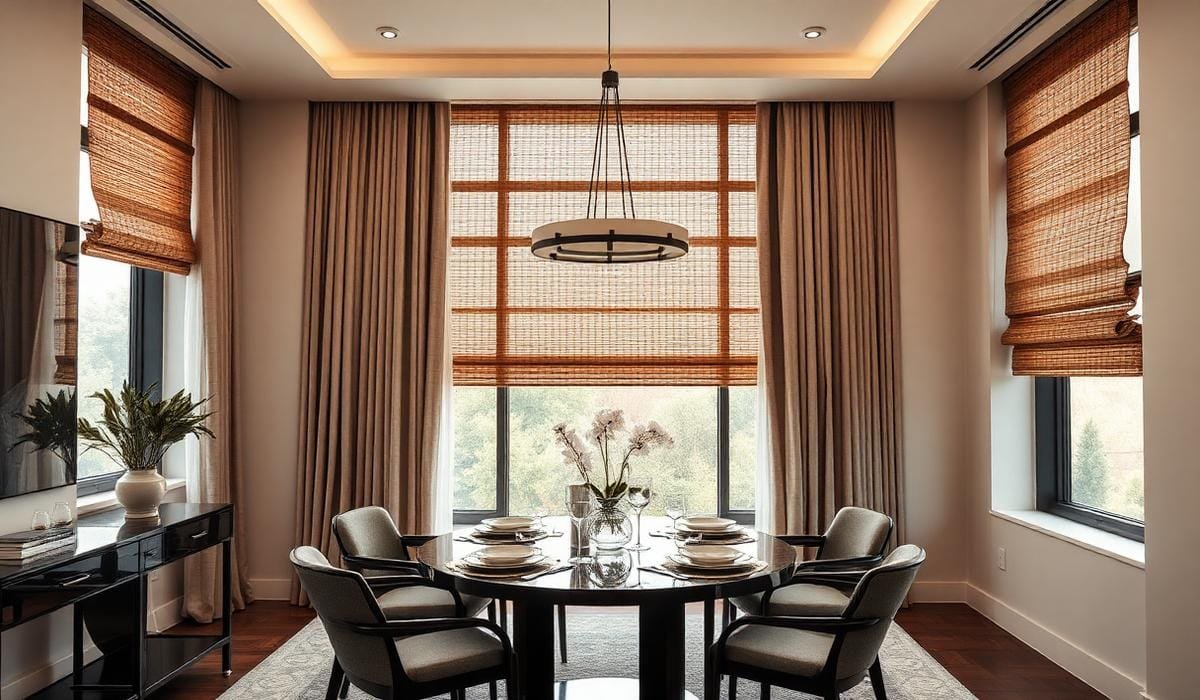
TL;DR
Layer curtains by placing a light-filtering panel closest to the glass and a heavier decorative or blackout panel in front. Correct rod placement, fabric weight, width, and length decide whether the result looks tailored or crowded.
Introduction
Why do some windows look calm and finished while others feel busy, even with expensive fabric? The difference often comes from planning the layers around light, privacy, scale, and daily use. A good setup can soften glare at noon, block streetlights at night, reduce drafts, and frame a room without hiding the window. The method matters more than the price tag.
Plan the Layers Around Light, Privacy, and Daily Use
A layered window treatment usually combines two jobs. The inner curtain filters daylight or protects privacy, while the outer curtain adds darkness, insulation, colour, or visual weight. This setup works well in bedrooms, street-facing living rooms, nurseries, home offices, and rented apartments where one fabric cannot solve every problem.
New York brownstones often have tall windows facing pavements, so residents use white sheers during the day and lined drapes after sunset. In a sunny room in Dubai, the same arrangement can cut harsh glare while preserving daylight. Climate, window direction, and the room’s daily schedule should shape the fabric choice.
- Use sheer voile or open-weave linen near the glass for daytime privacy without closing off the room.
- Add blackout or thermal-lined panels in bedrooms, media rooms, and west-facing spaces that overheat in late afternoon.
- Choose room-darkening curtains rather than full blackout fabric when soft morning light suits the space.
- Test privacy after dark with indoor lights on, since many thin sheers become transparent at night.
Buying two attractive fabrics before assigning their jobs often creates excess bulk or weak light control. Decide what each layer must do first, then choose colour, texture, and hardware.
Choose Fabrics That Work Together Instead of Competing
The rear layer should move easily and sit close to the window. Polyester voile, cotton gauze, and lightweight linen blends suit this position because they gather neatly on a narrow rod. The front layer can carry more weight through velvet, lined cotton, wool blend, jacquard, or dense linen.
IKEA’s HILJA sheer curtains and MAJGULL room-darkening curtains show the basic pairing at an accessible price level. Pottery Barn’s Belgian Flax Linen curtains create a relaxed natural look, while West Elm’s cotton velvet panels bring heavier texture. The brands differ, but the design rule stays steady: one quiet layer and one dominant layer.
- Pair matte sheers with textured drapes for depth that does not feel glossy or formal.
- Keep both fabrics in the same warm or cool colour family unless the room already supports strong contrast.
- Use patterned outer panels with plain inner sheers so the window has one visual focus.
- Check care labels before buying, since dry-clean-only drapes and machine-washable sheers age at different rates.
Fabric weight affects movement. Heavy velvet on a weak tension rod will sag, while thick linen on small clip rings can drag. Metal rods, secure brackets, and suitable rings matter as much as the material itself.
Install Double Rods at the Right Height and Width
A true layered setup works most smoothly on a double curtain rod. The smaller rear rod holds the sheer, and the stronger front rod carries the decorative panel. Kirsch, Umbra, IKEA, and The Home Depot sell double-rod systems in several diameters, finishes, and projection depths.
Rod placement changes the apparent size of the window. Mounting hardware about 4 to 6 inches above the frame often creates a taller look. Extending the rod 8 to 12 inches beyond each side lets open curtains stack away from the glass, which brings in more light and makes a narrow window feel broader.
- Place the inner rod close enough to the wall that the sheer does not press against handles, blinds, or radiators.
- Leave enough space between rods so thick outer panels slide without catching the rear fabric.
- Anchor brackets into studs where possible, or use wall plugs rated for the curtain weight.
- Add a centre support on wide spans, especially above sliding doors or windows wider than about 60 inches.
Hotels often use two ceiling tracks, with a sheer near the glass and a blackout panel toward the room. This layout suits bay windows and full-height glazing. Keep fabric away from open flames, electric heaters, and air vents, and use cordless shades behind curtains in rooms used by young children.
Get Curtain Width and Length Right
Width controls fullness, which decides whether curtains look rich or flat. A practical target is total fabric width of about 1.5 to 2.5 times the rod width. A 72-inch rod may need 108 to 180 inches of combined panel width, depending on fabric thickness and the amount of gathering.
Length sets the mood. Panels that stop at the sill suit kitchens and workspaces, while floor-length curtains fit living rooms and bedrooms. A clean “kiss” finish ends at the floor, a short break adds about 1 inch, and a decorative puddle uses several extra inches. Puddling looks dramatic but collects dust and hinders vacuuming.
- Measure from the rod or ring to the intended end point, not from the top of the window frame.
- Measure both sides because older floors and ceilings may not sit level.
- Let sheers finish at the same length as the outer panels for a calm, continuous line.
- Hem ready-made curtains rather than allowing random folds to bunch across the floor.
A Manchester apartment owner used 84-inch panels on a window that needed 96-inch curtains. The gap made the room look unfinished. Rehanging the rod closer to the ceiling and fitting the correct length created a stronger vertical line without changing the furniture or wall colour.
Balance Colour, Pattern, and Room Style
Layered curtains add more visual material than a single panel, so restraint often produces a stronger result. White, ivory, flax, and light grey sheers blend into most rooms. The outer curtain can echo a sofa, rug, wall paint, or headboard without matching it exactly. Slight variation keeps the room from feeling staged.
Nate Berkus often builds rooms with natural materials and restrained colour, an approach that suits curtain layering. A sand-coloured sheer behind olive linen drapes works with oak furniture, while white voile behind navy velvet creates a sharper, more formal mood. Each combination uses contrast without turning the window into visual clutter.
- Repeat one curtain colour elsewhere through cushions, artwork, upholstery, or a Ruggable rug.
- Use small-scale patterns in compact rooms and larger motifs where the window wall has more breathing space.
- Match the rod finish to nearby metal details, such as black lighting, brass handles, or chrome furniture legs.
- Steam or press panels after hanging because packaging creases can distort the fall of the fabric.
Patterned sheers, bold drapes, ornate tiebacks, decorative finials, and strong wall colour can compete in a small area. Remove one or two features rather than adding more. Basic double rods often cost about $25 to $70, while heavy-duty and custom systems can cost far more. Spend first on correct dimensions and secure hardware.
Wrap Up
A successful layered window starts with two separate functions, supported by suitable fabric, strong hardware, and accurate measurements. Place the light layer near the glass and the heavier panel toward the room. Keep the proportions generous, the palette controlled, and the opening easy to use. The finished window should look considered in daylight and remain practical after dark.
FAQs Section
Can you put sheer curtains and blackout curtains on the same rod?
They can share one rod with specialised rings or connectors, but opening each layer independently becomes awkward. A double rod or two-track system gives better control and cleaner folds.
Should sheer curtains go in front or behind?
Sheers usually sit behind the heavier curtains, closest to the glass. This placement keeps them visible during the day while the outer panels stay open at the sides.
How far apart should double curtain rods be?
Many systems leave about 2 to 4 inches between rods, though thick velvet or lined drapes may need more space. The front panel should move freely without dragging across the sheer.