
TL;DR
A properly matched rug pad offers the strongest long-term grip without harming the floor. Rug tape, corner grippers, furniture placement, and regular cleaning can solve lighter movement, but each method must suit the rug material, floor finish, room traffic, and moisture level.
Introduction
Why does a rug creep across the room even after someone straightens it every morning? The answer usually involves a slick floor, a lightweight backing, trapped dust, or a rug that’s too small for its setting.
Stopping that movement requires more than placing random adhesive under the corners. The right fix protects hardwood finishes, keeps tile clean, reduces trip risks, and helps the rug lie flat. A good setup also prevents curled edges, stretched fibers, scratched flooring, and the constant frustration of shifting furniture.
Find Out Why the Rug Keeps Moving
A rug slides when horizontal force exceeds the friction between its backing and the floor. Foot traffic, running pets, robotic vacuums, opening doors, and wheeled office chairs all create that force. Smooth surfaces such as polished porcelain, laminate, luxury vinyl plank, and polyurethane-coated oak provide less natural resistance than unfinished wood or textured stone.
The rug itself matters just as much. Thin cotton flatweaves move more readily than dense wool rugs because they have less weight and often lack textured backing. A small two-by-three-foot mat in an entryway also receives concentrated pressure. An eight-by-ten-foot rug held beneath a sofa and armchairs faces far less movement.
- Check for dust first. Fine debris behaves like tiny ball bearings between the rug and floor.
- Inspect curled corners. Curling often develops after storage, washing, moisture exposure, or uneven drying.
- Watch the walking pattern. Rugs tend to migrate in the direction people enter, turn, or push off.
- Measure nearby door clearance. Thick pads can stop a door from opening freely.
- Look for moisture. Damp floors weaken many adhesives and may damage natural-fiber rugs.
A renter in a Chicago apartment kept straightening a five-by-seven-foot IKEA LOHALS jute rug on sealed oak. The rug moved because the woven backing had little traction and sat outside the front legs of the sofa. Vacuuming both surfaces and adding a quarter-inch felt-and-rubber pad stopped the daily drift without using adhesive on the landlord’s floor.
Match the Rug Pad to the Floor and Rug
A rug pad works by creating friction, adding weight, and absorbing movement before it reaches the floor. Pads also reduce pressure on rug fibers. That cushioning can slow wear in hallways, dining areas, and living rooms where furniture legs compress the same spots for years.
Material choice affects performance. Natural rubber grips smooth floors well, while felt adds cushioning and sound control. Many higher-quality pads combine felt on top with rubber underneath. Open-grid PVC pads cost less, but some products can react with certain vinyl, laminate, or refinished wood surfaces, especially when heat and moisture build up.
- Hardwood and engineered wood: Choose natural rubber or a felt-and-rubber pad labelled safe for the floor finish.
- Tile and stone: Rubber pads provide strong grip, though grout lines may require a denser pad that won’t sink unevenly.
- Luxury vinyl plank: Check the flooring warranty before using rubber, latex, or PVC because chemical reactions can cause staining.
- Carpet: Use a rug-to-carpet pad with a firmer surface designed to resist bunching.
- Heated floors: Select a breathable pad approved for radiant heat rather than thick foam that traps warmth.
Pad thickness should fit the room. One-eighth-inch pads suit low-clearance doors and thin runners. Quarter-inch pads work for many living rooms, while three-eighth-inch felt pads add softness beneath larger wool rugs. A pad should sit about one inch inside the rug’s edge on every side, so it stays hidden and doesn’t create a visible ridge.
Brands such as Ruggable use a two-part system with a washable cover attached to a non-slip base. West Elm and Pottery Barn sell cut-to-size felt-and-rubber pads for conventional area rugs. IKEA’s STOPP FILT serves lighter household rugs, though a heavier wool or jute rug often benefits from a denser pad with greater compression resistance.
Use Tape and Corner Grippers Without Damaging the Floor
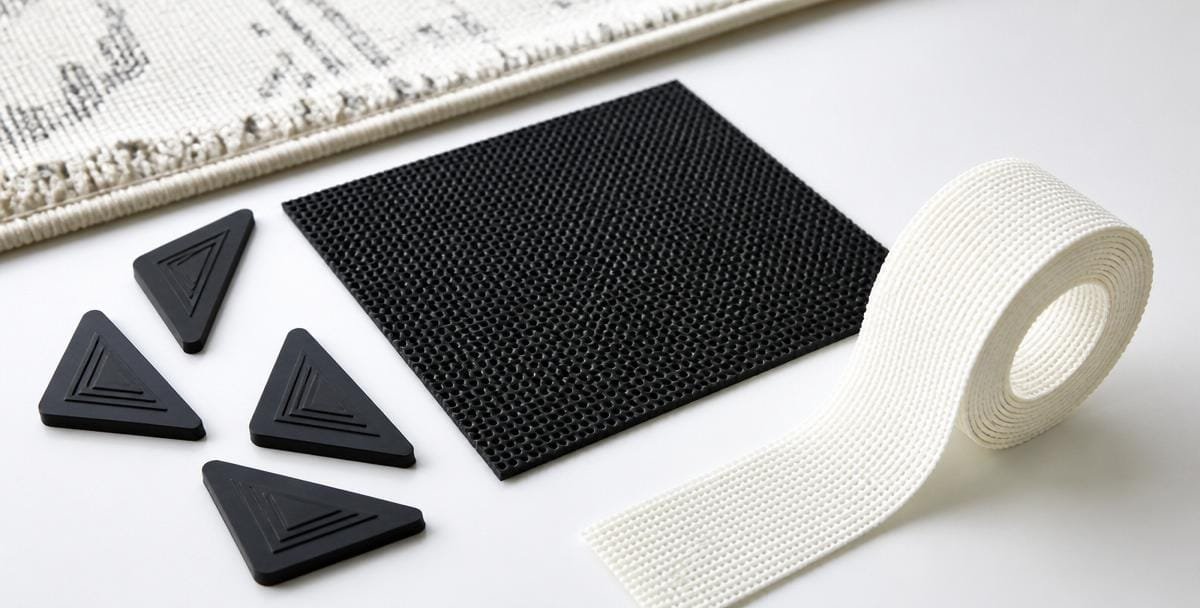
Double-sided rug tape can control runners, mats, and corners that lift under foot traffic. It works well when the floor stays clean, dry, and stable. Tape performs less reliably on dusty concrete, textured tile, damp entryways, or rugs with loose natural fibers that shed into the adhesive.
Floor compatibility deserves close attention. Strong carpet tape may pull finish from older hardwood or leave residue on vinyl. Adhesive can also darken porous stone such as unsealed limestone. Products from 3M, Gorilla Grip, and XFasten come in several formats, but the label must specifically name the intended flooring and rug materials.
- Test a hidden area. Leave a small piece in place for several days before covering a large section.
- Clean without oily polish. Soap residue and floor wax weaken adhesion.
- Use short strips. Place them near corners and along high-pressure edges rather than covering the entire rug.
- Replace aging adhesive. Heat, humidity, and repeated washing can reduce grip.
- Remove tape slowly. Pull it back at a low angle instead of lifting it straight upward.
Reusable corner grippers offer a less permanent option. These flat pads attach to the rug and grip the floor through tacky silicone or a textured surface. They work well on bathroom mats, kitchen rugs, and washable runners, though repeated laundering may shorten their life. Some grippers also stiffen curled corners, reducing the chance that a shoe or vacuum head catches the edge.
In a Manchester terraced house, a narrow cotton runner shifted on glazed hallway tile whenever two children rushed toward the front door. A full rug pad interfered with the door sweep. Four low-profile corner grippers and two short floor-safe tape strips held the runner while preserving the required clearance.
Control Movement Through Sizing and Furniture Placement
Rug dimensions affect stability before any pad or tape enters the room. A small living-room rug floats between furniture and receives direct force from every step. A larger rug gains weight and can sit beneath sofa legs, chairs, or a coffee table, which limits movement without relying entirely on adhesive.
Interior designers often use rugs to define seating zones rather than treat them as isolated decoration. In a typical living room, placing at least the front legs of the sofa and chairs on the rug creates a connected arrangement. Dining rugs need enough width for chairs to remain on the surface when someone pulls them away from the table.
- Living rooms: Extend the rug beneath the front legs of major seating pieces.
- Dining rooms: Allow roughly 24 inches beyond each table edge for chair movement.
- Bedrooms: Place a large rug under the lower two-thirds of the bed or use secured runners on both sides.
- Hallways: Leave balanced floor space along both edges so the runner doesn’t appear crooked when movement begins.
- Home offices: Avoid placing loose rugs beneath rolling chairs unless the rug and pad suit repeated wheel pressure.
Furniture can hold a rug, but excessive weight creates its own problems. Narrow metal legs may crush wool pile or leave permanent dents. Protective furniture cups spread the load across a larger area. Rotating the rug every six to twelve months can also distribute sunlight, traffic, and compression more evenly.
A large Ruggable Kamran rug or a dense Pottery Barn wool rug may stay stable beneath a sectional because weight and furniture placement work together. A lightweight Ruggable runner in a kitchen faces different pressure from turning feet, cabinet access, and frequent washing. That setting needs a gripping base and regular checks around the edges.
Clean and Maintain the Grip
Even a well-fitted pad loses traction when dust, pet hair, cooking grease, or floor cleaner collects underneath it. Kitchens and entryways need more frequent attention because airborne oils, outdoor grit, and moisture settle around rug edges. In dry rooms, checking the underside every few months usually catches problems before the rug begins to creep.
Lift the rug rather than dragging it across the floor. Vacuum both sides, clean the floor with a product approved by its manufacturer, and let every surface dry fully. Moisture trapped beneath rubber, felt, jute, or wool can cause odor, discoloration, mildew, or damage to a wood finish.
- Vacuum beneath busy rugs monthly or quarterly, depending on traffic.
- Wash reusable grippers according to their care instructions rather than coating them with household cleaner.
- Replace crumbling pads. Old foam can bond to floors and become difficult to remove.
- Check edges after robotic vacuuming. Devices such as the iRobot Roomba can catch thin corners.
- Inspect seasonal rugs before storage. Roll them around a tube instead of folding them sharply.
Safety matters most in homes with children, older adults, or people with limited mobility. Falls are the leading cause of injury among adults aged 65 and older in the United States. Loose runners, curled corners, and abrupt changes in floor height add avoidable hazards, especially near stairs, bathrooms, and dim hallways.
Costs vary by material and size. Small grippers or tape often cost less than a full pad, while dense felt-and-rubber pads for room-size rugs can cost far more. The cheaper fix isn’t always economical. Replacing damaged floor finish or repairing a stretched handmade rug can exceed the price of a correctly fitted pad.
Wrap Up
The strongest solution starts with diagnosis. Clean the surfaces, identify the floor finish, measure the rug, study the traffic pattern, and select a pad or gripping product made for those exact conditions.
Natural rubber and felt-and-rubber pads suit many area rugs, while low-profile tape and corner grippers solve smaller movement problems. Furniture placement and correct sizing add stability without placing more adhesive against the floor.
Check the setup after cleaning, seasonal humidity changes, and heavy use. A rug that stays flat protects the floor, lasts longer, looks more intentional, and removes a preventable trip hazard from the room.
FAQs Section
What can I put under a rug to stop it from sliding?
Use a floor-compatible natural rubber pad, a felt-and-rubber pad, reusable corner grippers, or rug tape labelled for the floor material. The pad should sit about one inch inside the rug’s edges.
How do I stop a rug from moving on hardwood floors?
Clean the hardwood and rug backing, then add a natural rubber or felt-and-rubber pad approved for finished wood. Avoid unknown latex, PVC mesh, and strong adhesive tape because some products can stain or lift the finish.
How do I keep an area rug from sliding on carpet?
Place a firm rug-to-carpet pad beneath it and anchor the rug with furniture where possible. Standard pads made for hardwood may not stop rippling because carpet compresses and moves under pressure.