
Here are five of the easiest and most effective ways to remove a stripped screw, ordered from the simplest fix to dedicated extraction tools.
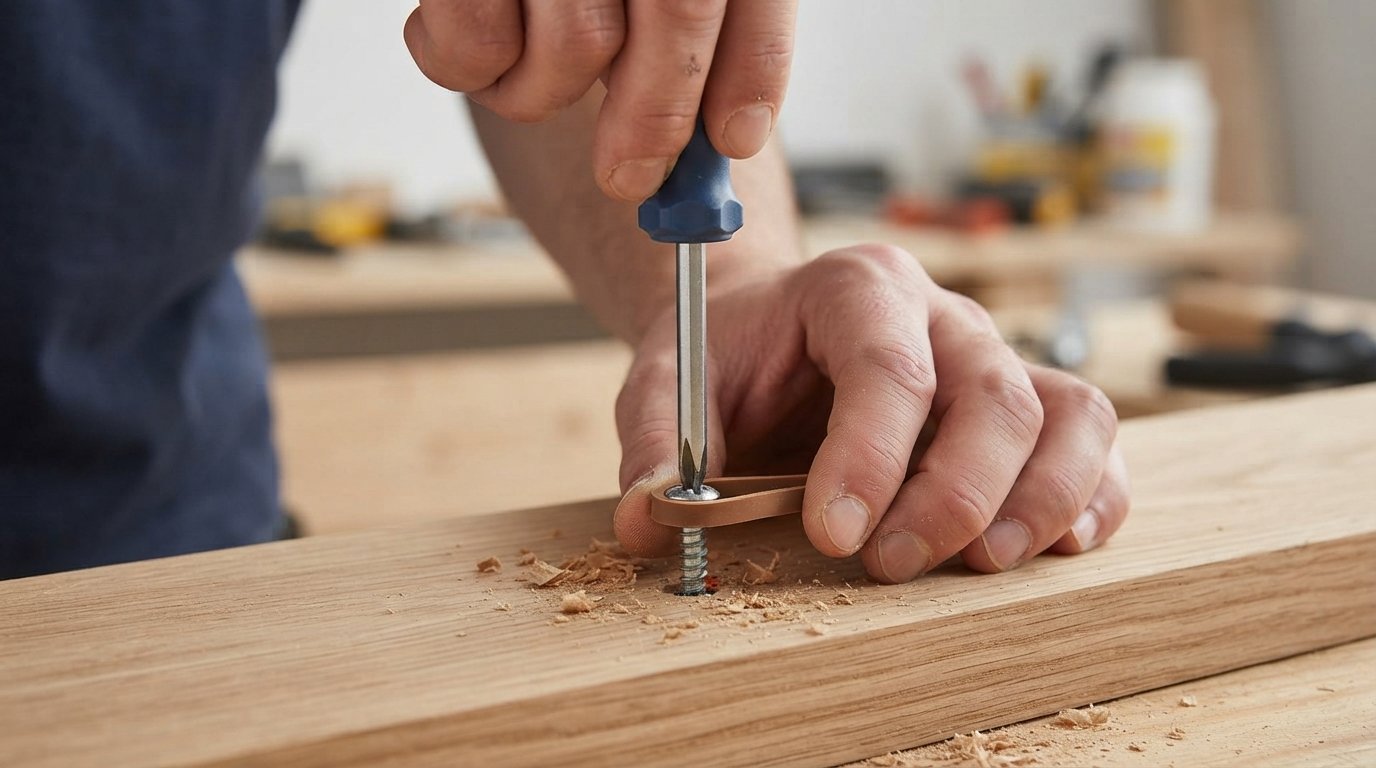
1. The Rubber Band Trick
- Best for: Lightly or moderately stripped screw heads (Phillips or Torx).
- How to do it: Place a wide, thick rubber band flat over the stripped screw head. Press your manual screwdriver firmly into the rubber band and turn slowly counterclockwise.
- Why it works: The elastic rubber fills the stripped gaps, creating enough friction for the bit to grip the remaining metal.
2. Locking Pliers (Vise-Grips)
- Best for: Screws where the head sticks out above the surface.
- How to do it: Adjust a pair of locking pliers so they clamp onto the outer rim of the screw head with maximum grip strength. Lock them in place and rotate counterclockwise.
- Why it works: This completely bypasses the stripped driver slots by applying leverage directly to the outside of the screw head.
3. Tap the Screwdriver with a Hammer
- Best for: Screws binding from rust, paint, or stripped upper slots.
- How to do it: Place a manual screwdriver into the screw head. Tap the back of the handle firmly with a hammer while pushing down hard, then try turning counterclockwise while maintaining heavy downward pressure.
- Why it works: The downward force wedges the driver bit deeper into any clean metal left in the socket, while the impact shock breaks the grip of rusted or stuck threads.
4. Cut a Flathead Slot
- Best for: Rounded screw heads flush with the surface where pliers can’t reach.
- How to do it: Use a rotary tool (like a Dremel with a thin cutoff wheel) or a hand hacksaw blade to cut a straight groove across the middle of the screw head. Put a sturdy flathead screwdriver into your new slot and back the screw out.
- Why it works: Converts a ruined Phillips or Star head into a functional flathead screw in about 30 seconds.
5. Use a Screw Extractor Bit
- Best for: Heavily stripped or countersunk screws where other methods fail.
- How to do it: Insert a dual-ended screw extractor bit (like a Grabit) into your drill. Use the burnishing end on high pressure in reverse to smooth out the center hole. Flip to the reverse-threaded spiral end, set the drill to low speed / reverse, press hard into the screw, and pull the trigger.
- Why it works: The extractor’s reverse threads bite deeper into the metal as the drill turns counterclockwise, grabbing the screw and backing it straight out.
Pro-Tip: Always use a manual screwdriver rather than a high-speed power drill when trying to back out a partially stripped screw. Fast-spinning drill bits cause friction heat and instantly strip away whatever metal is left.