
TL;DR
Ticks and bed bugs look similar to the naked eye, but their habits and risks are completely different. Ticks are eight-legged arachnids that cling to skin outside to feed on blood for days, while six-legged bed bugs hide in indoor mattresses and bite quickly at night. Knowing which pest you have determines whether you need a trail check or an indoor exterminator.
Introduction
Did you just spot a small, flat, reddish-brown bug crawling across your bed sheets or clinging to your ankle? mistaking a parasite from the woods for an indoor household infestation happens constantly, and the confusion leads to wasted money on the wrong extermination tools. While both insects feed on blood, their biology, preferred habitats, and human health risks do not align. Identifying the correct pest instantly saves time, reduces panic, and ensures you take the right steps to clear your home or body.
Physical Characteristics: Anatomic Differences Under the Magnifying Glass
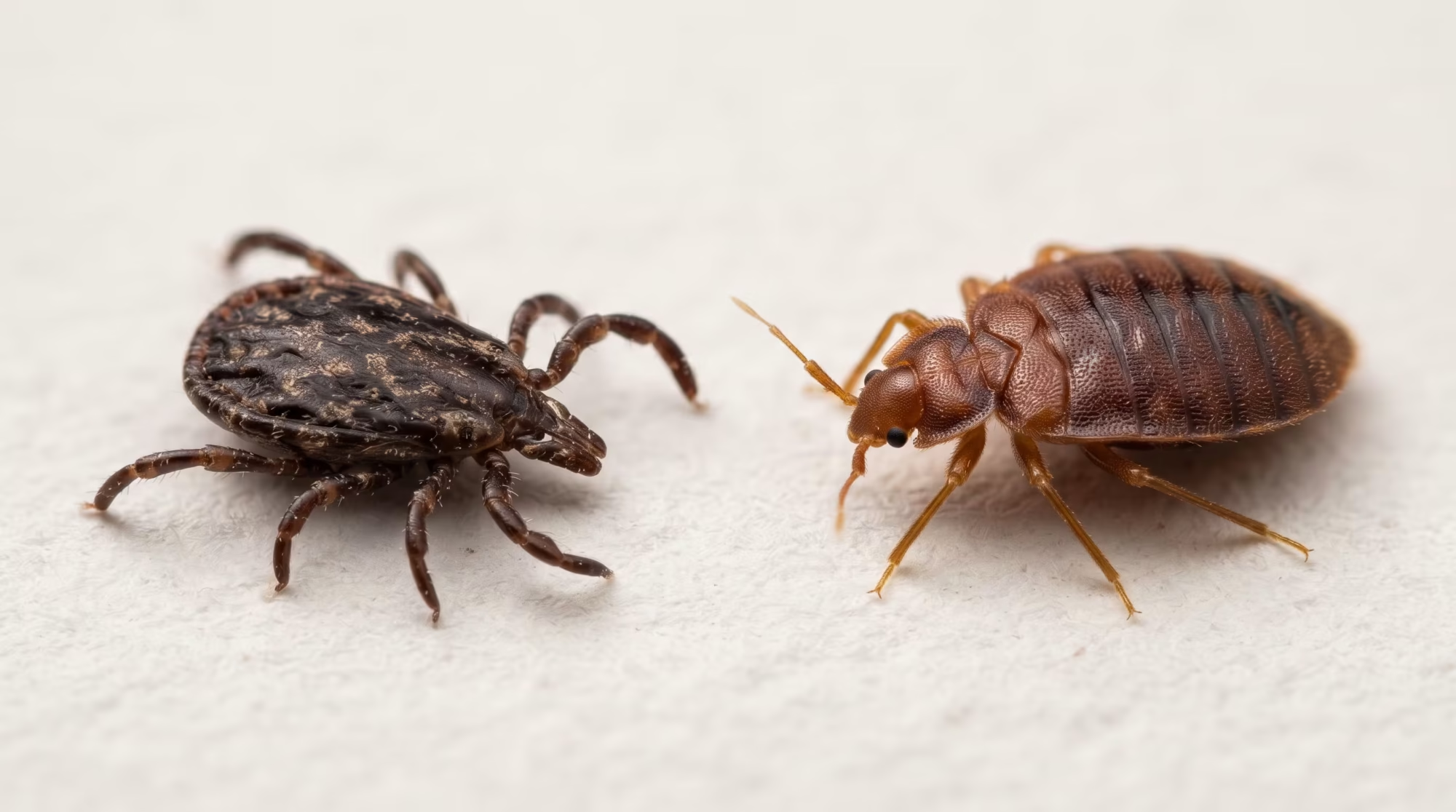
While both parasites share a flattened, oval-shaped body when unfed, their body structures separate them into entirely different arthropod classes. Bed bugs belong to the insect family, meaning they feature three distinct body regions: a head, thorax, and abdomen. Ticks are arachnids, closely related to spiders and mites, featuring a fused body structure called an idiosoma with no visible neck or waist separation.
Counting the legs offers the fastest path to identification under bright light or magnification:
- Leg Count and Structure: Adult bed bugs have six distinct legs attached near their front body segments. Ticks possess eight legs in their nymph and adult stages, though larval ticks hatch with six legs before molting.
- Color and Texture: Unfed bed bugs display a mahogany brown color with prominent horizontal ridges across their flat abdomens. Ticks vary from dark brown to reddish-black, featuring a hard shield called a scutum on their backs that feels smooth or leathery.
- Size Differences: A mature bed bug (Cimex lectularius) measures roughly four to five millimeters long, similar to an apple seed. Adult hard ticks, like the Blacklegged tick (Ixodes scapularis), measure smaller at two to three millimeters before feeding, expanding up to ten millimeters when full.
- Engorgement Effects: When a bed bug feeds, its body elongates into a cylindrical shape and turns bright red for a few hours. A tick swells evenly into a round, gray-blue or pale olive balloon over several days.
During a pest inspection in a Philadelphia residence in 2023, a homeowner mistook an adult American dog tick (Dermacentor variabilis) on a rug for a bed bug. The homeowner was preparing to spend thousands on thermal mattress treatments. A simple leg count revealed eight limbs and a distinct patterned scutum, confirming the creature was an isolated tick brought inside after a walk in Fairmount Park rather than a systemic indoor bed bug infestation.
Behavior and Feeding Patterns: Outdoor Parasites vs. Indoor Hideouts
The fundamental difference between these two pests lies in where they live and how they hunt for host blood. Bed bugs are obligate indoor pests that set up harborages within four feet of human sleeping areas. They avoid light, emerging around two to four in the morning to feed on exposed skin for roughly five to ten minutes before crawling back to dark crevices.
Ticks are wild outdoor opportunists that rely on questing to find hosts in high grass, leaf litter, and brushy trails. They climb up vegetation, extend their front legs, and grab onto passing animals or humans. Once on a host, a tick crawls upward to find thin skin, burrows its mouthparts deep into tissue, and cements itself in place to feed continuously for three to ten days. Ticks cannot survive long-term inside a climate-controlled home with low humidity unless brought in on pets or clothing.
Primary Life Differences at a Glance
| Attribute | Tick | Bed Bug |
| Class | Arachnida (8 legs as adult) | Insecta (6 legs always) |
| Primary Habitat | Woods, tall grass, leaf litter | Mattresses, headboards, baseboards |
| Feeding Duration | 3 to 10 days anchored to skin | 5 to 10 minutes, then crawls away |
| Primary Risk | Lyme disease, Anaplasmosis | Severe itching, skin infections, anxiety |
| Mobility | Crawls onto host from vegetation | Crawls onto host from mattress/furniture |
An outdoor enthusiast hiking through the Catskills in New York picked up several lone star ticks (Amblyomma americanum) on canvas trousers. Because the hiker threw those trousers on a bedroom carpet overnight, two ticks crawled onto the baseboards. The hiker assumed the bedroom was infested, but vacuuming the perimeter and washing the clothes in hot water permanently resolved the issue without chemical sprays, as ticks cannot set up breeding nests inside dry drywall gaps.
Bite Recognition and Disease Risks: Comparing Health Impacts
Identifying the physical bite mark on your skin helps narrow down the culprit, though individual allergic reactions vary wildly. Bed bug bites often appear as small, red, itchy welts arranged in linear paths or tight clusters of three, frequently called “breakfast, lunch, and dinner” patterns. These bites appear on exposed skin areas like shoulders, arms, and necks during sleep, usually itching intensely within twenty-four hours.
Tick bites rarely itch immediately because tick saliva contains anesthetic compounds that numb the attachment site. Instead of multiple scattered bites, a tick bite presents as a single isolated bump, often with the pest still firmly attached to the center. If the tick carries pathogens like Borrelia burgdorferi, a expanding red ring resembling a bullseye (erythema migrans) may develop between three to fourteen days after the bite.
- Bite Distribution: Bed bugs leave multiple grouped marks; ticks leave a single, isolated bite mark.
- Pathogen Hazards: Ticks transmit dangerous bacterial and viral diseases, including Rocky Mountain spotted fever and Powassan virus. Bed bugs do not transmit infectious diseases to humans, though scratching their bites can cause secondary bacterial skin infections like impetigo.
- Attachment Mechanics: Bed bugs never anchor into skin or leave mouthparts behind. Ticks insert a barbed mouthpart called a hypostome deeply into the dermal layer, requiring fine-tipped tweezers to pull the mouthparts out cleanly.
When removing an attached tick, grab the body as close to the skin surface as possible and pull straight up with steady pressure. Never squeeze the swollen abdomen, use petroleum jelly, or apply heat with a match. Those outdated methods force the tick to regurgitate gut fluids into your bloodstream, raising infection risks significantly.
Eradication and Control Strategies: Targeted Solutions for Each Pest
Treating a tick issue requires an entirely different operational plan than eradicating a bed bug infestation. If you find a tick, your focus belongs on personal defense, pet treatments, and yard maintenance. Spraying interior baseboards with insecticides will not fix a tick problem because they do not breed inside carpet fibers or furniture frames.
Eradicating bed bugs demands an intense indoor protocol targeting hiding spots like mattress seams, box springs, electric outlets, and carpet tacks. Products from brands like Sterifab, Bedlam Plus, or professional heat remediation equipment from companies like Temp-Air are standard tools used by pest control professionals.
Action Plan for Ticks
- Yard Management: Clear leaf litter, keep lawn grass mowed below three inches, and create a three-foot gravel or woodchip barrier between woods and living spaces.
- Personal Protection: Apply EPA-registered repellents containing twenty percent DEET or Picaridin on skin, and treat hiking boots and outer clothing with 0.5% Permethrin.
- Pet Treatments: Use veterinarian-approved oral chewables like Simparica Trio or topical treatments like Frontline Plus to kill ticks before they ride into your living rooms on dogs or cats.
Action Plan for Bed Bugs
- Thermal Treatment: Enclose infected sheets, curtains, and clothing in high-heat dryers for at least thirty minutes at 120°F (49°C).
- Encasements: Seal mattresses and box springs in certified bed-bug-proof encasements from brands like SafeRest or Protect-A-Bed to trap existing bugs and eliminate hiding spots.
- Targeted Insecticides: Apply non-repellent residual sprays or desiccant powders like CimeXa (silica gel) into wall voids, bed frames, and baseboard cracks where bugs aggregate.
Wrap Up
Telling ticks and bed bugs apart comes down to counting their legs, checking their feeding habits, and examining where you found them. A single eight-legged arachnid pulled off your leg after a outdoor trail walk calls for body observation and proper tick removal. A cluster of six-legged bugs found along a mattress seam requires an immediate indoor pest management approach. By identifying the exact pest early, you can take direct action to safeguard your health and keep your living space pest-free.
FAQs Section
Can a tick live inside my bed like a bed bug?
No, ticks cannot establish breeding nests inside mattresses or carpets because indoor air is far too dry for their survival. While an attached tick might drop off a pet onto a bed, it will wander off toward humidity or die within a few days without an outdoor environment.
Do bed bugs jump or fly like other household pests?
Bed bugs have no wings and cannot fly, nor do they possess hind legs built for jumping like fleas or grasshoppers. They move exclusively by crawling at a moderate pace across floors, walls, and fabric surfaces.
What should I do immediately if I find a tick attached to my skin?
Use fine-tipped tweezers to grasp the tick as close to your skin surface as possible and pull straight upward with steady, even pressure. Clean the bite site thoroughly with rubbing alcohol or soap and water, then save the tick in a sealed bag for potential disease testing if you develop a fever or rash.