
Growing tomatoes in containers comes down to giving roots enough space, warmth, and steady moisture. Here are the six easiest and most reliable ways to guarantee a heavy harvest on a balcony, deck, or patio.
1. Choose Compact Varieties (Bush or Dwarf)
Standard “indeterminate” tomatoes grow 6–8+ feet tall and easily overwhelm pots. Stick to determinate (bush) or dwarf varieties that top out around 2–4 feet and set fruit reliably in tight spaces.
- Top picks: Bush Early Girl, Patio Princess, Celebrity, Tiny Tim, or Tumbler (great for hanging baskets).
- If you want full-sized fruit: Choose a dwarf slicing tomato like Dwarf Tomato Project varieties rather than a sprawling heirloom like Brandywine.
2. Use a Large Container (5 to 10 Gallons)
Under-potting is the most common reason container tomatoes fail. Small pots dry out within hours in summer heat and stunt root development.
- Minimum size: 5 gallons for cherry or dwarf varieties (about 12 inches deep and wide).
- Ideal size: 7 to 10 gallons (or a 15-inch fabric smart pot) for medium-to-large varieties.
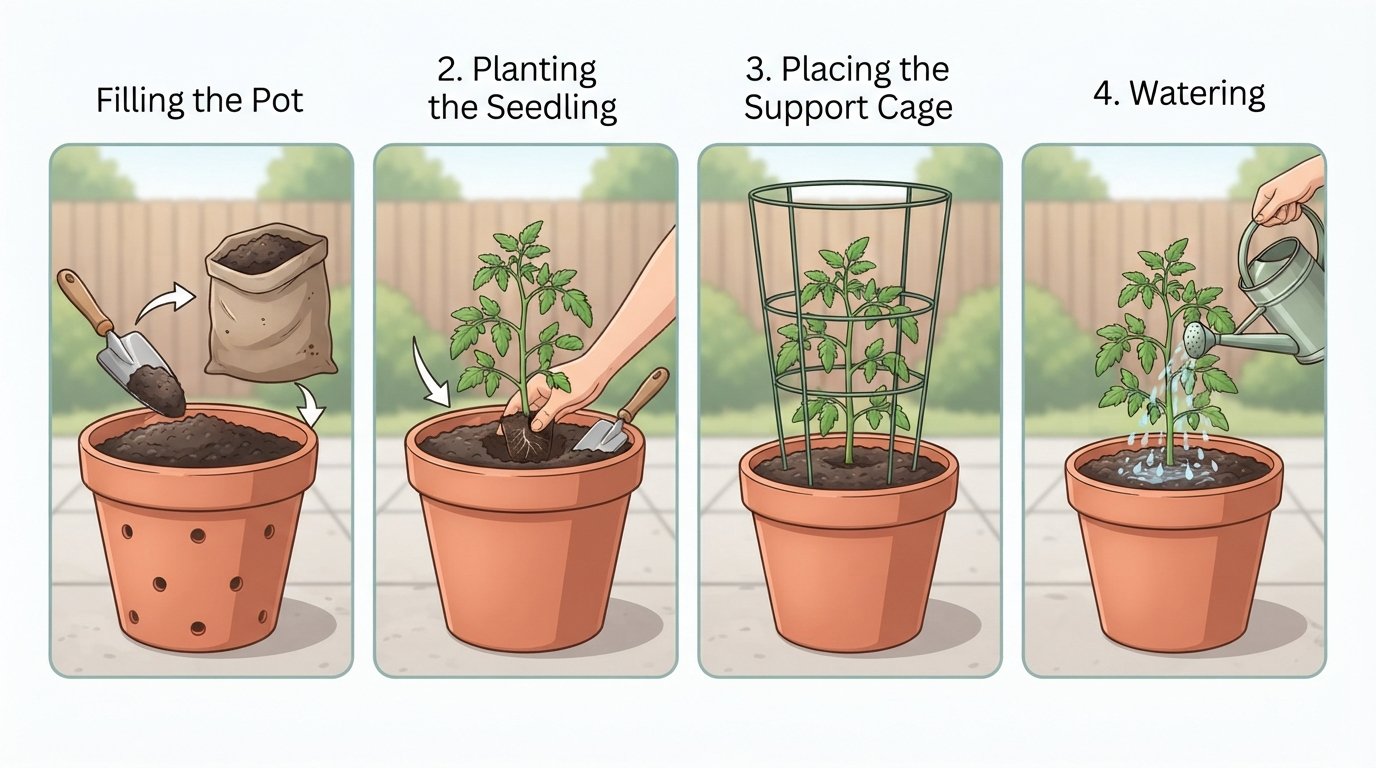
- Drainage: Ensure the pot has multiple clear drainage holes at the bottom so water never pools around the roots.
3. Bury the Stem Deep in Quality Potting Mix
Tomatoes have a unique ability to sprout new roots all along their buried stems, creating a stronger foundation for absorbing nutrients.
- How to plant: Pinch off the lower leaves and bury 50% to 60% of the main stem directly into the soil.
- Soil choice: Never use heavy topsoil or ground garden soil—it compacts and smothers roots in a pot. Use a lightweight, fluffy potting mix amended with compost and perlite for air flow.
4. Maximize Sun (6 to 8+ Hours Daily)
Tomatoes need heavy direct sunlight to convert energy into sweet fruit.
- Placement: Position pots on a south- or west-facing patio or deck.
- Pro tip: Place large pots on rolling plant caddies before filling them with dirt. That way, you can easily roll them into sunny spots throughout the season.
5. Water Consistently at Soil Level
Flustered watering schedule leads to two major issues: blossom end rot (black bottoms on fruit caused by calcium lock-out) and cracked tomatoes from sudden water spikes.
- Schedule: Keep the soil consistently damp like a wrung-out sponge. Water daily during midsummer peak heat (and twice daily on 90°F+ days).
- Technique: Water directly onto the soil at the base, not the leaves. Wet foliage promotes fungal diseases like early blight.
6. Switch to High-Potassium Food When Flowering
Nutrients in potting soil wash out through drainage holes within 3 to 4 weeks of regular watering, so regular feeding is non-negotiable.
- Early growth: Use a balanced organic vegetable fertilizer (such as 5-5-5) when planting.
- Fruiting phase: As soon as yellow blossom flowers appear, switch to a low-nitrogen, high-potassium/phosphorus tomato food (such as 3-4-6) every 7–10 days. Too much nitrogen causes lush leaves but zero fruit.