
Making your home energy efficient before the winter comes down to two main goals: stopping warm air from escaping and ensuring your heating system isn’t overworking.
Here is a practical checklist categorized by high-impact DIY fixes and general maintenance:
1. Stop Drafts & Seal Leaks (Quickest ROI)
Air leaks around windows, doors, and exterior walls are often the biggest culprit behind heat loss.
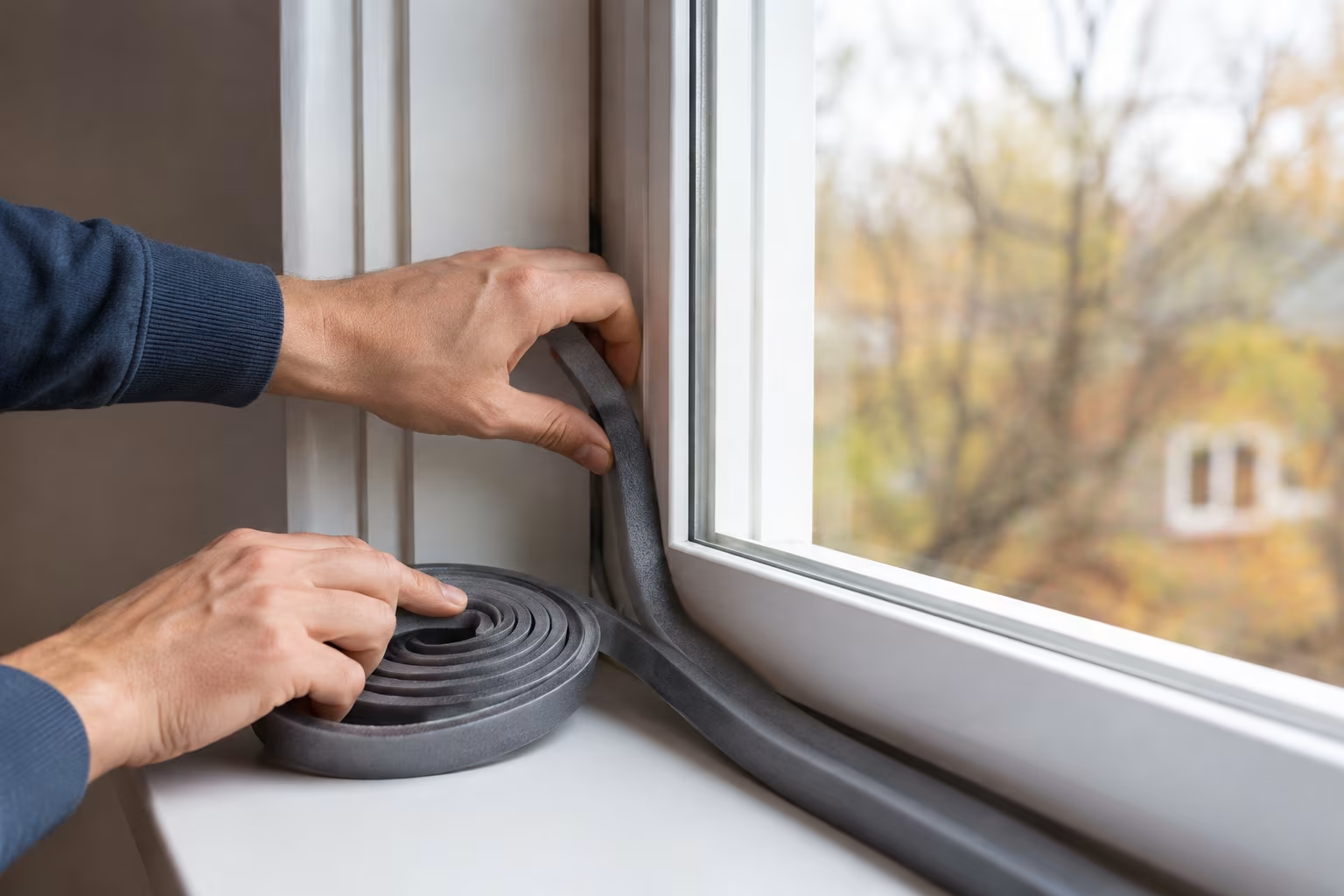
- Caulk & Weather-Strip: Inspect around window frames and exterior doors. Apply silicone caulk to non-moving joints and replace worn weather-stripping along door tracks.
Install Door Sweeps: Attach draft stoppers or door sweeps to the bottom of exterior doors. - Insulate Electrical Outlets: Exterior wall outlets and light switches can let cold air in. Install inexpensive foam wall-plate gaskets behind the cover plates.
- Window Insulation Kits: If you have single-pane or older drafty windows, shrink-wrap plastic window insulation kits add a powerful barrier against the cold.
2. Optimize Heating & Air Distribution
A well-maintained HVAC system consumes significantly less energy to keep you warm.
- Swap HVAC Filters: Replace furnace/heat pump air filters before turning on the heat. Dirty filters restrict airflow, forcing the system to run longer.
- Reverse Ceiling Fans: Switch your ceiling fan rotation to clockwise at low speed. This gently pushes the rising warm air back down into the living space without creating a breeze.
- Clear Air Vents: Ensure furniture, rugs, or drapes aren’t blocking supply registers or return air vents.
- Install a Smart Thermostat: Programmable/smart thermostats allow you to automatically lower the temperature by $7\text{–}10^\circ\text{F}$ when you’re sleeping or away from home, which can shave roughly 10% a year off your heating bill.
3. Protect Water Pipes & Water Heater
Water heating accounts for a big chunk of winter utility bills, and uninsulated pipes waste heat fast.
- Lower Water Heater Temp: Set your water heater to $120^\circ\text{F}$ ($49^\circ\text{C}$). This is plenty hot for showers and dishes while avoiding unnecessary standby heat loss.
- Insulate Exposed Pipes: Wrap foam pipe insulation sleeves around hot water pipes in unconditioned spaces like the basement, garage, or crawl space.
- Insulate the Tank: If you have an older hot water tank in an unheated space, fit it with an insulated water heater blanket.
4. Attic & Exterior Care
- Clean the Gutters: Clear out leaves and debris so melting snow can drain properly. Clogged gutters cause ice dams, which destroy roofing and allow heat to escape through water-damaged attic spots.
- Check Attic Insulation: Heat rises. Ensure your attic insulation is even and at a recommended thickness (usually 12–15 inches, depending on your climate zone).
- Close Chimney Dampers: When not in use, ensure your fireplace damper is tightly closed so warm room air isn’t sucked up the chimney.
Pro Tip: Many utility companies offer free or discounted home energy audits before winter, where a technician uses thermal imaging to pinpoint exactly where your house is losing heat. Check with your local provider to see if you qualify!