
TL;DR
Hot water, dish soap, a wire coat hanger, or even a two-liter bottle can clear most toilet clogs when a plunger is nowhere in sight. The trick is patience: let the water level drop, add friction or pressure gradually, and avoid forcing anything that could crack the bowl. Most household clogs come loose within fifteen to twenty minutes using items already under the sink.
Introduction
Ever had a toilet back up right when guests were due in an hour, and the plunger was buried in a garage you hadn’t organized since 2022? It happens more often than most people admit. A clogged toilet doesn’t need a specialty tool to fix; it needs the right combination of heat, soap, and patience. This guide walks through methods that use ordinary household items, explains why each one works, and flags the moments when it’s smarter to stop and call a plumber instead of pushing further.
Dish Soap and Hot Water
Dawn or any grease-cutting dish soap breaks the surface tension holding a clog together, letting hot water slide past blockages made of waste, paper, or both. Squeeze about a quarter cup into the bowl, then pour in water heated to roughly 120 degrees Fahrenheit, never boiling, since a sudden temperature shock can crack porcelain that’s already stressed from age.
- Let the soap sit for five to ten minutes before adding water
- Pour from waist height for gentle added pressure
- Repeat once if the water level drops but doesn’t fully clear
- Avoid this method on a bowl that’s already filled near the rim
A property manager in Austin once described walking into a rental unit ahead of a tenant move-in, finding a toilet clogged for two days, and clearing it with nothing but dish soap and a kettle in three rounds. The lesson stuck: heat and soap do the work that force usually gets credit for.
Why Temperature Matters
Water that’s too hot risks warping the wax ring seal beneath the toilet or, in rare cases, stressing hairline cracks in older porcelain. Lukewarm to warm bathwater temperature is plenty. The goal is softening waste and paper, not sterilizing the bowl.
The Wire Hanger Method
A bent wire coat hanger, wrapped in an old cloth or a plastic grocery bag to protect the porcelain, works as a makeshift toilet auger. Straighten the hanger, leave a small hook at one end, and wrap the hook in fabric so it doesn’t scratch the glaze.
- Insert the hooked end into the drain opening at the bottom of the bowl
- Twist gently while pushing, mimicking the motion of a real auger
- Pull back slowly if you feel resistance, rather than forcing through it
- Stop immediately if the clog feels solid or metallic, which could mean a foreign object
This method traces back to old-school plumbing habits from before store-bought augers were common in every hardware aisle, and it still shows up in forums like those on Reddit’s home improvement communities. It’s most effective on clogs caused by too much toilet paper, less effective on flushed items like wipes or toys.
When Not to Use a Hanger
Skip this approach on a toilet with a glass-smooth ceramic bowl that shows any hairline cracks, since metal pressure in the wrong spot can turn a clog into a bigger repair bill. Older homes built before the 1980s sometimes have more fragile bowls, so a visual check first saves a headache later.
The Two-Liter Bottle Push
An empty two-liter soda bottle, the kind Coca-Cola or Pepsi ship in, can generate enough water pressure to dislodge a soft clog. Fill it with hot water, cover the opening with a thumb, and squeeze the bottle hard while releasing your thumb right at the drain opening.
- Works best on paper-based clogs, not solid blockages
- Requires two or three squeezes in a row for full effect
- Keep the bottle opening close to the drain hole, not floating in open water
- Pairs well with dish soap added beforehand for extra lubrication
Think of it as a low-tech version of a hydro-jet, minus the cost. It won’t out-muscle a serious blockage, but for the common Tuesday-morning clog it does the job in under five minutes.
Baking Soda and Vinegar
This pairing gets used constantly for kitchen drains, and it carries over reasonably well to toilets, though expectations should stay modest. The chemical fizzing action from combining baking soda and white vinegar loosens organic material without the harshness of a commercial drain cleaner like Drano or Liquid-Plumr.
- Add one cup of baking soda directly into the bowl
- Follow with two cups of white vinegar, poured slowly
- Let the mixture fizz undisturbed for thirty minutes
- Finish with a bucket of hot water poured from height
A 2021 University of Nevada extension bulletin on home cleaning noted that baking soda and vinegar solutions are effective for mild organic buildup but weaker than enzyme-based or chemical treatments for tougher clogs. That distinction matters here: this method suits early-stage clogs, not toilets that have been backed up for days.
Skip Commercial Chemical Cleaners in the Bowl
Products designed for kitchen or shower drains, including many bleach-based cleaners, shouldn’t go into a clogged toilet bowl. Mixing chemicals in standing water can produce fumes, and if the clog doesn’t clear, a plumber now has to work around caustic water rather than plain water.
Dish Soap Combined With a Bucket Flush
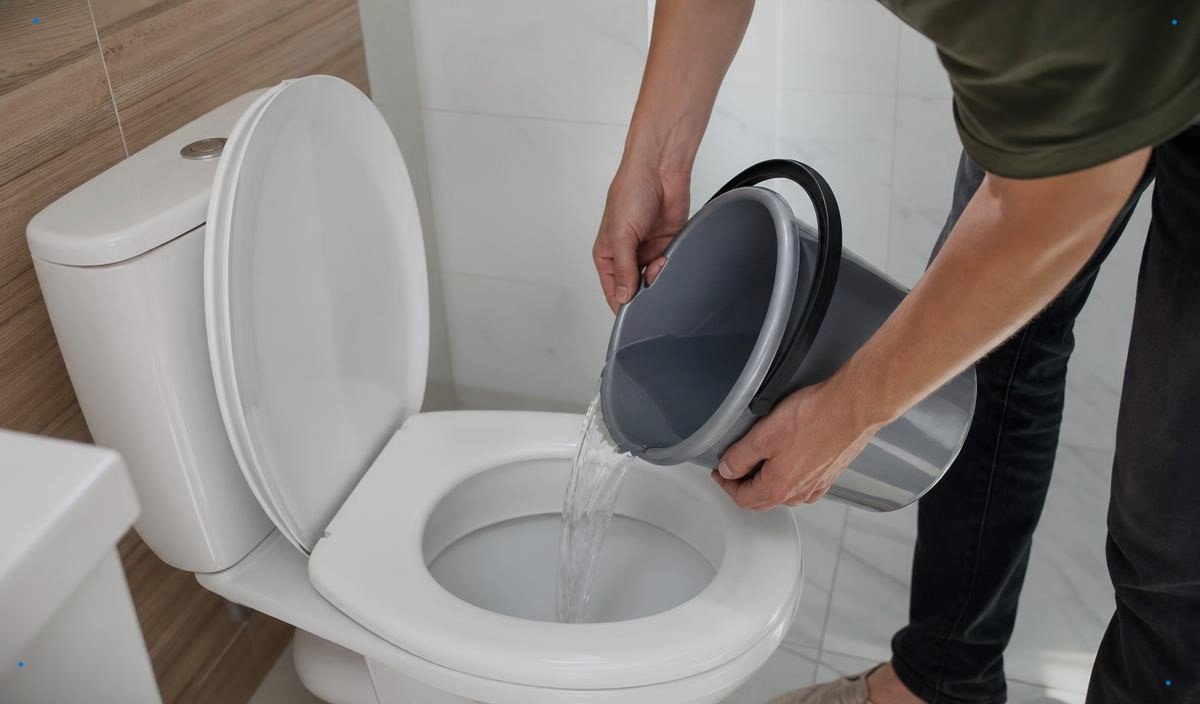
When the bowl is already full and a plunger substitute feels risky, a manual bucket flush skips the tank altogether. Fill a bucket with about a gallon of warm water, add dish soap, and pour it in one steady, forceful motion rather than a slow trickle.
- Use a five-gallon bucket if available for maximum force
- Pour from about two feet above the bowl
- Have towels ready in case of overflow
- Never attempt this on a bowl already at the rim
This is the same principle plumbing supply stores describe as a manual flush test, often used by technicians from companies like Roto-Rooter when diagnosing venting issues rather than just surface clogs. If a bucket flush doesn’t move the water at all, that’s usually a sign the clog sits deeper in the line than any home remedy will reach.
Reading the Water Level
Watch how the water responds rather than just whether it disappears. A slow drain that empties over several minutes suggests a partial clear, worth a second round. Water that doesn’t move at all after multiple attempts, or that rises instead of falling, points toward a blockage past the trap, which calls for a professional auger or camera inspection.
Wrap Up
Most toilet clogs respond to heat, soap, and controlled pressure long before anyone needs a plunger or a service call. Dish soap paired with hot water solves the majority of everyday cases, while a wire hanger or a two-liter bottle handles the tougher ones. Baking soda and vinegar work fine for mild buildup but won’t replace a real auger on stubborn blockages. If water keeps rising instead of draining after two or three honest attempts, that’s the signal to stop experimenting and bring in a licensed plumber.
FAQs
What household item works best to unclog a toilet without a plunger?
Dish soap combined with hot water clears the largest share of everyday clogs because the soap breaks surface tension and lets water pass through blocked paper or waste.
Can baking soda and vinegar really unclog a toilet?
Yes, for mild clogs caused by paper buildup, though it’s noticeably weaker than a plunger or auger on deeper or solid blockages.
Is it safe to pour boiling water into a clogged toilet?
No, boiling water can crack porcelain or damage the wax seal underneath; warm to hot tap water around 120 degrees Fahrenheit is the safer choice.
Disclaimer
This content shared by Fall Rugs is solely for research and informational purposes. Fall Rugs is not a professional interior design or home renovation consultancy, and the information provided should not be considered professional advice for home improvement or decor. All ideas and suggestions are based on current trends and general knowledge in the home decor industry.