
TL;DR
Foil is safe in nearly every air fryer, but only when it’s weighed down, left uncovered in spots, and kept away from acidic ingredients. The real danger isn’t the metal itself. It’s a loose sheet drifting up toward the heating coil. Basket models and oven-style units each call for slightly different habits.
Introduction
Ask five air fryer owners whether foil belongs in the basket, and expect five different answers, most of them half right. Some swear by it for easy cleanup. Others avoid it after a scorched sheet ruined a batch of wings. The truth sits between both camps. Foil works well in an air fryer, but the appliance’s fan-driven heat changes the rules compared to a regular oven, and a few small habits separate a smooth dinner from a stressful one.
Why Foil Behaves Differently in an Air Fryer
An air fryer isn’t just a small oven. It pushes hot air at high speed through a compact chamber, usually from a coil sitting just above or behind the food. Philips introduced the first mainstream air fryer at IFA Berlin in 2010, built specifically around that rapid air circulation idea rather than the still, radiant heat of a conventional oven.
That fast airflow is exactly why foil needs a different approach here. A flat sheet resting loosely on top of food can lift, flap, and drift toward the coil once the fan kicks in. In a regular oven, gravity and still air keep foil in place. In a 1500 watt air fryer basket, three inches of clearance from the element isn’t much room for error.
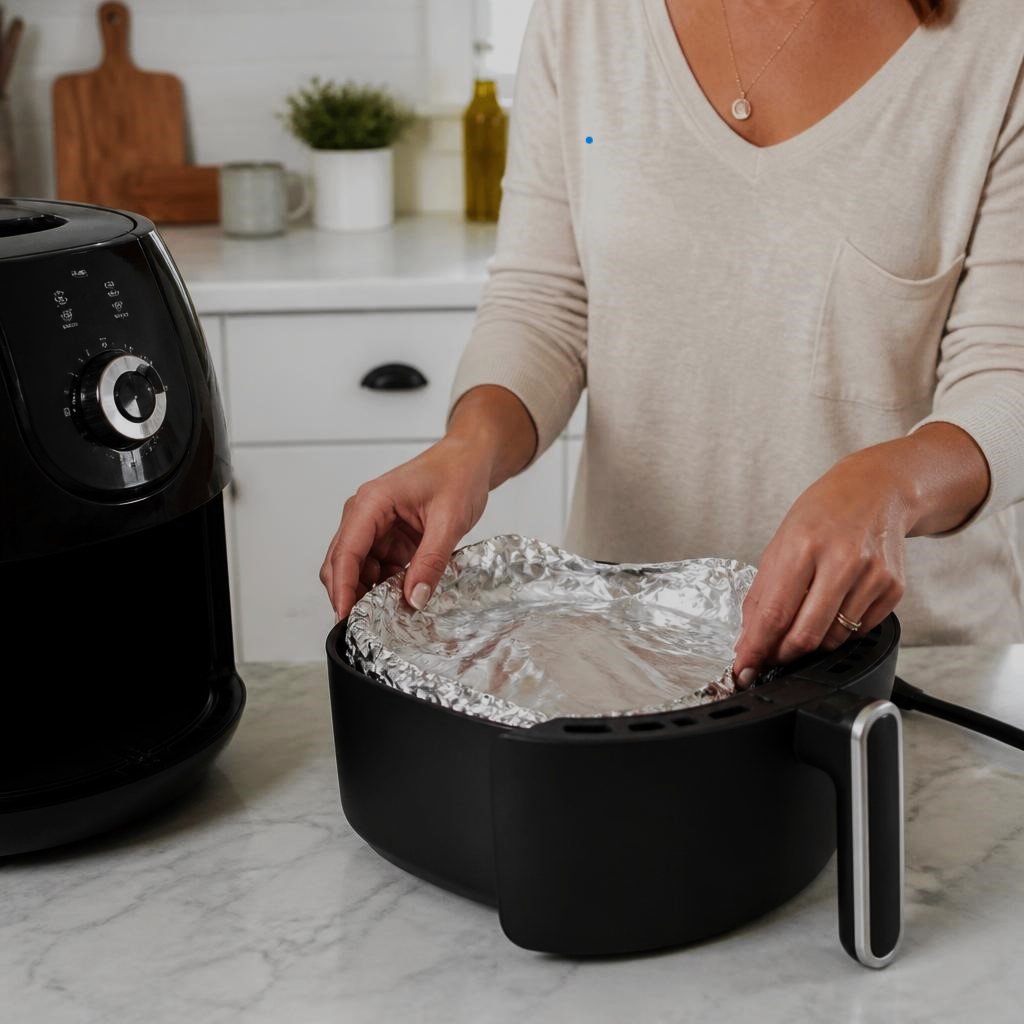
The fix isn’t complicated. Foil that’s tucked under the food, or cut smaller than the basket, stays put and cooks safely. Chicken thighs, salmon fillets, and meatballs all work with a foil base as long as the edges don’t stick up into the airflow path.
How Much Coverage Is Too Much
Covering the entire basket floor blocks the hot air from circulating underneath the food, which defeats the appliance’s main advantage over deep frying. Most manufacturer guides, including Ninja’s Foodi manual, recommend leaving at least twenty five percent of the basket surface open so air can still move through the perforated holes below.
Situations Where Foil Actually Causes Problems
Foil isn’t risky by default, but a few specific foods and habits turn it into a genuine hazard or a flavor problem. Acidic ingredients are the biggest one. Tomato sauce, citrus marinades, and vinegar based dressings react with aluminum, which can pit the foil and leave a faint metallic taste on the food, especially during longer cook times past fifteen minutes.
Loose, lightweight scraps are the second issue. A small torn piece left in the corner of the basket can catch in the fan and touch the heating coil, which is where actual fire risk comes from, not the foil sitting flat under a chicken breast. This is the scenario most safety warnings are really describing, even when the headline just says “don’t use foil.”
A cook named Rachel in Ohio learned this after wrapping a salmon fillet loosely and setting it in her Cosori basket. The corner of the foil lifted during preheating, brushed the coil, and left a small scorch mark on the packet before she caught it. She switched to trimming foil an inch smaller than the basket floor and weighing it down with the food itself, and hasn’t had the issue since.
Coating Damage Is a Quieter Risk
Many air fryer baskets use a nonstick PTFE coating that scratches easily. Foil edges dragged across the surface while removing food can nick that coating over months of repeated use. Silicone tipped tongs, rather than metal utensils, keep both the foil and the basket lining intact longer.
What the Manufacturer Manuals Actually Say
Reading the fine print on a few popular models shows the guidance is more consistent than the internet debate suggests. Philips, the brand that started the whole category, tells owners in its user manual to avoid loose foil near the heating element and to always weigh material down with food. Ninja’s Foodi documentation repeats a similar warning, focused mainly on airflow blockage rather than the metal itself.
Instant Pot’s Vortex manual takes a slightly more cautious tone, suggesting foil only for the bottom of the basket and never as a full wrap around food, since a sealed pouch can trap steam and slow the crisping effect that makes an air fryer worth owning in the first place. GoWISE, a smaller but well reviewed brand, includes a printed diagram in its quick start guide showing exactly how far foil should sit from the coil, roughly two inches at minimum.
None of these manuals ban foil outright. They all converge on the same three points: keep it flat, keep it partial, and keep it away from acidic sauces. That agreement across competing brands is a stronger signal than any single forum post claiming foil is either perfectly fine or completely forbidden.
A Second Case Worth Knowing
A home cook named Daniel in Austin ran into the opposite problem from Rachel’s scorched salmon. He lined his entire Philips basket with foil to cook a batch of frozen French fries, covering every hole on the bottom. The fries came out pale and soggy on one side after eighteen minutes, well past the usual twelve minute cook time for that brand of fries.
The issue wasn’t the foil catching fire or reacting with the food. It was airflow. With every vent covered, the fryer behaved like a small covered pan instead of a convection appliance, and the trapped steam kept the bottom layer from crisping. Once Daniel cut the foil down to cover only half the basket and left the rest of the holes exposed, the same fries browned evenly in under thirteen minutes. His experience lines up with what Cosori’s own recipe booklet notes: foil is fine for sauce heavy proteins, but french fries, tater tots, and other high starch foods do better directly on the basket or with minimal foil coverage.
Using Foil Correctly in a Basket Style Air Fryer
Basket models like the Ninja Foodi, Cosori Pro, and Instant Pot Vortex all share the same fan-behind-basket design, so the same habits apply across brands.
- Cut the foil about an inch smaller than the basket floor on all sides
- Weigh it down by placing food directly on top rather than draping it loosely
- Leave gaps or poke a few holes through for hot air to pass through
- Avoid wrapping anything in a sealed foil pouch unless the recipe calls for steaming
- Skip foil entirely for tomato based wings, citrus salmon, or vinegar marinated vegetables
Following these five habits solves almost every complaint people have about foil turning a mess or scorching unexpectedly.
Oven Style Air Fryers Play by Slightly Different Rules
Toaster oven style units, including the Breville Smart Oven Air and larger Cuisinart models, place the heating element farther from the food and use racks instead of a basket. That extra distance means foil has less chance of contacting the coil directly, which is why these models tolerate a fuller sheet of foil across a tray.
Even here, though, the same acidic food caution applies, and foil still shouldn’t touch the exposed heating element at the top of the cavity. A sheet pan lined with foil for roasted vegetables works well in a Cuisinart oven style unit, especially for sticky glazed dishes like teriyaki chicken thighs that would otherwise cake onto the tray.
Better Alternatives for Certain Foods
Foil isn’t always the best tool, even when it’s safe to use. Perforated parchment paper, the kind sold specifically for air fryers, handles delicate fish and pastries without any metal-food reaction, and it costs roughly eight to twelve dollars for a pack of a hundred sheets.
Reusable silicone liners, often shaped to match popular basket sizes from brands like Cosori and Ninja, run closer to ten to fifteen dollars and hold up for hundreds of uses. They’re a better fit for saucy dishes like barbecue wings, where foil’s edges would otherwise trap sauce against the coil area during the toss-halfway-through step most wing recipes call for.
Parchment does have one limit worth knowing: it can’t handle temperatures much past 420 degrees Fahrenheit without browning at the edges, so very high heat recipes, like a quick 400 to 450 degree potato wedge batch, still lean on foil or the bare basket instead.
Cost is often the deciding factor for casual cooks. A roll of standard foil lasts for dozens of meals and costs a few dollars, which explains why it remains the default choice for quick weeknight cooking even among people who own silicone liners. Silicone becomes worth the higher upfront price mainly for households running the air fryer daily, where the liner pays for itself within a month or two compared to buying foil or parchment on a weekly grocery run.
Wrap Up
Foil and air fryers get along fine most of the time, and the appliance manuals from Philips, Ninja, and Cosori all confirm it in some form. The habits that matter are simple: cut it smaller than the basket, weigh it down with food, skip it for acidic dishes, and pick parchment or silicone liners when a recipe calls for full tray coverage. Get those four details right, and foil becomes a shortcut for easier cleanup rather than a risk to manage.
FAQs
Can aluminum foil catch fire in an air fryer?
Foil itself doesn’t ignite, but a loose piece that touches the heating coil can scorch and create smoke, so keeping it flat and weighed down under food prevents this.
Does foil affect how food cooks in an air fryer?
Yes, foil blocks direct airflow underneath the covered area, so food sitting on foil browns a bit less on the bottom than food placed directly on the perforated basket.
Is it better to use parchment paper instead of foil in an air fryer?
Parchment works better for acidic or delicate foods like citrus fish or pastries, while foil holds up better for high heat items like potato wedges or roasted vegetables.
Disclaimer
This content shared by Fall Rugs is solely for research and informational purposes. Fall Rugs is not a professional interior design or home renovation consultancy, and the information provided should not be considered professional advice for home improvement or decor. All ideas and suggestions are based on current trends and general knowledge in the home decor industry.