

TL;DR
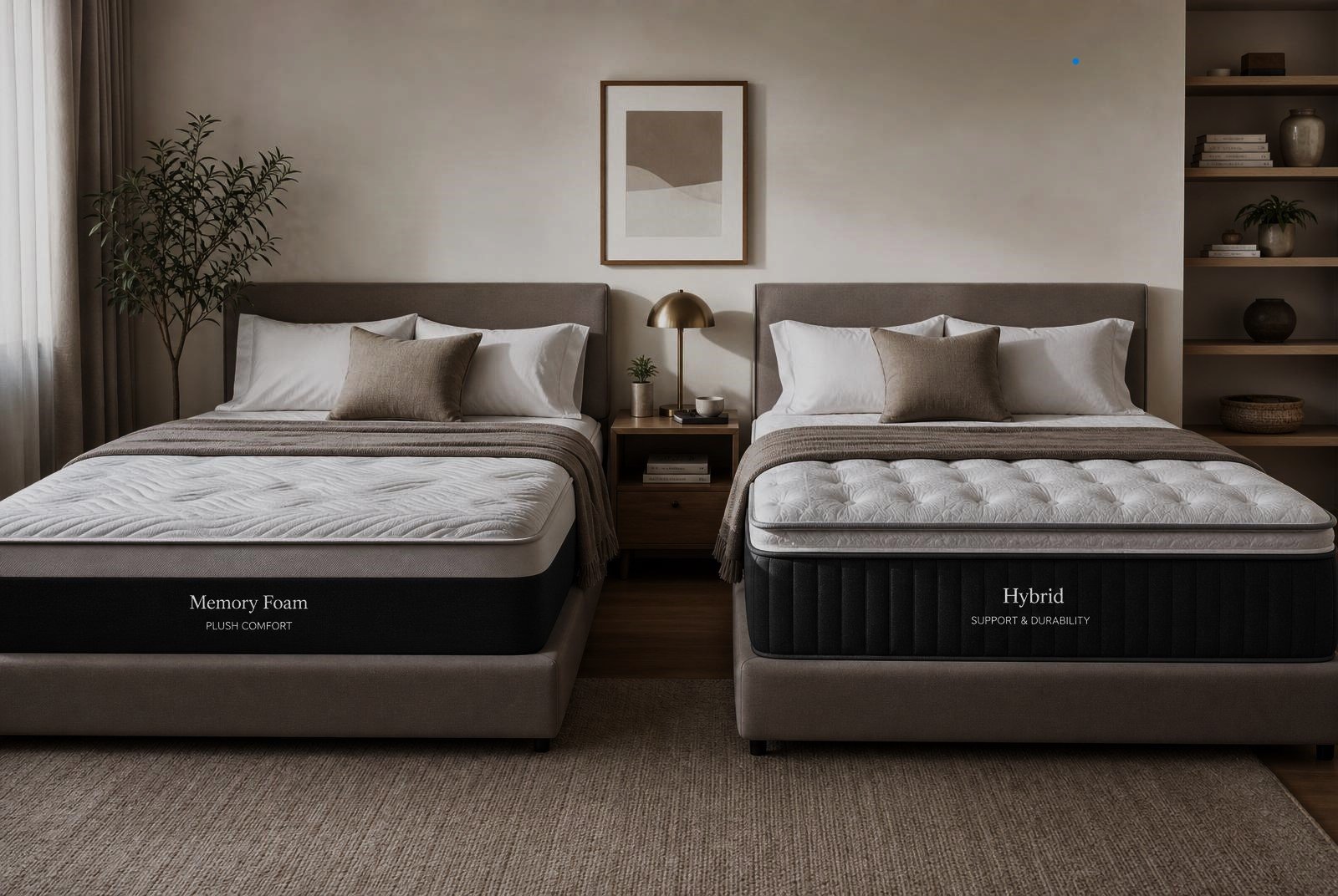
Memory foam contours to your body and isolates motion, while hybrid mattresses combine coils with foam layers for more bounce and airflow. Side sleepers and couples often lean toward memory foam for pressure relief, while back and stomach sleepers, plus hot sleepers, tend to do better on a hybrid build. Price, edge support and long-term sag rates separate the two just as much as comfort does.
Introduction
Standing in a mattress showroom in 2026 feels different than it did a decade ago. Every brand from Tempur-Pedic to Saatva now claims its bed solves back pain, night sweats and restless partners in one purchase. The honest answer sits somewhere between marketing and material science. This article breaks down how memory foam and hybrid mattresses actually perform, where each one falls short, and which sleep habits pair best with each build.
What Memory Foam Mattresses Actually Do To Your Body
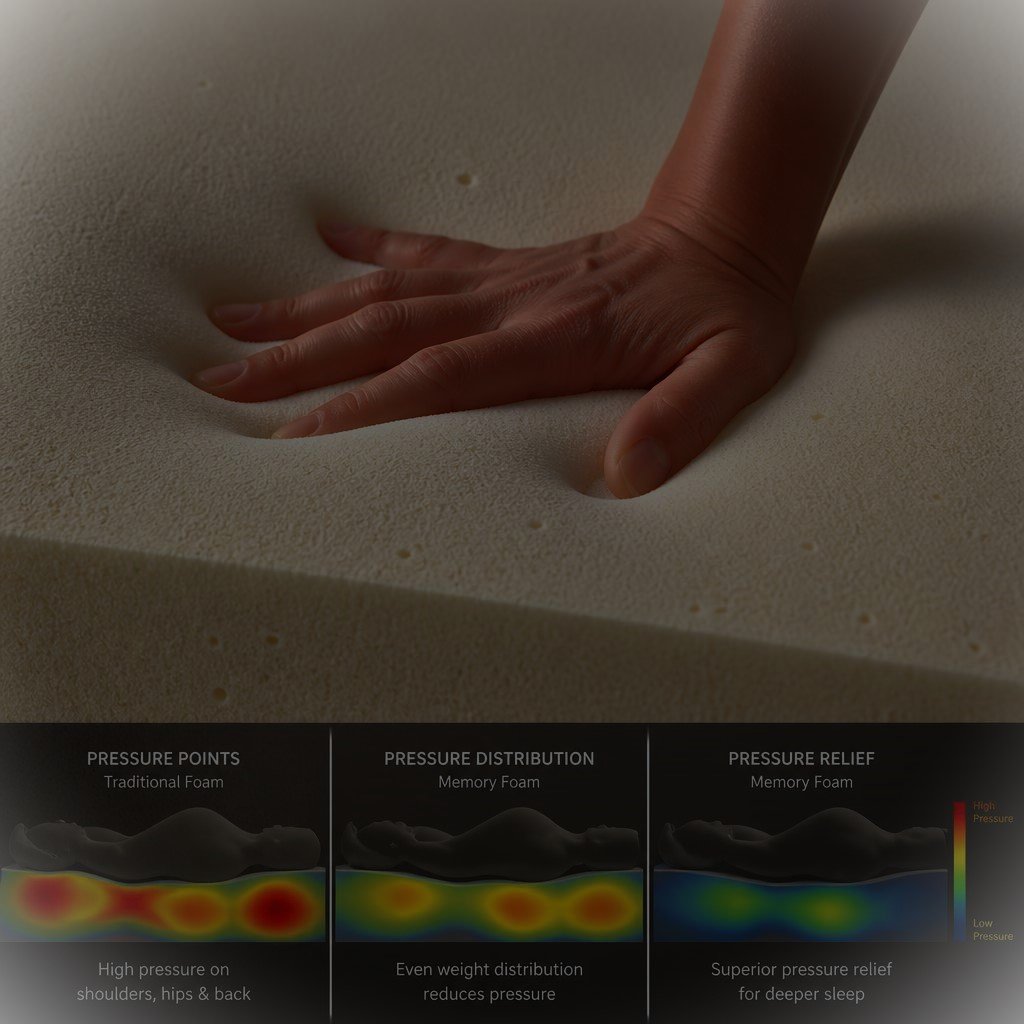
Memory foam is viscoelastic polyurethane foam, originally developed by NASA in 1966 to cushion aircraft seats during high-impact landings. Tempur-Pedic brought the material into home bedrooms in 1992, and it reshaped an entire industry within a decade. The foam softens with body heat and slowly molds around the shoulders and hips, spreading weight instead of pushing back against it.
This slow-response quality is exactly why side sleepers gravitate toward it. A 2019 review of mattress firmness studies found medium-firm surfaces reduced lower back pain more consistently than very firm or very soft options, and memory foam’s density range of 3 to 5 pounds per cubic foot usually lands in that medium-firm zone. Higher density foam, closer to 5 lb/ft³, lasts longer but sleeps warmer.
- Casper’s original foam mattress popularized the “zoned support” idea, with firmer foam under the hips and softer foam at the shoulders
- Purple uses a hyper-elastic polymer grid instead of traditional foam, trading some contouring for extra airflow
- Full memory foam beds typically run $700 to $2,000 for a queen size, depending on foam density and cover material
- Couples with different body weights on the same mattress report less roll-together sag with higher density foam layers
- Heat retention remains the most common complaint, especially in bedrooms without strong air conditioning
Where Memory Foam Falls Short
The same contouring that relieves pressure also traps body heat, since dense foam does not allow air to move through it the way coils do. Sleepers in warmer climates, including much of Pakistan’s summer months, often notice this within the first few weeks. Gel-infused foam and open-cell designs help, but they rarely match a hybrid’s airflow.
Edge support is the second weak point. Sitting on the edge of a pure foam mattress to tie your shoes usually produces a noticeable sink, which shortens the usable sleep surface over time.
What Hybrid Mattresses Bring To The Bed
A hybrid mattress pairs a pocketed coil support core, usually 800 to 1,000 individually wrapped coils in a queen size, with two to four inches of foam or latex on top. Saatva, DreamCloud and Serta’s iComfort Hybrid line all use this formula, though coil gauge and foam thickness vary between them. The coils create channels for air to move, which keeps the surface noticeably cooler than solid foam.
Bounce is the other defining trait. Couples who need to reposition without waking each other, or who simply want a bed that feels responsive rather than “stuck,” tend to prefer the coil layer’s give. Stomach and back sleepers also benefit, since the firmer coil base keeps the spine from sinking into an unnatural curve.
- Coil count between 800 and 1,000 in a queen size generally signals better individual point support than cheaper 400 to 600 coil builds
- Hybrid mattresses run $900 to $2,500 for a queen, reflecting the added manufacturing cost of two support systems
- IKEA’s hybrid options, like the MATRAND line, offer a budget entry point around $600 to $800
- Edge support in hybrids is typically reinforced with high-density foam rails, so sitting or sleeping near the border feels sturdier
- Motion transfer is higher than pure foam, so light sleepers sharing a bed may notice a partner’s movement more
Where Hybrids Fall Short
The coil layer, while good for airflow, transmits more motion across the mattress than solid foam does. A restless partner is more noticeable on a hybrid, and that is the trade-off for the extra bounce and cooling.
Hybrids also tend to weigh more, which makes moving them between apartments or up a narrow staircase a two-person job in most cases. Sealy’s Posturepedic hybrid line, for example, ships at close to 100 pounds in a queen size.
Memory Foam vs Hybrid: Side By Side Comparison
| Feature | Memory Foam | Hybrid |
|---|---|---|
| Core material | Viscoelastic foam layers, 3-5 lb/ft³ density | Pocketed coils (800-1,000 count) plus foam or latex top |
| Motion isolation | Excellent, minimal transfer between partners | Moderate, coils transmit more movement |
| Temperature | Sleeps warmer unless gel-infused | Sleeps cooler due to coil airflow |
| Edge support | Weak, noticeable sink at border | Strong, reinforced foam rails |
| Bounce and responsiveness | Low, slow contouring response | High, springier feel |
| Weight | Lighter, easier to move alone | Heavier, often needs two people |
| Typical queen price | $700-$2,000 | $900-$2,500 |
| Best for | Side sleepers, couples wanting isolation, pressure point pain | Back/stomach sleepers, hot sleepers, combo sleepers |
| Example brands | Tempur-Pedic, Casper, Nectar | Saatva, DreamCloud, Serta iComfort |
| Average lifespan | 6-8 years | 6-7 years |
Which One Fits Your Sleep Style
Side Sleepers And Couples
Side sleepers put concentrated pressure on the shoulder and hip, and memory foam’s slow contouring distributes that weight instead of pushing back against it. Couples who wake each other up with every turn also benefit from foam’s motion isolation, since a Nectar or Tempur-Pedic mattress absorbs movement rather than passing it across the surface.
Back, Stomach And Hot Sleepers
Stomach and back sleepers need a firmer, more even surface to keep the spine aligned, which is exactly what a coil-supported hybrid delivers. Hot sleepers, and anyone in a bedroom that runs warm through summer, will also notice the difference within the first week, since coils allow air to pass through the mattress instead of trapping it.
Pairing either mattress with breathable bedding matters as much as the mattress itself. A cotton duvet from West Elm or a lightweight linen set from Pottery Barn can offset some of memory foam’s heat retention, while a Ruggable rug at the foot of the bed adds a soft landing spot without holding onto warmth the way thicker wool rugs do.
Cost, Durability And Real World Wear
Price alone rarely tells the full story. A $1,200 memory foam mattress with 5 lb/ft³ density foam will usually outlast a $700 model using 2.5 lb/ft³ foam by two to three years, since lower density foam compresses and loses shape faster under repeated body weight. The same logic applies to hybrids: coil gauge and foam thickness on top matter more than the sticker price.
One case that comes up often in mattress forums involves a couple in their early thirties who bought a budget hybrid to save money, only to notice a visible body impression forming within eight months. Swapping to a mattress with a thicker top foam layer and higher coil count solved the sagging, though it cost nearly double the original price. The lesson holds across both categories: cheaper materials wear out faster regardless of whether the core is foam or coils.
- Rotating a mattress head to foot every three to six months slows uneven wear on both foam and hybrid builds
- A mattress protector prevents moisture damage, which shortens the lifespan of foam layers faster than almost anything else
- Most manufacturers back memory foam and hybrid mattresses with a 10-year warranty, though sag thresholds for a valid claim vary by brand
- Trial periods of 100 to 365 nights, common with direct-to-consumer brands, let sleepers test firmness before committing
- Firmness preference often shifts with age and body weight changes, so a mattress that fit five years ago may not fit today
Wrap Up
Memory foam and hybrid mattresses solve different problems. Foam wins on pressure relief and quiet nights next to a restless partner, while hybrids win on cooling, bounce and edge support. Your dominant sleep position, your bedroom’s typical temperature, and how much you weigh together point toward the better fit more reliably than any single brand’s marketing claim. Testing a mattress during its trial period remains the most reliable way to confirm the choice before the return window closes.
FAQs
Is a hybrid mattress better than memory foam for back pain?
It depends on the cause of the pain. Memory foam often helps with joint and pressure point pain, while a hybrid’s firmer coil base tends to suit general lower back support better for stomach and back sleepers.
Do hybrid mattresses sleep cooler than memory foam?
Yes, in most cases. The coil layer in a hybrid allows air to circulate through the mattress, while dense memory foam traps body heat unless it includes gel infusion or an open-cell design.
How long do memory foam and hybrid mattresses typically last?
Both types average 6 to 8 years with proper care, though higher density foam and higher coil counts on either type usually extend that lifespan by a year or two.
Disclaimer
This content shared by Fall Rugs is solely for research and informational purposes. Fall Rugs is not a professional interior design or home renovation consultancy, and the information provided should not be considered professional advice for home improvement or decor. All ideas and suggestions are based on current trends and general knowledge in the home decor industry.