
TL;DR
A rug’s fate in the dryer depends almost entirely on its fiber and backing, not its size. Cotton and synthetic washable rugs under 5 feet by 7 feet usually tumble dry fine on low heat, while wool, jute, and rubber-backed rugs can shrink, crack, or melt. Air drying stays the safer default for anything you can’t confirm is machine washable.
Introduction
You just spilled coffee on the kitchen rug and your first thought is straight to the washer and dryer combo you already trust for towels. Rugs aren’t towels though, and the wrong guess can turn a $150 piece into a stiff, shrunken mat. This piece walks through which rugs handle a dryer cycle, which ones need to air dry, and how to read a care label before you regret it.
Fiber Type Decides Almost Everything
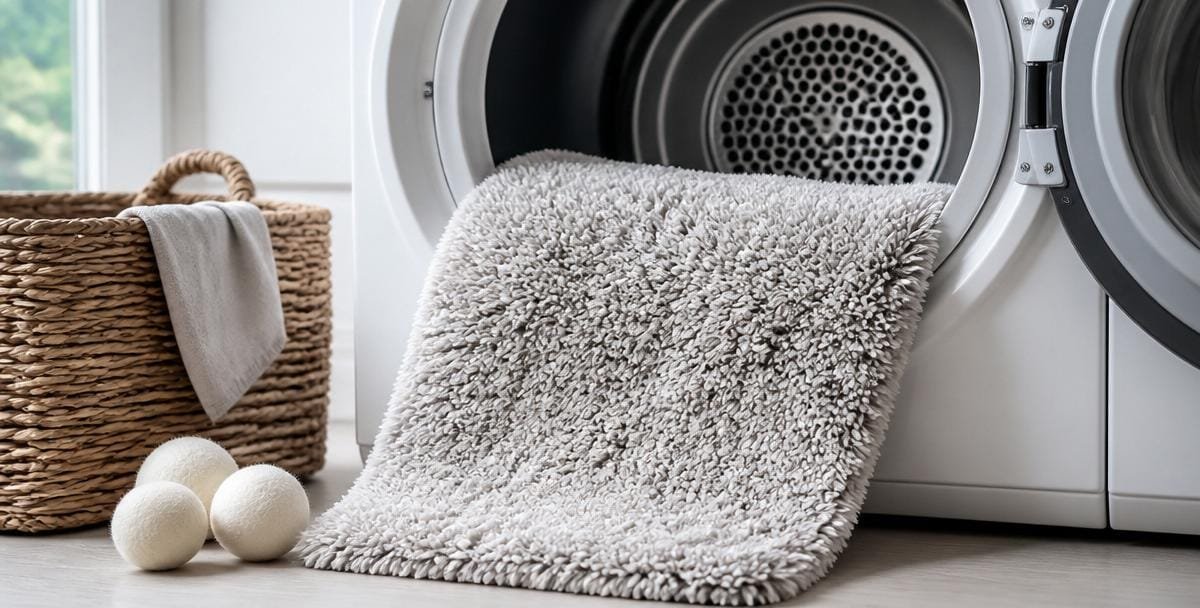
The material woven into a rug determines how heat and tumbling will treat it. Cotton, polyester, and nylon rugs generally tolerate low heat drying because these fibers resist shrinking and don’t break down under moderate warmth. Wool, jute, sisal, and silk behave differently, and heat is usually their weak point.
- Cotton rugs, like those sold by Pottery Barn, can shrink 3 to 5 percent even on low heat, so a snug fit matters before you start.
- Wool rugs felt and shrink permanently in a dryer because heat and tumbling mimic the same process used to make wool felt in textile mills.
- Jute and sisal rugs lose their fiber structure and turn brittle when dried with heat, since these natural grasses were never meant for sustained warmth.
- Polypropylene and polyester blends, common in budget rugs from Target or Walmart, hold their shape well under low heat but can develop a faint plastic smell if the dryer runs too hot.
A rug from West Elm’s flatweave cotton collection, for example, is built to survive a wash and dry cycle because the company markets several lines specifically as machine washable.
Wool and Natural Fiber Warnings
Wool fibers have overlapping scales that lock together permanently when exposed to heat and moisture at the same time, which is the exact science behind felting. Once a wool rug felts in the dryer, no amount of stretching brings back the original weave or softness. Sisal and jute face a different problem: these plant fibers dry out and become stiff enough to crack along fold lines after just one heat cycle.
Backing Material Changes the Risk Level
Many area rugs have a backing layer glued or stitched to the underside for grip and shape retention, and this layer often reacts badly to heat. Rubber and latex backings, found on many kitchen mats and entryway rugs, can melt, crack, or peel apart above 120 degrees Fahrenheit. Jute backing, common on higher end wool rugs from brands like Anthropome or Loloi, tends to shrink at a different rate than the top fibers, causing the rug to pucker or curl at the edges.
- Rubber-backed bath mats should air dry only, since dryer heat softens the rubber and leaves residue on the drum.
- Latex-backed rugs can release a chemical odor when heated repeatedly, a common complaint in home forums about older kitchen mats.
- Woven cotton rugs with no backing, like a simple Turkish kilim replica, are the safest candidates for a dryer because there’s no separate layer to warp.
- Rugs with a non-slip PVC coating on the back should never go in a dryer, since PVC softens and can stick to the drum at low temperatures.
A homeowner in Austin once ran a rubber-backed doormat through a standard dryer cycle on medium heat and found the backing had partially melted onto the lint trap, a mistake that cost her a replacement mat and a thorough dryer cleaning.
Machine Washable Rug Brands Built for This
A newer category of rugs exists specifically for washer and dryer use, led by companies like Ruggable, which sells a two piece system with a washable cover and a separate rubber grip pad that stays behind during laundering. Ruggable explicitly instructs customers to tumble dry the rug cover on low heat and air dry the grip pad separately, since the pad’s rubber backing can’t handle dryer heat at all. Chilewich, known for indoor-outdoor floor mats, makes rugs from vinyl-coated polyester that the brand recommends hanging to dry rather than machine drying.
- Ruggable covers, sized for standard 5 by 7 and 8 by 10 layouts, typically finish a low heat dry cycle in 30 to 40 minutes.
- The Ruggable grip pad should never enter a dryer under any setting, based on the brand’s own published care instructions.
- Boutique washable wool blends from brands like Safavieh often carry a “dry flat only” label despite being technically machine washable in the wash cycle.
- Outdoor rugs made from polypropylene, popular for patios in warm climates like Phoenix or Miami, tolerate both washing and low heat drying since they’re built to survive UV and moisture exposure outdoors.
Size and Dryer Capacity Matter More Than People Expect
A standard home dryer drum holds around 7 cubic feet, which limits how large a rug can go in without bunching against the drum wall and drying unevenly. A 3 by 5 foot cotton rug fits comfortably and tumbles with enough room to dry evenly, but an 8 by 10 rug is often too bulky for a residential dryer regardless of fiber type. Overloading the drum also strains the motor and can trip a thermal safety switch mid cycle, leaving the rug damp and the machine displaying an error code.
- Rugs under 4 by 6 feet generally fit and tumble properly in a standard 7 cubic foot dryer drum.
- Rugs between 5 by 7 and 6 by 9 feet often need a commercial size dryer, the kind found at laundromats, to dry evenly.
- Anything 8 by 10 feet or larger should air dry flat or get taken to a rug cleaning service instead of risking a home machine.
- Small kitchen and bath rugs under 3 by 5 feet dry fastest and cause the least wear on both the rug and the dryer’s drum bearings.
Wrap Up
Cotton and synthetic rugs under about 5 by 7 feet handle a low heat dryer cycle reasonably well, especially when a brand like Ruggable or West Elm builds the product for exactly that purpose. Wool, jute, sisal, and anything with a rubber or PVC backing are safer left to air dry, since heat can felt, crack, or melt these materials permanently. Checking the care label first and matching rug size to your dryer’s actual capacity prevents most of the shrinking, cracking, and odor complaints people run into after a rushed laundry day.
FAQs
Can you put a bath rug in the dryer? Cotton bath rugs without rubber backing usually dry fine on low heat, but rubber or latex backed mats should air dry to avoid melting or cracking.
Will a rug shrink in the dryer? Cotton rugs can shrink slightly on low heat, while wool rugs often shrink significantly and permanently due to felting, so wool should air dry instead.
How long does it take to dry a rug in the dryer? A small cotton or synthetic rug under 5 by 7 feet typically finishes a low heat cycle in 30 to 45 minutes, depending on thickness and dryer capacity.