
TL;DR
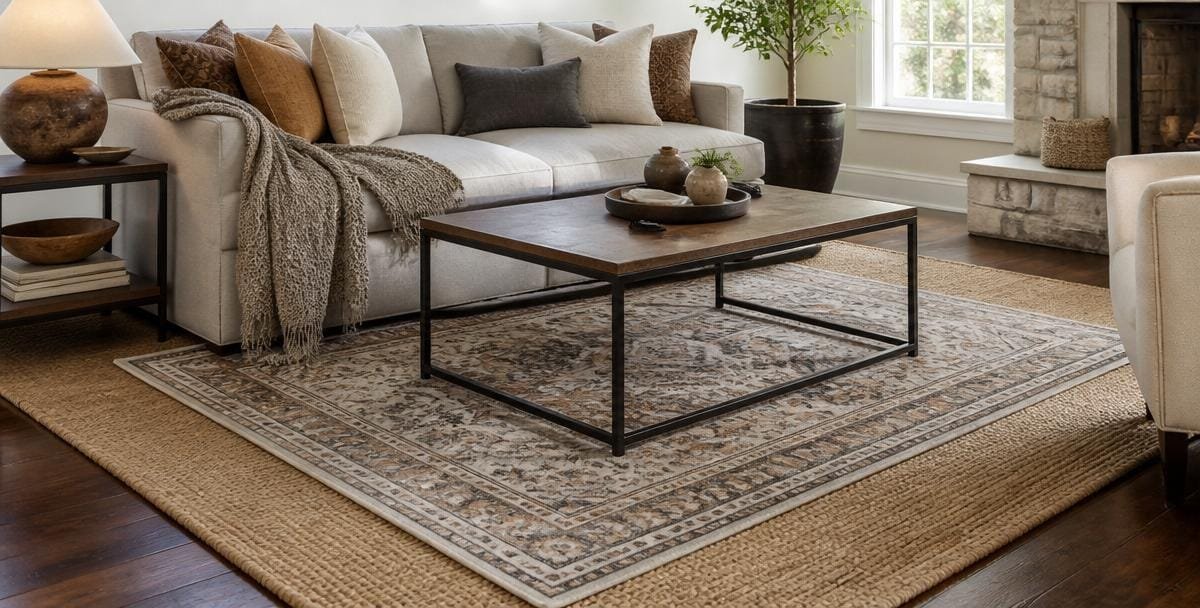
Layering rugs in a living room works when the base rug is neutral and large, the top rug is smaller and textured, and both share at least one color or tone. Skip the trend if your furniture already carries a bold pattern. Get the sizing wrong and the whole setup looks like a mistake instead of a choice.
Introduction
Why do some layered rugs look like they belong in a design magazine while others look like a laundry accident? The gap usually comes down to three things: proportion, texture, and restraint. A living room with a 9×12 jute rug topped by a smaller Persian-style piece from Ruggable can feel curated in an afternoon. Get the ratio wrong, and the same two rugs read as clutter. This piece walks through the sizing math, the material pairings that hold up over years of foot traffic, and the specific mistakes that show up again and again in real homes.
Start With the Base Rug Size
The base layer sets the tone for the whole room, and it needs to be big enough to anchor the furniture rather than float under it.
- Measure so the base rug extends at least 6 to 8 inches under the front legs of your sofa and armchairs.
- Natural fiber options like jute, sisal, or seagrass work well here because their flat weave keeps the layer from feeling bulky.
- IKEA’s LOHALS and West Elm’s jute collection are both common starting points because they run large and stay affordable at the 8×10 and 9×12 sizes.
- Stick to a neutral color: sand, oatmeal, or soft gray gives the top rug room to stand out.
A living room measuring roughly 14 by 16 feet typically needs a base rug no smaller than 8×10 to avoid the “postage stamp” effect, where furniture legs hang off the edge and the whole arrangement looks unfinished. Homeowners who go smaller to save money on the base layer almost always end up replacing it within a year once the visual imbalance bothers them enough.
Choose a Top Rug That Contrasts in Texture, Not Just Pattern
The second rug should feel different to the touch and different to the eye, but it should not fight the base layer for attention.
- Vintage-style or distressed rugs, the kind Pottery Barn and Anthropologie have leaned into since around 2018, pair well with flat-weave jute because the texture contrast reads as intentional.
- A wool or wool-blend top rug adds warmth underfoot, which matters in colder climates like the Pacific Northwest or New England during winter months.
- Keep the top rug’s longest edge inside the base rug’s border by at least 12 to 18 inches on all sides.
- Avoid stacking two busy patterns. One patterned layer and one plain layer is the safer combination for most living rooms.
A common real-world scenario: a couple in Austin bought a 5×7 vintage Turkish-style rug for their living room but placed it directly over new beige wall-to-wall carpet instead of a jute base. The rug kept sliding and bunching within weeks. Once they added a base layer and a rug pad underneath both, the movement stopped and the room finally looked finished rather than temporary.
Rug Pads Matter More Than People Expect
A rug pad between the base rug and the floor, and often another thin one between the two rugs, prevents slipping and adds cushioning. Skipping this step is the single most common reason layered rugs shift out of place within the first month.
Match at Least One Shared Element
Two rugs that share zero visual traits will almost never look like they belong together, no matter how expensive either one is.
- Pull one color from the top rug’s pattern and echo it somewhere else in the room, such as throw pillows or curtains.
- If the base rug is warm-toned (sand, camel, rust), lean the top rug toward warm tones too, even if the pattern differs.
- Consider scale: a top rug with a tight, small-scale pattern usually reads cleaner against a solid or near-solid base than against a rug with large geometric shapes.
- Interior stylists have pointed out for years that repetition, not matching, is what makes layered spaces feel designed rather than accidental.
Common Mistakes That Undercut the Look
Even people who understand the size and texture rules still trip over a handful of avoidable errors.
- Placing the top rug dead center on the base rug instead of shifting it slightly toward the seating area, which flattens the visual interest.
- Choosing two rugs of nearly identical size, which reads as a mismatched pair rather than an intentional layer.
- Ignoring furniture traffic patterns; a top rug placed where people walk constantly will bunch and curl at the edges within months.
- Using synthetic rugs for both layers in a high-humidity climate, which can trap moisture and lead to a musty smell over a single summer.
Budget matters too. A full layered setup can run anywhere from 150 dollars for a budget base plus a secondhand top rug, up to 1,200 dollars or more for a wool base from a brand like Rifle Paper Co.’s rug line paired with a vintage import. Most homeowners land somewhere in the 300 to 600 dollar range once pads are included.
Wrap Up
Layering rugs in a living room comes down to getting the base size right, choosing a top rug that contrasts in texture rather than competing in pattern, and tying both pieces together with at least one shared color or tone. Skip the rug pad and the whole effort risks looking sloppy within weeks. Done with a little restraint, two rugs read as a considered design choice rather than an afterthought.
FAQs
Can you layer two patterned rugs together? Yes, but keep one pattern large-scale and the other small-scale so the eye can separate them; two similarly busy patterns tend to clash.
What size should the top rug be compared to the base rug? The top rug should sit at least 12 to 18 inches inside the base rug’s edges on every side, so both layers stay visible.
Do layered rugs work over carpet? Yes, as long as a rug pad sits under the base layer to stop sliding; without it, both rugs tend to shift and bunch within a few weeks.